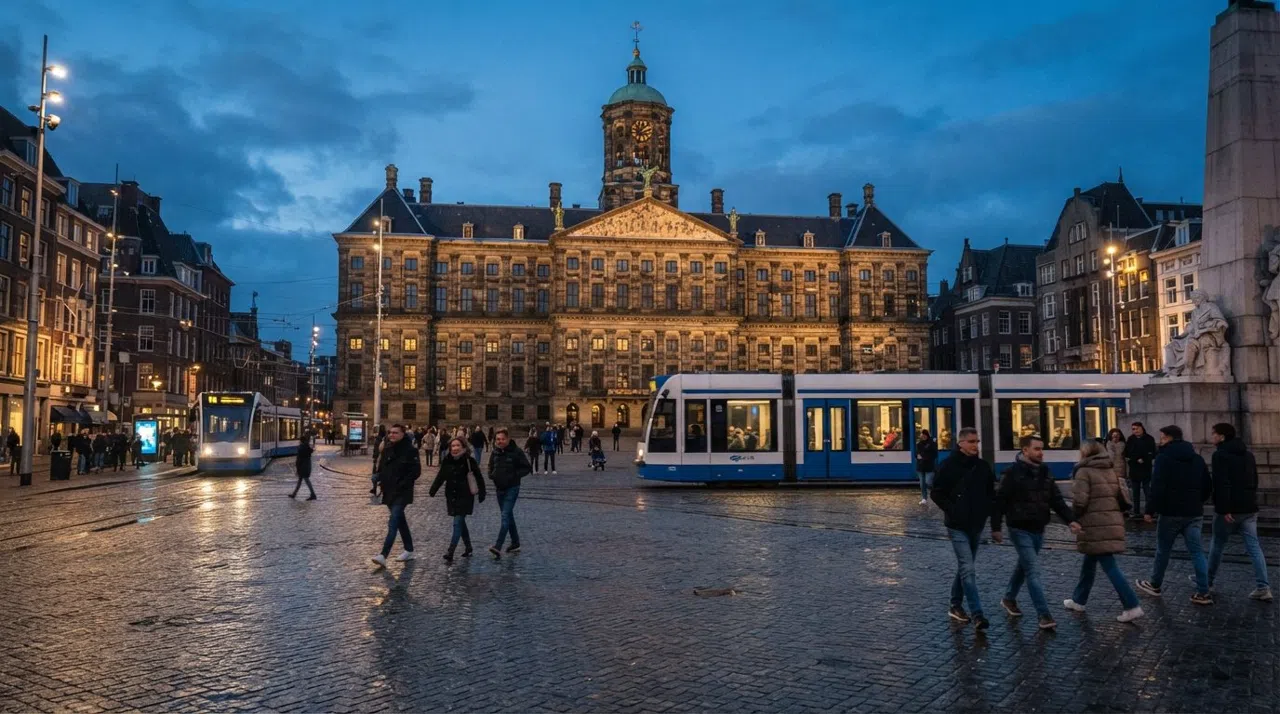

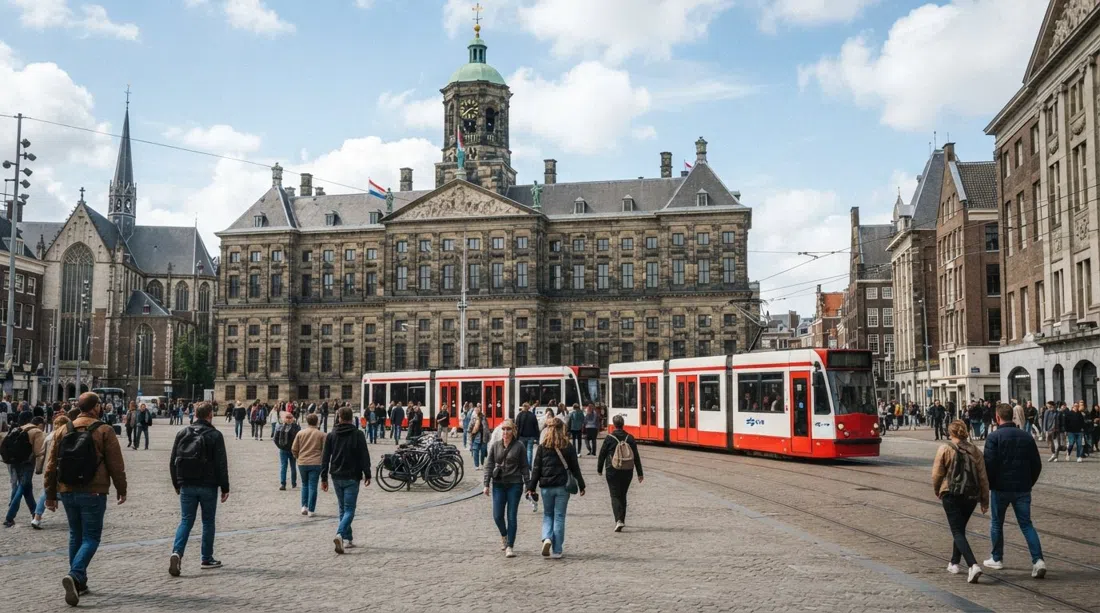
Amsterdam-Centrum starts with a bell and a crowd. On the Dam, trams hiss past the Royal Palace, tourists drift in front of the Nieuwe Kerk, and somewhere nearby a bike bell cuts through the whole scene like a polite complaint. This is the oldest ground in Amsterdam, the medieval half-moon inside the Singel where the city began as a fishing dam on the Amstel around 1275. The result is a neighbourhood that never really learned to sit still. It flashes from palace to alley, from chain store to hidden courtyard, from red neon to 700-year-old brick, often in the space of one block.
What Amsterdam-Centrum is known for
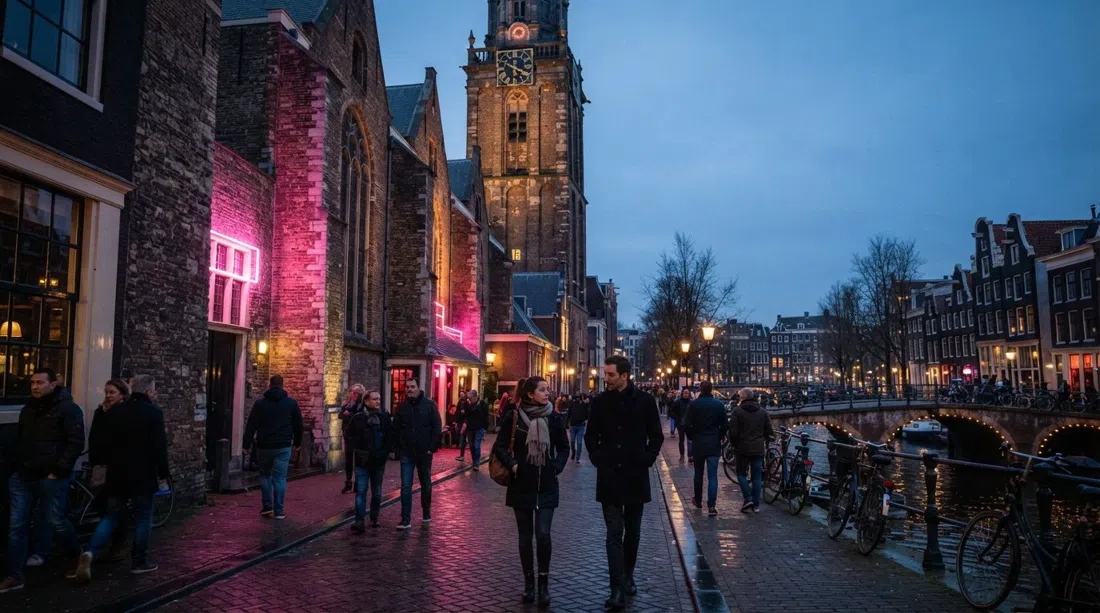
Centrum is the picture-book, monument-dense core, but it is not a museum piece. It is a working centre with office workers on lunch breaks, market traders setting out their stalls, museum-goers, cruise passengers and stag groups all shuffling through the same narrow streets. The city’s layers are visible without even trying. Dam Square gives you the grand civic face: the Royal Palace, once a 17th-century town hall and once nicknamed the eighth wonder of the world, standing opposite the Gothic Nieuwe Kerk. A little east and the mood changes sharply. De Wallen, the Red Light District, throws pink neon onto medieval brick, and the Oude Kerk sits there like a stubborn old witness, founded around 1213 and now doubling as a contemporary-art space among its tombs.
The thing about Centrum is that it never gives you one version of itself for long. Kalverstraat is a shoulder-to-shoulder shopping river; turn off it and you can suddenly be in the Begijnhof, where the noise drops away as if someone has shut a heavy door. The district is dense, hectic and occasionally seedy, but also genuinely old in a way the outer neighbourhoods are not. The Waag on the Nieuwmarkt is a 1488 city gate. The Houten Huys in the Begijnhof dates to around 1420. The Royal Palace was, in its day, Europe’s largest secular building. You come here for the monuments and the layers, not for peace and quiet, though Amsterdam does occasionally hide a pocket of it if you know where to duck.
Where to eat & drink
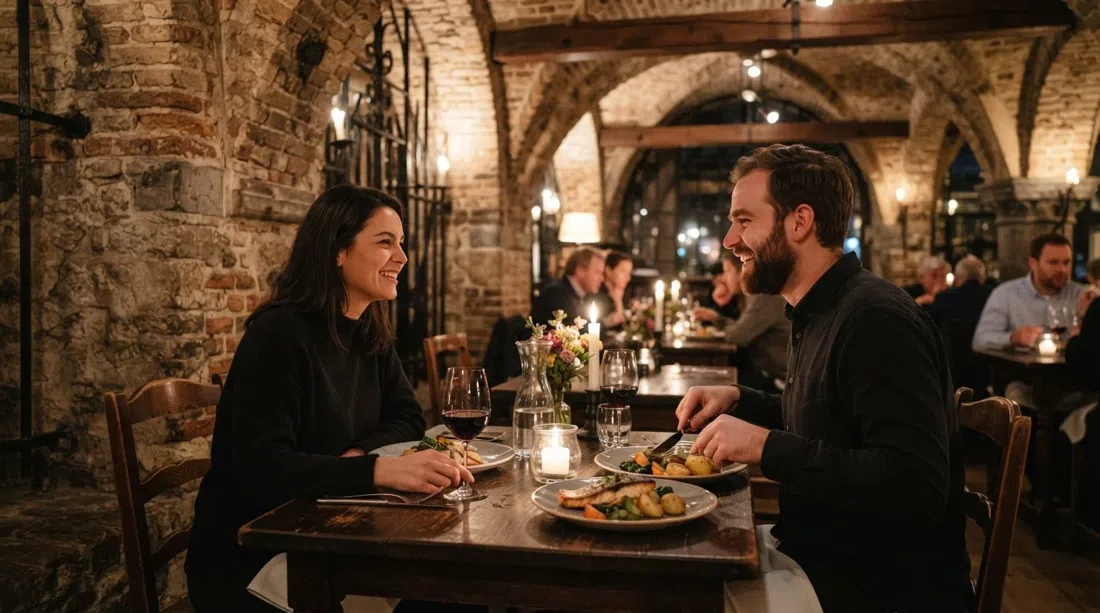
Eating in Centrum is mostly an exercise in dodging the obvious traps. The place is full of photo menus, pavement touts and food that looks as if it was assembled for people who will never come back. So you have to be a little choosy, and a little stubborn. On the Nieuwmarkt, In de Waag is the kind of room that makes you slow down whether you meant to or not: modern-European plates and a candlelit high tea inside the 1488 gatehouse. It is worth booking for the atmosphere as much as the food, because eating inside a former city gate is one of those indulgences that feels almost too on-the-nose, and yet Amsterdam gets away with it.
On the Zeedijk, Chinatown does what Chinatown should do: it feeds you well without a song and dance. Nam Kee, at Zeedijk 111, has been the Chan family’s roast-duck-and-oysters institution since 1981, and it remains one of the easiest places in the centre to recommend without crossing your fingers behind your back. The area around it is compact, lively and useful, especially if you want a cheap meal that does not come wrapped in irony.
For breakfast, or for a mid-morning scone and a proper sit-down, De Bakkerswinkel on the Warmoesstraat is the sort of bakery that understands the value of a good crust and a generous high tea. It sits in a former warehouse, which feels right for Amsterdam: a city that has always preferred to store, stack and repurpose rather than throw anything away.
Behind Centraal, Hannekes Boom is one of the few genuinely relaxed spots in the area. It is a scrap-timber waterside bar with a huge terrace, a wood-burning stove and moorings out front. In summer it has that easy, slightly improvised feel that makes you think the city has briefly remembered how to breathe. In winter, the stove does the emotional labour.
And if you want a Dutch classic near the Anne Frank House, The Pancake Bakery on Prinsengracht 191 has been griddling sweet and savoury pannenkoeken since 1973 in a 17th-century VOC warehouse. It is not subtle, and that is fine. A pancake in a canal warehouse is exactly the sort of thing Amsterdam should be allowed to be shameless about.
Going out
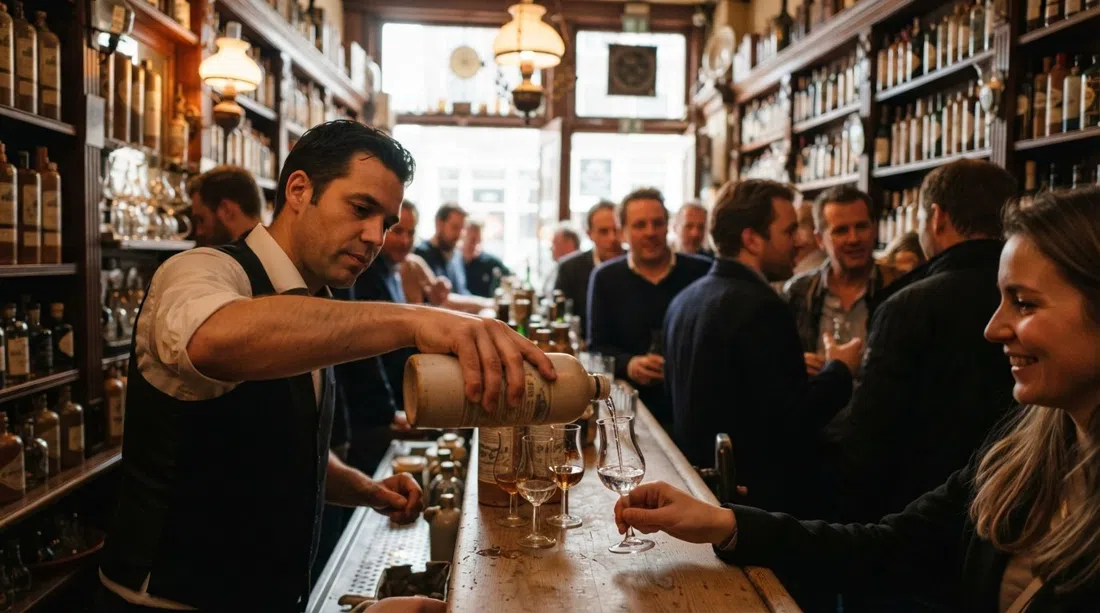
This is the loud, late heart of the city, and it splits into two flavours: the old drinking rooms where the city’s habits have barely changed, and the clubs where the night gets properly unruly. For a historic drink, Centrum’s tasting houses and brown cafés are the real draw. Wynand Fockink, on Pijlsteeg 31, has been pouring jenever since 1679. The room is standing-only, and the ritual matters: you order the classic kopstootje, a shoulder-height tulip glass of genever filled to the meniscus, bow to sip it, then chase it with a beer. It opens daily from 2pm, which feels about right for a place that knows exactly what it is.
Café Hoppe on the Spui has been pouring since 1670 and is the sort of old brown café that makes you believe in continuity for a minute. Sawdust-and-jenever character, a permanent terrace scrum, and the sense that half the city has agreed to meet here at some point since the Dutch Republic was young. For beer people, In de Wildeman on Kolksteeg 3 is a former 1690 distillery with 18 rotating taps, 250 bottles and a strict no-music rule. That last detail is doing a lot of work. In a district this noisy, a bar that refuses background music is practically a public service.
Café Belgique on the Gravenstraat is the opposite in scale but not in conviction: tiny, behind Dam Square, with eight Belgian taps and a DJ squeezed in at weekends. It is the sort of place where the room feels full even before everyone has ordered. Then there is the club side of Centrum, especially around Rembrandtplein. Escape has been throwing big-room parties since 1986 and can hold over 2,000 people. Club Air sits on Amstelstraat 16, and Club NYX on the Reguliersdwarsstraat flies the flag for Amsterdam’s queer nightlife. After midnight, this part of town belongs to the people who are not planning an early morning.
Things to do / what to see
Centrum is where you tick off the icons, but the trick is not to treat them like boxes. Start at Dam Square and go straight into the Royal Palace, which is around €13 and open most days from 10am to 5pm. The marble Citizens’ Hall is the room to linger in, especially if you have a weakness for civic grandeur and polished stone that seems to have absorbed three centuries of ambition. Cross to the Nieuwe Kerk next, where the building itself is as much the point as whatever exhibition is on. The church gives the square its Gothic counterweight, and the pair together explain a lot about Amsterdam’s instinct for keeping its sacred and secular faces within shouting distance.
Walk east into De Wallen and the city gets older and stranger. The Oude Kerk is Amsterdam’s oldest building, founded around 1213, and it is worth the visit for the wonky medieval floor of gravestones alone, never mind whatever contemporary installation currently fills the nave. It is one of those places where the past is not neatly preserved behind velvet ropes; it is under your feet, literally. Photography is banned at the Red Light District windows, and that rule should not be treated as optional. Respect it and move on.
For the opposite of the district’s glare, duck off the Spui into the Begijnhof courtyard. It is free, daytime only and still lived in by residents, so keep your voice down. The Houten Huys at number 34 is one of only two surviving wooden houses in the centre, and the courtyard has the kind of hush that makes the traffic outside feel like a rumour. If you have been walking the Dam and the shopping streets, the silence lands almost physically.
Museum-wise, the centre gives you the essentials without making you cross town. The Rembrandt House Museum is the painter’s restored home and studio on the Jodenbreestraat. Museum Ons’ Lieve Heer op Solder hides a 17th-century Catholic church in a canal-house attic, which sounds like a gimmick until you see how astonishingly well it works. And De Nieuwe Kerk keeps its place in the rotation of major exhibitions and events. The best free thing in the whole district, though, may simply be an hour wandering the alleys between the Oude Kerk and the Nieuwmarkt, where the medieval street plan survives almost intact. That is the sort of walk that reminds you the city was built by people who had no idea they were making a destination.
Shopping & markets
Kalverstraat is the headline shopping street and also the reason many locals avoid the centre on a Saturday. It runs from the Dam to the Muntplein as a pedestrianised high street, heaving and chain-heavy, useful more than charming. If you need a quick purchase, fine. If you are after the pleasure of browsing, keep walking.
The nicer edges are where Centrum softens. The Spui hosts a book market every Friday, where secondhand and antiquarian dealers set up beside the square’s cafés, and there is an art market on Sundays in season. That is the kind of market I can forgive the centre for: paperbacks, old maps, odd prints, the sort of things that make you linger because you have suddenly become a person who needs a 1960s guidebook to the Low Countries.
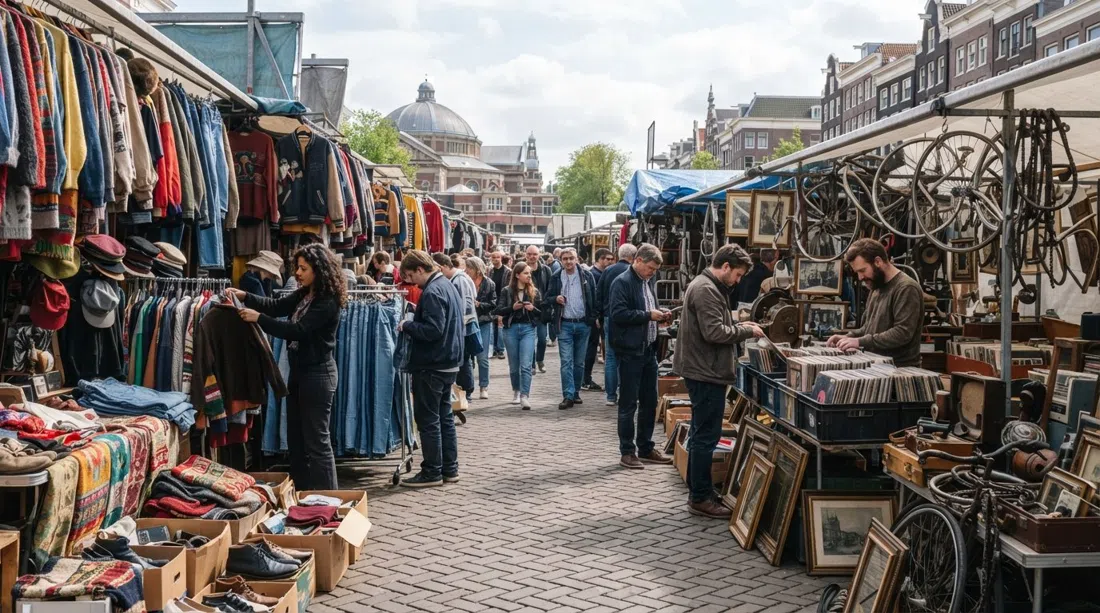
To the east, Waterlooplein is the oldest flea market in the Netherlands, with around 300 stalls of vintage clothes, records, bike parts and secondhand oddments, open Monday to Saturday. This is where the centre stops pretending to be polished and remembers it is still a place where people trade, mend and resell. If you want a real institution, the tiny Nine Streets, or De Negen Straatjes, technically straddle the border with the canal belt just west of the Dam and are the antidote to Kalverstraat’s crowds. They are not exactly bargain territory, but they do offer independent boutiques and a more humane pace.
The food gifts around the Dam — department-store food halls, cheese shops, stroopwafel shops — are fine in the way that gift shops are fine. The serious street markets, though, sit in neighbouring districts, so do not expect Centrum to do everything for you.
Where to stay in Amsterdam-Centrum
Staying in Centrum means everything is walkable and nothing is quiet. That is not a complaint, just a warning with better tailoring. The pockets matter. Around Dam Square, the Rokin and the Spui, you are central, well-connected and comparatively calmer — a good fit for first-timers who want to walk to the museums and canals without turning every outing into a tram project. The streets around Rembrandtplein and the Red Light District are cheaper for a reason: expect noise until the early hours from bars, clubs and stag groups, so only choose them if you plan to be out late yourself.
The Nieuwmarkt and the quieter lanes toward Waterlooplein give you an atmospheric, slightly more residential centre-of-town base. Even there, though, you are still in the middle of the city’s machinery. Prices skew high across the board for what you get: small rooms in old canal buildings, often up steep stairs with no lift. That is the Amsterdam tax, and Centrum charges it with interest.
For a short, sightseeing-led first visit, it works. For a longer or calmer stay, I would take the tram out and sleep somewhere with a little more elbow room. The live hotels render directly below.
Getting around
Centrum is small and made for walking. Most of the core sits within a 15-minute stroll of Dam Square, and much of it is car-free or bike-priority anyway. Still, you have to keep your wits about you. The tram tracks are not decorative, and the bike traffic is relentless. Cross cycle lanes as carefully as roads, because the city expects you to know the difference.
Amsterdam Centraal sits on the northern edge and does the heavy lifting. Trams 1, 2, 5, 13 and 17 leave from the west side, while 4, 9, 24 and 26 go from the east, fanning out across the city. Four of the five metro lines call here, and the north–south line 52 is the quick way under the centre. You can tap any contactless bank card or phone straight onto the reader when you board and again when you get off, or buy a GVB day pass if you prefer a paperless plan with fewer surprises.
The free GVB ferries to Amsterdam-Noord run around the clock from behind Centraal and take bikes, which is useful if you need to escape the centre without actually leaving the rhythm of the city. Schiphol Airport is about 15 to 20 minutes by direct train from Centraal, several an hour, which is one of those small logistical pleasures that makes Amsterdam feel more manageable than it looks on a map.
All of this is why Centrum remains the obvious base for a first, short visit: the Dam, the canals, the Oude Kerk, the palace, the markets, the drinking houses, the whole dense little theatre of old Amsterdam. It is crowded, yes. It is expensive, yes. It is also the place where the city still shows its oldest bones without asking you to take a bus to find them.