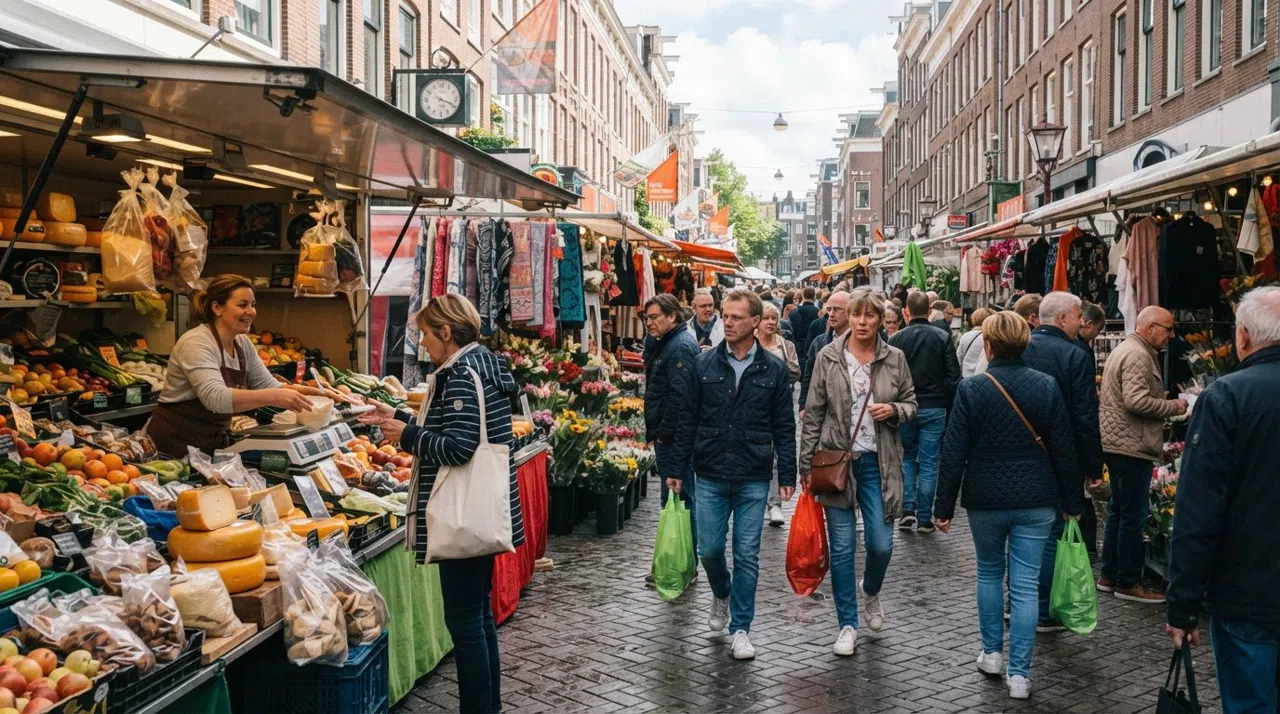
Two hundred and sixty stalls run the length of the Albert Cuypstraat, and on a dry morning the whole street seems to sizzle before you’ve even had coffee. The griddles are hot, the herring carts are already busy, and the terraces in De Pijp are doing that thing they do here — filling the second the sun clears the rooftops, as if someone has lifted a glass over the neighbourhood and given permission to begin. This is Amsterdam with its collar open: dense, loud, and permanently mid-meal, a grid of narrow streets that started as cheap workers’ housing and became the city’s best place to eat, drink and drift.
What De Pijp is known for
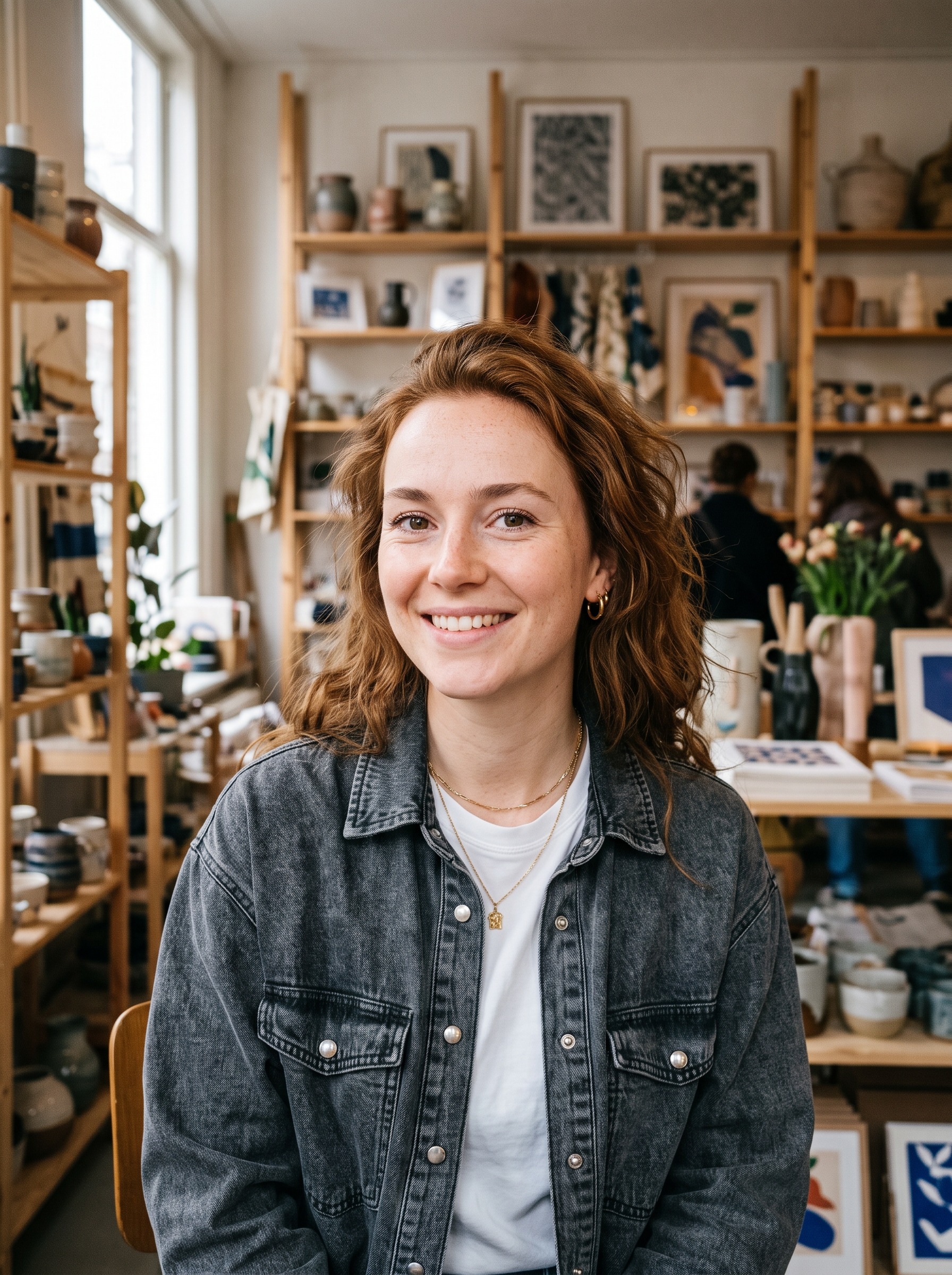
The first thing to understand about De Pijp is that it is not a neighbourhood that performs itself for visitors. It simply lives loudly. The streets were laid out fast and narrow in the 1870s to house Amsterdam’s working poor — which is where the name, “the Pipe,” is usually traced from — and the tight grid still dictates the mood. Everything happens on top of everything else: a Surinamese roti shop next to a natural-wine bar, a Turkish greengrocer next to a queue for brunch, a halal butcher a few doors down from a cevicheria. The soundtrack is market traders shouting prices over the Albert Cuyp, bicycle bells, terrace chairs scraping concrete, and Dutch, English, Sranan Tongo and Arabic all at once. It feels less like a district you visit than one you briefly inhabit.
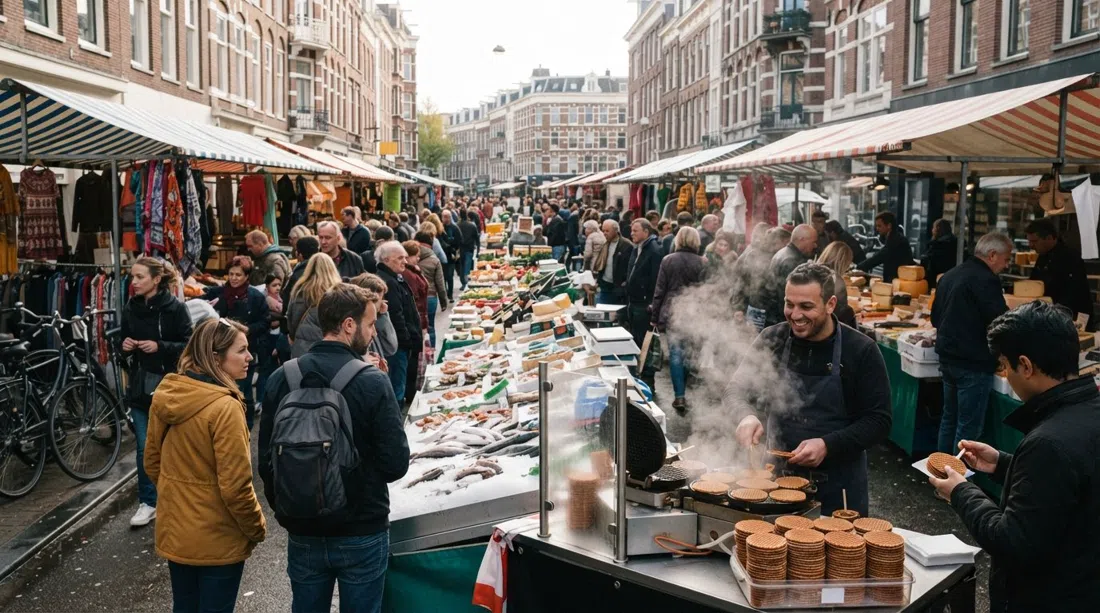
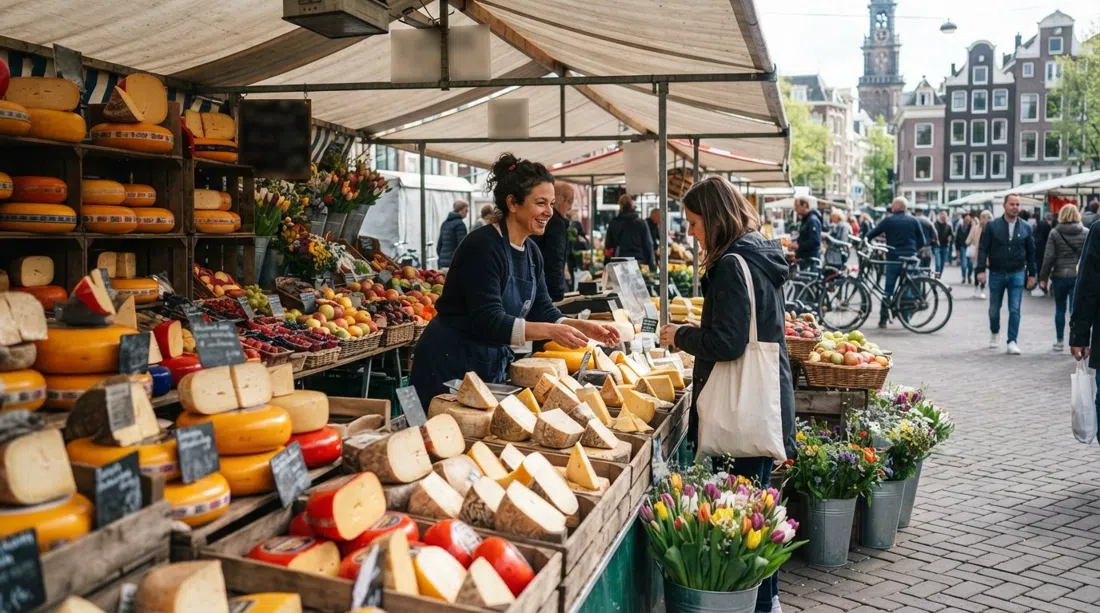
The market is the anchor, the magnet, the bit everyone photographs and then returns to because they’re hungry again. The Albert Cuyp Market runs between Ferdinand Bolstraat and Van Woustraat, roughly Monday to Saturday from 9:30 to 17:00, and it is the largest daily street market in the Netherlands. That scale matters, but so does the texture: fabric and phone cases, fresh fish and cheese, flowers and Dutch snacks, all moving past one another in a street that never seems to pause. The best stalls are the ones that make a small mess of your hands. Warm stroopwafels are pressed to order, the caramel inside going soft enough to burn your fingers if you’re impatient. Kibbeling comes in a paper cone, hot and salty and just a little too easy to finish before you’ve found a bench. Herring is eaten the local way, tail and all, or chopped with onion and pickle if you prefer to keep your dignity.
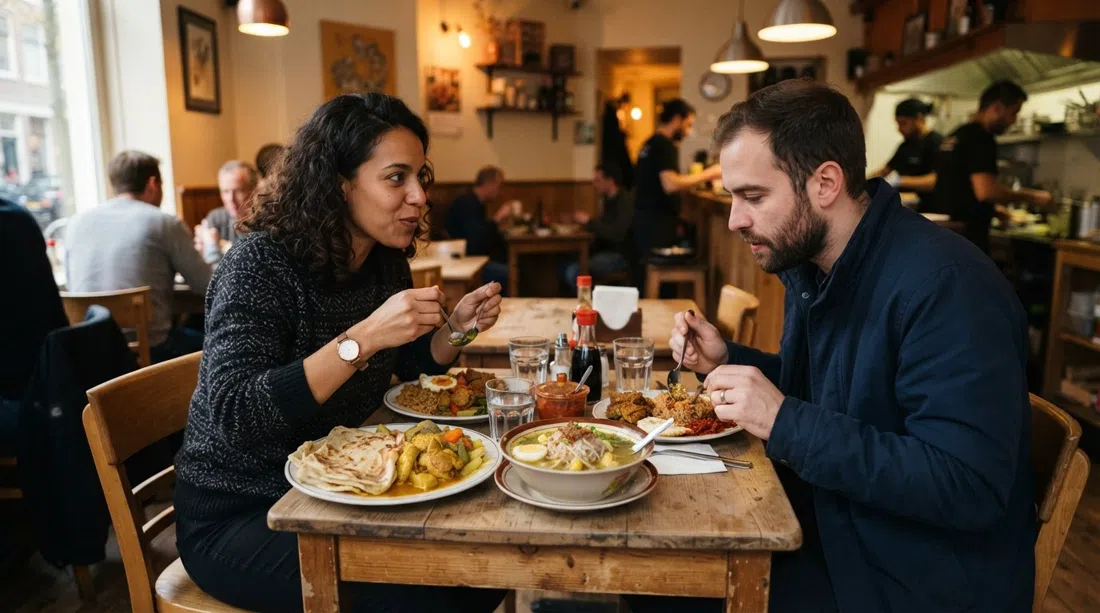
De Pijp’s other identity is multiculturalism, and you taste it rather than merely read about it. This has been Amsterdam’s immigrant quarter for generations, which is why the food is so broad and so good. The neighbourhood is often nicknamed the city’s Latin Quarter, thanks to the bohemian streak that arrived when students and creatives moved into the cheap rooms, but the better shorthand is simply that this is where Amsterdam comes to eat. Surinamese, Peruvian, Japanese, Italian, Turkish and Syrian kitchens sit within a few blocks of each other, and nobody seems to think that is remarkable anymore, which is perhaps the most Amsterdam thing about it.
The one conventional attraction is the Heineken Experience on Stadhouderskade, the old brewery turned self-guided tour, but even that feels more like a local institution than a polished monument. De Pijp’s real appeal is simpler: it is a neighbourhood built for appetite. You do not come here to stand in reverent silence. You come here to order something, sit down, and then order one more thing because the table next to you has convinced you.
Where to eat & drink
If De Pijp has a thesis, it is that you can eat very well without dressing up for it. The neighbourhood’s immigrant backbone is still alive in places like Warung Spang Makandra on Gerard Doustraat 39, a tiny family-run Javanese-Surinamese warung that has been open since 1978. The room seats barely twenty, which is part of the charm and part of the reality — you are close enough to hear other people deciding between roti, saoto soup and nasi. That is not a flaw; that is the point. The food tastes like it has survived a few decades of Amsterdam weather and still knows exactly what it is doing.
A few streets over, Fa. Pekelhaaring at Van Woustraat 127 has been one of De Pijp’s dependable fixtures for years, and it remains the sort of place that makes you forgive the city for charging too much elsewhere. It does honest, well-priced Italian in a vintage-and-design room with an open kitchen: handmade pasta, a famous white-chocolate cheesecake, and the sense that the whole setup helped define the Amsterdam look before everyone else tried to copy it. You can come here hungry and leave without feeling mugged, which in a city like this is almost romantic.
Then there is the newer, sharper De Pijp — the part that proves the neighbourhood never stopped evolving. NAZKA on Van Ostadestraat 352 turns out contemporary Peruvian with the confidence of a kitchen that knows its references: ceviches, tiraditos, anticuchos and pisco sours, all arriving with the kind of precision that makes you sit up a little straighter. Sjefietshe, Amsterdam’s first and only cevicheria, is a lively little bar where dorade ceviche and octopus come alongside serious drinking until late. It is one of those places that reminds you how much better a neighbourhood can be when it permits itself to be both dinner and a night out.
On the market street itself, De Japanner at Albert Cuypstraat 228 does izakaya small plates without the pretence. Think miso-glazed aubergine, squid fries and the easy buzz of a room that knows people are likely to wander in after shopping and stay longer than intended. Samuel’s plays the neighbourhood French brasserie, all day and into the evening, with steak tartare, omelettes and a dreamy bistro room that looks as though it was designed for people who want lunch to turn into dinner without any formal decision being made.
For brunch, the two names locals keep returning to are Little Collins on Eerste Sweelinckstraat 19F and CT Coffee & Coconuts on Ceintuurbaan 282. Little Collins is Melbourne-style and walk-in-only, which means there will probably be a queue and yes, that is annoying, but the caramelised banana brioche French toast is the sort of thing that makes you stop complaining. CT Coffee & Coconuts is a different mood entirely: an all-day brunch spot in a converted 1920s cinema over three plant-filled levels, famous as much for the room as for the coconut pancakes. It has the kind of scale that makes you feel as if brunch has become a civic event.
Going out
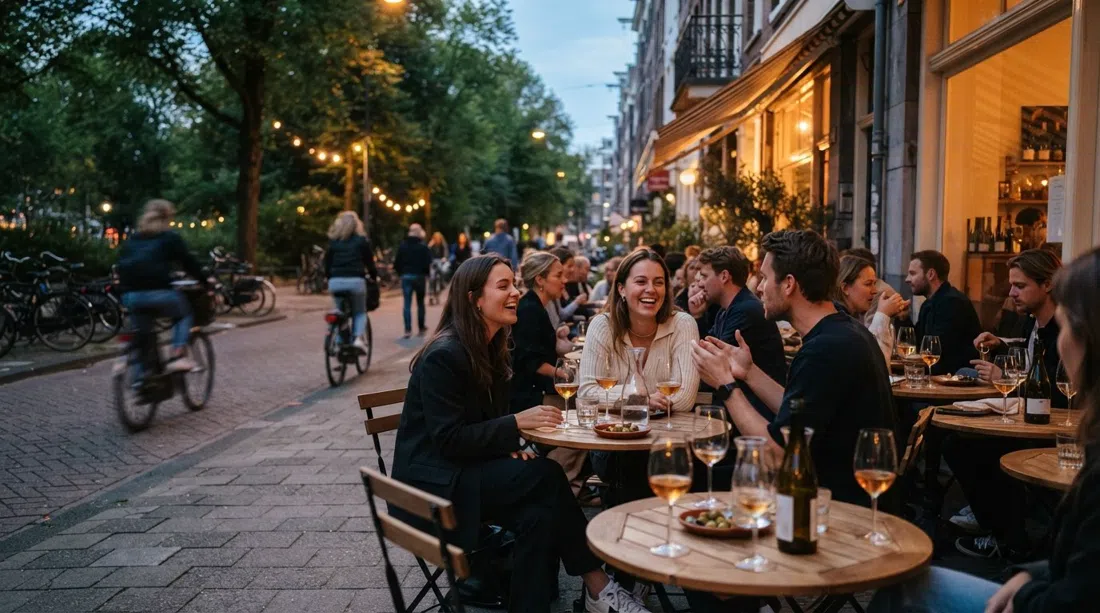
De Pijp doesn’t really do clubs, and frankly that is a blessing. The night here is terraces, wine, cocktails and brown cafes, which is a far more civilised way to lose track of time. The corner classic is Café Berkhout at Stadhouderskade 77, a proper brown cafe with dark wood and mirrors directly across from the Heineken Experience. It is the sort of place that works as a first drink, a last drink, or the drink you intended to make brief and then didn’t. It stays open past 1am, later on weekends, which feels about right for a neighbourhood that never fully stops humming.
For something more designed, Bar Mokum at Ferdinand Bolstraat 11 hides beneath a pancake spot and leans into speakeasy drama without becoming ridiculous about it. The drinks are built around Dutch spirits and Amsterdam-slang names, and the food is limited to olives and nuts, which is honestly enough if you’re here for a cocktail and not a second dinner. It has the right amount of secrecy: just enough to feel like you found it, not so much that you need a map and a torch.
Wine is where De Pijp really shines. Glouglou at Tweede van der Helststraat 3, near Sarphatipark, is the Netherlands’ first natural-wine bar, open since 2015. It pours low-intervention bottles and keeps a short seasonal plate menu, but the real reason to come is the hum that spills onto the pavement on warm nights. This is one of those places where the neighbourhood’s whole social logic becomes visible: people standing, people leaning, people deciding whether to order one more glass.
Boca’s at Sarphatipark 4 faces the park and does the share-plates-and-drinks thing with a terrace that catches the sunset in a way that feels almost unfair. Cannibale Royale on the Ruysdaelkade 149 brings the more boisterous end of the evening, with a long draught list, craft beer and a hip after-work crowd that looks as though it has only just escaped the office and is not sorry about it. Brouwerij Troost at Cornelis Troostplein 21 is a former monastery turned brewery and distillery, making its own beers plus gin and jenever, with a big terrace that fills fast. On a summer evening, the whole neighbourhood effectively becomes one long terrace, and nobody seems inclined to object.
Things to do / what to see
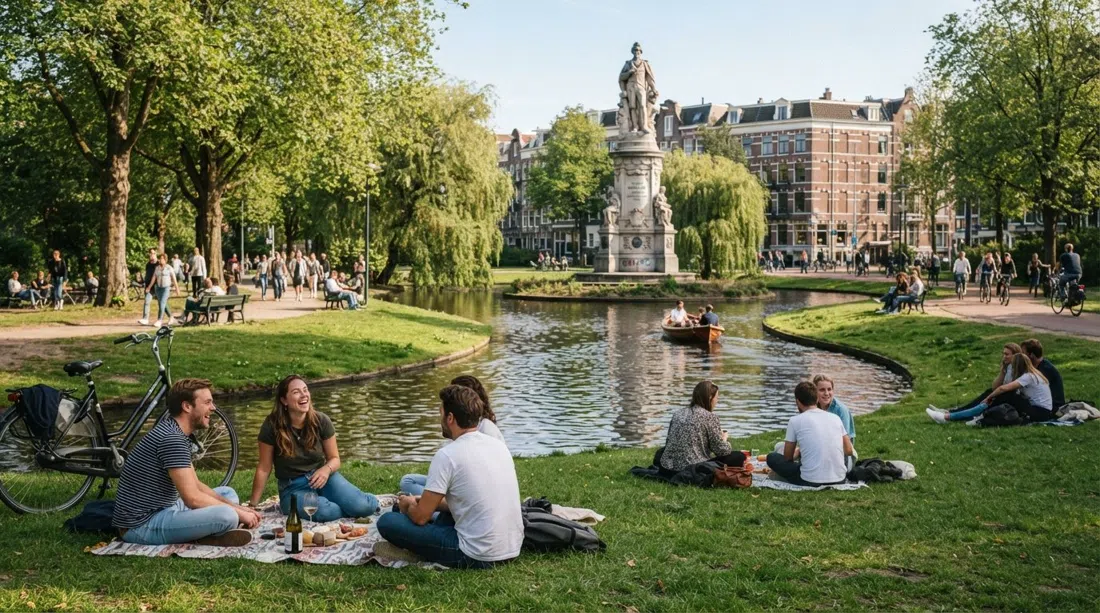
The market and the park are the two free pleasures, and they bookend most days here. Walk the Albert Cuyp Market end to end and graze as you go — a warm stroopwafel, a cone of kibbeling, a slice of cheese pressed into your hand by a trader who has seen this routine a thousand times and still means it. Then cut two streets south to Sarphatipark, De Pijp’s green heart. It is small, English-landscape in style, laid out around ponds and a monument to the 19th-century physician-urbanist Samuel Sarphati, and on any warm day it fills with picnics, sunbathers and post-brunch loungers. Buy your lunch on the market and eat it on the grass; that is the local move, and unlike many local moves in Amsterdam, it is actually affordable.
The one ticketed attraction is the Heineken Experience at Stadhouderskade 78, the brand’s original 19th-century brewery. It stopped brewing in 1988 and reopened as a self-guided tour in 1991, which means the building has had enough lives to justify its own ego. The visit runs about 90 minutes across four floors of brewing history and multimedia, ending at a tasting bar with a couple of beers included. You must be 18 or over to enter, and in high season it is worth booking a timed slot online rather than pretending spontaneity will save you from the queue.
Beyond that, the joy of De Pijp is unstructured. A slow café-crawl along Gerard Doustraat. An afternoon drifting between terraces. A market bag full of things you will definitely cook later and may in fact eat standing up over the sink. This is not a neighbourhood that rewards ticking boxes. It rewards wandering, pausing, and deciding one snack was a sensible lunch after all.
Shopping & markets
Shopping in De Pijp means, first and last, the Albert Cuyp Market. It is the single best browse in the neighbourhood, six days a week, and the reason so many people end up carrying a warm snack in one hand and flowers in the other. Come hungry and go for the food stalls: fresh stroopwafels off the griddle, kibbeling and herring from the fish carts, Dutch cheese by the wedge, plus fruit, olives and spices. If you are the kind of traveller who likes to snack your way through a district, this is your playground. If you are not, it will convert you.
The streets running off the market are where the interesting small retail sits. Van Woustraat and Ferdinand Bolstraat are the neighbourhood’s main shopping spines, mixing everyday shops with independent boutiques, and the side streets hide the delis that give De Pijp its multicultural larder — Turkish, Moroccan, Syrian and Surinamese grocers, halal butchers and spice sellers that have traded here for decades. This is not a designer-boutique district like the canal belt’s Nine Streets, and that is exactly why it works. The appeal is the mix: an artisanal deli next to a cheap-and-cheerful toko next to a market stall, all feeding directly into your next meal.
Pack light and buy edibles. That is the De Pijp souvenir. A wedge of cheese, a packet of spices, maybe something sweet that survives the journey home if you are disciplined, which I am not. The neighbourhood is at its best when it leaves you with groceries and the pleasant problem of deciding what to eat next.
Where to stay in De Pijp
De Pijp is one of the best-value central bases in Amsterdam for anyone who travels on their stomach. You trade canal-house grandeur for being seconds from the market and the terraces, which is a deal I would take again without hesitation. The sweet spot is the blocks around the Albert Cuyp Market and Sarphatipark: design hotels, apartments and B&Bs cluster here, and you wake up in the middle of the eating and drinking rather than a tram ride from it. That matters more than most hotel websites admit.
The northern edge along the Stadhouderskade, by the Heineken Experience, puts you closest to the Museumplein and the canal ring, handy if you want the museums on foot. It is also the busiest, noisiest strip, so ask for a room off the main road unless you enjoy hearing Amsterdam negotiate itself at 7am. Deeper into the grid, around Van Woustraat and the Ceintuurbaan, it turns more residential and quieter while staying walkable to everything. Expect steep Dutch stairs, compact rooms and a lively, occasionally loud street scene; light sleepers should choose carefully and pack earplugs.
The live hotels for De Pijp render directly below.
Getting around
De Pijp is compact and made for walking. You can cross it in fifteen minutes, and everything above is within an easy stroll of the Albert Cuyp Market. That is the nicest way to move here, because the neighbourhood is all about small discoveries between one food stop and the next. You are never far from another terrace, another deli, another queue for something warm and fried.
For getting in and out, the North/South metro line 52 stops at De Pijp station on Ferdinand Bolstraat and at Europaplein, linking you fast to Amsterdam Centraal and the south. Several trams also serve the district: lines 1, 7, 19 and 24 run along its edges, with stops right by the Heineken Experience on the Stadhouderskade, and tram 4 runs down Van Woustraat. Cycling is the true local mode, but first-timers should mind the tram tracks and the crush of bikes. The centre and the canal ring are a 10–15 minute walk or one metro stop north; the Museumplein — Rijksmuseum, Van Gogh Museum — is a short walk over the Stadhouderskade. For the airport, Schiphol is about 15–20 minutes by train to Centraal, then metro 52 south two stops, or a direct 20–25 minute taxi or ride-share.
De Pijp is lively and safe, with the usual big-city care around pickpockets in market crowds and awareness of bikes and tram tracks when crossing. It is not the Amsterdam of postcard canals and solemn museum days. It is the Amsterdam of lunch that turns into drinks, of groceries that become dinner, of a neighbourhood that knows exactly what it is and has no interest in dressing up for you. That, to me, is the charm.