Brouwersgracht is a kilometre of dark warehouse doors, hoisting beams and houseboats with herbs growing on the roof, and for an hour either side of nine in the morning it smells of coffee coming from three directions at once. The brewers and distillers who gave the canal its name are gone, bar one survivor a few streets south. What they left behind is a strip of water where almost every corner has something worth eating on it, from a four-euro herring to a tasting menu you book weeks out.
The canal that was named after a drink
Brouwersgracht means brewers' canal, and the warehouses along it once held the grain, hops and spirits that came in off the IJ. Nobody knocked them down, so they are apartments and houseboats now, with shutters painted the colour of dark chocolate. The canal runs east to west, from the sluice where it meets the Singel at one end to the old Western Islands at the other, crossing the Herengracht, Keizersgracht and Prinsengracht on the way. The Jordaan starts on its south bank. The eastern shopping street sits one block north.
That geography is what matters if you are here to eat. You are never more than three minutes from the water, the corners are where the cafés are, and the two best food streets in the district, Lindengracht and the Noordermarkt, are a two-minute walk off the south bank. There is no food hall here and nothing to buy a ticket for. It is an ordinary working canal with an unusually high density of good, mostly small, mostly old places on it.
Breakfast before the street fills up
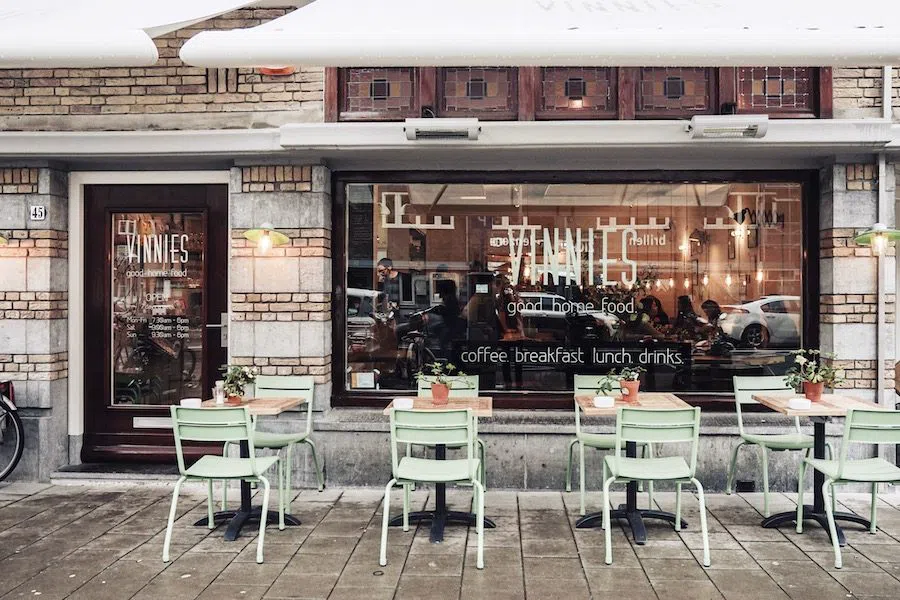
The canal is at its best early, and so is the food. VINNIES (eastern end, one block north of the water) opens at 7:30am on weekdays, before anything else nearby, and does honest organic breakfast and lunch plates at €10-17 with coffee around €4. It is small and it gets properly busy at weekend brunch, so walk in with two or three and phone ahead for six or more.
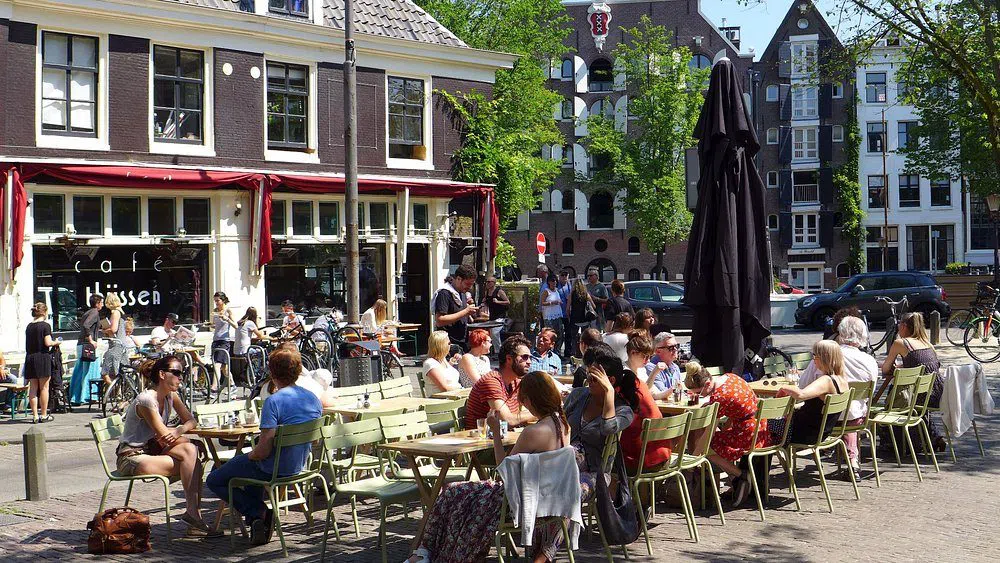
Café Thijssen (the Brouwersgracht and Lindengracht corner) opens at 8am and is the closest thing the area has to a living room. Coffee is about €3.50, a beer about €5, lunch plates run €10-16, and there is no door policy of any kind, with the pavement terrace absorbing walk-ins all day. Groups over six should reserve at weekends, but four people can simply arrive. It has been on that corner since 1990 and the room still works the way a grand café should: newspapers, dogs, a long bar, and food that is fine rather than fussy.
Petit Gâteau (eastern end, a block north) opens at 10:00 and closes at 18:00 every day, which makes it the reliable plug for the dead hours between lunch and dinner. Pastries are €4-7, lunch €10-15, and everything is made in front of you behind glass, which is rare on a street with this much footfall. The compact first-floor room seats a few comfortably and a large group badly.

Saturday morning belongs to the Noordermarkt
If you can only do one morning here, make it a Saturday. The Noordermarkt Boerenmarkt (Noordermarkt, a three-minute walk off the south bank) runs 09:00-15:00 on Saturdays only, costs nothing to wander, and sells the kind of cheese, bread, mushrooms and smoked fish that the restaurants around it are buying. Snacks run €3-8. After 11am it is shoulder-to-shoulder and no fun at all with a group; at 9am it is farmers and regulars.
Which is also the correct time for Winkel 43 (on the Noordermarkt itself), the city's most argued-over apple pie. A slice with cream is about €6.50, coffee €3.50, and it opens at 7am on market days. The terrace is first-come, first-served and the Saturday queue is real; indoor tables and group bookings can be reserved. Go at nine and you eat alongside the market rather than behind it. The pie is a tall, wet, cinnamon-heavy slab that needs the cream and does not need the argument.
Lunch you eat standing up
Small World Catering (Binnen Oranjestraat, at the west end) has been running since 1999 and is the best takeaway lunch within a minute of the canal's quiet end. Sandwiches are €8-12, coffee about €3.50, and there are only a few seats, so the move is to buy for everyone and eat sitting on a bollard by the water. It is closed on Mondays, so check that before you walk over.
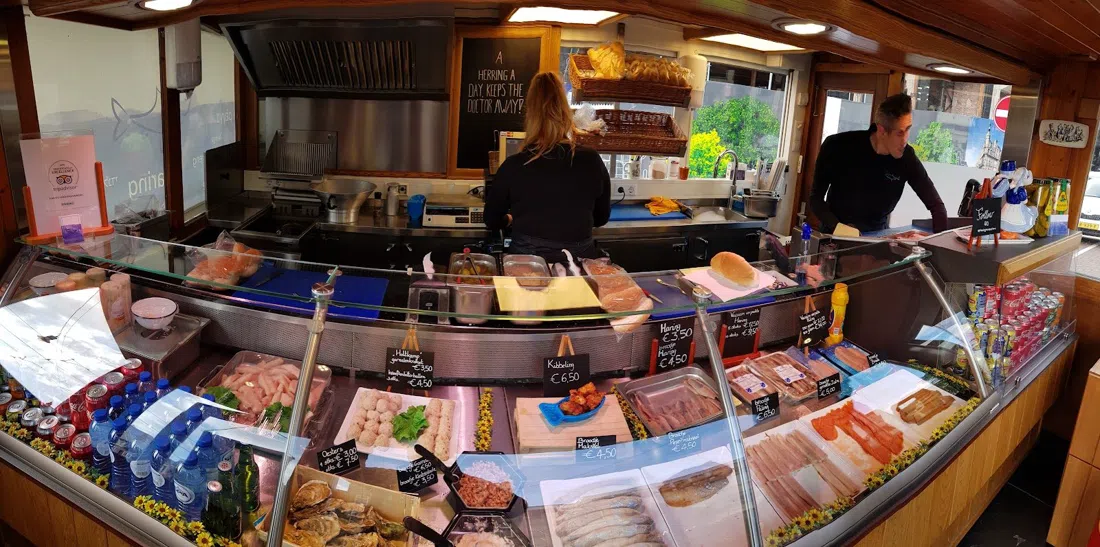
Stubbe's Haring (at the sluice where the canal meets the Singel, the eastern tip) is a stall, not a restaurant: a queue, a board, a man with a knife. Herring or a broodje haring is roughly €4-6, served the old way with onion and pickle, and it takes five minutes for a group of any size. Hours shift with the weather and the season, so treat it as a bonus on the route rather than the plan.
For something between a snack and a diversion, the Amsterdam Cheese Museum (Prinsengracht, ten minutes from the canal) is free to enter, open until 21:00-22:00 daily, and more shop than museum, which it says plainly. The tastings are free and you can get through twenty Dutch cheeses quickly; wheels to take home run €10-25. The basement display is small, so a group filters through rather than stands in it.
The brown cafés that hold the corners
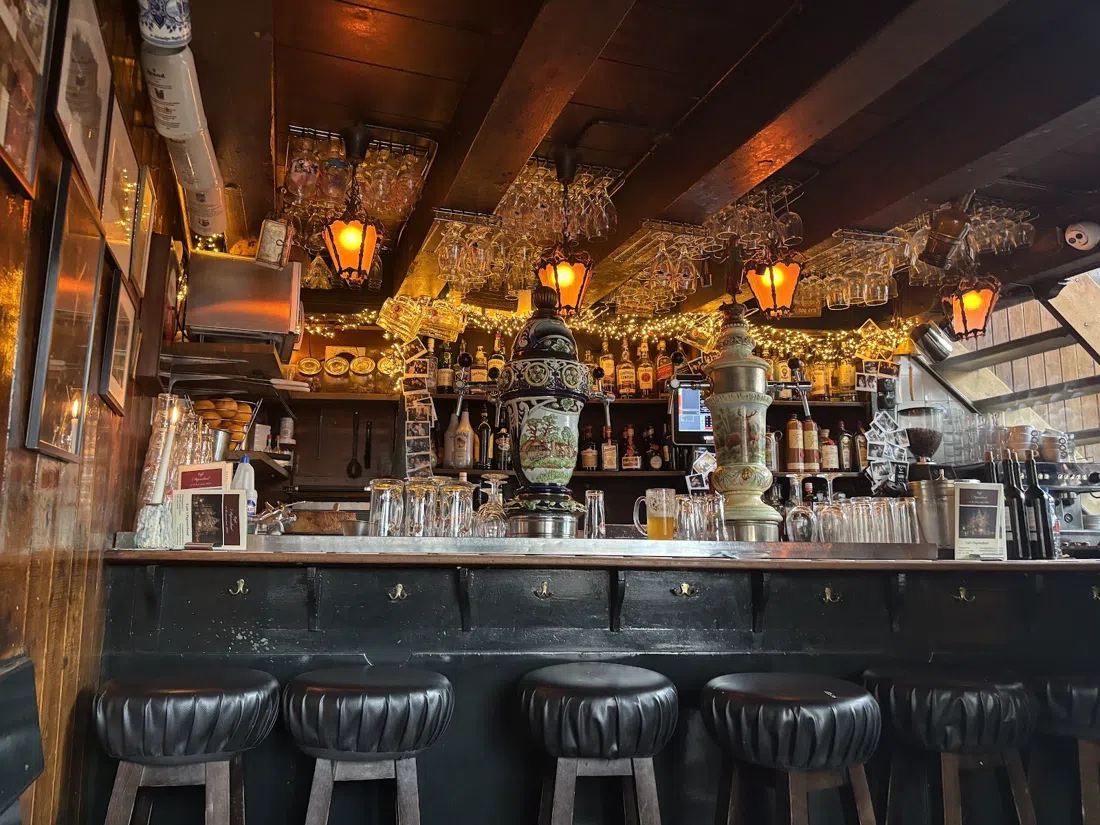
Café Papeneiland (the Prinsengracht and Brouwersgracht corner) is one of the oldest cafés in the city and the anchor of the best-known corner on the canal. Appeltaart with cream is about €6, a beer about €5, and the pie is made in-house, so this is the one to eat if you do not want to walk to the Noordermarkt. It is small and often full. Four to six is fine; larger groups should call. The handful of canal-side terrace seats cannot be booked by anyone, ever. Bill Clinton's certificate on the wall is the only concession to fame the place has made.
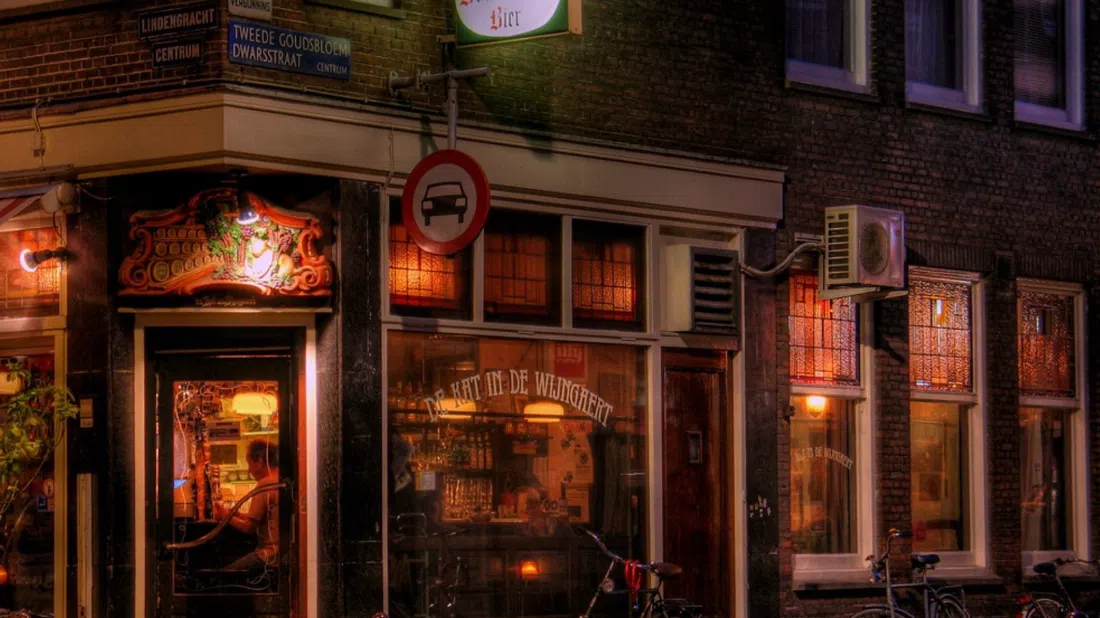
De Kat in de Wijngaert (Lindengracht, Jordaan) is where the area actually drinks. Beer is about €4, a broodje about €5, it opens between 9 and 10 in the morning and runs late at weekends, and there is no door policy and no pretension. Seats are limited, because it is a local bar rather than a function room, but a few of you will always get in.
Café Tabac (Brouwersgracht at the Prinsengracht) is the best late room in the area and nothing like the tourist bars two streets east. Beers are €5-6, cocktails €12-14, bar snacks €6-12. As of 2026 it is a reservations-only operation, so groups must book and walk-ups are no longer the deal. Standing space is thin on Friday and Saturday nights. Check the policy before you cross the bridge to it.
Jenever where the trade started
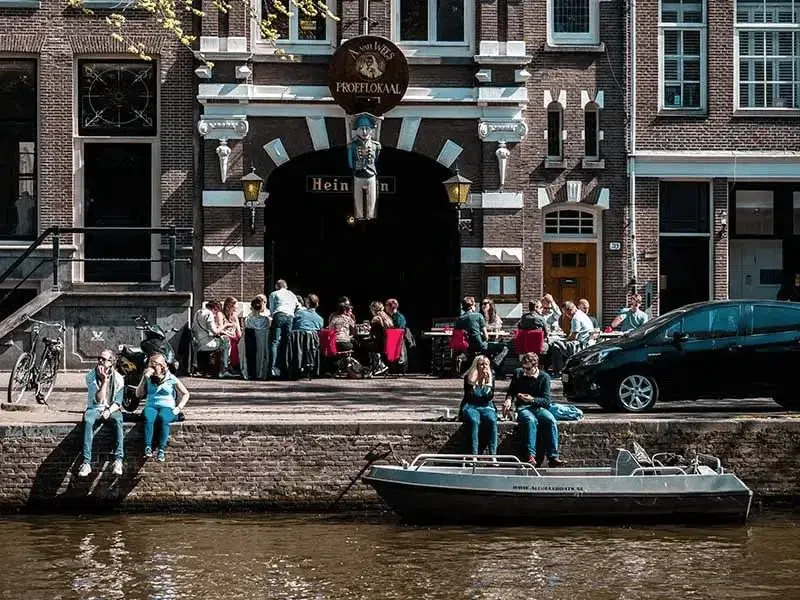
Proeflokaal A. van Wees / Distilleerderij De Ooievaar (Driehoekstraat, Jordaan) is the city's last surviving genever distillery, founded in 1782, and the most direct link you will find to the brewing and distilling that named the canal. The tasting room is open daily from 11:00 for walk-ins and a glass starts around €4. Young jenever is clean and grainy, oude jenever maltier and slower. Distillery tours and group tastings are a different thing entirely: arranged by email in advance, priced on request. Do not turn up with ten people expecting a tour.
Dinner from the canal-side to the tasting menu
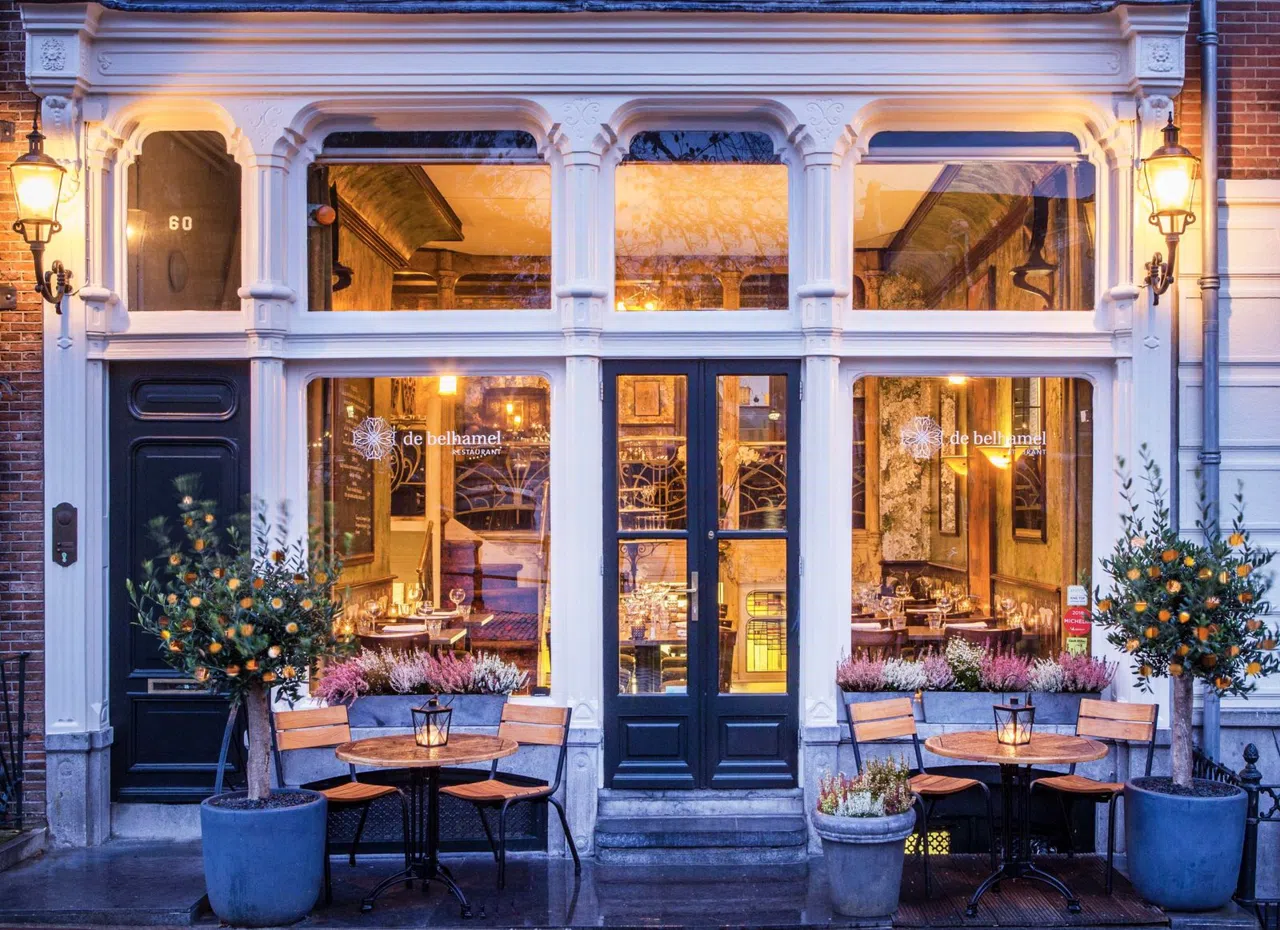
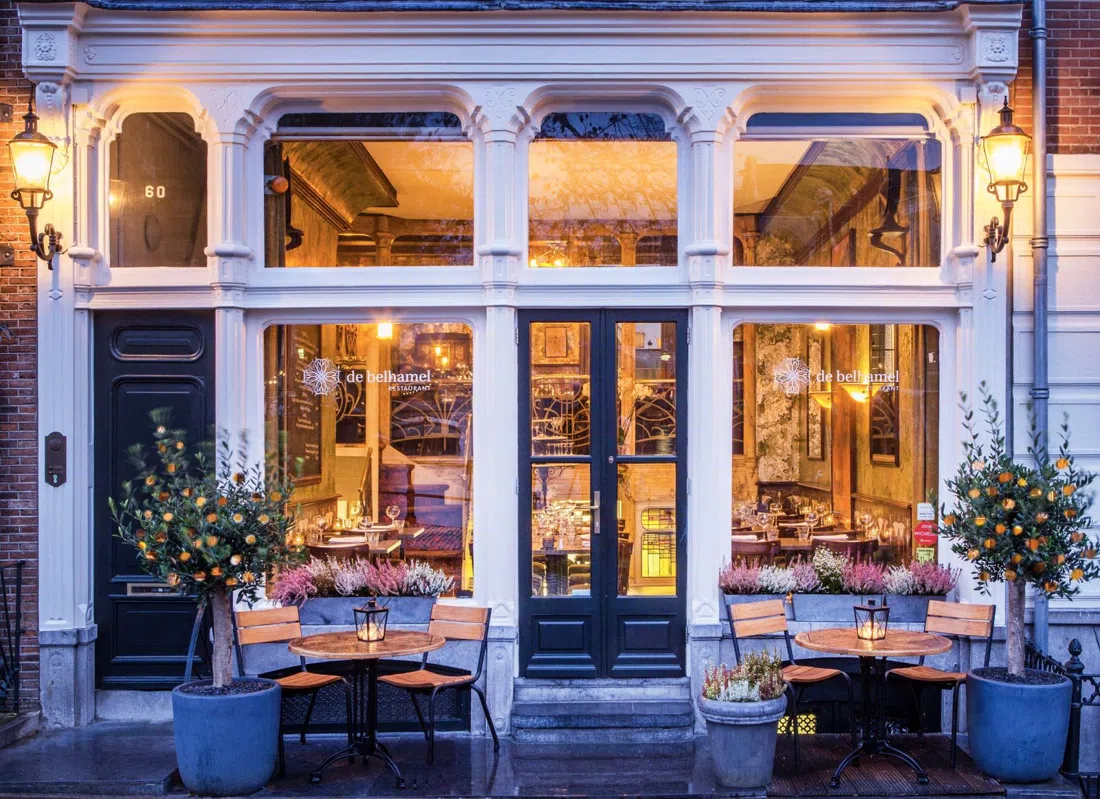
Restaurant De Belhamel (Brouwersgracht at the Herengracht corner) occupies the single most photographed spot on the canal and is, usefully, also a proper restaurant. Three courses run roughly €50-60. Book a terrace table for the two-canal view. Inside is pleasant, but you are paying for the corner and you should sit in it. The rooms upstairs and by the bar are narrow, so large parties need to phone well ahead rather than book online at the last minute.
Toscanini (Lindengracht, Jordaan) has been the district's serious Italian for over three decades: mains €25-35, a full dinner €55-70, a big room that handles a group properly. It books out days ahead and phone reservations are effectively mandatory. Daalder (Lindengracht, a few doors along) is the best cooking within walking distance of the canal. Dennis Huwaë's starred kitchen reopened on the street where it started in June 2026, with an Indonesian-inflected tasting menu at six courses. Covers are limited, so small groups only and reserve early; anything larger or private has to be arranged directly.
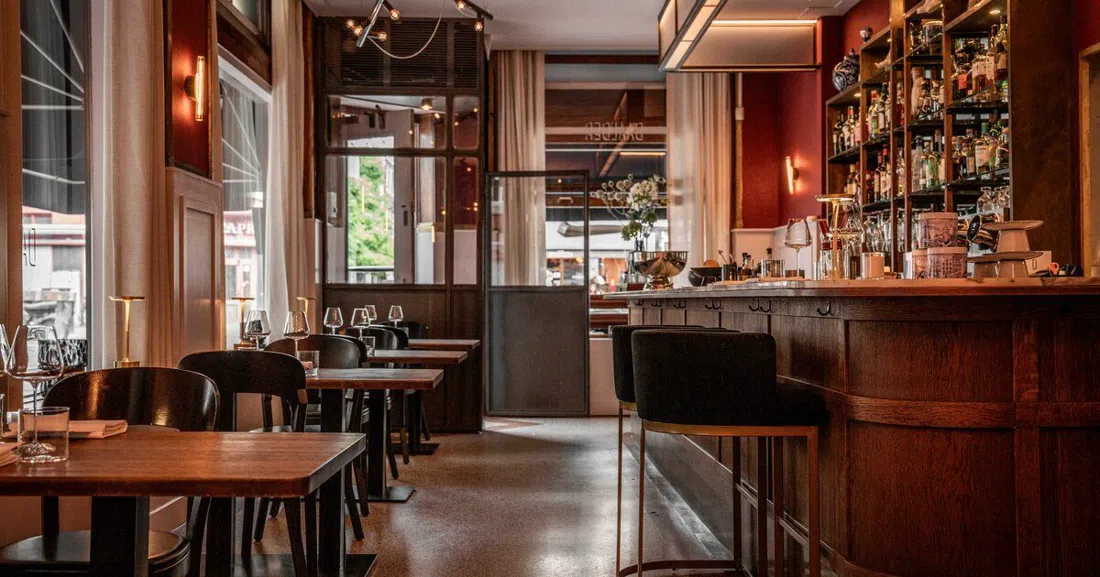
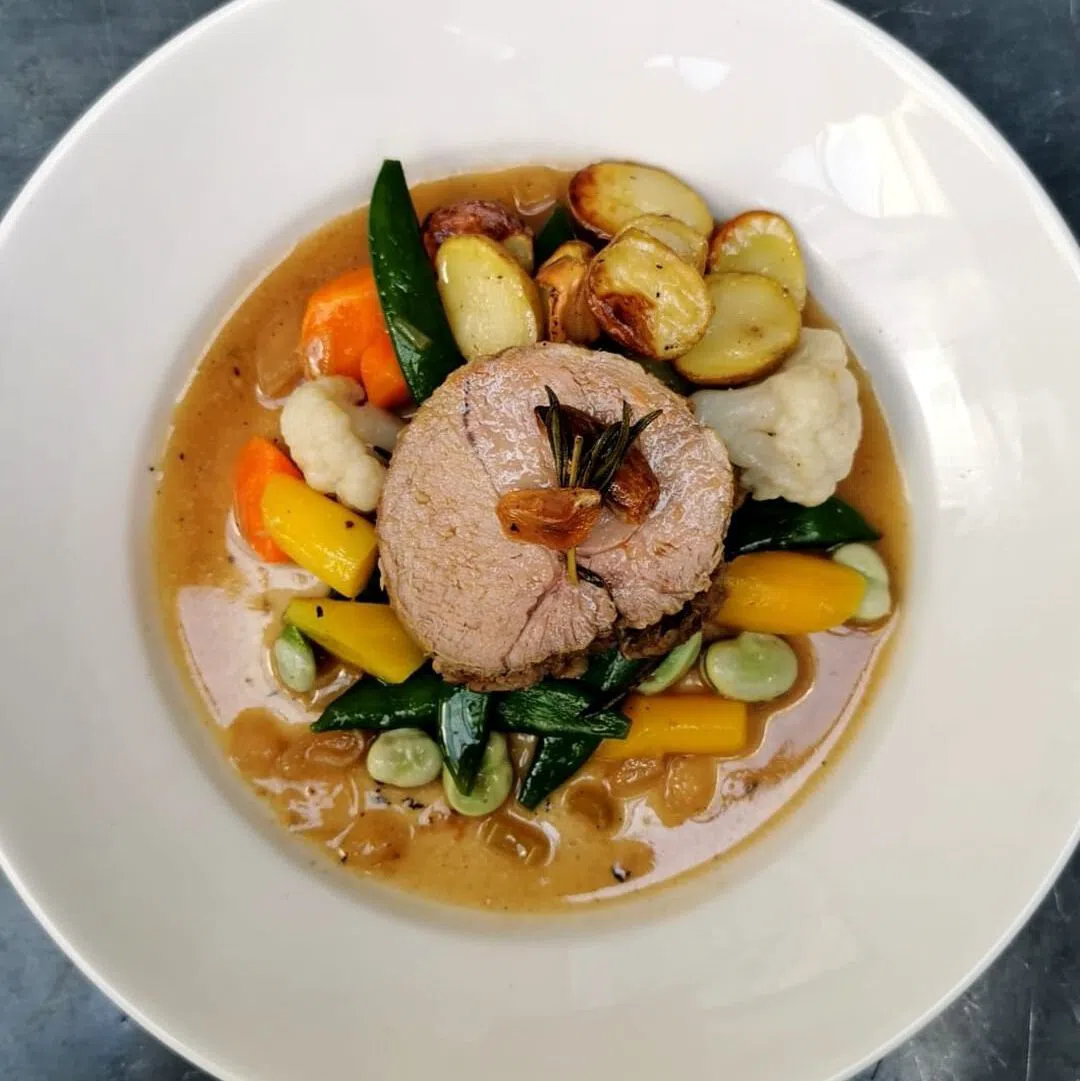
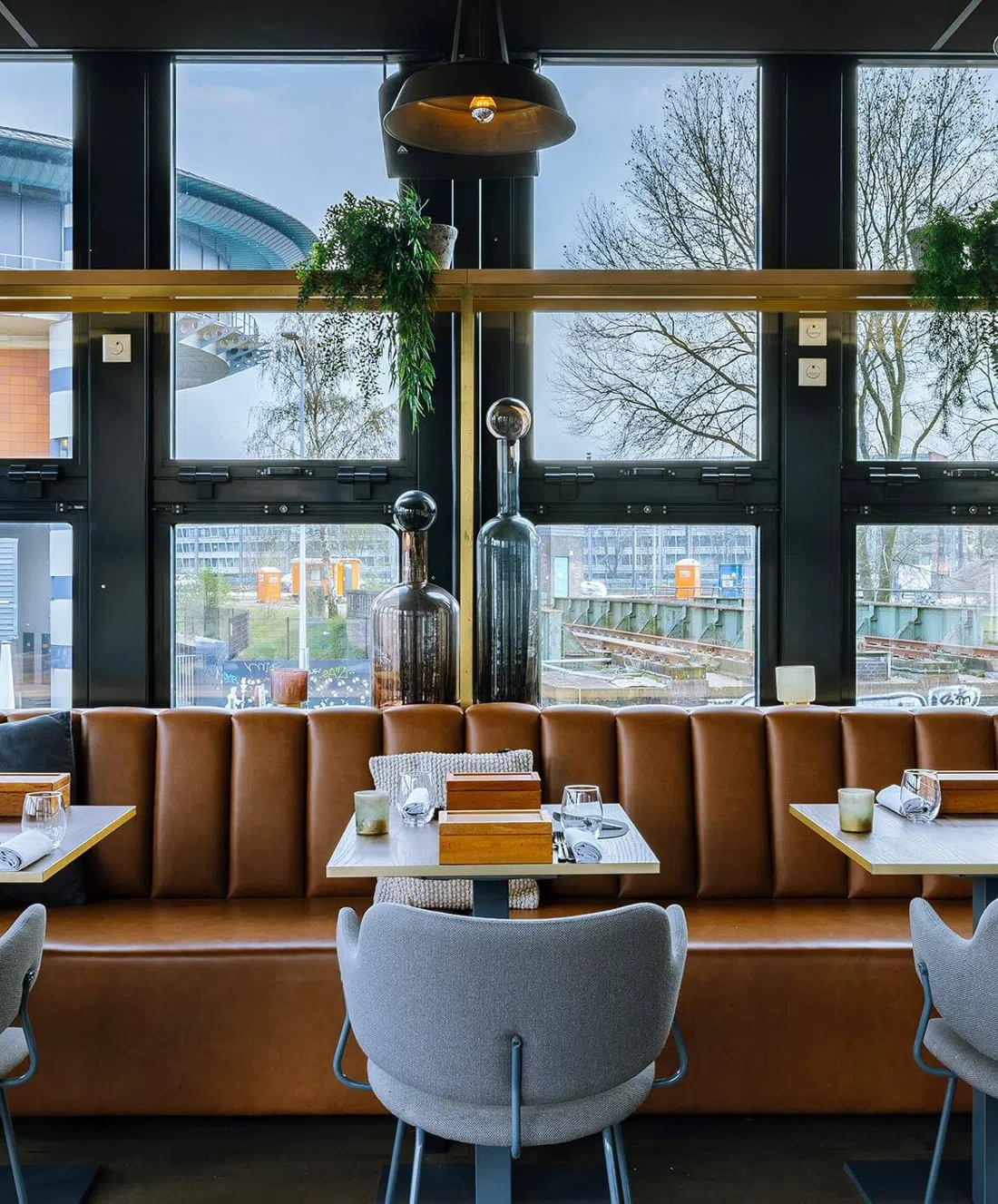
Wolf Atelier (Westerdok, ten minutes west) is the outlier: a Michelin Plate kitchen in the strangest room in the district, with tasting menus from four courses up to fifteen. It welcomes larger parties for business and family dinners, which almost nothing else here does. Dinner runs Tuesday to Saturday and lunch on Saturday only, and it is the one entry on this walk that needs booking weeks out.
How long the canal actually takes
End to end, Brouwersgracht is a fifteen-minute walk with no stops. Eaten properly, it is a half day: coffee at eight, the market at nine, pie at ten, a sandwich by the water at one, a jenever at four. Add dinner at either end of the price scale and you have a full day that never goes more than ten minutes off the water. If you only have two hours, do the eastern half (herring, Thijssen, Papeneiland) and skip the Westerdok.
Queues, doors and what needs booking
Nothing on this canal has a ticket or a door charge. The queues that exist are terrace queues, and they are predictable: Winkel 43 on a Saturday, the Noordermarkt after 11am, Thijssen's pavement tables in any sun. The doors work the opposite way round from what people expect. The old brown cafés will take you as you are, and the small modern rooms are the ones that turn you away. Book Toscanini, Daalder, Wolf Atelier and De Belhamel in advance; book Café Tabac at all, because 2026 made it reservations-only; and simply walk into Thijssen, De Kat in de Wijngaert, the van Wees tasting room, the cheese shop and the herring stall.
A guided food walk of this area exists and is attached to this page as a card rather than named in the text. It runs seven days a week and starts from around 128 USD per person. It buys you tastings, a route and someone answering questions; doing it yourself buys you the same food for the price of the food. Both work. The tour makes more sense if you are here for two days and want the district explained, less if you are happy to walk and order.
Best time to go
Saturday between 8am and 11am is the single best window of the week: the market is on, Winkel opens at 7, Thijssen at 8, and the light on the water at that hour is why the corner by De Belhamel is photographed as often as it is. Sunday mornings are quieter and slower but you lose the market entirely, since it is Saturdays only, 09:00-15:00. Weekday mornings from 7:30 are the calmest eating here gets.
Avoid the middle of Saturday afternoon unless crowds are the appeal. Evenings are the other good slot: the canal empties of day-trippers, the brown cafés fill with locals, and Tabac runs late. Seasonally, this walk is almost weatherproof, since most of it is indoors and the distances are short, but terrace season runs roughly April to October, and the canal-side seats at De Belhamel and Papeneiland are the whole reason to come in summer. In winter, go for the pie, the jenever and the fires instead, and expect it to be dark by half four.
Is it worth it
Yes, with one honest caveat: Brouwersgracht is a place to eat, not a sight to see. If you arrive expecting an attraction you will take four photographs and leave in twenty minutes wondering what the fuss was. If you arrive hungry, with three hours and a rough plan, it is the best-value eating strip in the centre of the city, because it is still mostly serving the people who live on it.
It suits couples and pairs best; almost every good room here is small. Groups work if you plan around that: Thijssen, Wolf Atelier, Toscanini and the market absorb numbers, the brown cafés do not. Early risers do enormously well here and late risers do not. Families are fine everywhere except the tasting-menu restaurants. Anyone who wants a big, loud, late night should look elsewhere in the city; this is a canal that goes to bed reasonably.
Practical notes
The canal is a ten-minute walk west of Centraal Station and no transport beats walking to it. Trams and buses stop along the eastern end; there is no useful parking and you should not attempt a car in the Jordaan. Bikes are easy, but the bridges and the bollards make locking up a small negotiation, so use the racks rather than the railings.
Cards are accepted almost everywhere, and a number of cafés and the market stalls are card-only. Dutch debit systems are universal; foreign credit cards are usually fine but not guaranteed in the smallest bars and stalls, so carry €20-30 in cash for the herring stall, the market and a round in a brown café. Tipping is not required, and rounding up or leaving five percent is normal for good service.
A full day eating well here runs about €35-50 a head if you stick to cafés, pie, sandwiches and beer; €90-120 with a canal-side dinner at De Belhamel or Toscanini; and considerably more if you take the tasting menu at Daalder or Wolf Atelier. Free is also possible: the market, the cheese tastings and the canal itself cost nothing.
Check hours before you set out. Small World is closed Mondays, Petit Gâteau shuts at 18:00, the market is Saturday only, Wolf Atelier serves dinner Tuesday to Saturday and lunch on Saturdays, and Stubbe's Haring keeps weather-dependent hours. Staying nearby makes the early start much easier; see the Amsterdam hotel search for rooms in the Jordaan and along the western canals, and the broader Amsterdam guide for how this corner fits with the rest of the city.