Amsterdam guide
Grachtengordel, Amsterdam: the canal belt where the city keeps its best face
A walk through Amsterdam’s concentric canal belt, from merchant mansions and museum houses to brown cafes, Nine Streets shopping and the quiet ritual of a nightcap by the water.

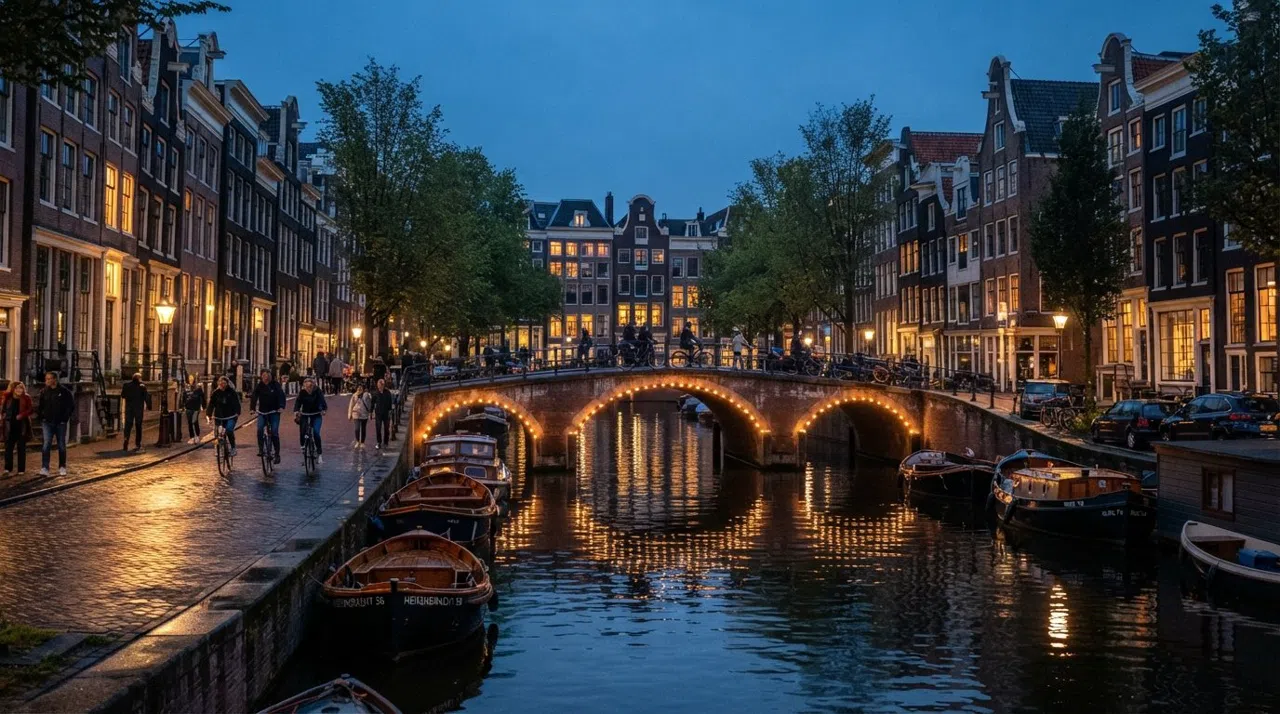
Three concentric canals — Herengracht, Keizersgracht and Prinsengracht — were dug through swamp in the 1600s for Amsterdam’s merchant class, and the fact that this drainage project now sells the city to the world is very on-brand for Amsterdam. Stand on a humpback bridge here and you get the whole argument in one frame: leaning gables, canal water, bicycles, and the faint sense that the city has been posing like this for 400 years and expects applause.
What the Grachtengordel is known for
The Grachtengordel is Amsterdam at its most composed. Water, brick and tilted 17th-century gables are laid out in three neat arcs west and south of the old centre, as if someone took a ruler to wealth and then let the canal boats do the rest. It reads calm rather than sleepy. Cyclists ring past on the cobbles, a boat throttles down under a bridge, someone wrestles a bakfiets full of groceries up a steep front step. By day, it feels genteel and unhurried; by night, the bridges light up and the reflections do most of the heavy lifting.
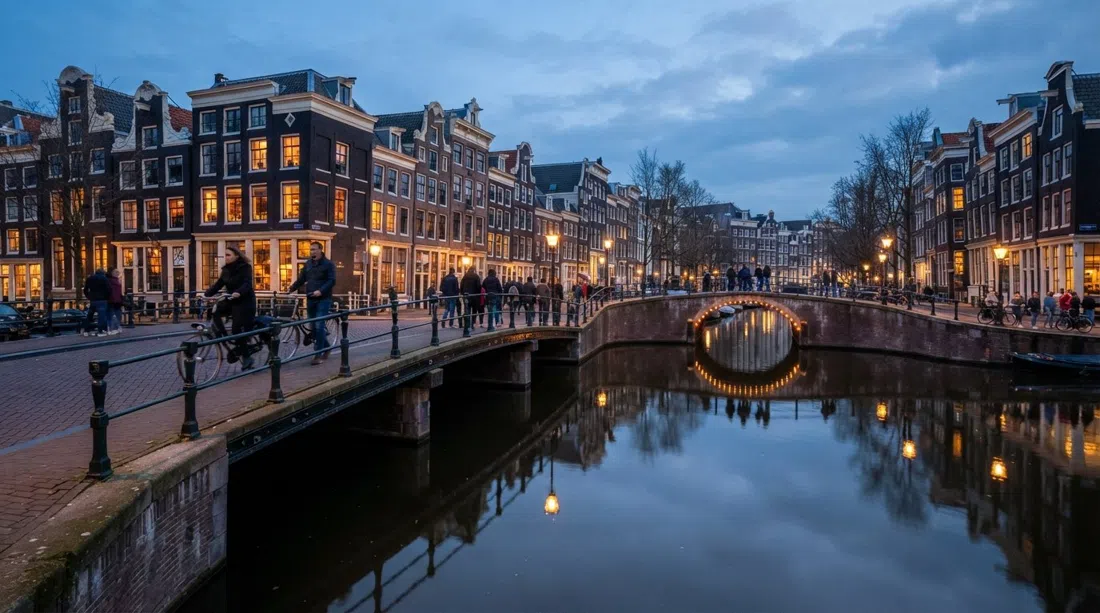
The belt is the reason the word Amsterdam conjures water. The grandest stretch is the Golden Bend on the Herengracht, where double-wide mansions with sculpted cornices and hidden coach houses still sit like they know exactly how much they’re worth. This is the smart address, the one that has always understood the value of a good façade and a discreet entrance. It’s elegant, moneyed and slightly self-aware, which is a very Dutch combination when you think about it.
Then there’s the heavier history, which the district never lets you forget. At Prinsengracht 263-267, the Anne Frank House pulls you out of postcard mode and into the kind of silence that changes the temperature of a walk. Nearby, the Westerkerk’s 1631 tower cuts through the skyline, and the pink-granite Homomonument sits beside it, a memorial with real weight rather than decorative sentiment. This part of Amsterdam packs a lot into a small compass: canal-house museums, big-name sights, and the sense that you can spend a whole day here without ever leaving the water’s edge.
Where to eat & drink
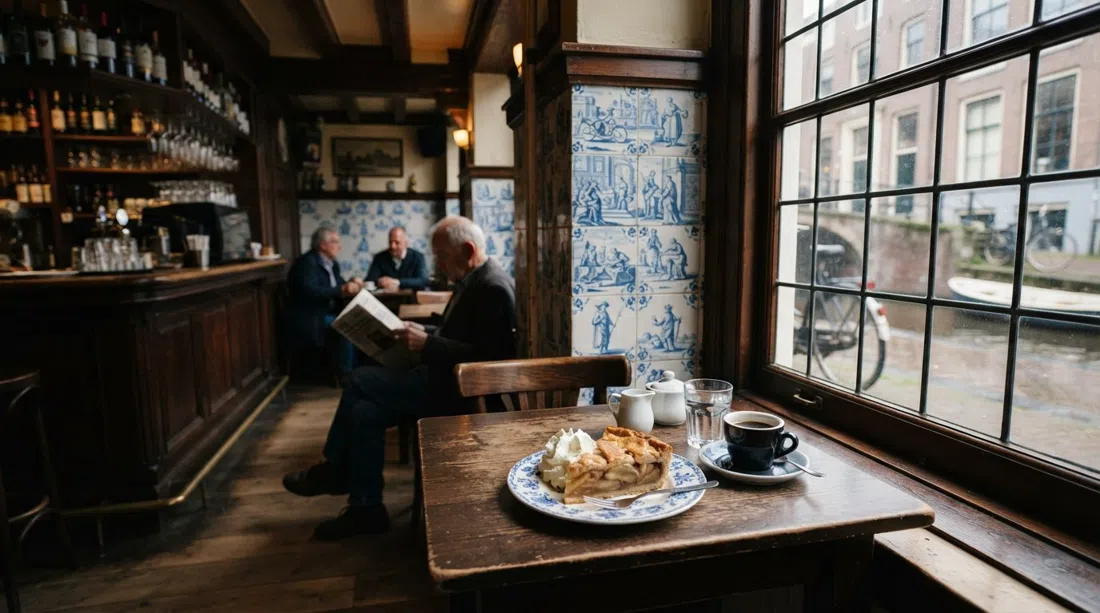
If you want the canal belt in edible form, start old-school. Cafe ’t Papeneiland, on the corner where the Prinsengracht meets the Brouwersgracht since 1642, is one of those brown cafes that makes you lower your voice the second you step inside. Dark wood, Delft tiles, and an apple pie so famous Bill Clinton reportedly ordered a whole one to take home. That’s not exactly a modest endorsement, but the place doesn’t need modesty. It has the grain of age in every surface and the sort of pie that makes you briefly reconsider your relationship with dessert.
A short walk south, Restaurant Cafe Van Puffelen spreads itself across two monumental canal houses at Prinsengracht 375-377, with a canalside terrace and an international menu it has been serving for more than 40 years. This is the belt doing what it does best: offering a polished, central place to sit by the water without pretending it’s anything other than a lovely, expensive convenience. On a sunny day, it’s the sort of terrace where lunch quietly becomes late afternoon.
For something more considered, Jansz at Reestraat 8 inside the Pulitzer hotel does refined modern-Dutch cooking in the heart of the Nine Streets. Think Dutch yellowtail ceviche, locally sourced plates, grey-blue wainscoting and bentwood chairs; the room is as composed as the menu. It’s one of those places where the linen, the lighting and the cutlery all seem to have agreed on the same mood. If you’re paying canal-house prices, at least this is the sort of room where the bill looks like it belongs there.
Tempo Doeloe on Utrechtsestraat 75 goes in the opposite direction, and thank goodness for that. This tiny, reservation-only Indonesian restaurant lays out one of Amsterdam’s best rijsttafels across three ascending spice levels, and you ring the doorbell to get in. That alone tells you the place has no interest in being casual for the sake of it. It is the sort of meal you book, plan for and then remember when you’re back home eating something beige.
Bluespoon, in the Andaz hotel on the Prinsengracht, turns out a seasonal international menu in a Marcel Wanders interior. It’s a very Amsterdam move to put serious design around a meal and expect the room to carry half the mood. For sugar, Chocolaterie Pompadour at Huidenstraat 12 has been a tearoom-patisserie in the Nine Streets for decades, and it remains the sort of place where bonbons feel less like a treat than a small civic duty.
Going out
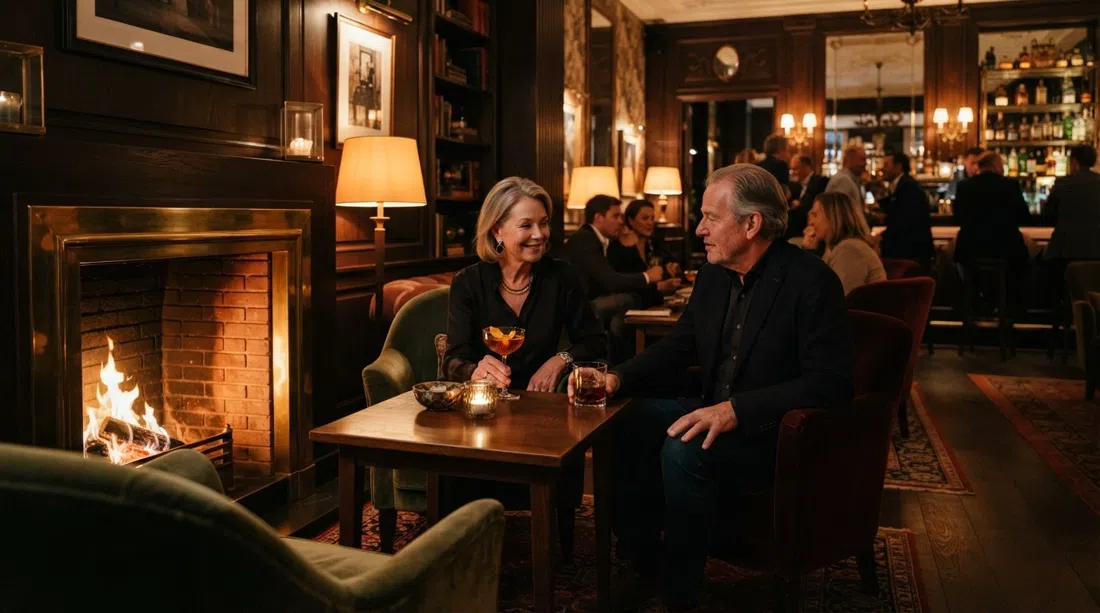
Nights in the Grachtengordel are more nightcap than nightclub, which is exactly why they work. The loud stuff lives elsewhere, over at Leidseplein and Rembrandtplein, while the canal belt keeps things measured. Pulitzer’s Bar at Keizersgracht 234 is the grande dame here: an Art Deco cocktail room with fireside armchairs, a menu that walks you through cocktail history, and a house rule that keeps parties to four so the place never tips into chaos. It feels like the sort of room where people still know how to sit up straight.
If you want your drink with a little theatre, Door 74 on the Reguliersdwarsstraat is the city’s pioneering speakeasy, hidden behind an unmarked door and run on a reservation-by-message system that keeps it hushed and small. There’s something pleasingly stubborn about a bar that makes you work for entry and then rewards you by not shouting at you once you’re inside.
For the old Amsterdam ritual, head to Proeflokaal A. van Wees on the Herengracht. This is where genever and liqueur are poured the traditional way, and if you do it properly, you take the first sip hands behind your back, leaning in to the brim-full tulip glass. It sounds ceremonial because it is ceremonial. The point is not speed; it’s attention. In a district this polished, a little old-fashioned gravity is refreshing.
Things to do / what to see
The Anne Frank House is the one everyone thinks they can wing, and the one everyone learns cannot be winged. Tickets are sold exclusively online at annefrank.org, released in weekly batches every Tuesday at 10:00 Amsterdam time for dates exactly six weeks out, and in high season they can disappear within hours. There are no door sales and no legitimate resellers, which is Amsterdam’s way of saying: plan ahead or miss out. The Secret Annexe at Prinsengracht 263-267 is not a place for improvisation, and the visit lands harder when you’ve done the admin properly.
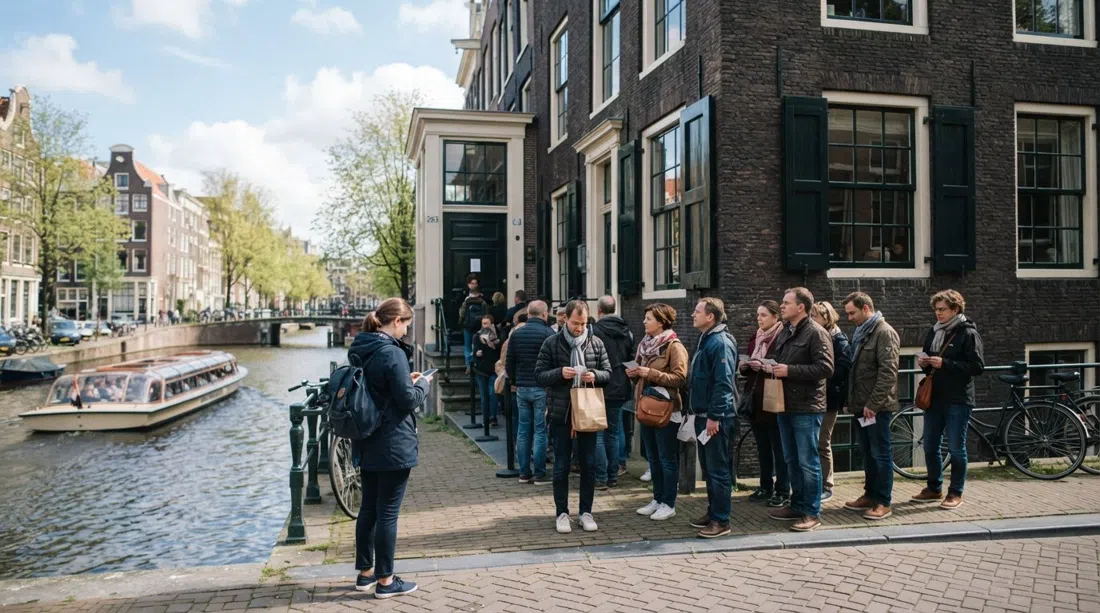
The canal-house museums are where the district stops being scenery and starts being lived-in history. Museum Van Loon on the Keizersgracht preserves an intact patrician canal-house home with its garden and coach house, while Museum Willet-Holthuysen at Herengracht 605 gives you a 17th-century mansion with a ballroom and box garden. These places are a reminder that the canal belt wasn’t built as a backdrop; it was built as a way of life, with formal rooms and private gardens tucked behind the water-facing front.
Foam on the Keizersgracht keeps the photography sharp and contemporary, a useful counterweight to all the chandeliers and carved wood. Nearby, the Museum of the Canals, or Het Grachtenhuis, explains how the whole belt was engineered from swamp to showpiece. It’s one thing to admire the result; it’s another to understand the scale of the planning that made it possible. And if you want the best rooftop view over the gables, climb the Westerkerk tower. If you don’t want to climb, just walk the canals after dark. The bridges are outlined in lights, the water doubles everything, and the whole district starts looking like it knows it’s being admired.
{{ATTRACTIONS}}
Shopping
The best shopping in the belt lives in De Negen Straatjes, the Nine Streets: a grid of short lanes bridging the Singel, Herengracht, Keizersgracht and Prinsengracht. Reestraat, Hartenstraat, Berenstraat, Wolvenstraat, Runstraat and Huidenstraat are packed with one-off boutiques, vintage dealers, perfumeries, record shops and small galleries, and mercifully free of the big chains you’d rather not be ambushed by on a day out. This is browse-and-graze territory, the kind of area where you go in for one thing and emerge with a tote bag, a coffee and a mild sense of financial regret.
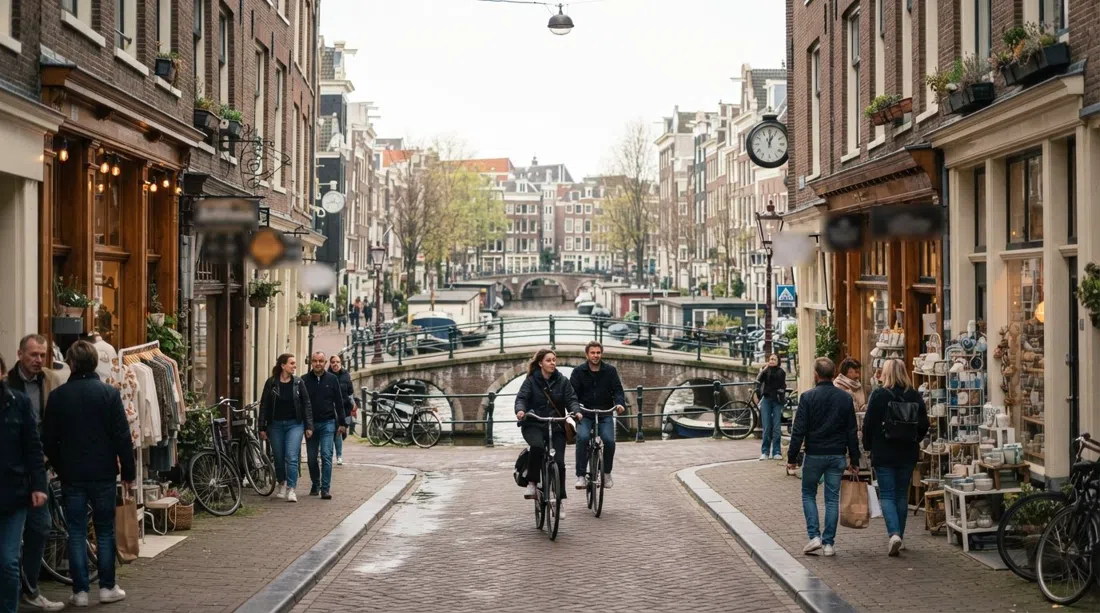
The specialists are the fun part. De Kaaskamer on the Runstraat is a temple to Dutch and European cheese, with wheels stacked to the ceiling and tastings on offer. It is gloriously unembarrassed about its own obsession. Denham, also on the Runstraat, flies the flag for Amsterdam denim, and Tenue de Nimes built a cult following on selvedge jeans and a strong coffee corner. Screaming Beans on the Hartenstraat has been roasting since 2007 and pulls one of the best flat whites in the quarter, which is handy when your feet have started filing complaints. Circle back to Chocolaterie Pompadour on the Huidenstraat for bonbons to take home, if you can manage not to eat them on the street.
Where to stay in the Grachtengordel
This is prime, and priced like it. If you want the full canal-house fantasy, base yourself on the Herengracht or Keizersgracht near the Nine Streets, where you’ll be steps from boutiques, museums and a dozen bridges. The Pulitzer, spread across a run of connected canal houses, and the Waldorf Astoria sit at the top end of the market, which is a polite way of saying your view has a premium attached to it. The Prinsengracht end near the Westerkerk and Anne Frank House is atmospheric but busiest by day; light sleepers should ask for a room off the water. Farther south, toward Utrechtsestraat and the Amstel, things feel a touch calmer and more neighbourhood-like while staying central.
Expect steep Dutch staircases, small footprints and view premiums almost everywhere. A canal outlook is the luxury you pay for here, and the belt knows it. It is not the place to hunt for bargains; it is the place to decide whether you want to wake up to brick, water and a bridge outside your window.
{{HOTELS}}
Getting around
The canal belt is made for walking. The whole ring is roughly a 45-minute stroll end to end, and most sights sit within a 20-30 minute walk of each other. That matters, because the real pleasure here is not just ticking off sights but drifting between them: from a museum house to a cheese shop, from a bridge to a brown cafe, from one waterline to the next.
For longer hops, tram 2 is the most useful line for canal sightseeing, running from Centraal Station through Dam, Koningsplein, Keizersgracht, Prinsengracht and Leidseplein. Trams 13 and 17 stop at Westermarkt, right by the Anne Frank House. From Amsterdam Centraal it’s about a 10-15 minute walk or a few tram stops to the northern canals, and Schiphol is 15-20 minutes by direct train to Centraal, then a short tram or walk into the belt. Cycling is idyllic in theory, but the cobbles, tram tracks and tight bridges are unforgiving for first-timers, so walk until you trust your balance.
The Grachtengordel is one of the calmest, most genteel parts of central Amsterdam after dark, and the lit bridges make for one of the city’s best evening walks. Keep the usual awareness for pickpockets in the tourist crush around Anne Frank House, and mind cyclists and tram tracks when crossing. Otherwise, the district does what it has always done: it carries itself beautifully, and lets you enjoy the view.
FAQs
Is the Grachtengordel a good area to stay in Amsterdam?
Yes — it’s one of the most central and scenic bases in the city, with the canals, the Nine Streets and major museums within walking distance. The trade-off is price, and around the Anne Frank House the daytime crowds can be heavy. If you want atmosphere and a canal view, it’s hard to beat.
How do I get Anne Frank House tickets?
Only online at annefrank.org. Tickets are released in weekly batches every Tuesday at 10:00 Amsterdam time for dates exactly six weeks later, with timed 15-minute entry slots. There are no door sales and no legitimate third-party resellers, and in high season they can sell out within hours, so book as soon as your date opens.
Is the Grachtengordel safe at night?
Yes. The canal belt is one of the calmer, more genteel parts of central Amsterdam after dark, and the lit bridges make for a lovely evening walk. Use normal city caution for pickpockets in busy spots and watch the cyclists and tram tracks, but the loud nightlife is elsewhere.
What is the best way to get around the Grachtengordel?
Walk first — the whole canal ring is roughly a 45-minute stroll end to end, and most sights are close together. For longer hops, tram 2 is the most useful line, and trams 13 and 17 serve Westermarkt near the Anne Frank House.