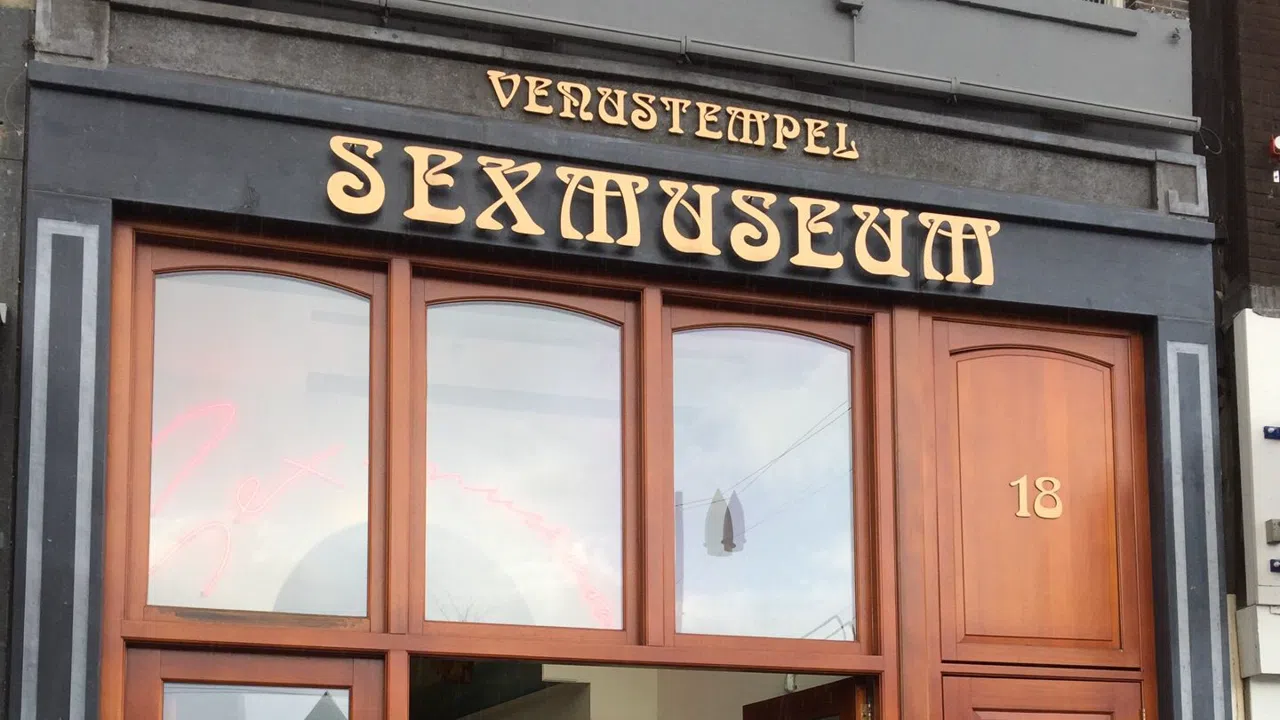

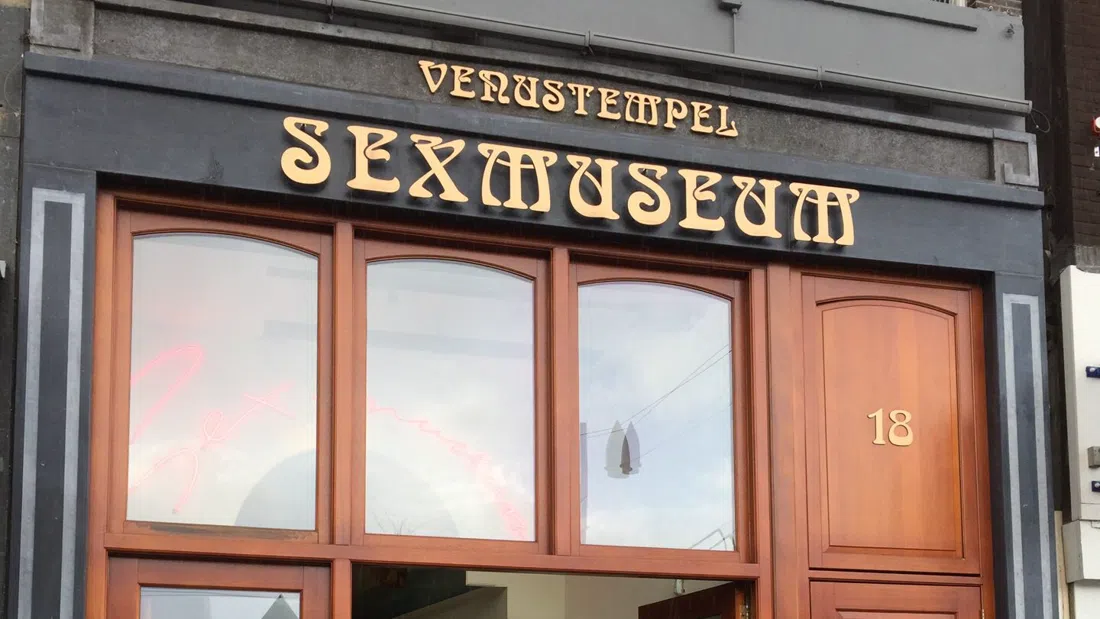
The Venustempel occupies a thin building on Damrak, a few minutes' walk downhill from Centraal Station, and on a wet October afternoon it is the warmest ten euros on the street. The rooms are small, the staircase is narrow enough that people stop at the turn to let others pass, and the whole visit is over in about three-quarters of an hour. It is not shocking, whatever the doorway suggests. It is a museum about how people have been silly, furtive and occasionally beautiful about sex for a few hundred years, and it knows exactly what it is.
What you actually see inside
Sexmuseum Amsterdam Venustempel (Damrak 18, Old Centre) has been open since 1985, which makes it the oldest museum of its kind anywhere, and the collection reflects that head start. The rooms run roughly chronologically: erotic prints and figurines from the older end, then the photographic era (the postcards, the smuggled pictures, the mail-order catalogues), then the twentieth century, when the whole business got loud and commercial. Glass cases do most of the work. There are a few animatronic set-pieces that exist purely to make the person in front of you jump, and they still work.
The tone is what carries it. This is a funny-historical museum, not a confrontational one. Most of what you look at is a century or more old, and that distance makes the material feel closer to social history than to anything titillating. People come out of it talking about Victorian prudishness and postal censorship more than about the exhibits themselves. If you arrive expecting to be scandalised you will be mildly disappointed, which is the correct outcome.
A fair warning about the building: it is an old Damrak house, so the layout is vertical and awkward. Rooms lead into rooms. The staircase between floors is steep and narrow, with a turn partway up where two people cannot comfortably pass. There is no lift and no step-free route, so anyone who cannot manage stairs should not plan on getting past the ground floor.
How long it takes and how the rooms flow
Budget 45 minutes. An unhurried reader who stops at every caption might stretch it to an hour; people who prefer looking to reading will be back on Damrak in half an hour. Giving it more time does not get you more out of it. It works as something slotted between two other things.
That short runtime is why it suits an afternoon opener rather than a main event. Museum, coffee, something older and quieter, a beer. Three hours, all of it inside a ten-minute walking radius, all of it doable in the rain.
Groups need a plan. There are no timed slots and no group route, you simply walk in, so a party of a dozen arriving together will bottleneck at the staircase and then stand shoulder-to-shoulder in rooms built for four. Anything over about eight people should split and go in waves, ten minutes apart, and agree a meeting point outside. It costs you nothing and it makes the visit tolerable for everyone, including the people already inside.
The door, the ticket and the 16+ rule
Entry is €10, paid at the door by card. There is no online booking, no timed entry and no queue-jump product to buy. Walk-up is the only way in, so there is nothing to arrange in advance.
The rule that catches people out is the age limit. It is strictly 16 and over, and it is enforced at the desk. Mixed-age family groups get turned away, and it is worth being blunt about what that means in practice: if you are travelling with a fourteen-year-old, nobody is going in unless one adult waits outside with them. This is the most common way a visit here goes wrong, and it goes wrong on the pavement in front of everyone. Plan around it before you walk down Damrak.
The second thing to know is that it is cash-free at the till. Card only, like most of the centre now.
Best time to go in October
October is the right month for this building, because the reasons to be indoors multiply and the museum is cheap enough to use as shelter without resentment. The weather is unreliable rather than cold, the crowds are thinner than summer but not thin, and the light goes early: after the clocks go back on 25 October 2026, sunset lands around five in the afternoon.
The best window is midweek, between about 14:00 and 15:30. Mornings on Damrak belong to arriving day-trippers and the station flow; late afternoon fills up as people come off the canal boats. Tuesday to Thursday in the middle of the afternoon is when you can actually stand in front of a case for more than four seconds.
The worst window is a rainy Saturday. Damrak's indoor attractions all absorb the same displaced crowd at the same moment, and a museum with no timed entry has no mechanism for spreading that out. If it is a wet weekend, go at opening or go at the end of the day, not at 15:00.
One more October consideration: because the light dies early, front-load anything you want to see from a height or from outdoors. Do the view first, the museum second. Reversing that order in late October means looking at a black window.
Four doors up and eight minutes away
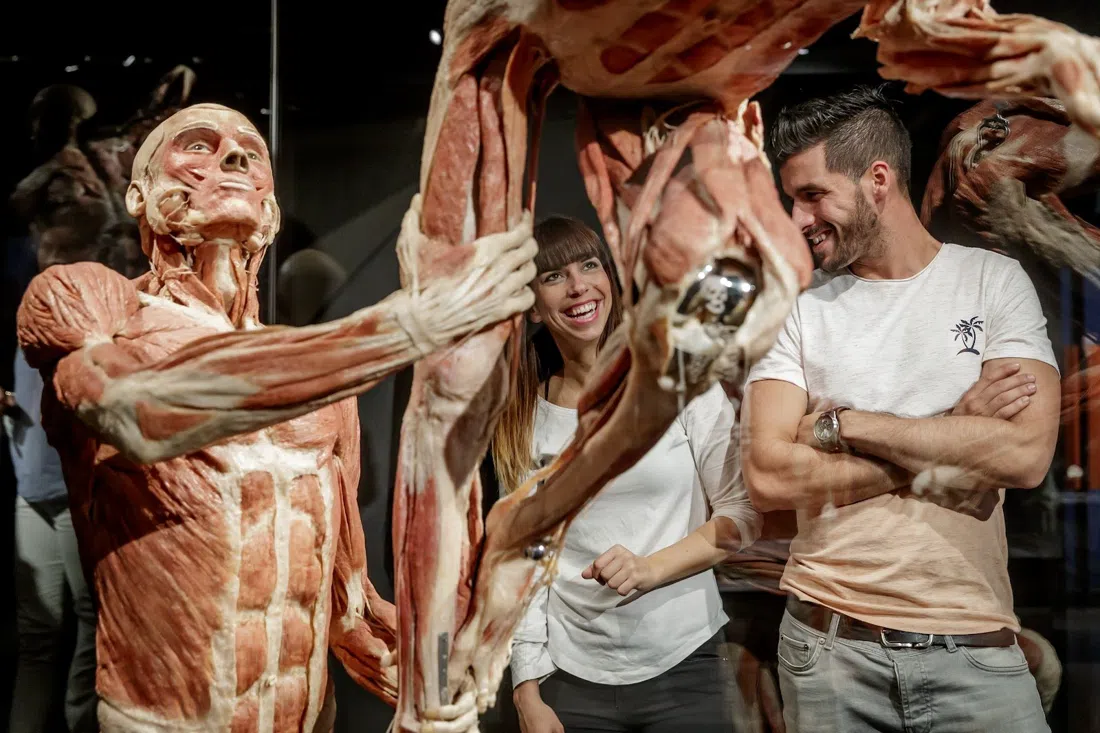
The rest of Damrak's museum strip is the obvious pairing, and it splits neatly by mood. Body Worlds Amsterdam — The Happiness Project (Damrak 66) is four doors up the same street and the serious counterweight: €20-26 for an adult, timed online entry, and a long-run exhibition rather than a pop-up, so it will still be there. It takes groups and school parties with advance booking, and the timed slots are what keep large parties moving. Book it; the Venustempel you can leave to chance.
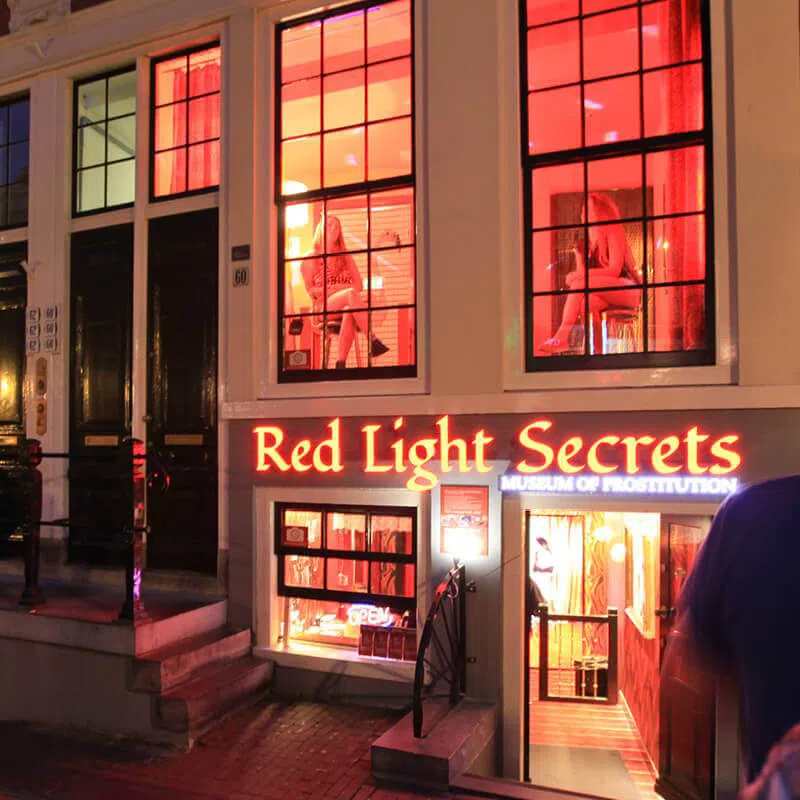
Red Light Secrets — Museum of Prostitution (De Wallen) is eight minutes' walk away in an actual former brothel, and it is the honest first-person companion to the Venustempel's historical jokes. It answers the questions the sex museum politely does not: what the work is, who does it, what the window costs to rent. €15 adult, or around €22 combined with the hash museum. Groups are welcome and online timed tickets are worth it here purely to avoid the doorway bottleneck. It is not wheelchair accessible.
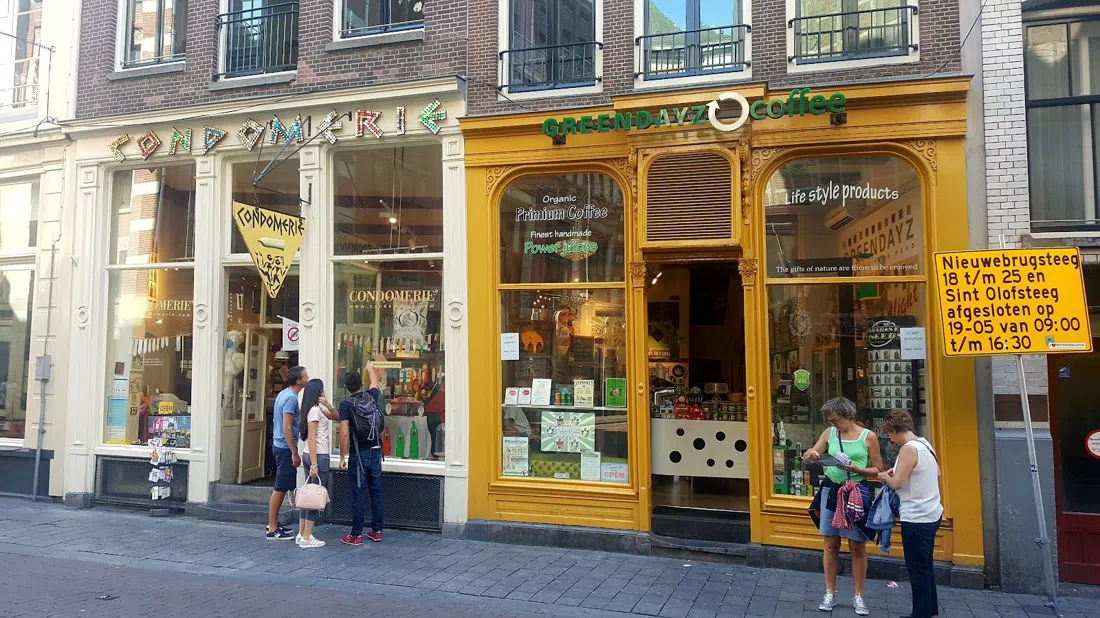
Condomerie Het Gulden Vlies (De Wallen) is a two-minute detour off Damrak and finishes the thread: the world's first dedicated condom shop, trading since 1987, free to browse, €3-15 if you buy. It is one very small room, so go two or three at a time and let the rest of the group wait outside. Closed Sundays, which trips up weekend visitors.
If you want the wider picture of how these streets fit together, the Amsterdam guide covers the centre in more detail.
Older and quieter within the same ten minutes
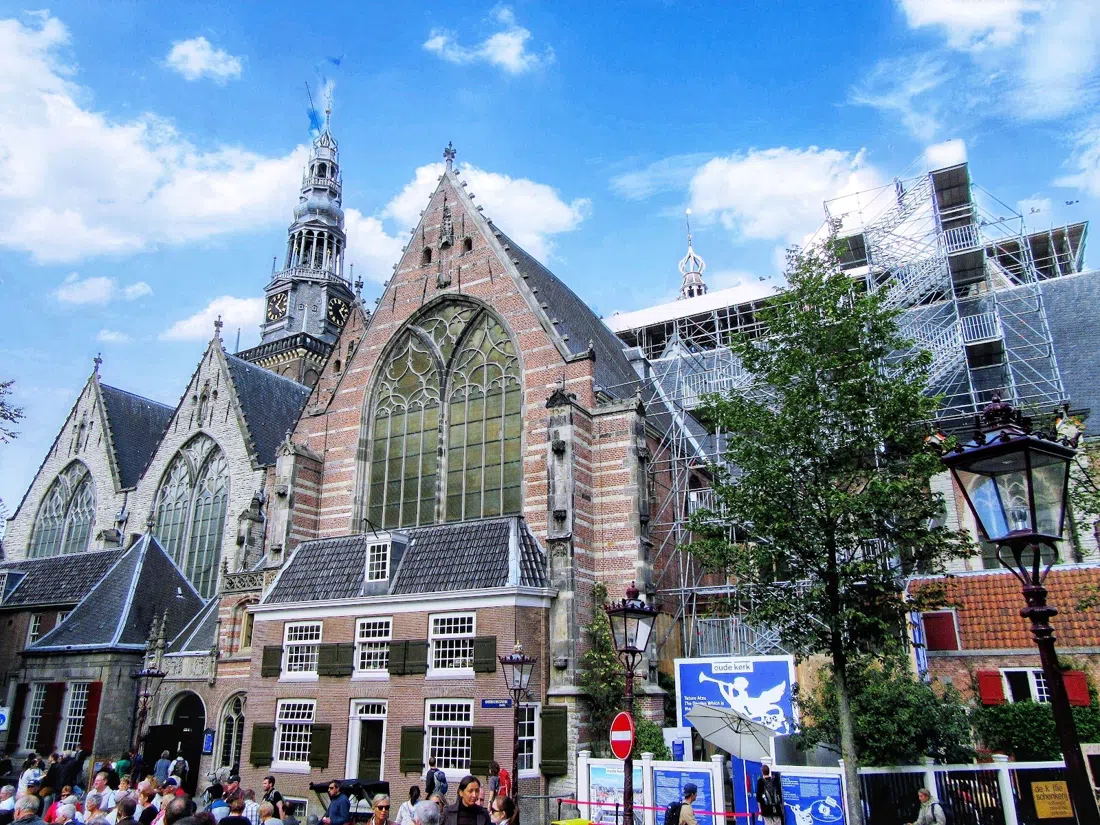
The centre's best trick is how fast the register changes. Oude Kerk (De Wallen) is a 13th-century church that commissions contemporary art while the Red Light District runs up against its outside walls, the strangest juxtaposition in the city and the one that will stay with you longest. €13.50 adult with a free audio tour, groups fine and guided group visits bookable. It closes between exhibition installs, so check before you walk over rather than after.
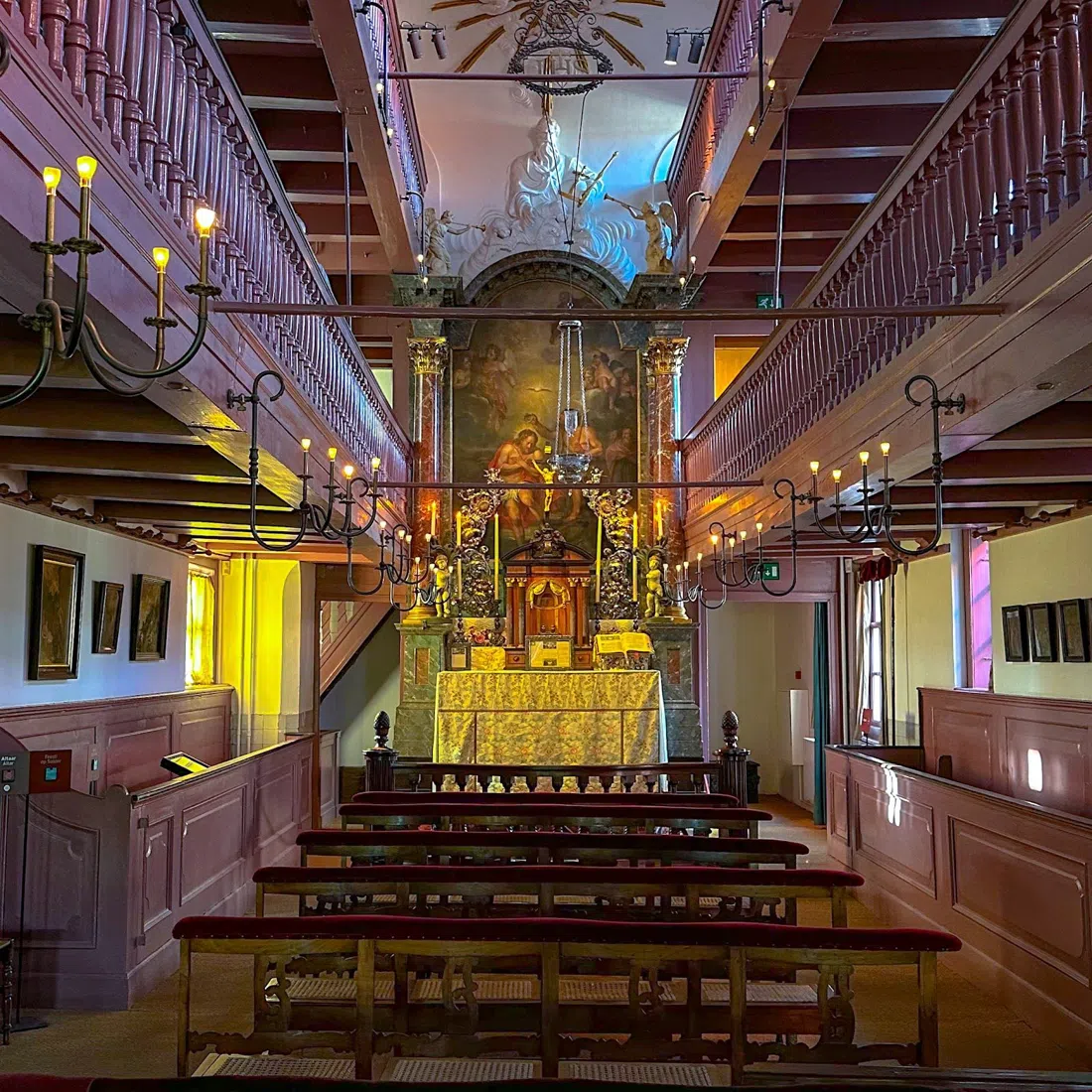
Museum Ons' Lieve Heer op Solder (Old Centre, on the edge of De Wallen) is five minutes from Damrak and the best value hour down here: a complete hidden Catholic church built into the attic of a canal house, €18 adult with a free audio tour in eight languages. Allow 50 to 90 minutes. The corridors and stairs are steep enough that staff stagger entry, so pre-book rather than turning up, and note that on the first Sunday of the month from September to June it opens at 11:00, which in this window means Sunday 4 October 2026.
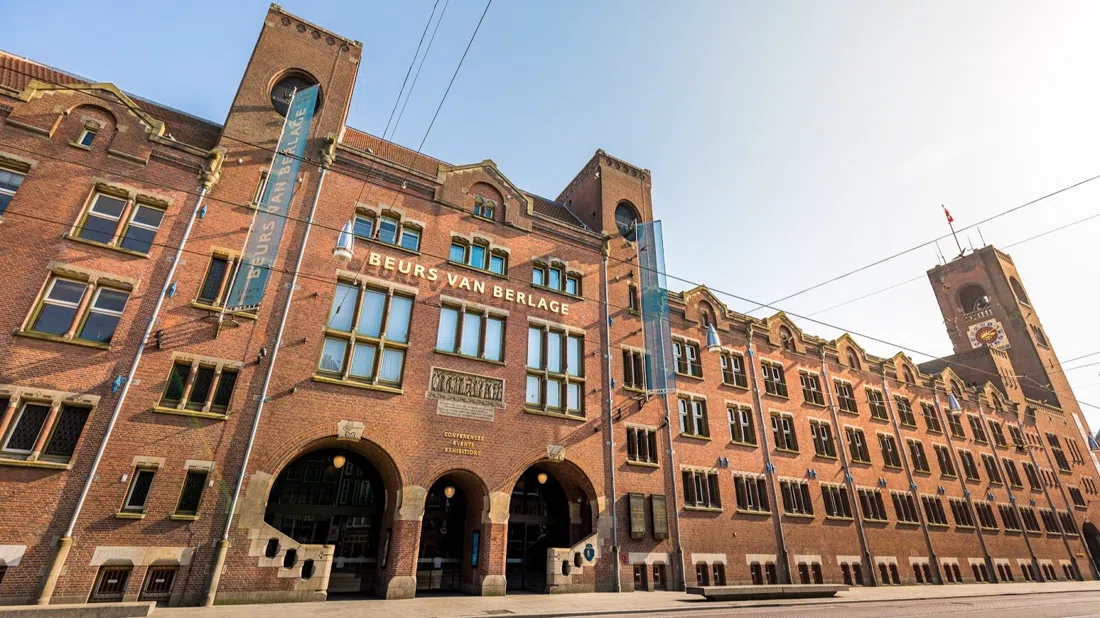
Beurs van Berlage (Damrak) sits directly opposite the museum strip and is the one piece of genuinely great architecture on the street. Parts of it are freely accessible, there are two restaurants inside at €15-40 and escape rooms if that is your thing, and group or venue visits go through the front office. Put your head in even when nothing is on.
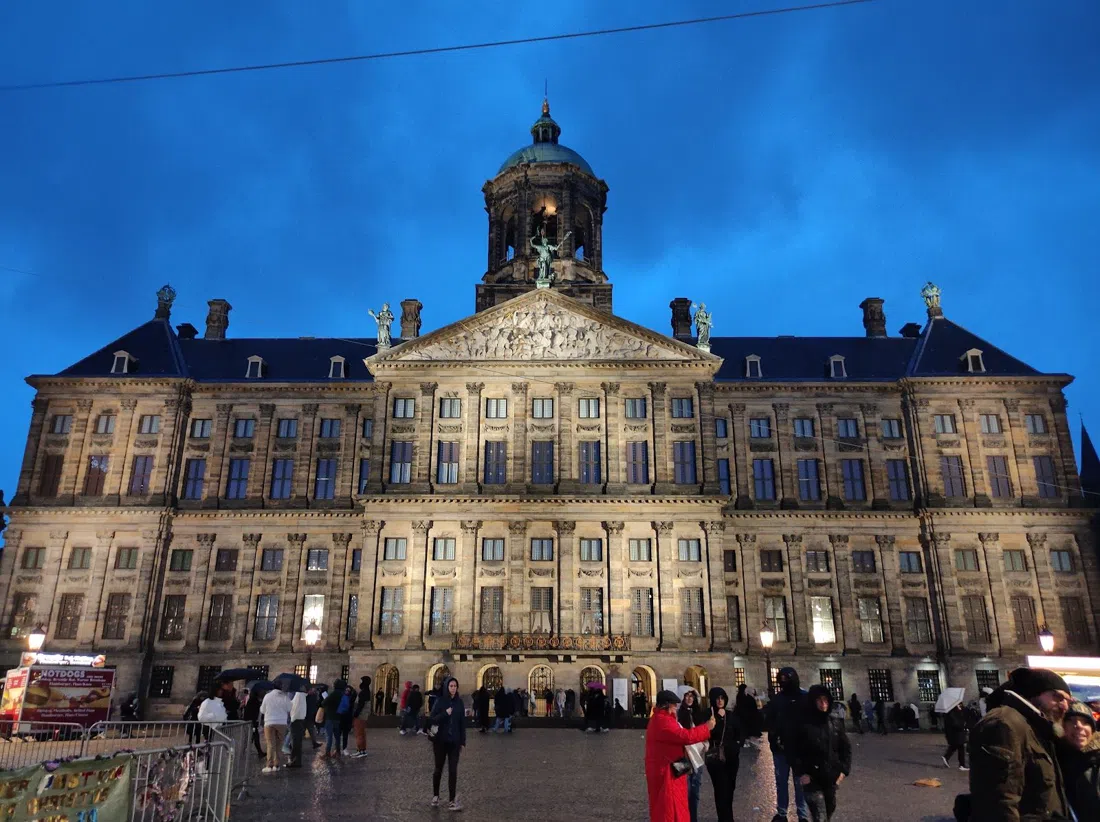
Royal Palace Amsterdam (Dam square) is open more than 230 days in 2026 but still shuts at short notice for royal events, so check the calendar on the morning you plan to go instead of assuming. €12.50-13.50 adult, under 18 free, card payment only at the desk, groups and guided tours bookable.
If your group wants a booked slot instead of a wander
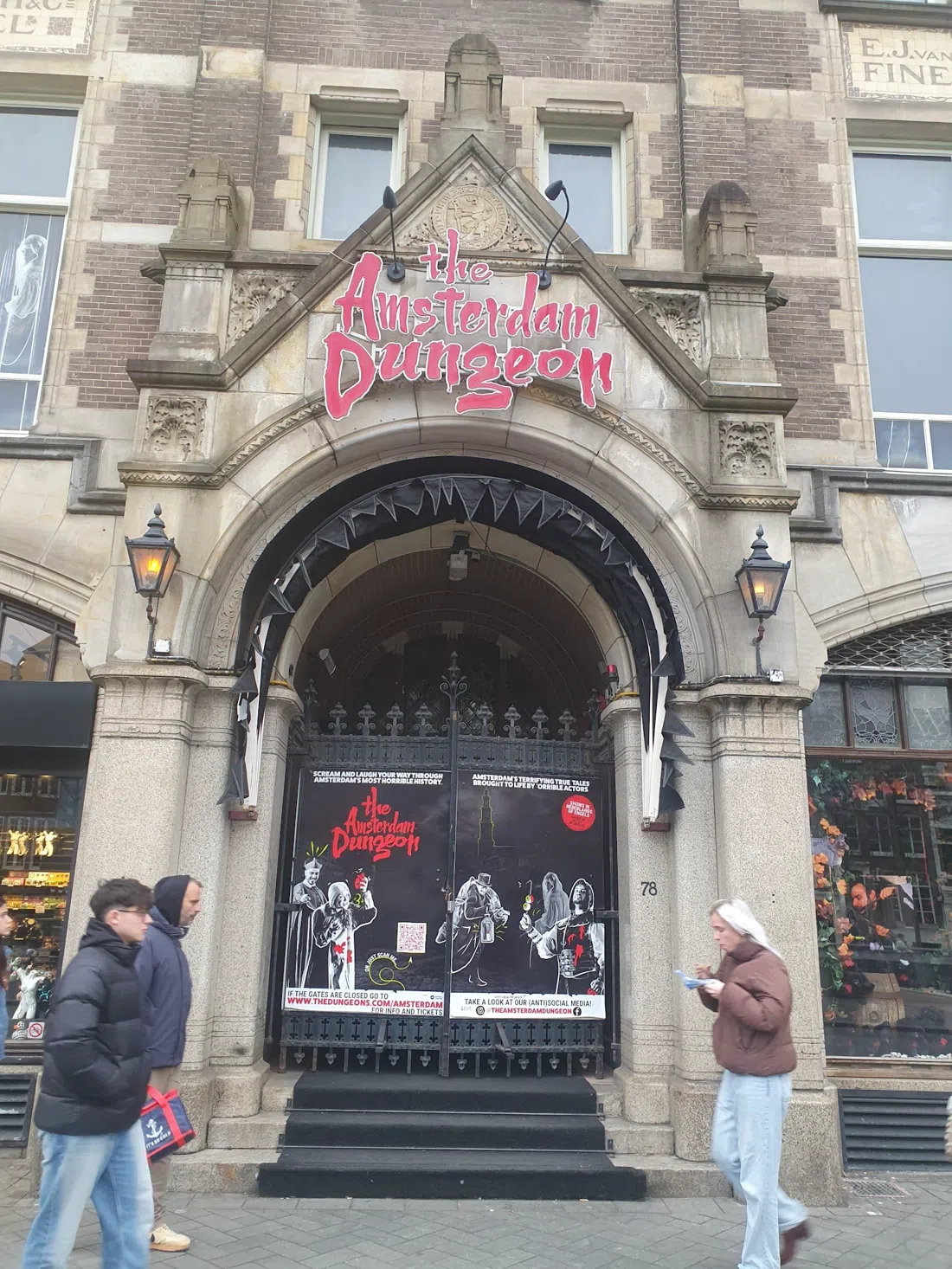
The Amsterdam Dungeon (Rokin) is built for exactly the thing the Venustempel is not built for: it runs in batches of 20 to 30 people with a new departure roughly every 15 minutes, in English or Dutch, and takes about 80 minutes. From €24 online and more at the door. It is theatre with live actors, not history, and you should go in knowing that. It is also the only nearby attraction that genuinely fills the time it asks for, and it solves the problem of what to do with fourteen people who all want the same start time.
A beer, a jenever and a view afterwards
Café Karpershoek (by Martelaarsgracht, two minutes from the museum door) is Amsterdam's oldest café and the honest antidote to the Damrak tourist bars on either side of it. €5-7 a beer, walk in, small groups fine. It goes shoulder-to-shoulder on Friday and Saturday nights.
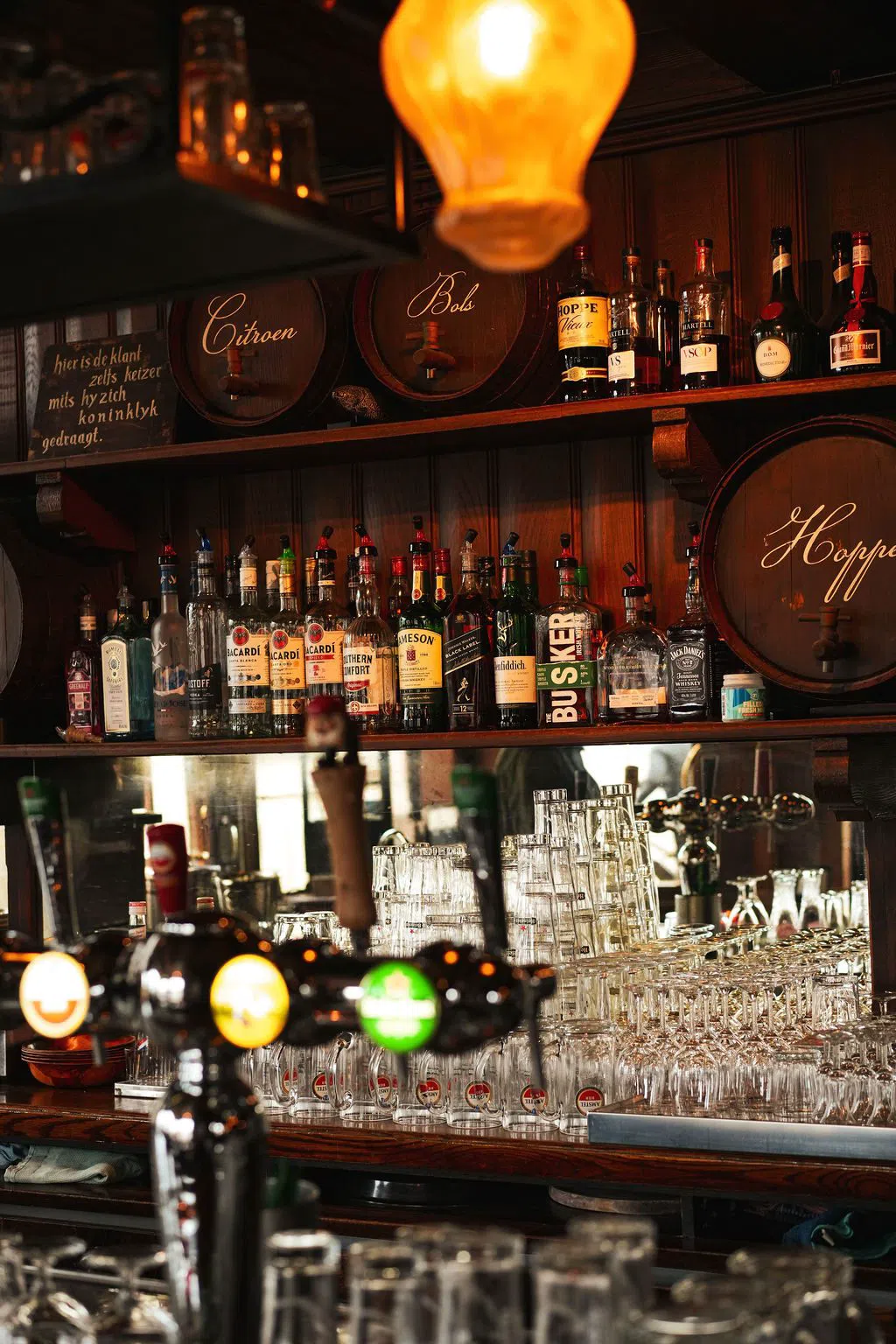
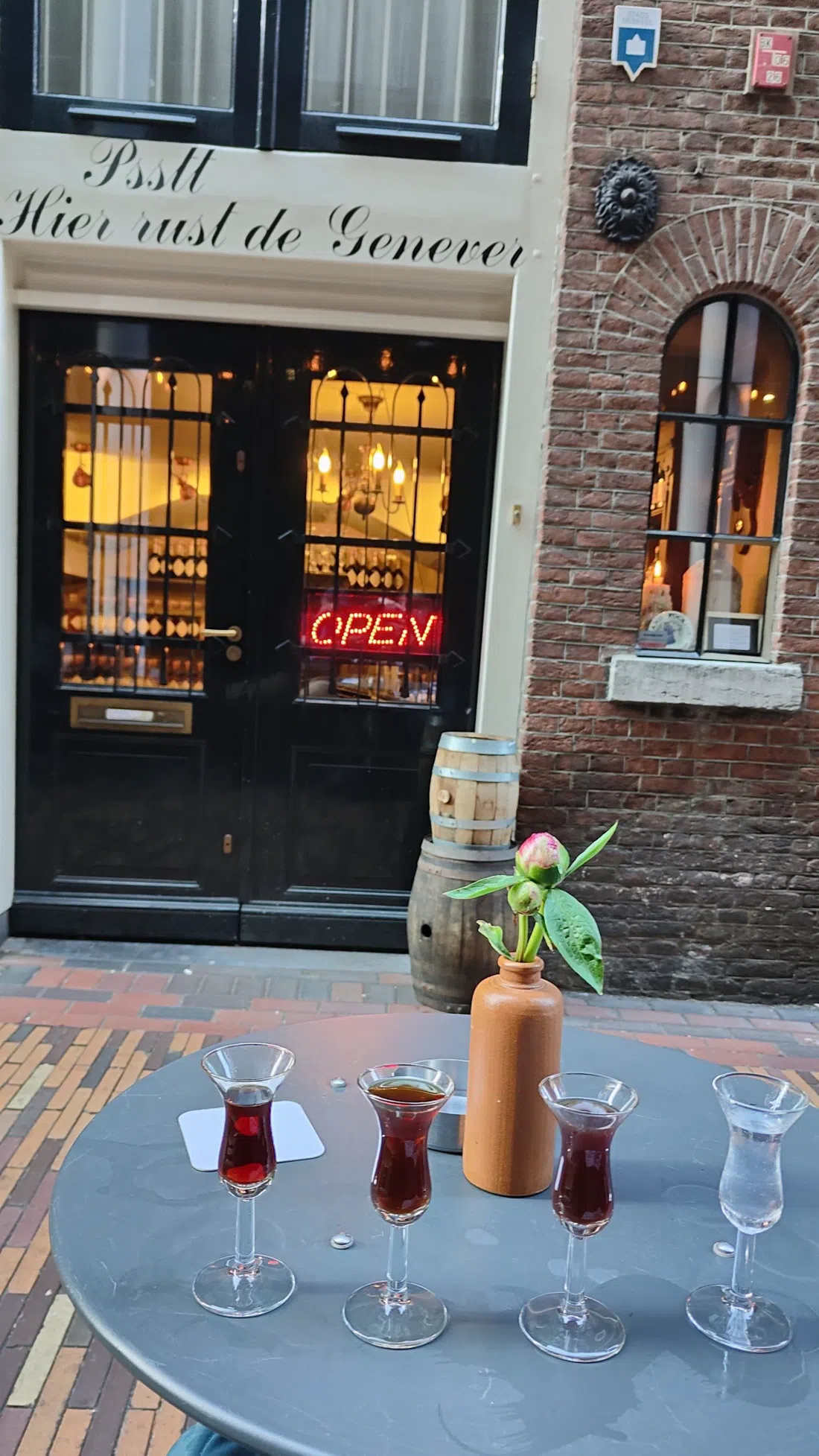
Proeflokaal Wynand Fockink (Pijlsteeg, behind Dam square) has been pouring since 1679 and is the most Dutch thing within ten minutes of Damrak. €6-9 a glass, no reservations in the tasting room, and it is one small room, so keep it to a handful of people or phone ahead to arrange a guided group tasting. Expect a short queue after 18:00, so go before dinner rather than after.
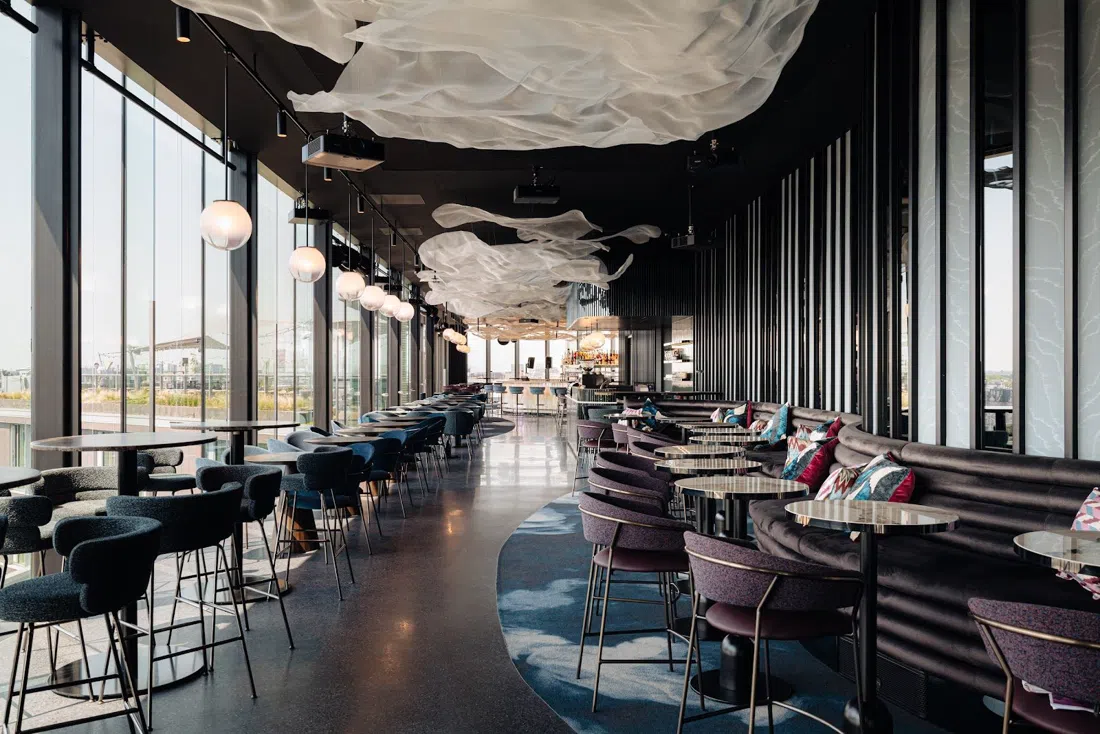
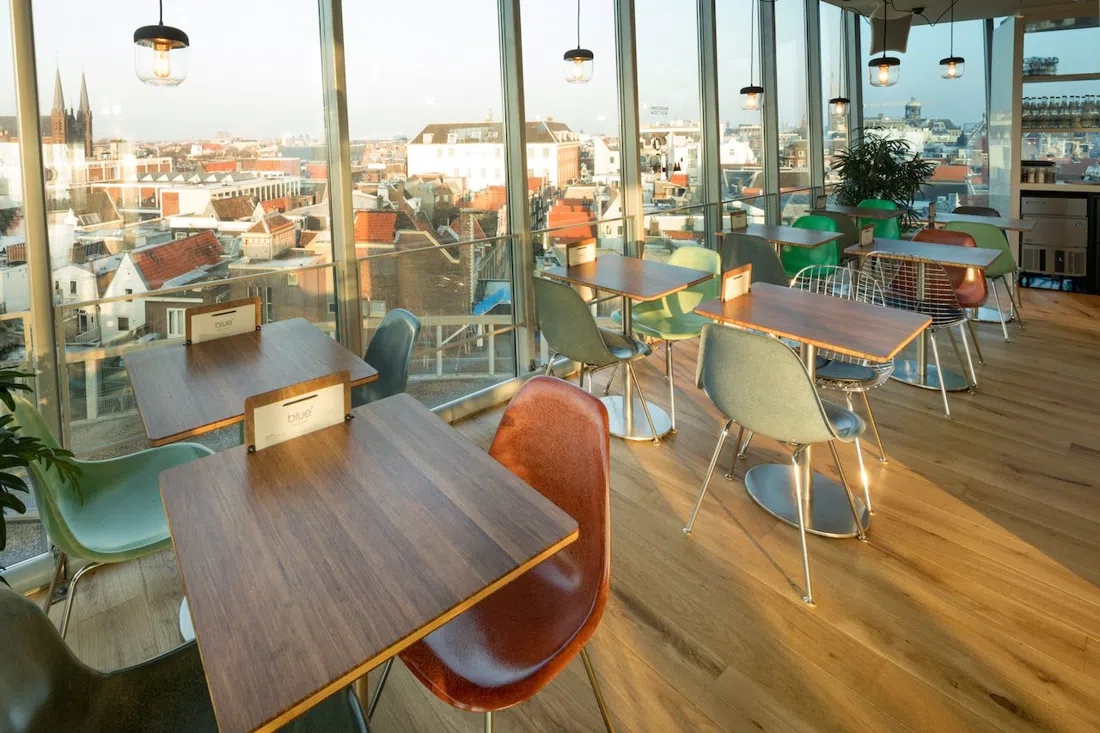
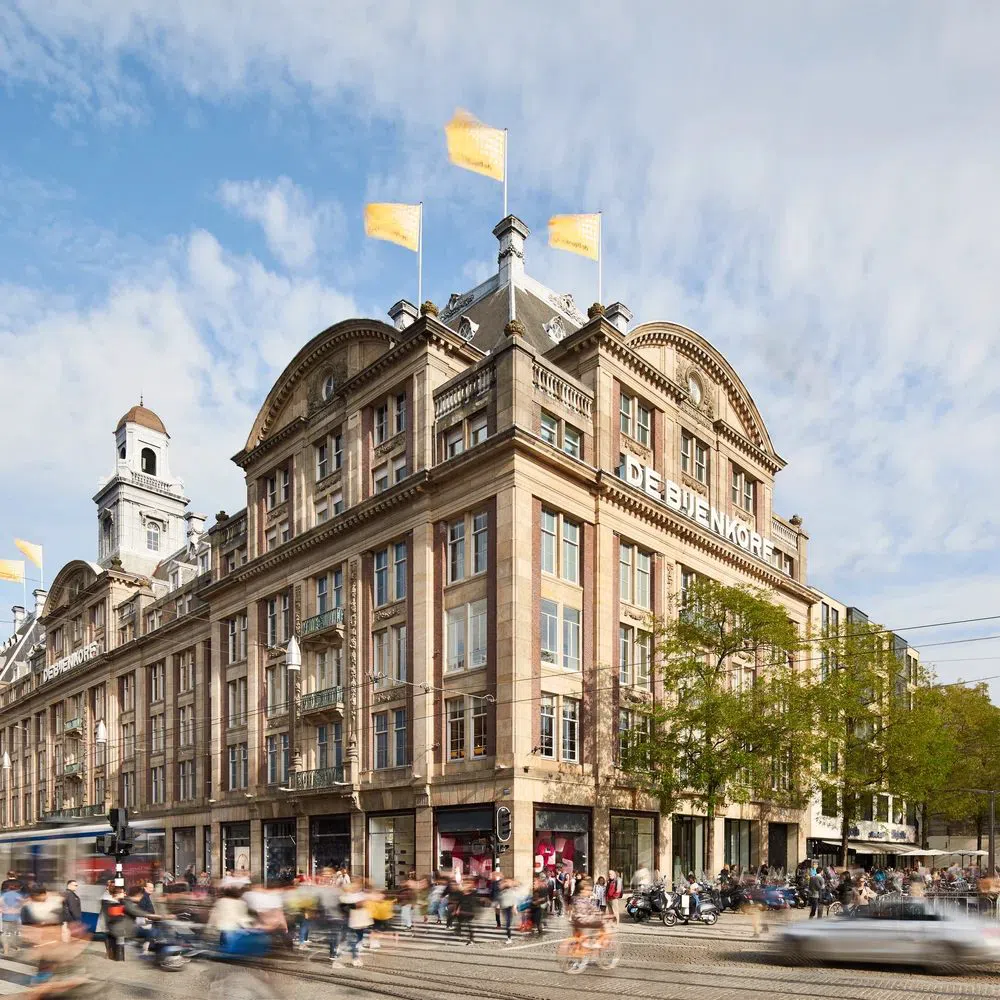
For height without a ticket, Blue Amsterdam (above the Kalverstraat shops) is the viewpoint locals use instead of paying for a tower: free to walk into, €4-15 for coffee and lunch, daytime groups up to 40 on the top floor, reservations taken only before 12:00. It shuts at 18:30 most days, which in October is after dark anyway. De Bijenkorf Kitchen (Dam square) is the other cheap way above the crowds, with self-service counters so any group size works, €8-20 a head, and an outdoor terrace with very limited seats that is the payoff on a clear October afternoon. For the evening version, LuminAir Amsterdam (a five-minute walk from Damrak 18) is the former SkyLounge, reopened under this name in 2025: cocktails €14-18, groups by reservation, 18+ late evening. Use the current name when you ask a driver or you will get a blank look.
Going north with a driver instead
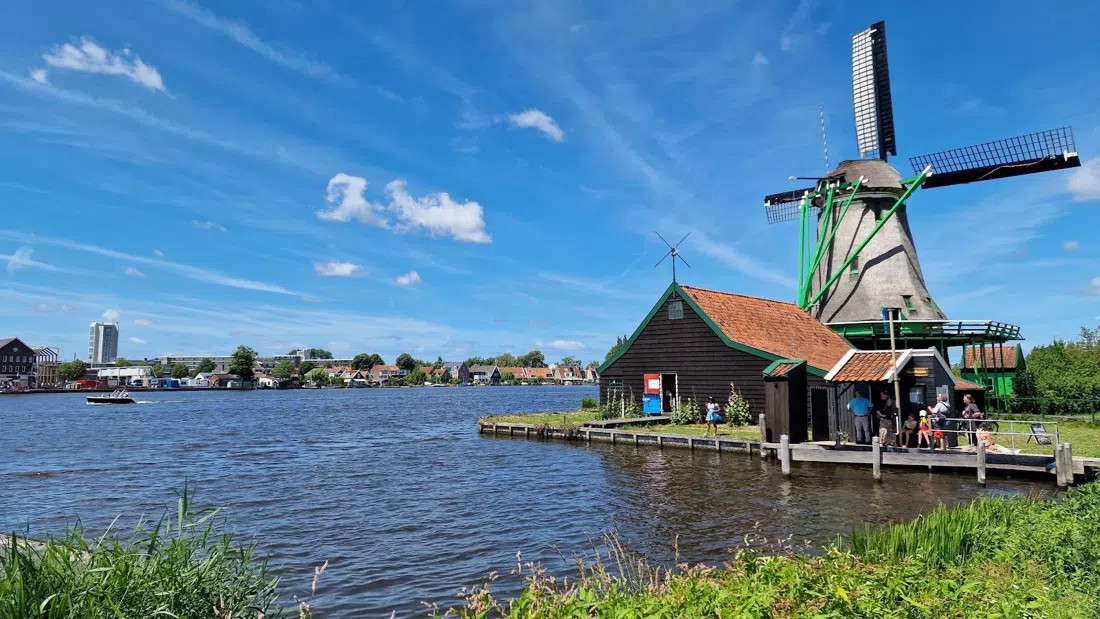
If the museum strip is the morning and you want the afternoon out of the city, the standard run north is a half-day with a driver. Zaanse Schans (north of the city) is the open-air heritage village of working mills: the proposed €17.50 village entry fee was fought off and, as of early 2026, walking in is still free. The individual mills and workshops charge separately, roughly €5-6 each. It is designed for coach and car groups, which is both its convenience and its drawback.
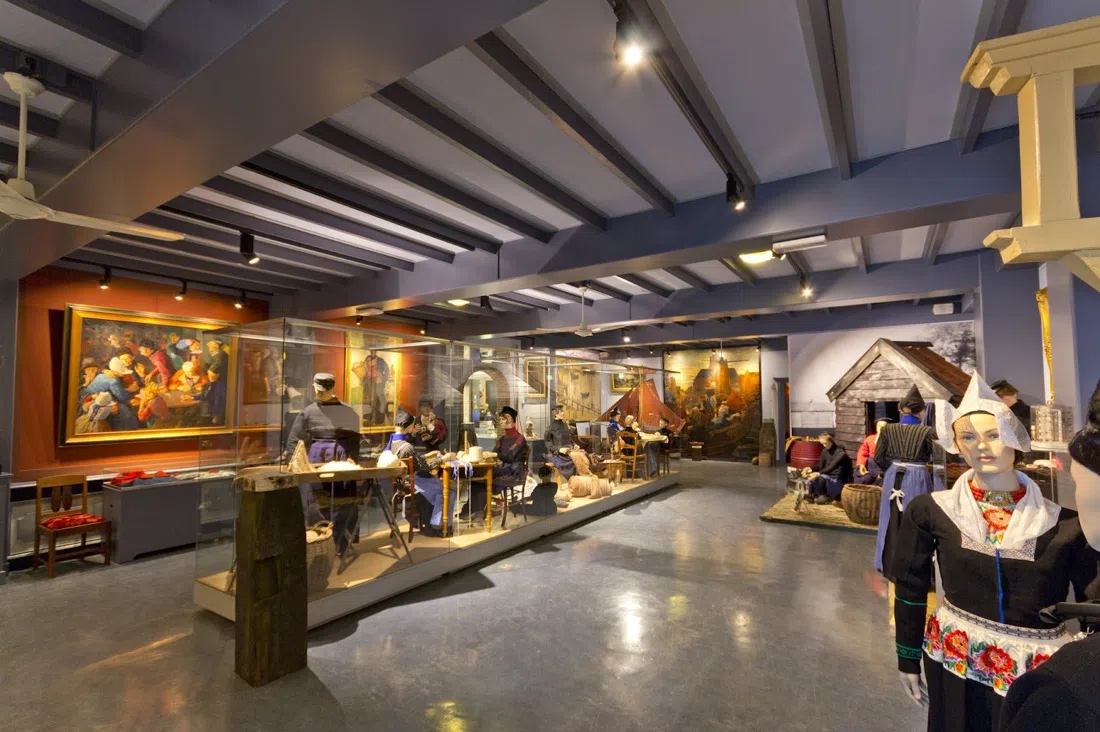
Volendams Museum (harbour village on the same northern loop) is the usual second stop, open daily 10:00-17:00, village free and museum around €5-6. Two to three hours covers the dyke, lunch and the museum, and the cigar-band room is worth the entry on its own rather than just the costume photograph.
A guided private-driver option for this loop is attached to this page. Two plain facts about it: there are 6 traveller reviews across the bookable tours here, with the top one rated 5.0 out of 5 from those 6 reviews, and prices start from 828 USD per person. That is a considered purchase rather than an impulse one, worth it if you are a group splitting a car and short on time, hard to justify for two people who are happy on a train.
Is it worth it
Yes, at €10 and 45 minutes, with conditions. It suits couples, friends in twos and threes, and anyone with an interest in social history who is willing to be amused rather than impressed. It suits a rainy afternoon better than a bright one. It does not suit anyone expecting a serious institutional museum, anyone who cannot do stairs, or any group travelling with under-16s.
It is also the cheapest of the Damrak options by some distance, which matters when you are assembling an afternoon. Spend the €10 here, put the real money into the hidden church or Body Worlds, and you have a good three hours for well under €40 a head.
Practical notes
Getting there: from Centraal Station it is a flat five-minute walk down Damrak, no tram needed, and the whole cluster in this article sits inside a ten-minute radius of that walk. Trams out of Centraal run down to Dam square if the weather is genuinely foul.
Money: card only at the Venustempel, card only at the Royal Palace desk, and card is expected nearly everywhere else in the centre. Carrying cash is optional; carrying a card is not.
Timing: aim for 14:00-15:30 midweek, avoid rainy Saturday mid-afternoons, and remember the clocks go back on 25 October 2026. After that, anything you want to see in daylight needs to happen before about 16:30.
Budget for the afternoon: €10 Venustempel, €15 Red Light Secrets, €18 the hidden church, €13.50 Oude Kerk, €5-7 a beer, €6-9 a jenever. Free: the Condomerie, the public parts of Beurs van Berlage, and the view from Blue Amsterdam.
Staying nearby: anywhere within the ring of the old centre puts every place in this piece within walking distance, which in October is worth more than a view. See the Amsterdam hotel search for what is open in that window.