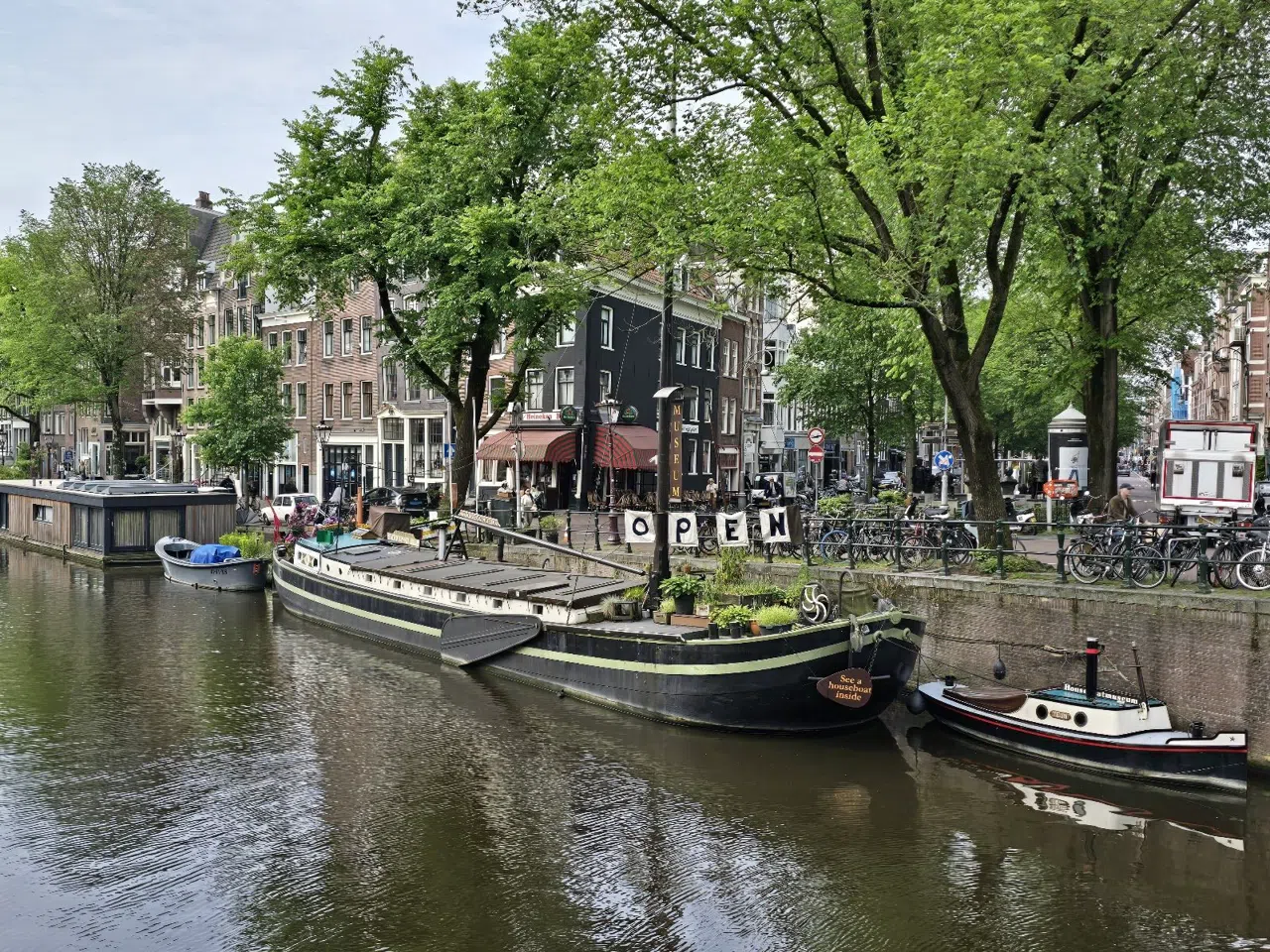

Ring the bell on a houseboat along the Prinsengracht and, more often than not, someone actually answers — on Amsterdam's water, a mooring is not scenery, it's an address, with a postcode, a waiting list decades long and a family who chose a gangplank over a stairwell. Roughly 2,500 houseboats are licensed on the city's canals and harbours, and this piece is about the neighbourhoods where that choice becomes visible to a visitor: the museum that lets you step inside a real one, the community that gives tours of its own front doors, the retired barges now serving lunch instead of cargo, and the handful of places you can actually spend a night afloat.
New mooring licences are almost never issued — most of the boats below have been in the same family, or the same short chain of owners, for a generation — so almost everything on this list is either a working home, a home turned into a small business, or a home's retired predecessor given a second act. Treat it as three separate day-trips rather than one long one; Amsterdam's water neighbourhoods sit on opposite sides of the city and don't chain together neatly.
Step Inside One: The Houseboat Museum and the Cat Boat
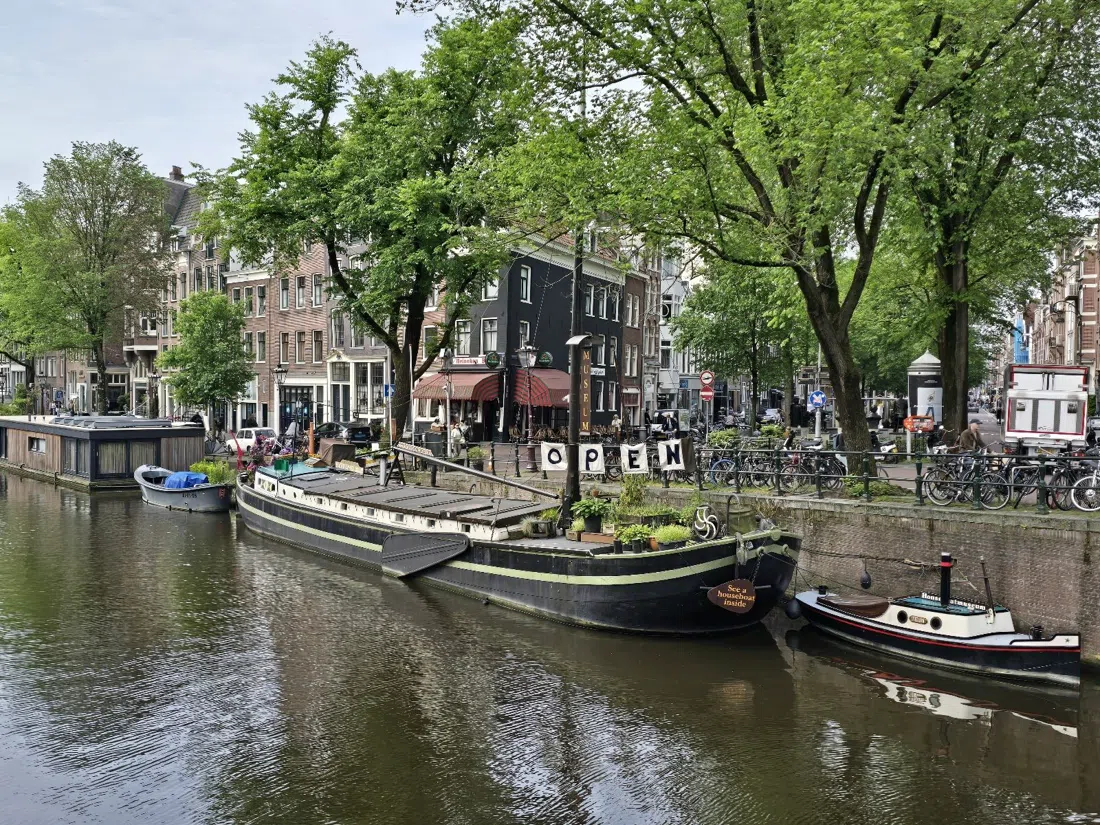
The Houseboat Museum (Woonbootmuseum), moored on the Prinsengracht in the Jordaan, is the only stop here where you don't just look at a houseboat from the towpath — you go inside one. The vessel itself, Hendrika Maria, is a 1914 freight barge that was converted and genuinely lived in before it became a museum, so the low ceilings, the fold-down bed and the tiny galley are original fittings, not a stage set. Entry costs a few euros, and the museum takes group bookings through a dedicated groups page, which makes it the sensible first call for anyone bringing more than two or three people — the boat is small, and a party fills it fast, so book ahead rather than turning up cold.
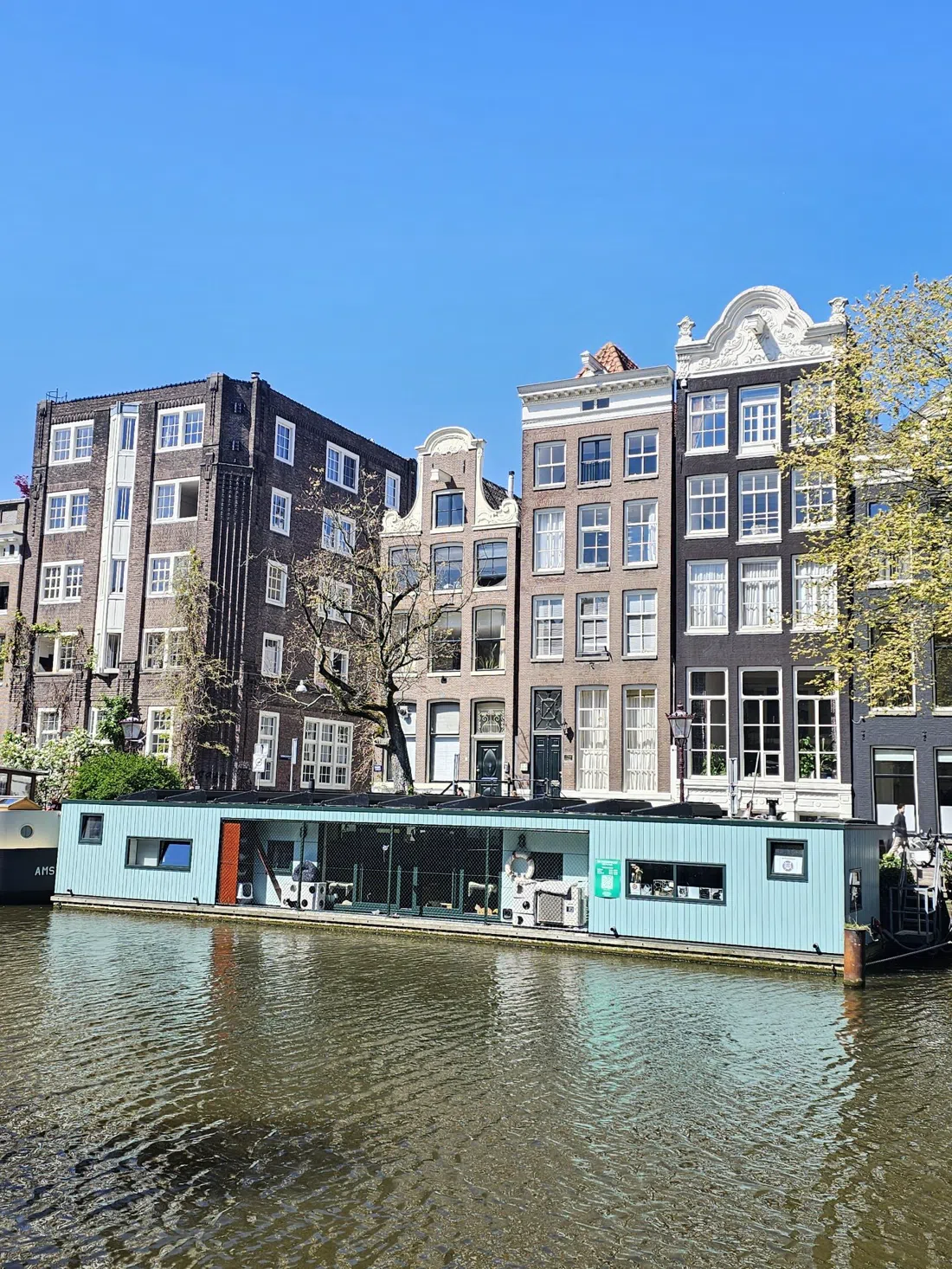
A short walk or one stop by tram, on the Singel near Centraal Station, De Poezenboot (The Cat Boat) is the odder companion piece. It has been a houseboat-turned-shelter since 1968, home to cats that can't be rehoused elsewhere, and it runs on donations rather than a ticket price. There's no group-booking system and no way around the cap of six visitors inside at any one time, so this is a walk-up curiosity for a couple of people rather than a group outing. Go early on a weekday if the aim is actually getting inside rather than queueing on the quay.
Schoonschip: The Neighbourhood That Explains the Rest
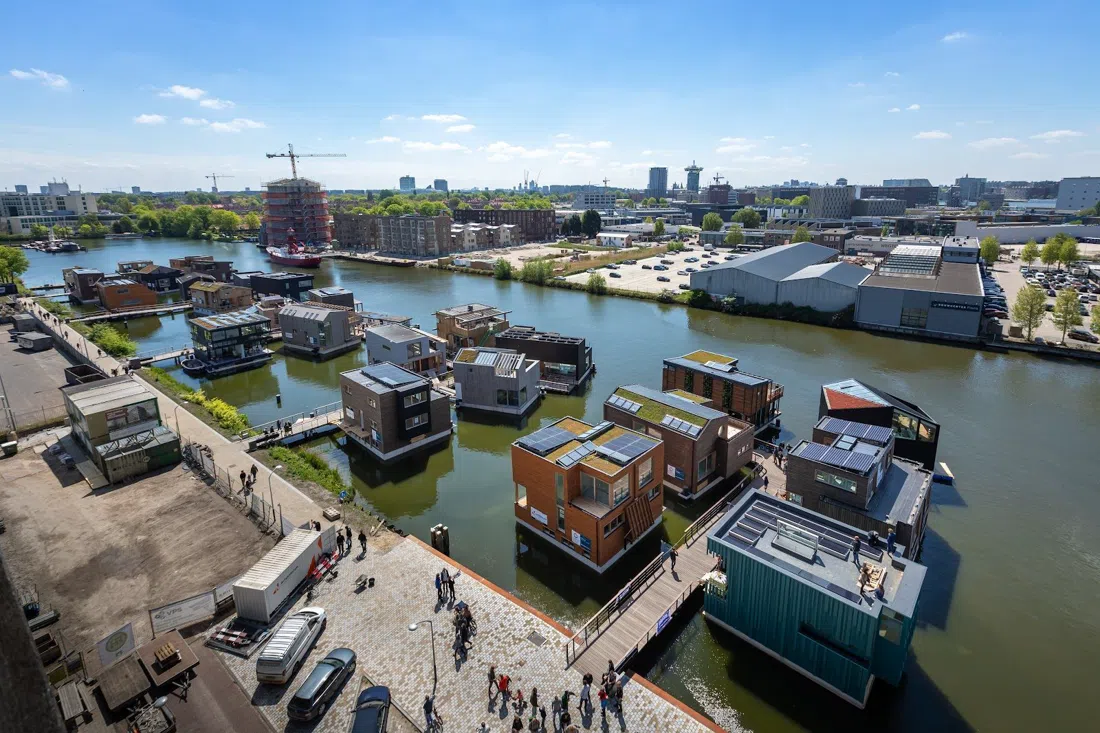
If the museum shows a houseboat's past, Schoonschip, in Amsterdam-Noord, shows its future. It's Europe's flagship sustainable floating neighbourhood — around thirty households on solar-powered, energy-sharing homes moored along a former industrial waterway — and it is the clearest version of the 'families who never left the canal' story going, because the people who live there lead the tours themselves. Guided visits are arranged by email through [email protected] rather than booked at a ticket desk, with the fee quoted on request depending on group size, so this needs planning weeks out rather than the same week. It works well for groups — school trips, architecture students and housing-policy delegations are the usual crowd — and it's a rare case where the guide isn't a professional interpreter but someone pointing at their own front door and explaining why the whole street shares one heat pump.
Two Neighbourhoods You Can Simply Walk Into
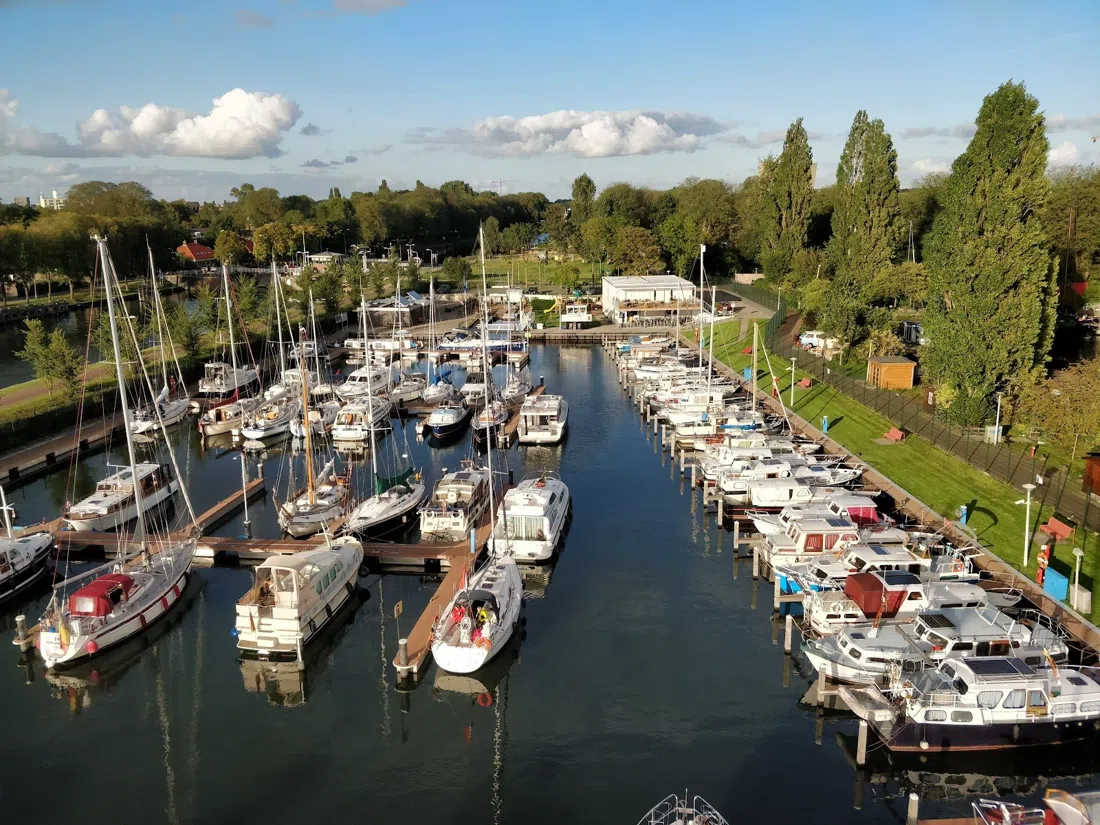
Not every floating community needs a booking. Sixhaven, tucked into Amsterdam-Noord a couple of minutes across the water on the free GVB ferry from behind Centraal Station, is a working marina where houseboats sit wedged between yachts and sailing dinghies at the edge of a district most visitors only ever see from the deck of the IJ ferry. There's no admission and nothing to arrange — it's a public quayside, and mooring fees are a boater's concern, not a visitor's — so this is simply a walk, best done slowly, early evening, when residents are back aboard, washing hung out, water gone still.
Further out, IJburg is the newest of the city's water neighbourhoods, a cluster of purpose-built floating homes reached by tram from Centraal. The honest way to see it properly is to eat there: Café-Restaurant Vrijburcht, open all seven days for lunch, dinner and a traditional high tea, sits with a direct view of the floating houses and doubles as the foyer for the community's own theatre. It welcomes groups without fuss, which makes it the practical anchor for anyone who wants more than a drive-by look at IJburg's water-facing façades — go for a late lunch and the light on the water is at its best.
Retired Boats With Second Careers
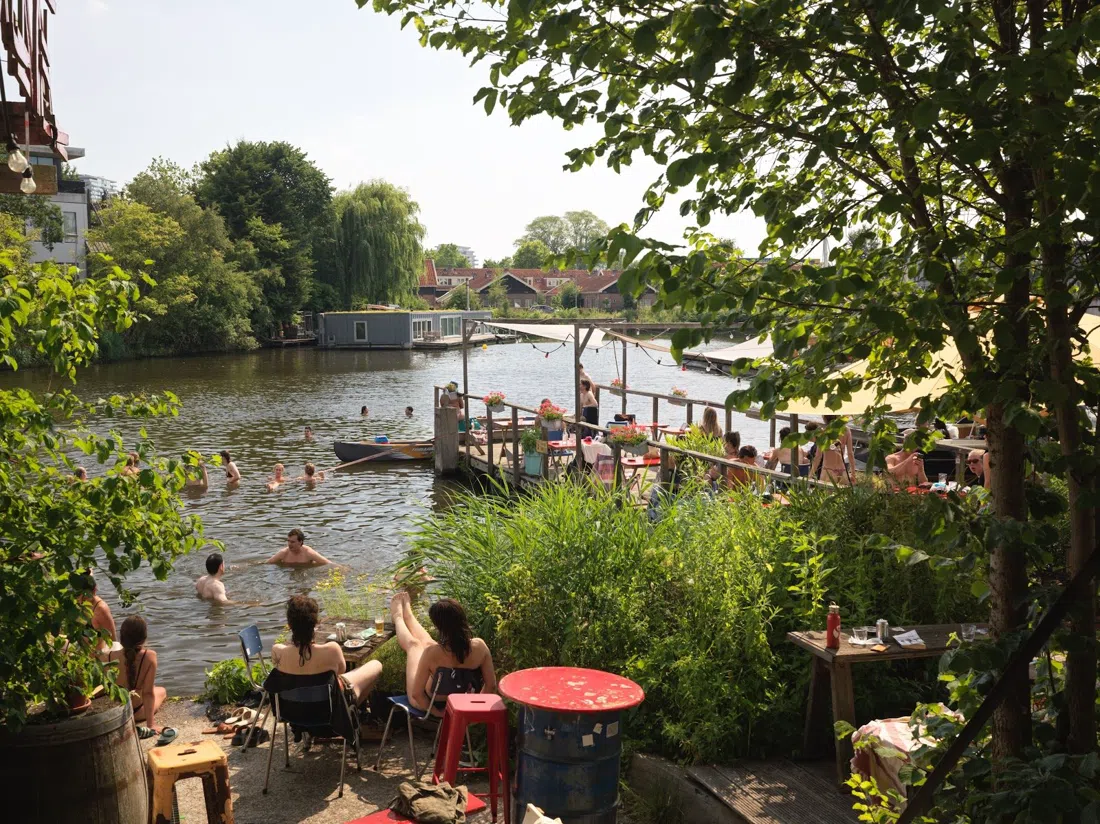
Not every notable vessel here is still a home. Café de Ceuvel, on a former shipyard site in Amsterdam-Noord, is built around a cluster of decommissioned houseboats craned onto land and given a second life as studios, workspaces and the café itself — a showpiece version of the same housing stock, seen from a different angle. It takes group reservations for parties of eight or more and sits at the budget-to-mid end of the price scale, which makes it an easy add-on to a Noord afternoon that already takes in Schoonschip a short walk away.
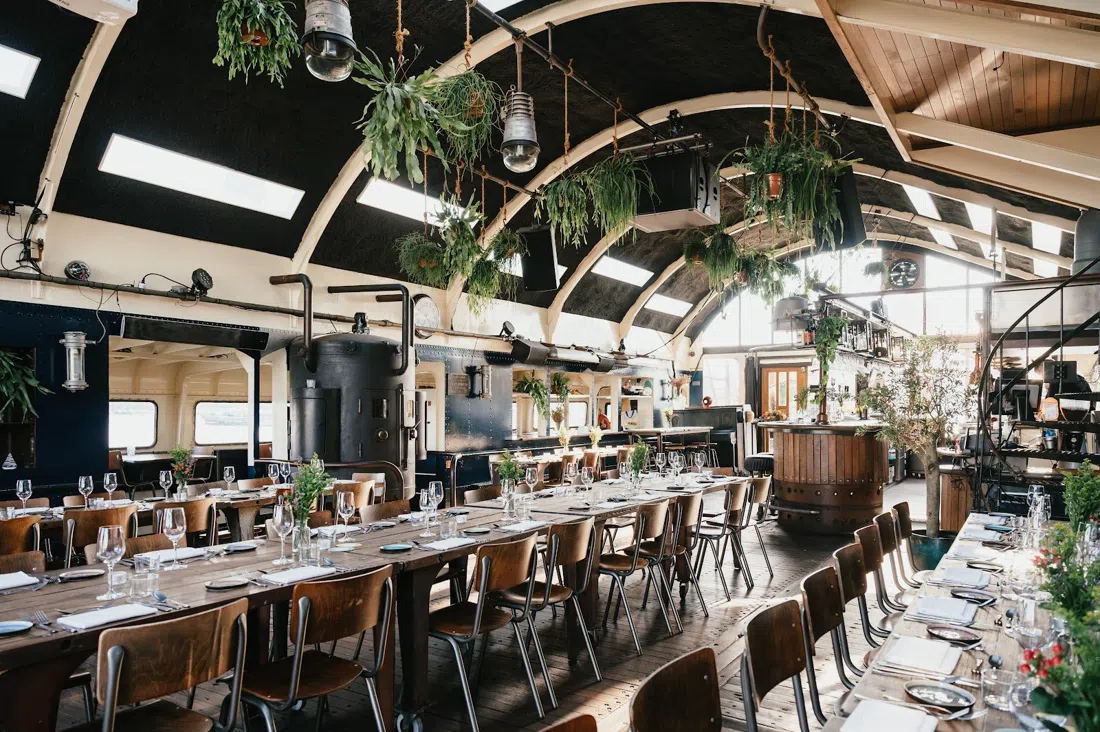
Down in the Houthavens, Pont 13 is a retired ferry turned restaurant and bar, moored among the district's working houseboat moorings rather than apart from them. Mains run roughly €15 to €30, there's a dedicated groups page for bookings, and the whole boat can be hired privately for an event — it's the most straightforwardly group-friendly stop on this list, and the closest a visitor gets to eating dinner inside the same water community it's celebrating.
A short walk from Pont 13, REM Eiland (REM Amsterdam) isn't a houseboat at all — it's a former offshore broadcasting platform, hauled in from the North Sea and re-anchored as a restaurant with a rooftop bar — but it earns its place in this story as context for how far back Amsterdam's relationship with squatted and repurposed maritime structures actually runs. It's fine dining, with a tasting menu around €65 to €85, and it explicitly caters to groups and events, from an intimate dinner to a full private hire. Go for the view over the IJ as much as for the plates, and book a rooftop table if the evening's clear.
Sleeping Aboard, Not Just Looking
For a visitor who wants to actually spend a night on the water rather than view it from a towpath, three options cover very different budgets and party sizes.
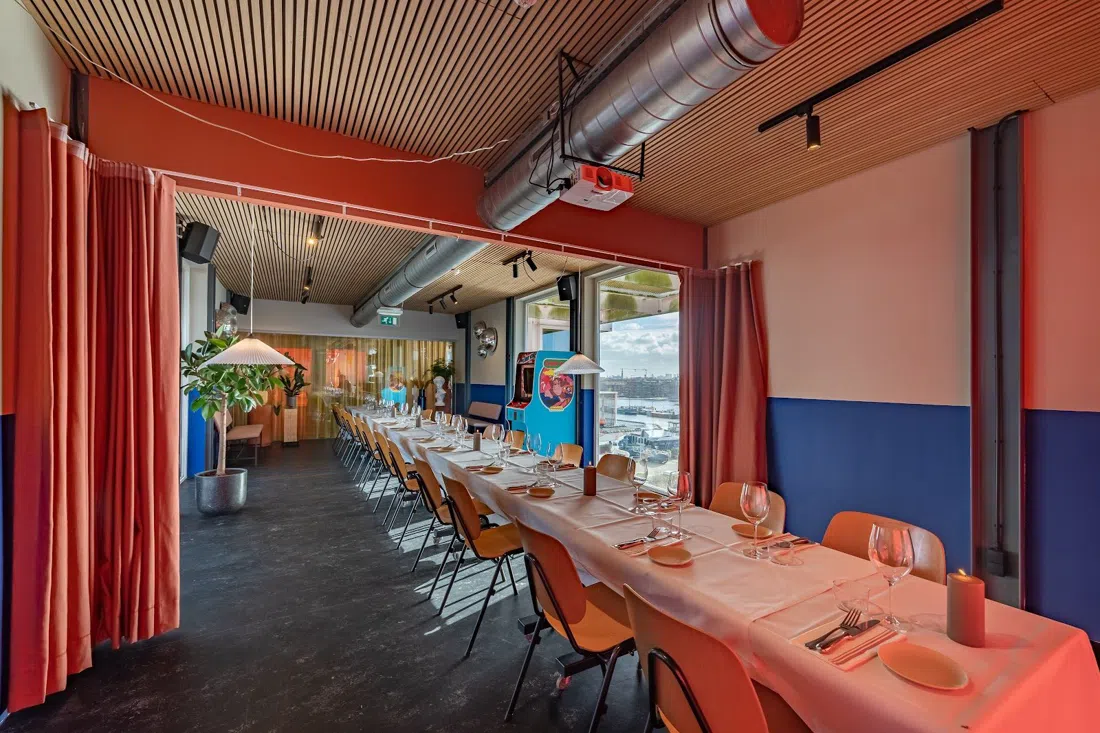
Hotel Asile Flottant is the smallest and most atmospheric: six individual houseboats run as a boutique hotel, at roughly €100 to €200 a night, better suited to a couple or a small group than a party of eight, since each boat is its own self-contained stay rather than one of a set of adjoining rooms.
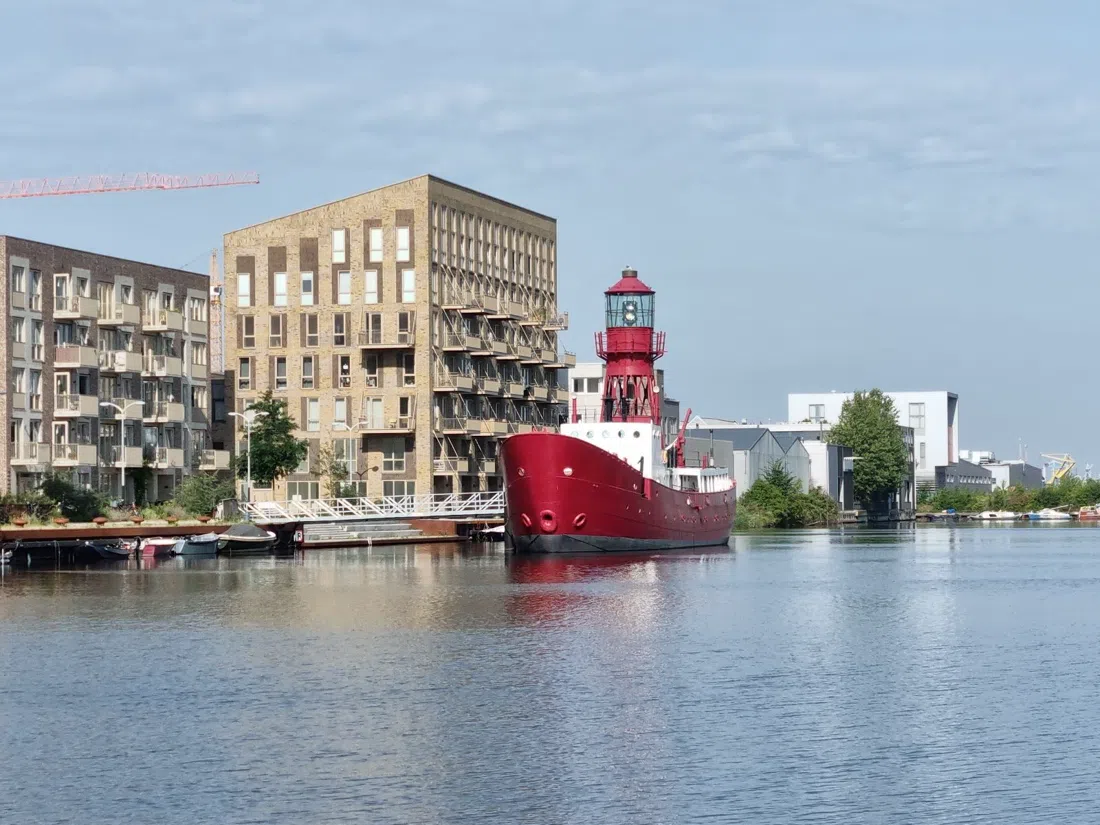
Amstel Houseboats Bed & Breakfast, moored on the Amstel, rents individual studio houseboats that sleep a maximum of two guests each, at roughly €120 to €180 a night — this is the closest most visitors get to the reality of the woonboot economy, where an owner-occupier rents out a spare houseboat, or a room aboard their own, rather than running a hotel brand under a company name.
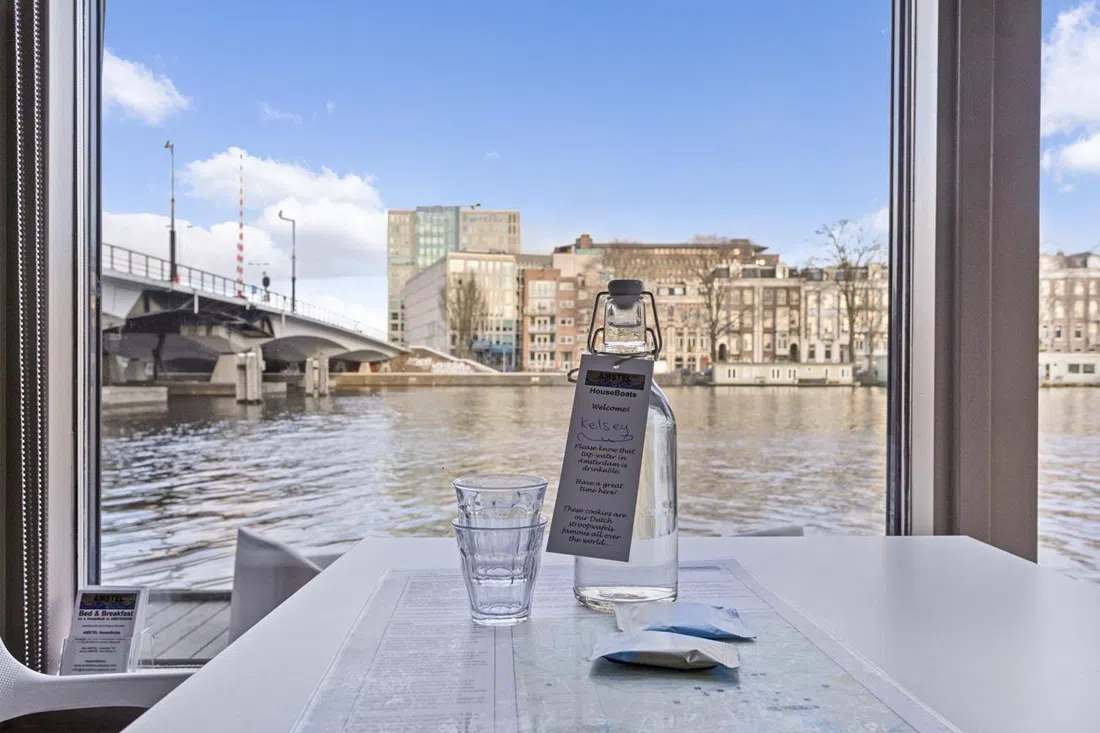
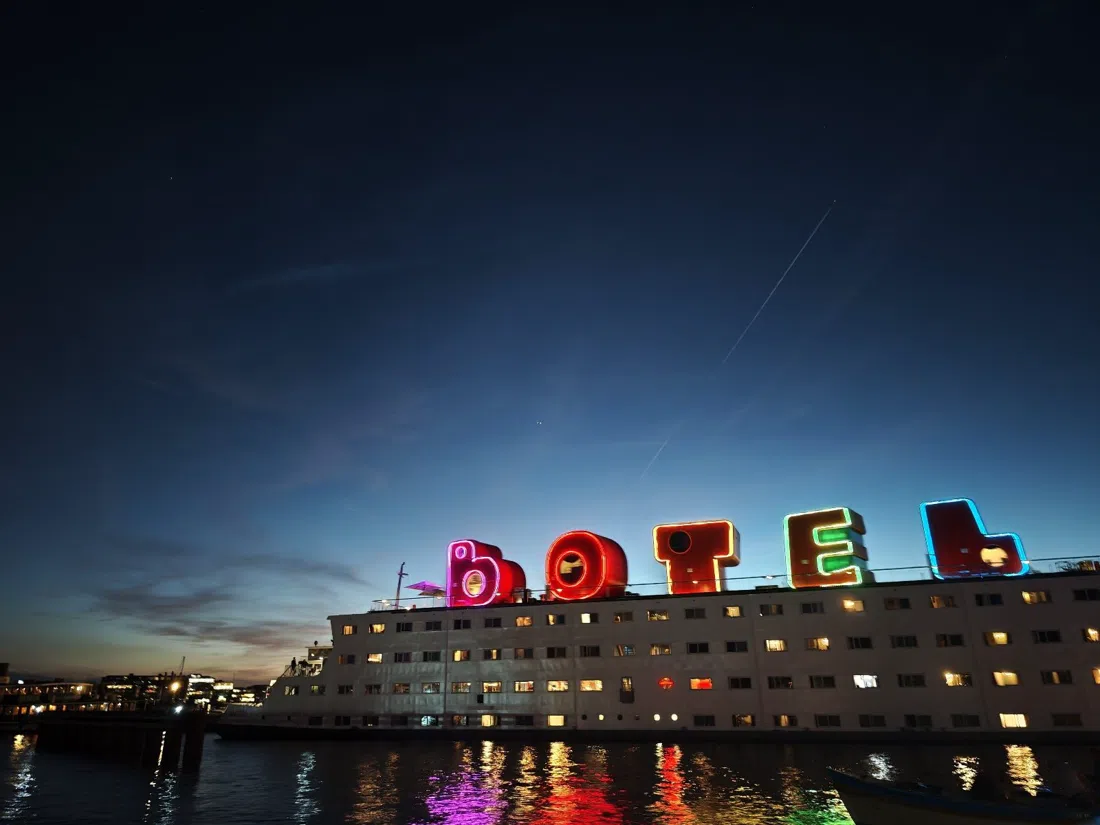
For anything larger, Botel Amsterdam, moored at the NDSM shipyard in Amsterdam-Noord, is the scaled-up option: a proper multi-room hotel boat with rooms from around €90 a night, straightforwardly set up for families and groups, in a district that's become the city's creative waterfront — converted warehouses and street art rather than gabled canal houses. Whichever of the three suits the trip, it's worth checking against the wider market before booking; see the Amsterdam hotel search for what else is available on the nights in question.
Getting There, Budget and Timing
Plan the day by district rather than trying to cover all of it at once — these neighbourhoods sit on opposite sides of the city. The Centrum stops, the Houseboat Museum and De Poezenboot, are walkable from Centraal Station in under fifteen minutes. Noord — Schoonschip, Café de Ceuvel, Botel Amsterdam and Sixhaven — is reached on the free GVB ferries that leave from directly behind Centraal, a crossing of a few minutes rather than a real commute. The Houthavens, home to Pont 13 and REM Eiland, is a short tram or bike ride west of Centraal; IJburg and Vrijburcht are the furthest out, a tram ride east that's worth building an afternoon around rather than squeezing into a morning.
Cash isn't really the issue on this route — every venue here takes cards — but it's worth carrying a small amount for De Poezenboot's donation box, since it's a houseboat run entirely by volunteers with no card reader. Budget a few euros for the museum, nothing at all for a walk through Sixhaven or Schoonschip's public paths, and save the real spending for a meal (roughly €15-30 at Pont 13 or Vrijburcht, up to €85 for the REM Eiland tasting menu) or a night afloat (from around €90 at Botel Amsterdam to €200 at Asile Flottant).
Timing matters more than money. Early morning or early evening is the quiet hour for Sixhaven and the Noord waterfront, when residents are actually visible on deck rather than at work; midday in high season brings coach parties to the museum and pushes De Poezenboot's six-visitor cap into play fast. Schoonschip's guided tours need booking weeks ahead, not days, so arrange that one first if it's meant to be the trip's centrepiece. For a wider sense of how these water neighbourhoods sit against the rest of the city, the Amsterdam guide is the place to start planning the rest of the stay.