Amsterdam sells itself in postcards — bicycles, canals, a single perfect tulip — but the truest read on the city happens at ankle height, between crates of herring and stacked bulb bags, where stallholders who've worked the same six metres of pavement for thirty years shout prices in three languages before 9am. This is a ranked, honest tour of that world: where the produce is real and where it's mostly souvenirs, who the crowds actually are, and what's worth your euros in 2026.
Albert Cuypmarkt: The Anchor, De Pijp
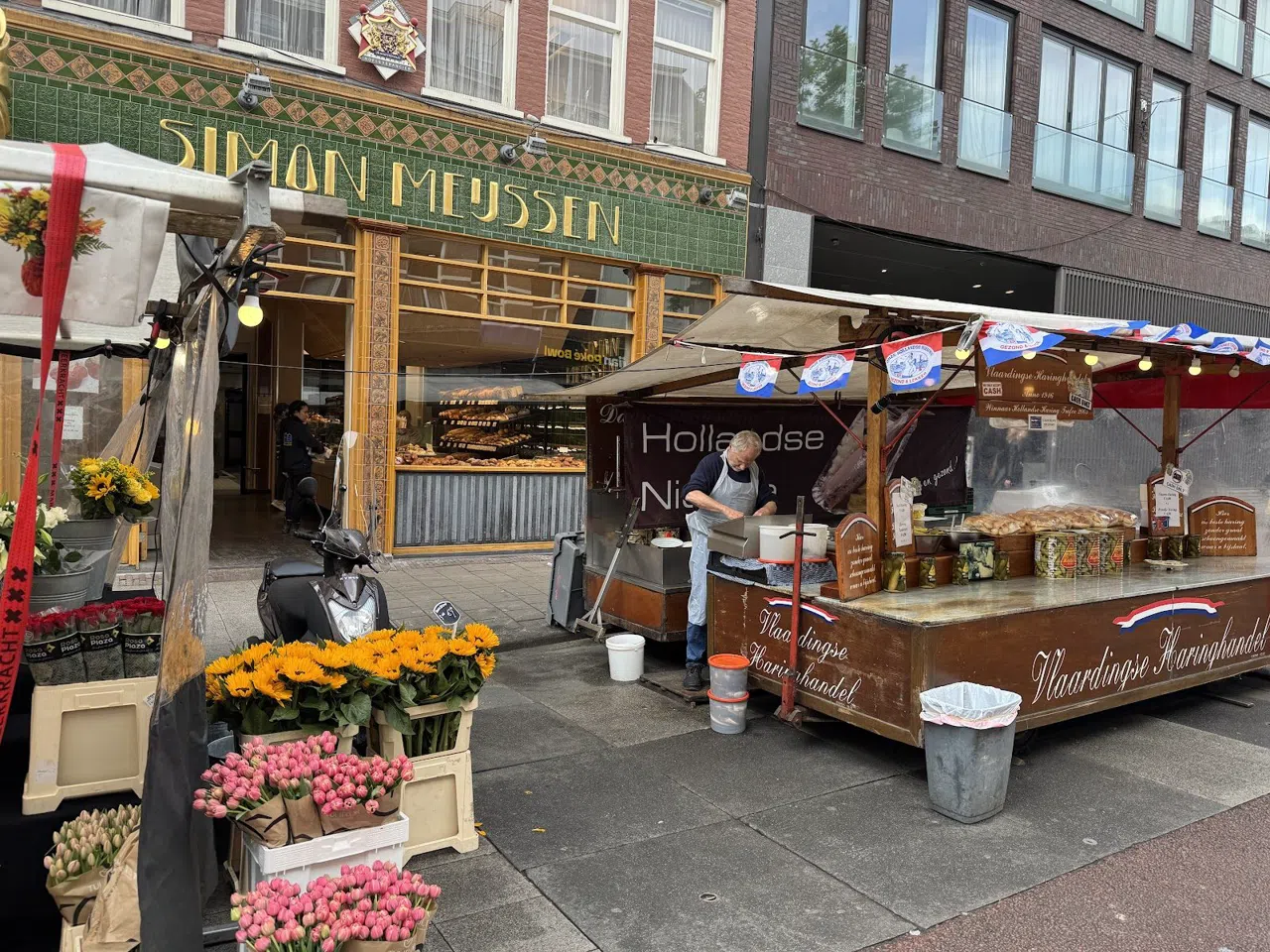
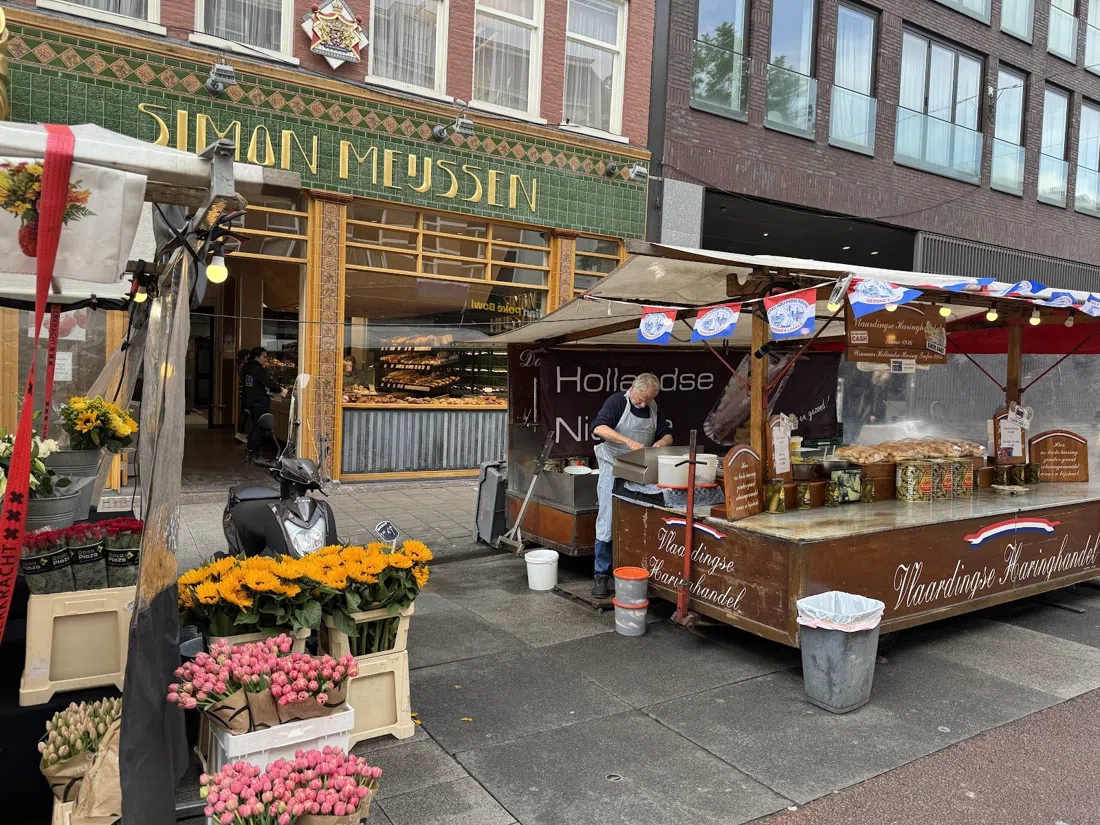
Start here, because everything else in this piece measures itself against it. Albert Cuypmarkt (De Pijp) has run six days a week since 1905, and it still feels like the engine room of the city rather than a heritage re-enactment. It's fully open-air, free to walk, and stretches for almost a kilometre of fishmongers, cheese counters, fabric stalls and multi-generational stallholders who know their regulars by order rather than name. The one genuine bottleneck is Rudi's Original Stroopwafels, where the syrup-and-waffle smell pulls a queue that can choke the aisle — large groups should peel off in twos rather than block it, buy one warm stroopwafel each (€2-4), and regroup a few stalls down. Beyond the waffle, this is where to eat a herring sandwich standing up, buy a kilo of stroopwafel-spiced speculaas biscuits for later, or just watch the choreography of a market that's been rehearsing itself for over a century. Snacks and produce run €1-8. It's closed Sundays — plan around that if it's the only market on your list.
Dappermarkt: The Honest Counterpoint, Oost
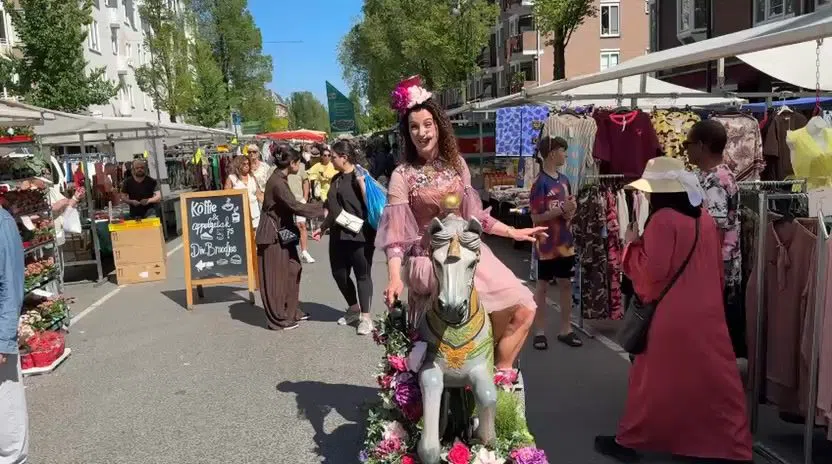
If Albert Cuyp is the market Amsterdam shows visitors, Dappermarkt (Oost, in the Indische Buurt) is the one it actually shops at. It's open-air with no restrictions on groups, and because it's genuinely local and multicultural — Surinamese, Turkish, Moroccan and Dutch stalls sitting side by side — visiting groups blend in rather than standing out, which is part of the point. This is where to try roti or a Surinamese broodje pom, buy spices by the scoop instead of the jar, and see a market that exists for the neighbourhood first and tourists a distant second. Snacks and produce are €1-8, same bracket as Cuyp, but the mix on the plate is completely different. If you only have time for one "real" market beyond the famous one, this is the correction — it shows a working-class, multicultural Amsterdam that the postcard version skips entirely.
Noordermarkt: One Square, Two Personalities, Jordaan
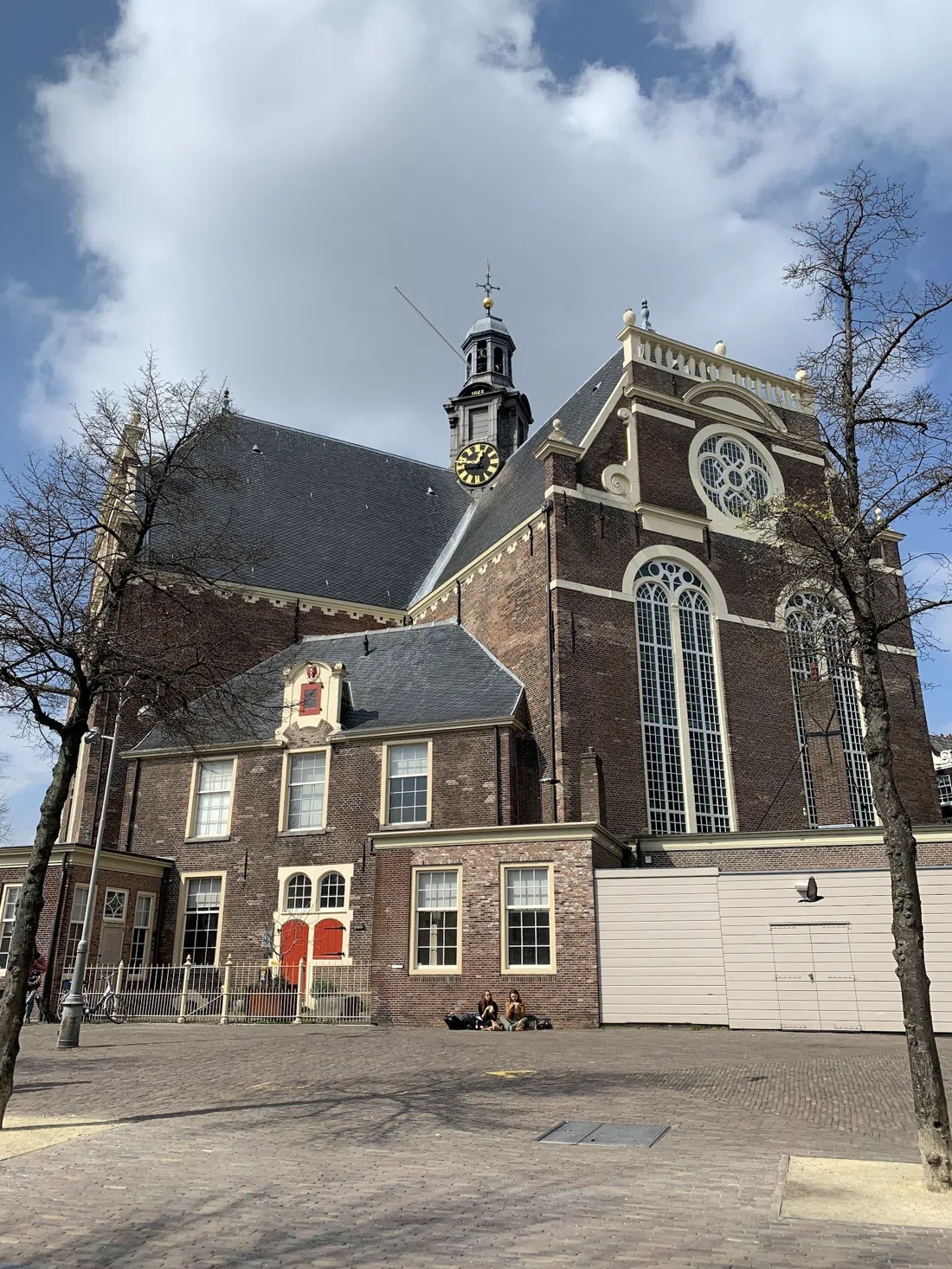
Noordermarkt (Jordaan) is the rare market worth visiting twice in the same week, because Monday and Saturday are close to different events. On Saturdays it's an organic farmers market — cheese, bread, seasonal vegetables, coffee bought standing at a stall rather than sat at a table — and it gets genuinely tight around the church steps between 11am and 1pm, so arrive earlier if you want to browse rather than shuffle. On Mondays the same square turns into an antiques and flea market, older and quieter, better suited to slow browsing than a Saturday-crowd energy. Either day, it's an open square that's easy for groups to move through, and organic produce and bites run €2-10. The two-market trick is a genuine structural quirk of the city's market calendar, not a gimmick — the square's personality depends entirely on which day you show up.
Lindengracht Markt: Jordaan's Saturday Ritual
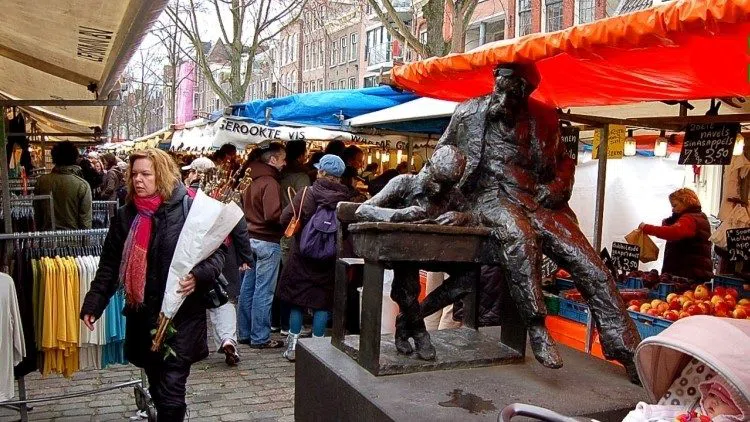
A few streets over, Lindengracht Markt (Jordaan) is the neighbourhood's Saturday-only general market, and it has the canal-side setting Noordermarkt's square doesn't — stalls running along the water rather than around a church. It's open-air and easy for groups, but the advice from regulars is consistent: get there before 11am, because the Saturday peak fills the narrow canal-side run fast. Produce and street food are €2-9, and the stallholder folklore here runs deep — several vendors have worked this exact stretch of canal for decades, and it shows in how efficiently they work a queue. Pair it with Noordermarkt's Saturday farmers market since they're a short walk apart in the same neighbourhood — a genuinely good market morning without needing to cross the city.
Bloemenmarkt: Famous, and Worth a Reality Check, Centrum
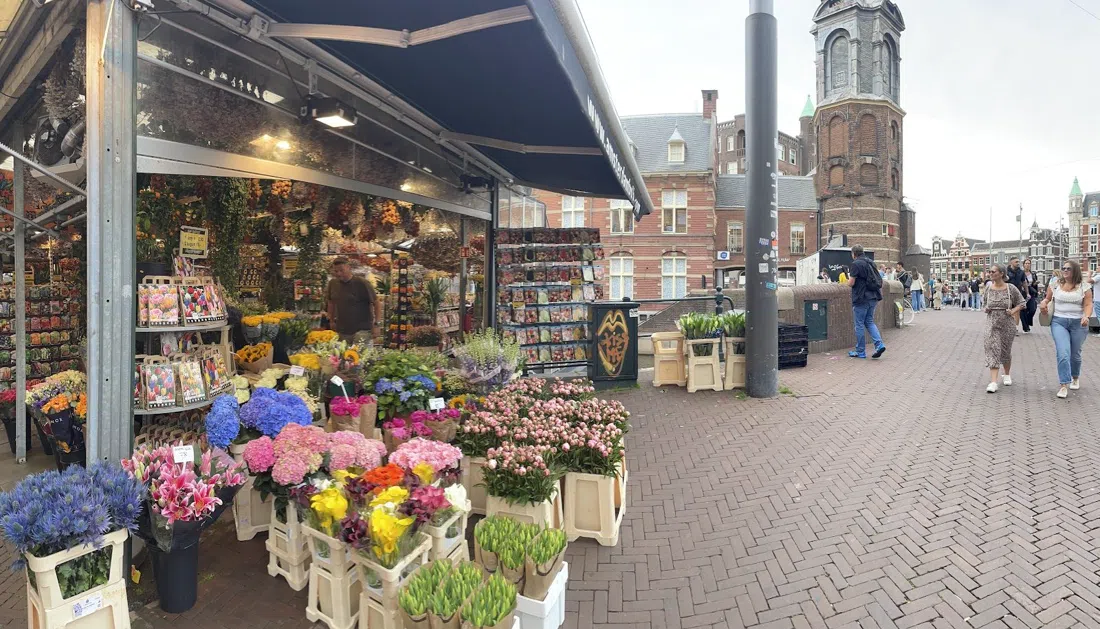
The Bloemenmarkt (Centrum, on the Singel) is the market every visitor has seen in a photo before they arrive, and it's worth being straightforward about what it actually is now: it leans souvenir and bulb-bag territory more than fresh-cut bouquets. The narrow floating platforms mean big groups should move through in twos and threes rather than clump and block the walkway, but it's free, always open, and easy to fit into an afternoon walking Centrum. Tulip bulb bags and souvenirs run €5-15 — a reasonable, packable buy if you're honest that you're shopping for a gift rather than a bunch of flowers for tonight's table. It's still worth seeing for the setting alone, floating stalls on a canal being a genuinely unusual piece of market infrastructure, but go in expecting a souvenir market with a flower-market history rather than a working flower market.
Waterlooplein: Amsterdam's Flea Market, Centrum
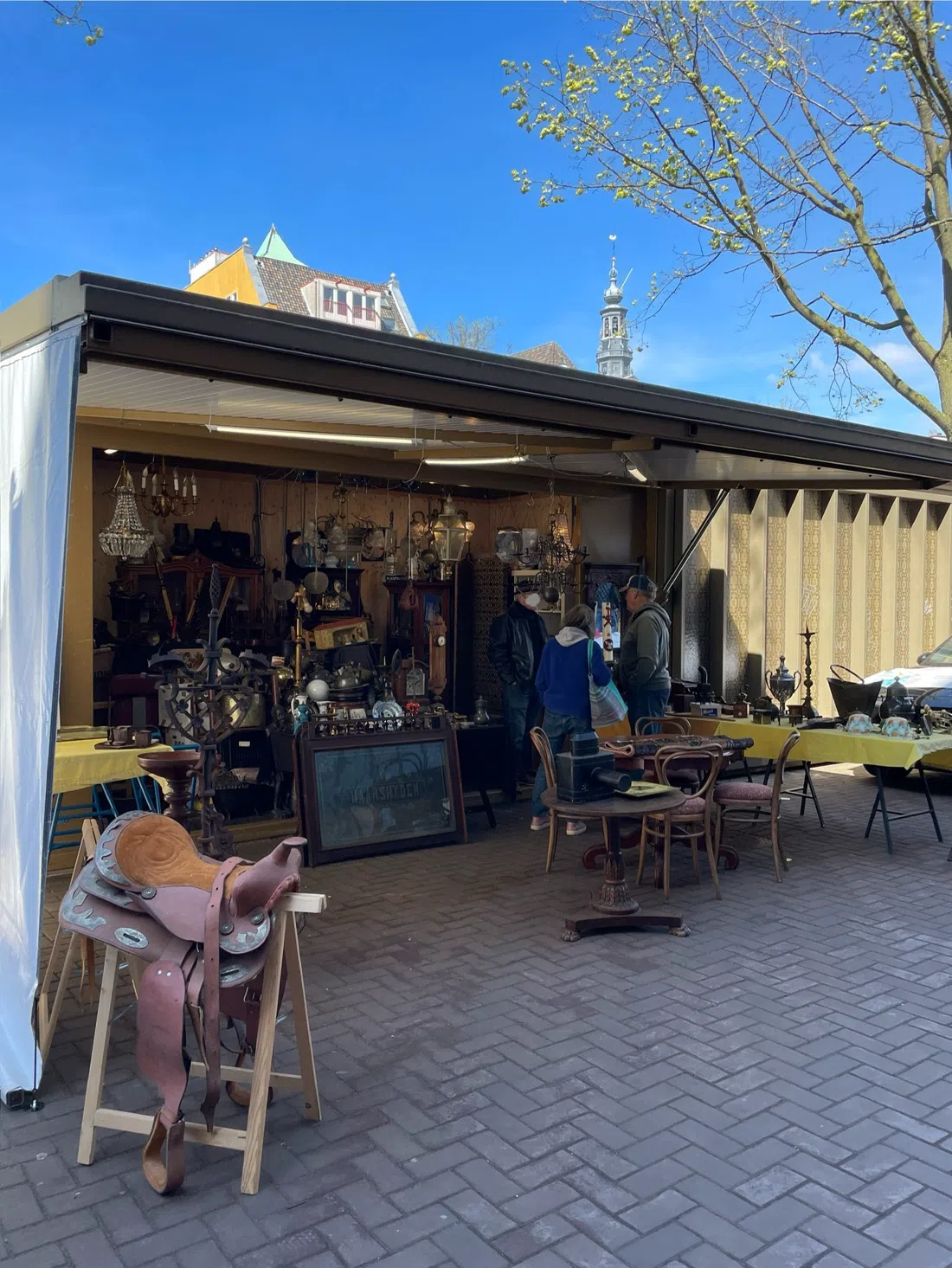
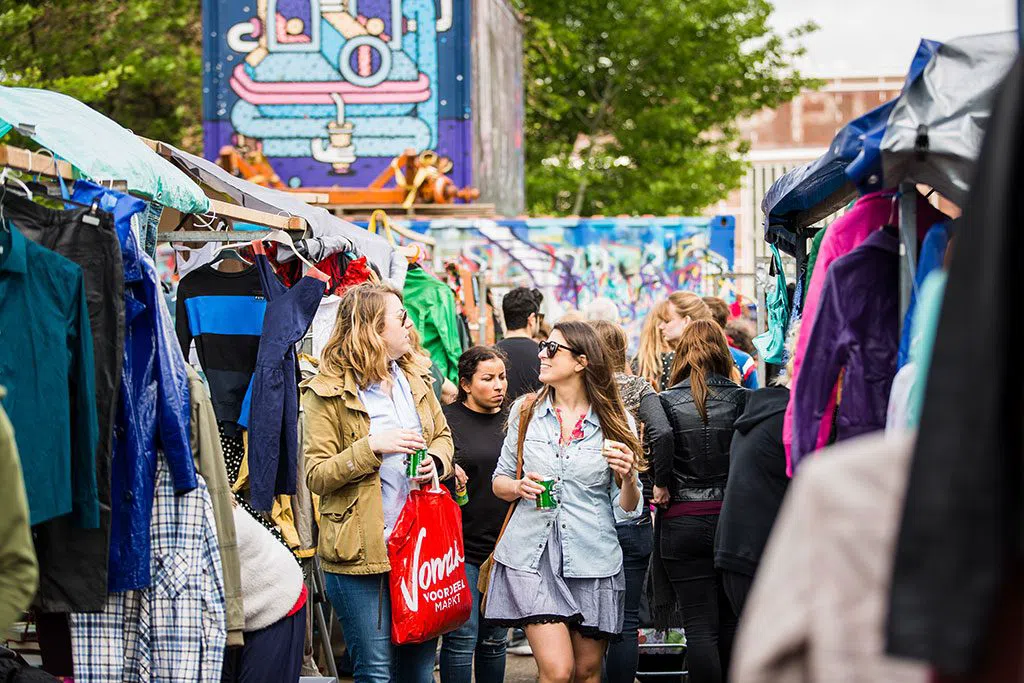
The Waterlooplein Flea Market (Centrum) gets called a "Monday morning" market in a lot of older write-ups, and that's worth correcting here: it actually runs Monday to Saturday, 9:30am to 6pm. What is true is that Monday brings the freshest turnover of stock, as vendors restock over the weekend, so if you're hunting vintage clothing, records, or genuine antiques rather than tourist bric-a-brac, a Monday-morning visit still pays off, especially early when the light and the square are at their most photogenic. It's a large open square, easy for groups to spread out in, and haggling is not just tolerated but expected — finds start from €2 and the price is a starting offer, not a sticker. Come with cash, come with time, and don't take the first price on anything that looks interesting.
Books, Stamps and Slow Browsing: Boekenmarkt op het Spui & Postzegelmarkt
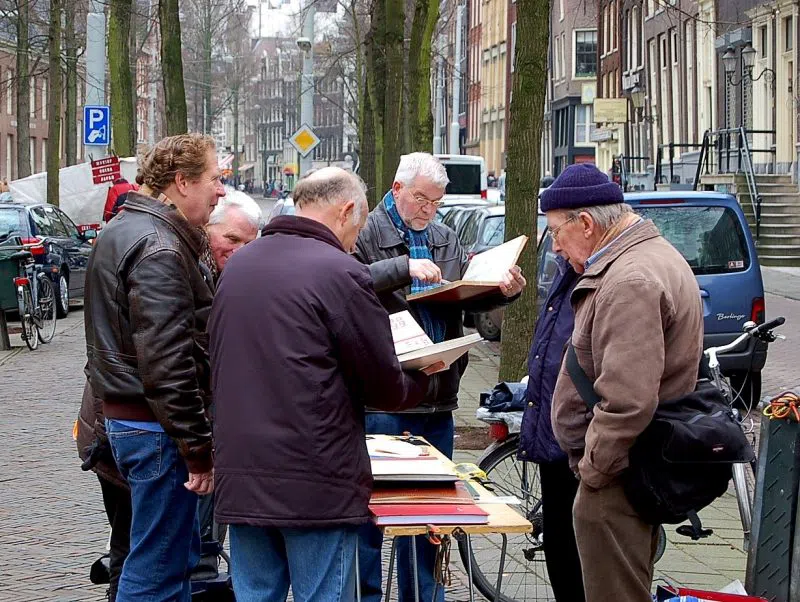
Not every market in this city is about food or flowers. The Boekenmarkt op het Spui (Centrum) sets up every Friday on a small square run by the same small guild of secondhand book dealers for decades — a quiet, literary counterpoint to the produce-and-stroopwafel energy elsewhere on this list, and one better suited to pairs or small groups browsing at their own pace than a large party moving as a unit. Books start from €1, and the appeal is entirely in the slow rummage rather than a specific target purchase. Nearby, the Postzegelmarkt (Centrum) deserves an honest footnote rather than a headline billing: it's a stamp, coin and postcard market that's shrunk to only a handful of stalls in recent years. It's still worth a five-minute detour for the decades-deep collector culture on display, but treat it as a curiosity stop, not a destination in itself — items go for a few euros, and there simply isn't enough left of it to justify building a visit around.
Nieuwmarkt and IJ-Hallen: Worth the Extra Steps
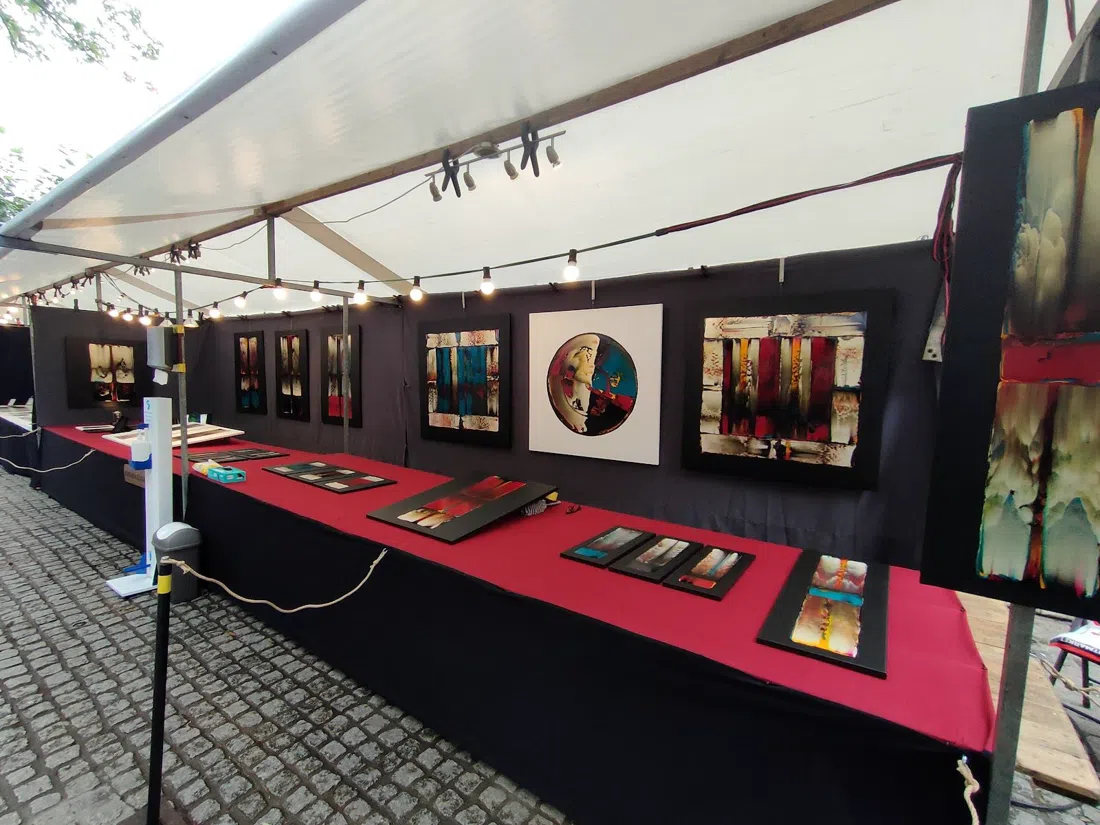
Two more, for anyone with a morning or a Sunday to spare. The Nieuwmarkt Organic Farmers Market (Centrum) runs Saturdays only, a short walk from Centraal Station, and pairs naturally with a Waterlooplein or Spui book-market visit on the same outing since all three sit within easy walking distance of each other. Organic produce and bites run €2-10 in an open square that's easy for groups on a short stop. Further out — and worth the specific trip — IJ-Hallen (across the IJ, reached by a free ferry from behind Centraal Station) claims to be Europe's largest flea market, and it earns the title on scale alone: a genuinely huge venue, built for crowds, with stalls running from €1 and haggling fully expected. It's monthly, not weekly, and the ferry ride itself is part of the appeal — check the exact date for the month you're visiting before building a day around it, since it doesn't run every weekend. A few euros gets you in the door, cheap for what amounts to a full day of browsing if you commit to it.
Practical Notes
Cash matters. Most stallholders across every market on this list take cards now, but small vendors — especially at Waterlooplein and IJ-Hallen, where haggling is the norm — still move faster and negotiate better with cash in hand. Carry small notes and coins; nobody wants to break a €50 for a €2 stroopwafel.
Timing is the whole game. Albert Cuyp and Dappermarkt run daily (Cuyp closed Sundays); Noordermarkt and Lindengracht are Saturday-morning rituals, with Noordermarkt flipping to antiques on Mondays; Waterlooplein runs six days but rewards a Monday visit; the Boekenmarkt is Friday-only; Nieuwmarkt is Saturday-only; IJ-Hallen is monthly. Arriving before 11am at any of the Saturday markets buys real breathing room before the crowds peak.
Budget realistically. A market breakfast — coffee, a herring roll, a stroopwafel — runs €6-10. A serious afternoon of vintage-hunting at Waterlooplein or IJ-Hallen depends entirely on what you find and how hard you haggle, but finds start as low as €1-2.
Getting around is straightforward on foot or by tram between the central markets (Bloemenmarkt, Waterlooplein, Spui, Nieuwmarkt, Noordermarkt and Lindengracht are all within a comfortable walking loop of the centre); Albert Cuyp and Dappermarkt sit a short tram ride south and east respectively. If you're building a longer stay around a market crawl, it's worth locking down a base first — see this Amsterdam hotel search for options within walking distance of the Jordaan and Centrum clusters. For the rest of the city beyond its stalls, the full Amsterdam guide covers where to eat, sleep and move between markets on quieter days.