
Amsterdam's canal houses get the postcards, but its most inventive brickwork sits a tram ride past the Ring, in worker housing blocks, an old shipping-company office and one cinema lobby where the same expressionist hand turned brick, wrought iron and stained glass into something closer to sculpture. This is the Amsterdam School — a home-grown movement built almost entirely between 1913 and 1930 — and unlike most "hidden" architecture stories, nearly all of it is still standing, still lived in, and still open to a visitor who knows which door to knock on. This route runs from the movement's true first building to its most theatrical interior, with the practical detail — ticket price, tour hour, who it actually suits — attached to each stop.
Before the Style Had a Name: De Bazel
Start at Stadsarchief Amsterdam (De Bazel), on Vijzelstraat a few minutes' walk from Muntplein. K.P.C. de Bazel finished this as the head office of the Nederlandsche Handel-Maatschappij bank in 1926, and it's worth knowing upfront that it predates the strict Amsterdam School canon — de Bazel worked in a more geometric, almost Egyptian-inflected idiom that historians treat as a prelude rather than the core movement. It still belongs on this list because every serious Amsterdam School walk stops here, and because the building itself argues the case: dark brick facades, carved stone reliefs at street level, and a banking hall that's now the city archive's reading room, sitting over a vaulted basement that once held safe-deposit boxes.
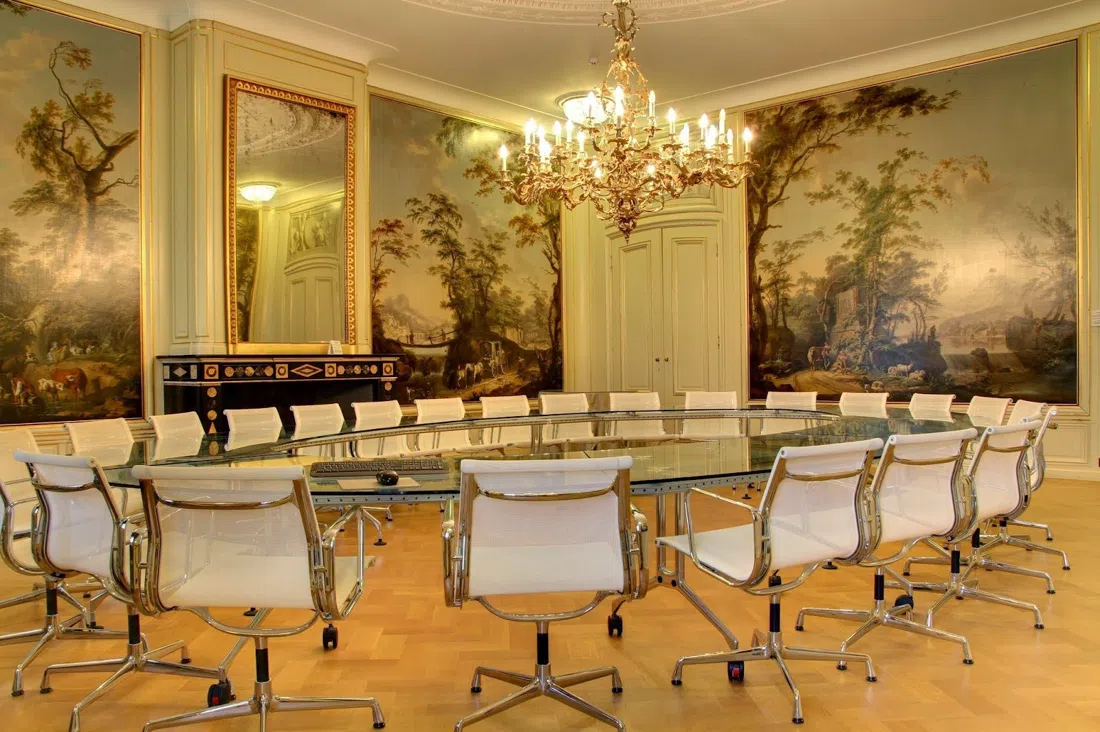
Entry to the free exhibition space and the Treasure Room is free, though you still need to collect a (also free) ticket at the desk — don't skip this step or the attendant will send you back. If you're around on a Sunday, the walk-in building tour (€7.50, no booking needed, just turn up) gets you into the vault and the upper galleries that the free exhibition doesn't cover. Groups can arrange a private tour by phone or email ahead of time, which is the better option if you're bringing more than four or five people, since the Sunday walk-in tour fills its capacity fast in high season.
Where the Movement Actually Starts
Most guidebooks send readers straight to Het Schip as the Amsterdam School's origin point. It isn't. That distinction belongs to Grand Hotel Amrâth Amsterdam (Het Scheepvaarthuis), a few minutes on foot from Amsterdam Centraal on Prins Hendrikkade. Completed in 1916 as the joint headquarters of six shipping companies, it's widely credited by architectural historians as the actual first Amsterdam School building — a full three years before Michel de Klerk's housing blocks made the style famous. The building is a working hotel now, which changes how you visit it: the lobby and the Great Hall are viewable by any visitor who walks in, free of charge, no ticket or reservation required, and it's worth the five minutes just for the ship-motif ironwork and the tiled ceiling over the reception desk.
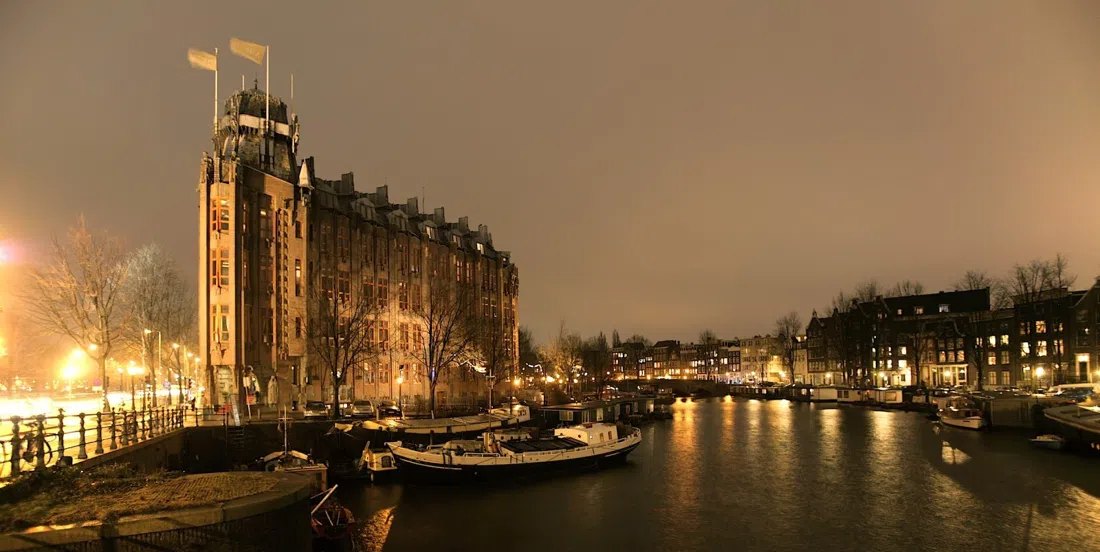
Going further than the lobby means booking ahead. Historical guided tours run in collaboration with Museum Het Schip and are aimed at groups — expect to pay roughly €15-20 per person. Because this is an operating hotel rather than a museum, tour slots are limited and can be bumped by hotel events, so confirm a date with Het Schip before building it into a tight itinerary, rather than turning up and hoping.
The Museums That Anchor the Route
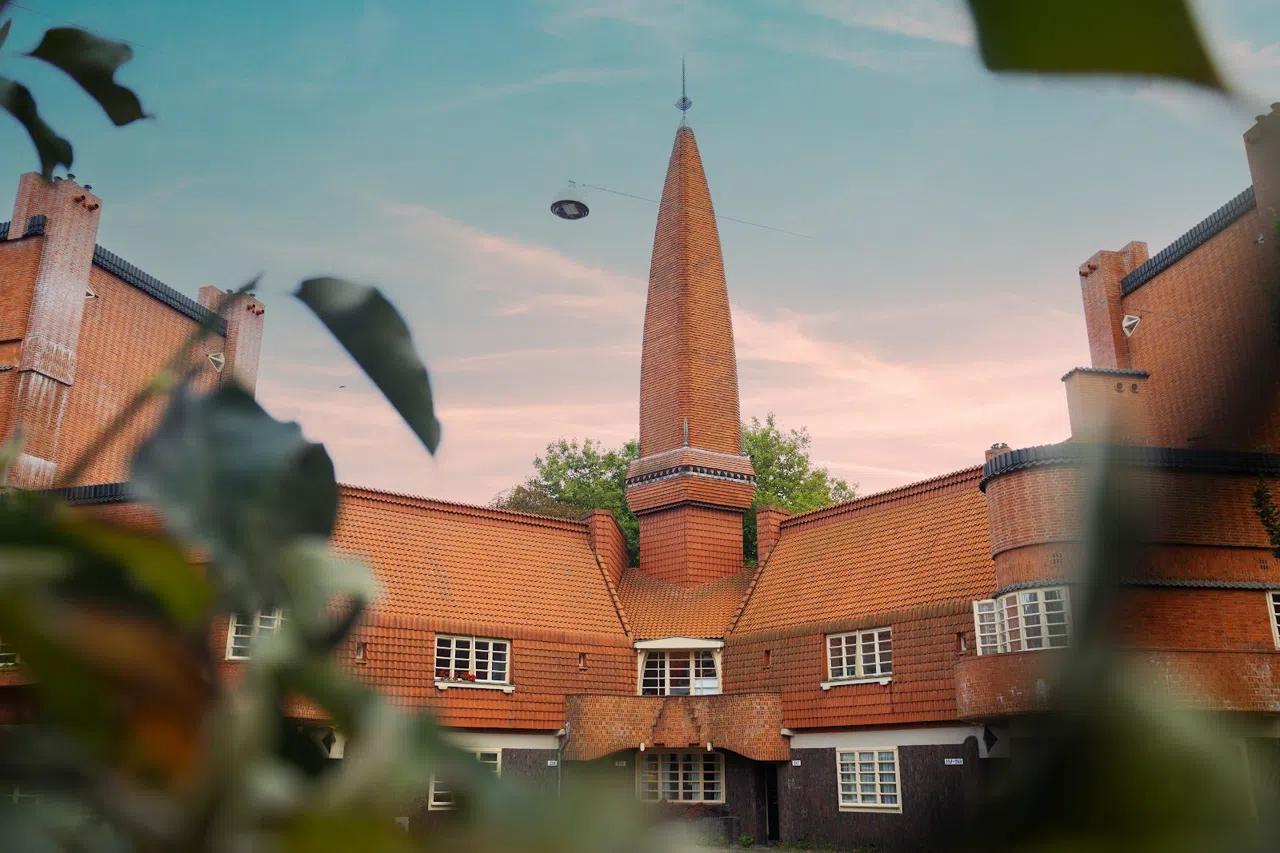
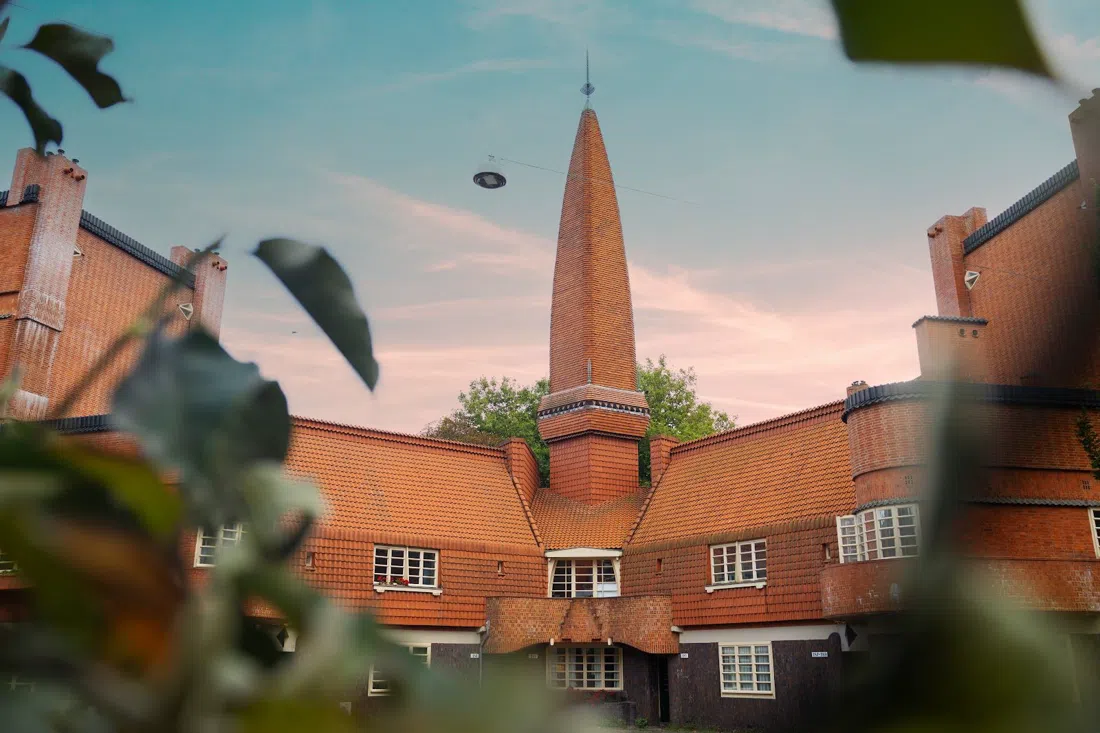
Museum Het Schip, in the Spaarndammerbuurt in Amsterdam-West (tram 3 toward Zoutkeetsgracht gets you close, then a short walk), is the building that actually gave the movement its public identity — de Klerk's 1921 social housing block, with its wave-like brick facade and the sculptural corner tower that's become the unofficial symbol of the style. This is a proper museum with a fixed programme: guided tours run on the hour, 11:00 to 16:00, and the 15:00 slot is always in English, which matters if you're not booking a private group tour. Entry with the guided tour is €19 for an adult; add €2 to also see the museum apartment and the old post-office interior, both preserved as period rooms rather than gallery space, and both worth the surcharge if you want a sense of what these flats actually felt like to live in. Private group bookings can be arranged outside the standard hour-by-hour tours. It works equally well for a solo visitor turning up for the English slot or a coach group booked weeks out — just don't assume you can wander freely without the guide, since access to the tower and the interiors is tour-only.
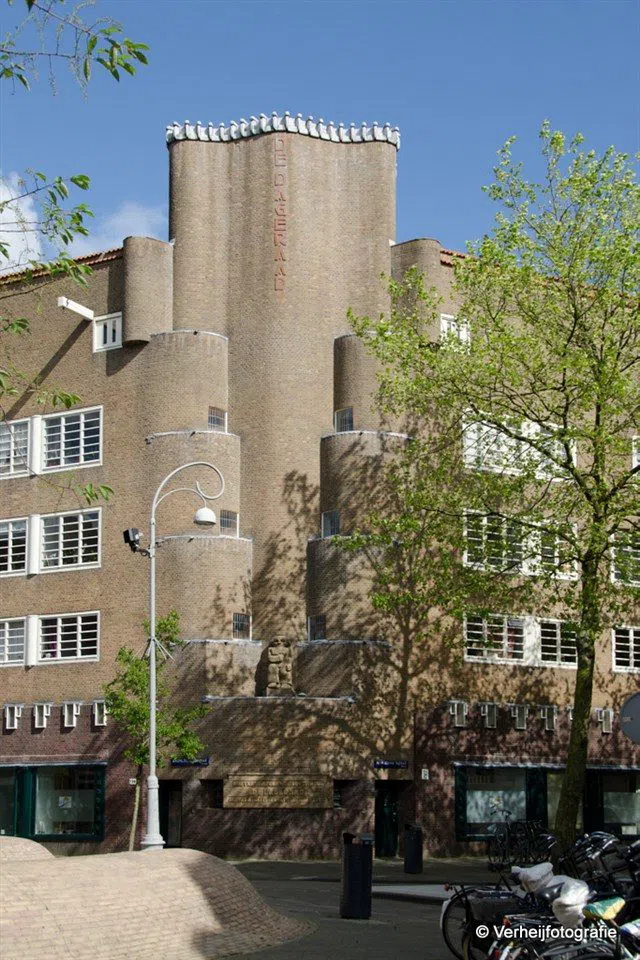
A short tram ride south, in Amsterdam-Zuid's Rivierenbuurt, Museum De Dageraad is the movement's other essential building and arguably the more emotionally direct one: worker housing, again with de Klerk, this time alongside Piet Kramer, built as total artworks down to the door handles and the shape of the chimneys. Entry runs about €19 and includes a free 45-minute guided tour — there's no separate charge for the tour itself, unlike the add-on system at Het Schip. The catch is the English-language slot: it only runs around 15:00, Thursday through Sunday, so it doesn't match Het Schip's daily English tour, and if you're trying to do both museums in English on the same day you need to sequence carefully — Het Schip first, De Dageraad on a Thursday-to-Sunday afternoon. Both museums sit on the same ticketing network, and groups are welcome at both, though De Dageraad's tours are smaller and more intimate than Het Schip's given the domestic scale of the rooms.
Brick Applied to Sport
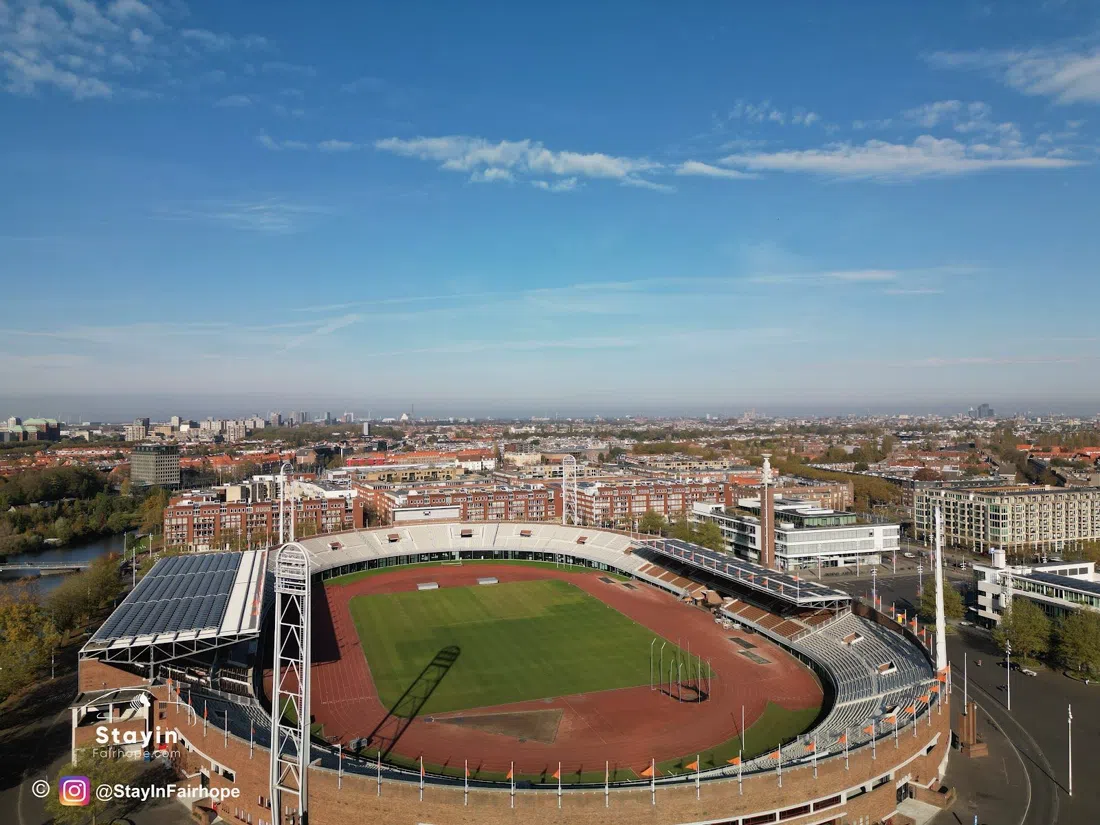
Not every Amsterdam School building is housing. The Olympic Stadium Amsterdam, built for the 1928 Games and sitting in the Stadionbuurt in Amsterdam-Zuid near Stadionplein, applies the same brick expressionism to a sports monument — the Marathon Tower, rising in banded brick above the stand, is one of the most photographed silhouettes in the city and rarely makes it onto an architecture-focused itinerary because it doesn't read as a museum piece. Groups of five or more can book a guided tour at €12.50 per person; solo visitors and couples get a self-paced digital tablet tour on weekdays, priced separately, which lets you move at your own speed through the stands and the old marathon gate without waiting on a group. It's a natural add-on if you're already heading south to De Dageraad — treat it as the third stop on a Zuid-focused half-day rather than a special trip on its own.
The Interior Counterpoint
Everything above is about facades and street-level brick. Pathé Koninklijk Theater Tuschinski, on Reguliersbreestraat near Rembrandtplein in the city centre, flips that: the real spectacle is inside. Built in 1921, the cinema mixes Amsterdam School brickwork with Art Deco and Art Nouveau flourishes in a way that's genuinely its own thing rather than a pure example of the style — worth saying plainly rather than overselling it as textbook Amsterdam School. What it delivers instead is the carpet, the lamps, the auditorium ceiling, and a level of ornamental ambition nothing else on this list attempts.
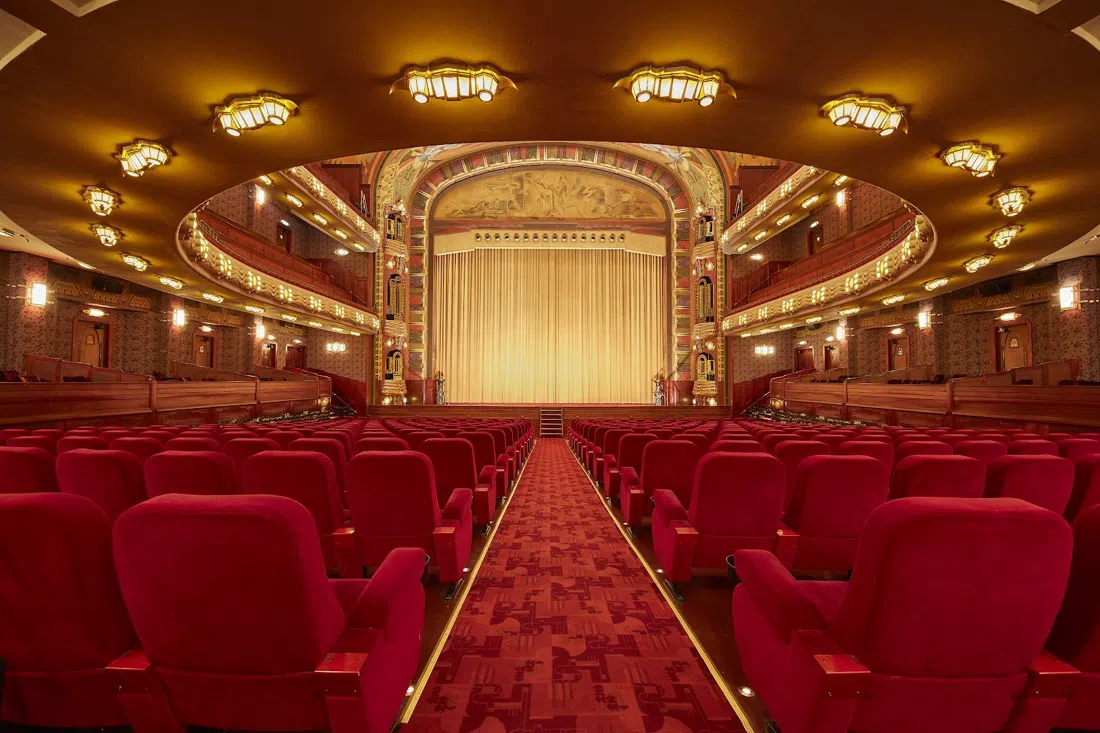
A self-guided audio tour runs daily at €11.50 per person and is the easiest way in for most visitors — you're moving through a working cinema, so tour hours are built around the screening schedule rather than fixed opening times, and it's worth checking the day's programme before you go rather than assuming you can walk in any time. Guided group and school tours are available by request through [email protected], priced individually depending on group size — this is the better route for a coach party or a school group, since the self-guided audio tour moves visitors through in a fairly tight flow that doesn't suit large clusters well.
Going Past the Museums, Into the Side Streets
The buildings above are all ticketed sights. What they don't show you is the Amsterdam School as it actually exists across the city — entire streets of housing blocks in areas most visitors never reach, like Betondorp out in Watergraafsmeer, where the style shows up in ordinary terraced housing rather than a flagship building. Two operators specialise in exactly that gap.
Architectuurtours Amsterdam runs walking and cycling group tours, minimum eight people, led by an English-speaking architectural historian, from €12.50 per person; private tours for smaller groups are priced on request. This is the operator to book if the museum buildings have you wanting to see the style at street scale rather than in a single preserved block — it's built specifically to go past Het Schip and De Dageraad into the streets around them.
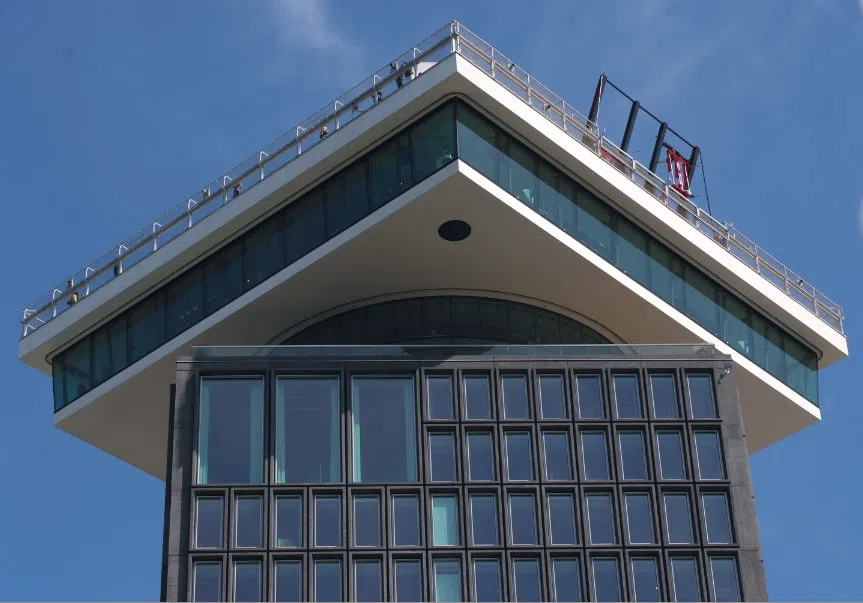
Architour works differently: it's built for private, corporate, and professional groups rather than walk-up tourists, with customisable and even multi-day programmes, priced on request depending on scope. Its guides are practising architects rather than generalist tour guides, which shows in the level of technical detail on offer — brick bonding patterns, structural choices, how the ornamental brickwork was actually built rather than just what it looks like. It's the right choice for a design-literate group, a firm outing, or anyone who wants the read of a working architect rather than a historical overview.
Planning the Route
Transport. GVB trams cover this entire route; a day ticket (roughly €9, check the current GVB app price before you go) is worth it the moment you're doing more than two stops, since Spaarndammerbuurt, the centre, and Amsterdam-Zuid are genuinely separate trips rather than walking distance from each other. Tram 3 serves the Het Schip side of things; the Stadionbuurt and Rivierenbuurt cluster in the south is best reached by tram rather than on foot from the centre — budget 20-25 minutes of tram time between the northern and southern halves of this itinerary.
Cash. The Netherlands runs almost entirely on card and contactless; carrying cash isn't necessary anywhere on this list, including the Stadsarchief's Sunday walk-in tour, which takes card.
Timing. Weekday mornings are the quiet hour across all of these — Het Schip and De Dageraad both get school groups and coach parties by early afternoon, so an 11:00 start at Het Schip beats a 14:00 one. Tuschinski is genuinely quiet mid-morning before the first screening block; avoid weekend evenings if you want the audio tour without dodging a queue for tickets. The Olympic Stadium's digital tablet tour, being weekday-only, naturally avoids weekend crowds by design.
Budget. A full day covering Het Schip (€21 with the apartment add-on), De Dageraad (€19), and the Stadsarchief's Sunday tour (€7.50) runs about €47.50 per person before transport — add the Tuschinski audio tour (€11.50) if you're routing back through the centre, or swap in a guided Architectuurtours walk (from €12.50pp) if you'd rather have one guide narrate the whole day instead of moving museum to museum solo.
If you're building a longer stay around this itinerary, the Amsterdam hotel search is the place to start, and the Amsterdam guide covers everything else worth knowing about the city beyond this one architectural thread.