Especial Amsterdam
Walking Nieuwmarkt and the Lastage in Amsterdam
The Waag, Rembrandt's house, a leaning lock-keeper's café and the Zeedijk temple, with the hours, prices and booking rules that decide what order you walk them in.

Por Robin HaasThe slow way through Amsterdam's canals, courtyards and back streets

The Waag has stood in the middle of Nieuwmarkt since 1488, first as the Sint Antoniespoort city gate, later as a weigh house and the anatomy theatre Rembrandt painted. A small produce, flower and cheese market runs around it from Monday to Friday. Rembrandt's own house on Jodenbreestraat is now a museum selling timed tickets at €23.50.
The Waag and the market days on Nieuwmarkt

De Waag (Nieuwmarkt 4) sits marooned mid-square, a squat brick gate with five round turrets under pointed grey-slate caps and a deep arched gateway through the middle. Trams and bikes pass on either side. It is the oldest surviving non-religious building in Amsterdam, and the quarter arranges itself around it.
Waag Futurelab holds the upper floors. The ground floor is Café-Restaurant In de Waag, candlelit inside, with a parasol terrace wrapping the base of the tower; mains are €€. The square and the exterior are free and there is no limit on numbers. Reserve the café ahead for a party of eight or more, and ask about the upstairs meeting rooms if you want a room of your own.
Market days decide which morning to come. Monday to Friday is the small produce, flower and cheese market. The organic farmers' market takes the square on Saturdays from 9:00 to 17:00, and an antiques and flea market fills it on Sundays from May through October. White canopies ring the Waag on open cobbles, with crates of Dutch cheese, tulip bunches, raw herring and bric-a-brac trestles, and café terraces and brick gabled houses closing the square. Browsing is free and snacks run €3 to €8. Arrange to meet at the Waag. The middle of the market is shoulder-to-shoulder on Saturdays and summer Sundays.
Lokaal 't Loosje (Nieuwmarkt) opens at 08:30 and serves breakfast from then, which makes it the place to sit while the stalls go up. The room was a tram waiting room in the 19th century and keeps the etched glass, the dark wood panelling and large wall panels of blue-and-white tile tableaux showing an old brewery and its drinkers. There are 12 taps. Beer is €4 to €6 and lunch €8 to €15. The heated terrace faces the Waag, and the doors stay open until late, 03:00 on Friday and Saturday.

Planifica tu viaje a Amsterdam
Precios en directo de nuestros socios de reservas.
Cancelación gratuita en muchas habitaciones. Podemos recibir una comisión cuando reservas.
Rembrandt's house and the Zuiderkerk churchyard
Museum Het Rembrandthuis (Jodenbreestraat) is the tall red-shuttered 17th-century canal house with white step-gable trim where Rembrandt lived and worked from 1639 to 1658, and which he lost to bankruptcy. The painter's studio has been reconstructed under its north light, with grinding stones and pigment jars to hand, and a cabinet of shells, armour and plaster casts stands in another room. Etching and paint-grinding demonstrations run daily, which puts it ahead of most house museums.
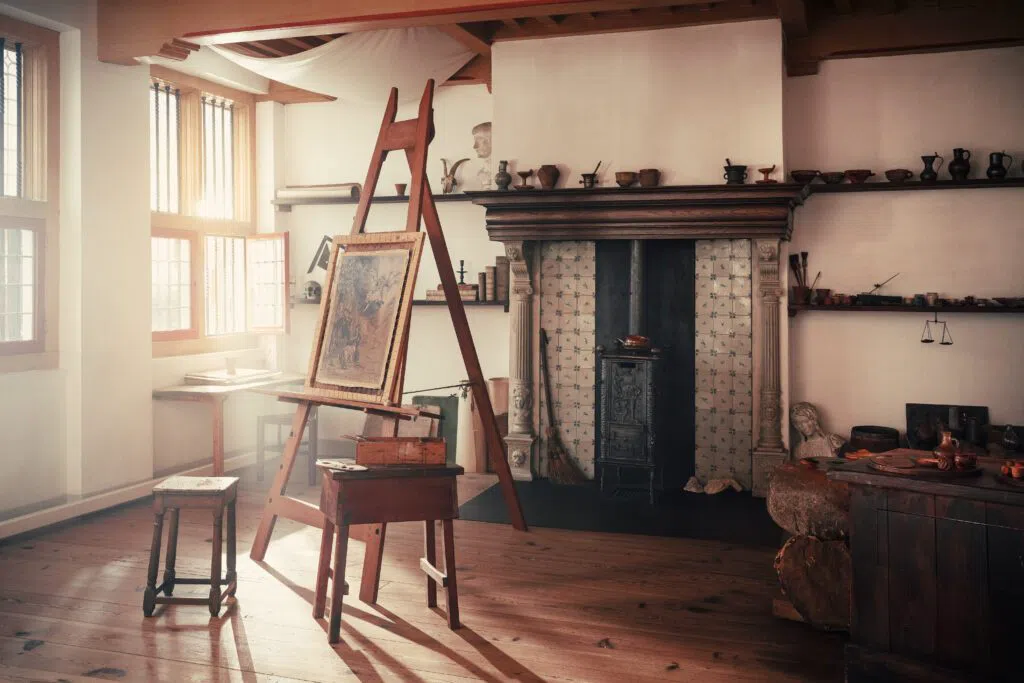
Adult entry is €23.50, €8 for ages 6 to 17, and €19.50 off-peak. A Museumkaart or an I amsterdam City Card covers entry. Tickets are timed, so book a day or two ahead. The Portuguese Synagogue and the Jewish Museum of the Jewish Cultural Quarter sit one bridge beyond the house, five minutes on foot.
Zuiderkerk (Sint Antoniesbreestraat) was built by Hendrick de Keyser between 1603 and 1611 as the first purpose-built Protestant church in Amsterdam. The 68m Dutch Renaissance tower of 1614 rises in sandstone and brick to a tiered octagonal lantern with a green-copper crown and gold clock faces. Monet painted that tower. A low gateway off Sint Antoniesbreestraat leads into the small walled churchyard, which is free to walk into and the quietest corner in the centre.

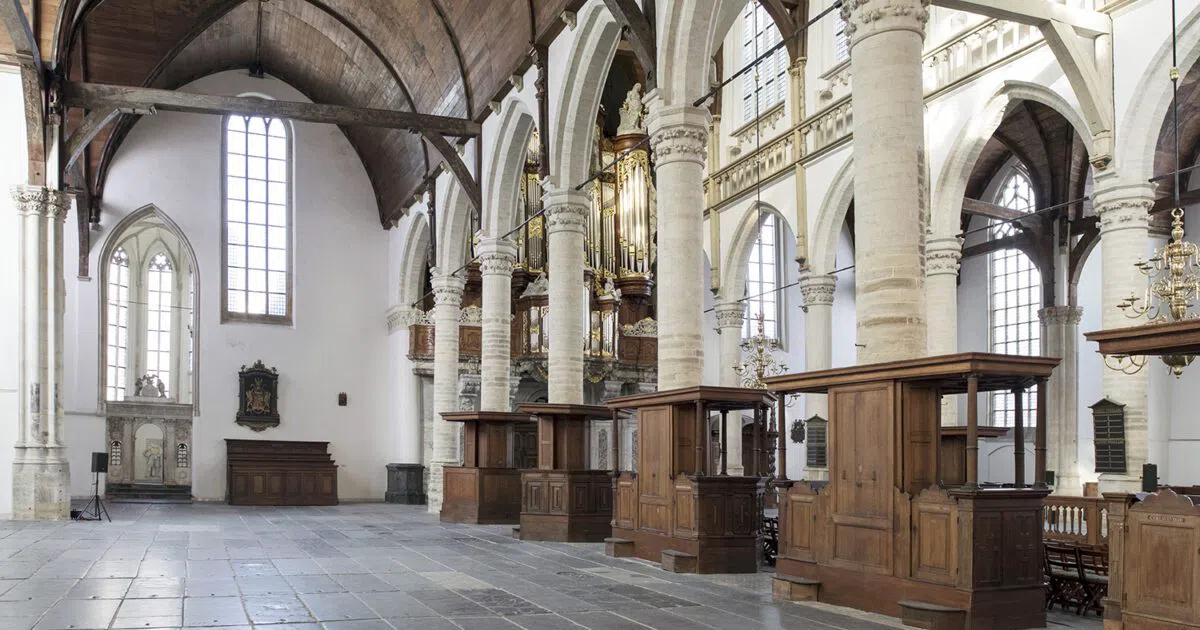
The interior is now hired out as an event space, so what you can see inside depends on what is on that day. Tower climbs go up in small guided groups during the summer months and cost a few euros when they run. The old tower-tour website has lapsed, so check before you build a climb into the day.
Huis de Pinto on Sint Antoniesbreestraat
Huis de Pinto (Sint Antoniesbreestraat) is the cream-rendered Italianate façade with pilasters that stands out against its modern brick neighbours. A Sephardic merchant built it in 1680, and the Nieuwmarkt protests fought off its demolition for the metro. It is now a neighbourhood library and cultural centre, and the library and reading room are free to walk into from Monday to Friday in the daytime and on Saturday afternoon.
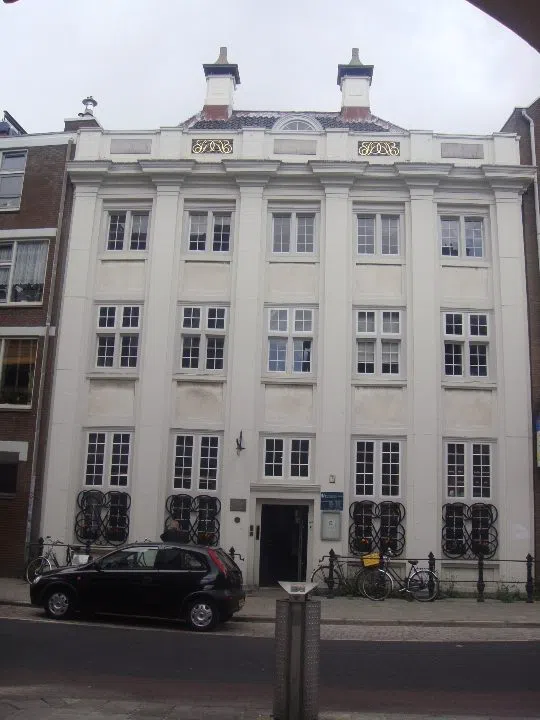
Look up once you are inside. A painted ceiling of gilded scrollwork and soaring birds runs above the shelves of secondhand books and the reading tables. It is the best free interior in the quarter, and the only thing asked of you is quiet. People read here, and events take the space.
The Zeedijk and Chinatown

Fo Guang Shan He Hua Temple (Zeedijk) has a Chinese palace-style front wedged into a row of Zeedijk houses, with a sweeping tiled roof, upturned eaves, red columns, gold lettering and stone lions flanking the ceremonial centre gate. Consecrated in 2000, it is the largest Buddhist temple in Europe built in the traditional Chinese style. Incense burns inside before a gilded Avalokitesvara.
Visitors are welcome Tuesday to Sunday in the afternoons. Entry is free and donations are welcome; a guided tour is €5. Enter by a side gate, because the centre gate is reserved for monastics, and cover shoulders and knees. This is a working temple and Sunday morning services are busy.
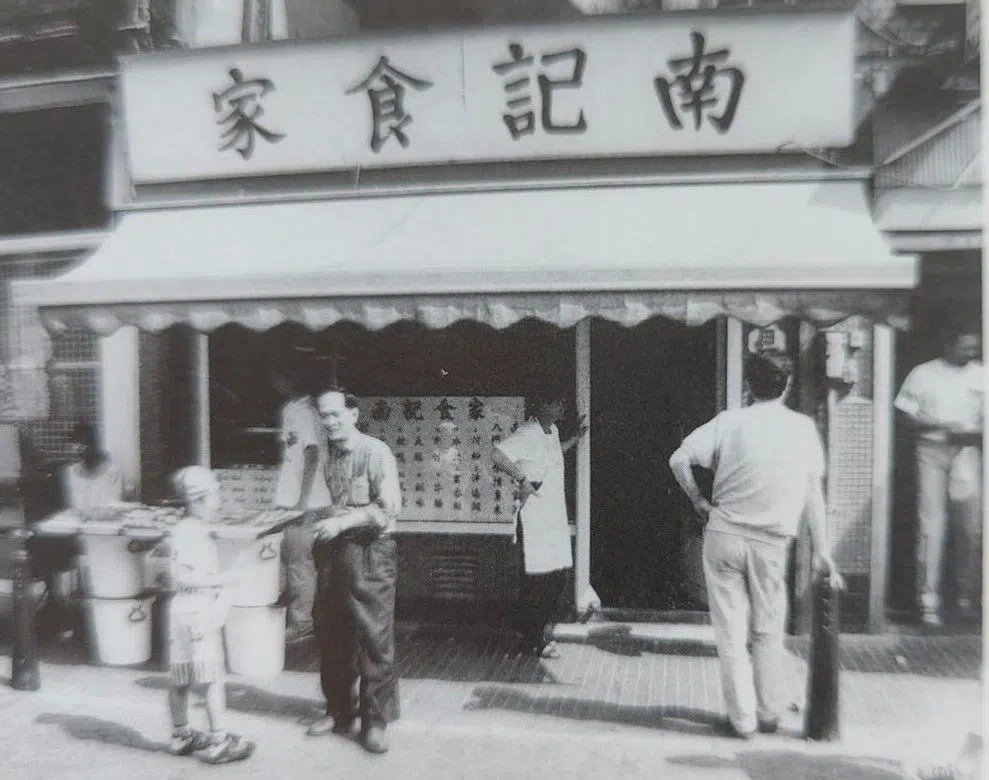
Nam Kee (Zeedijk 111 to 113) has been the Chinatown benchmark since 1981. Lacquered roast ducks and pork strips hang in the steamy front window, the tables inside are formica-simple, and the steamed oysters in black bean sauce arrive on an oval plate scattered with spring onion. Those oysters gave a Dutch novel and the film of it their title. Dishes are €12 to €22. The original branch opens Sunday to Thursday from 12:00 to 21:30 and Friday and Saturday until 22:00. No branch takes reservations; the Nieuwmarkt branch opens evenings only and carries the overflow.
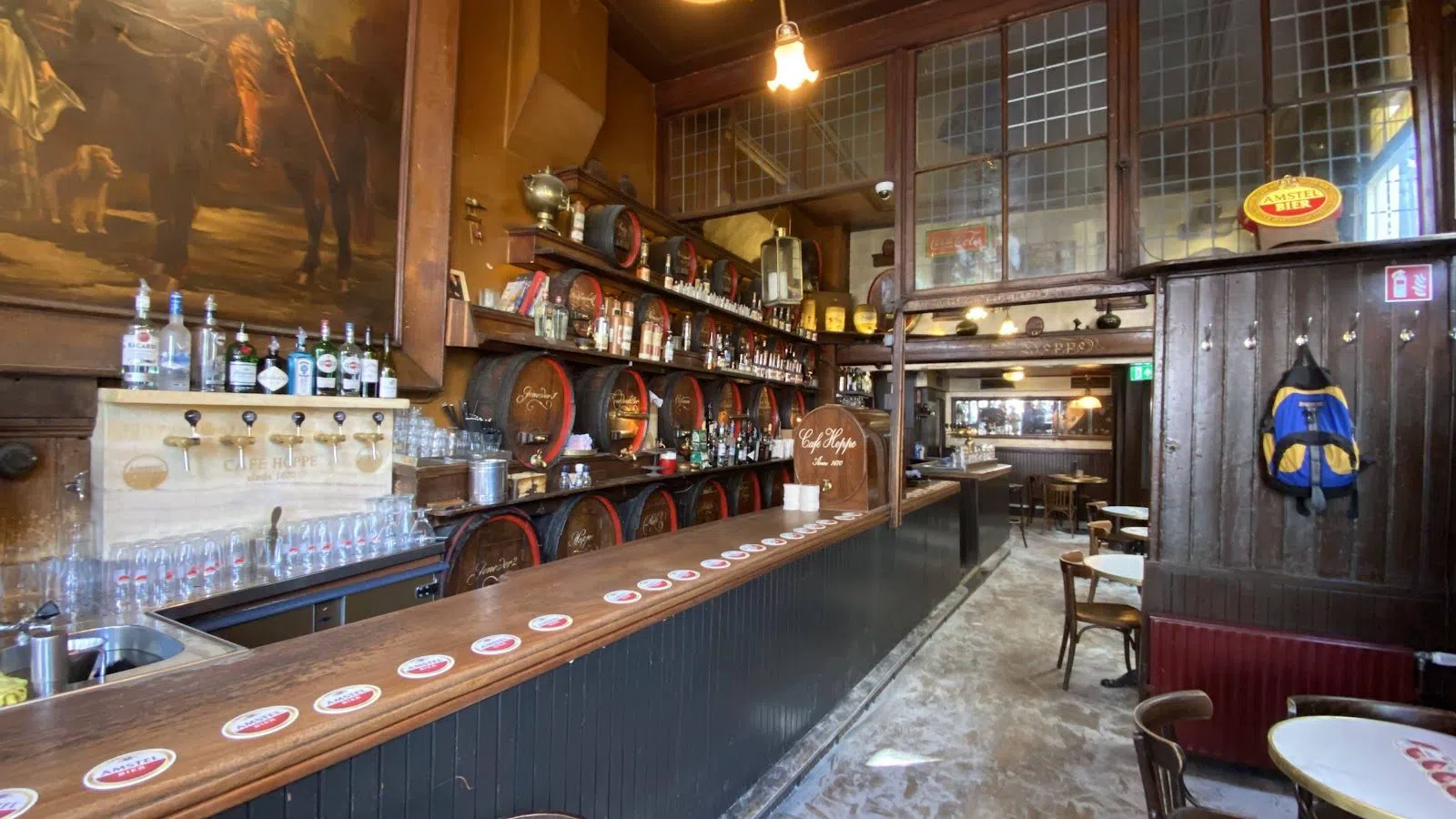
Café In 't Aepjen (Zeedijk 1) is a narrow timber-framed house (c.1550), one of two surviving timber houses in the centre, and a sailors' bar since 1519. The name recalls seamen paying their tab with pet monkeys, and stuffed and carved monkeys hang from the dark beamed ceiling above the old maritime prints and the jenever bottles. The bar is barely three metres deep. Jenever or beer is €4 to €6. Nobody takes bookings and there is no door policy, so get there early and treat it as one drink at the harbour end of the Zeedijk.
Oudeschans and Montelbaanstoren
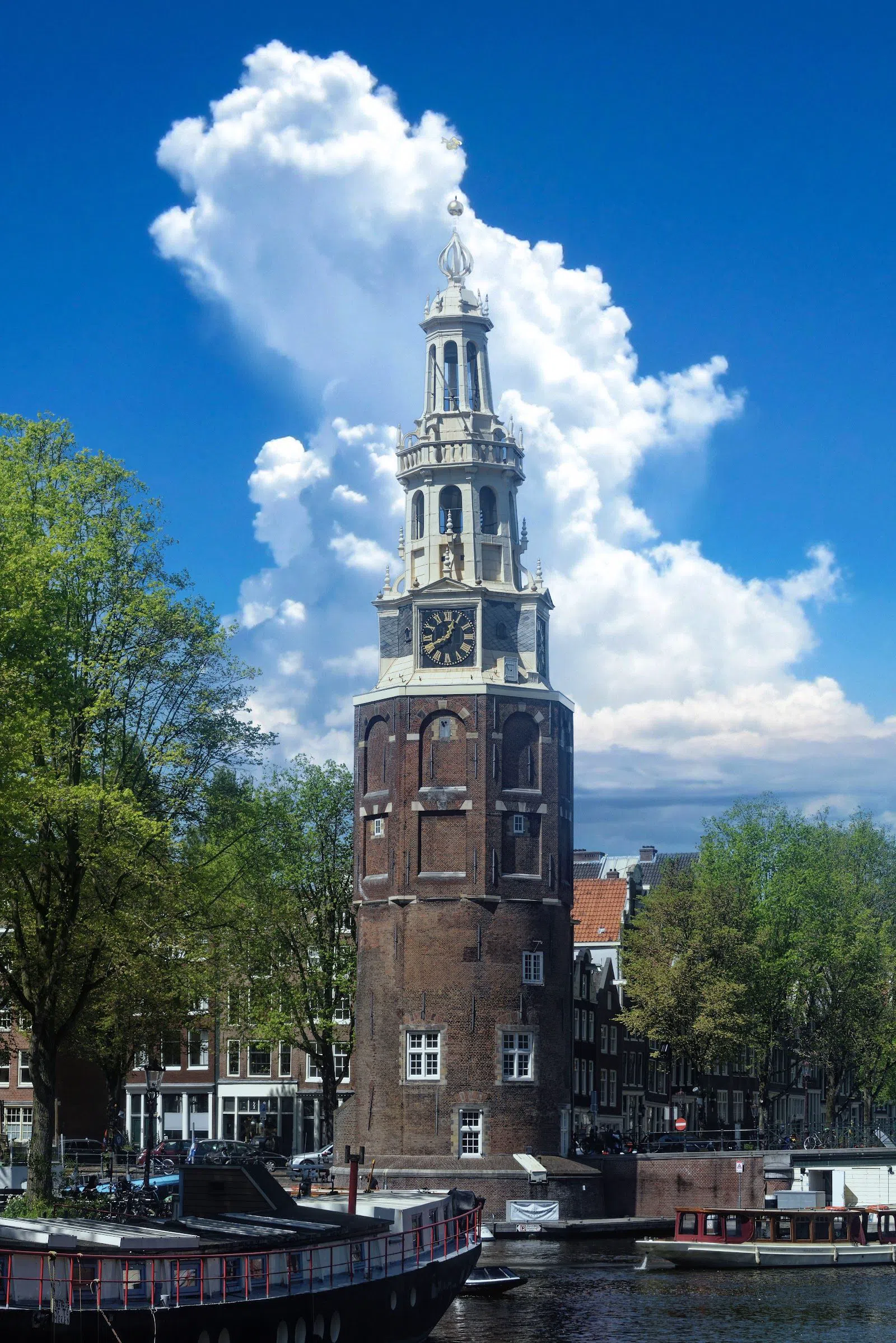
Montelbaanstoren (Oudeschans) is the defensive brick tower of 1516 on the Oudeschans waterfront, a plain round base carrying Hendrick de Keyser's 1606 wooden steeple in cream and grey with a clock and a weathervane. Houseboats and a leaning row of gabled houses reflect in the water beneath it. Rembrandt drew it and sailors timed their departures by its bell. The quay and the exterior are free, with no limit on numbers. The interior is a private boat-tour office and closed to visitors, so five minutes and a photograph is the whole stop.
Walk the Oudeschans from the tower to the lock. That stretch is the prettiest walking in the quarter, and it ends at the door of the next stop.
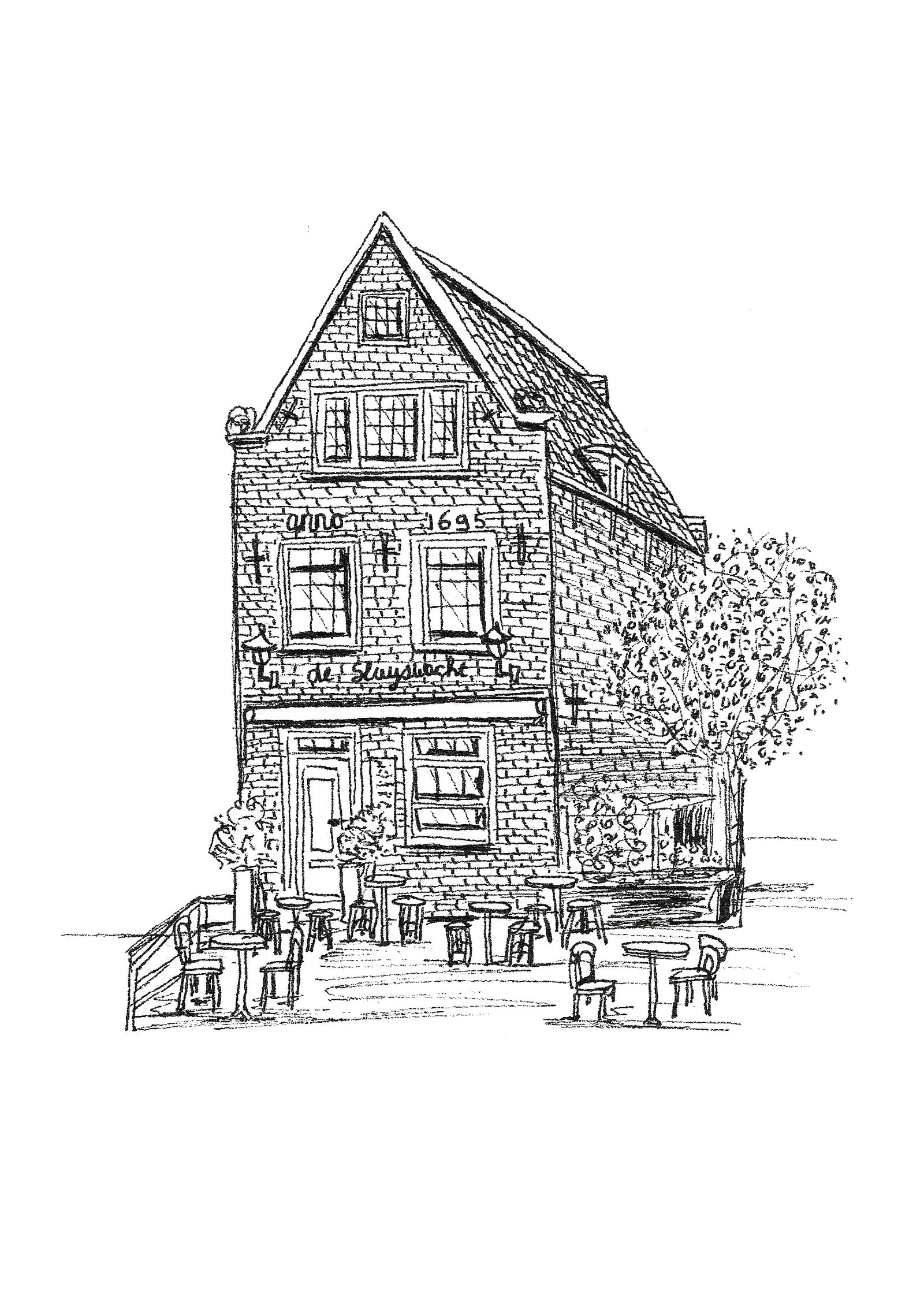
Café de Sluyswacht (Sint Antoniessluis) is the freestanding lock-keeper's cottage of 1695 that leans at an alarming angle because it has no neighbours to lean on. Black timber, white window frames, and a wooden deck terrace over the water with Montelbaanstoren down the canal. Beer is €4 to €6. It stands 30 seconds from the Rembrandt House, which makes it the drink to take after the museum. Inside is tiny and the terrace is first come, first served. It fills the moment the sun appears.
GASSAN Diamonds on Uilenburg
GASSAN Diamonds (Uilenburg) fills the huge 1879 steam-powered diamond-polishing works, red brick with rows of tall arched windows, in the restored Boas brothers' factory. It is the last working survivor of the Jewish diamond industry that made this island. Guided tours are free, run daily and are given in many languages, and they take you past bright polishing benches with spinning scaifes and loupes and a watchmakers' bench. The tour ends on the sales floor, where stones run to €€€€. Nobody minds if you buy nothing.

Dinner and a brewery off the square
De Bekeerde Suster (Kloveniersburgwal) is a tall split-level pub with copper brewing kettles and steel tanks glowing behind glass at the back, long wooden tables and canal-side windows. Its own beer comes off those tanks, alongside eight guest taps and 45 bottles on the chalkboard list. House beer is €5 to €7 and mains €18 to €25, daily from 12:00 to 00:00. They also run brewery tours and lay on group menus. The site was a convent that once housed reformed prostitutes. The name means 'the converted sister'.

Café Bern (Nieuwmarkt 9) has served cheese or meat fondue and little else for nearly 50 years. Communal caquelons bubble over burners on close-packed wooden tables in a dim room with nicotine-brown walls, bread baskets and carafes of white wine. Cheese fondue is €20 to €25 a person. The café opens daily from 16:00 to 01:00, with food from 18:00 to 23:00. Booking is by telephone only, from 15:00, on +31 20 622 0034; there is no online form.

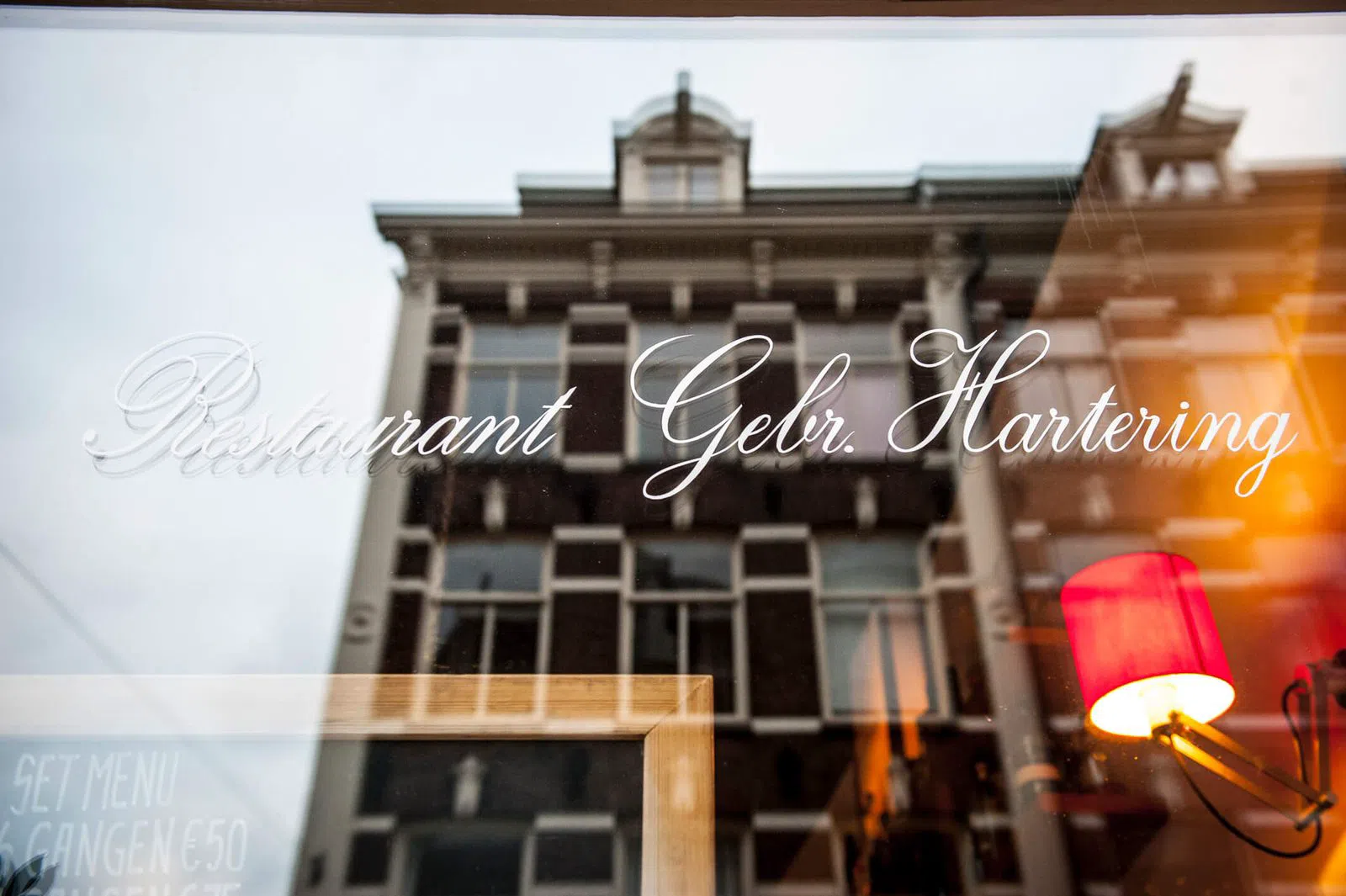
Gebr. Hartering (Peperstraat) is the serious dinner address here, two brothers cooking seasonal Dutch produce in a corner building on quiet Peperstraat in the Lastage. The room is half brown café and half French bistro: brown wooden walls, white linen cloths, candle stubs, an open kitchen sending out small seasonal plates, natural-wine bottles lined along a shelf. The set menu is €55 to €75. It opens evenings only and locals book it instead of wandering in. A party of six or more takes the whole back section, so call ahead.
Where to stay
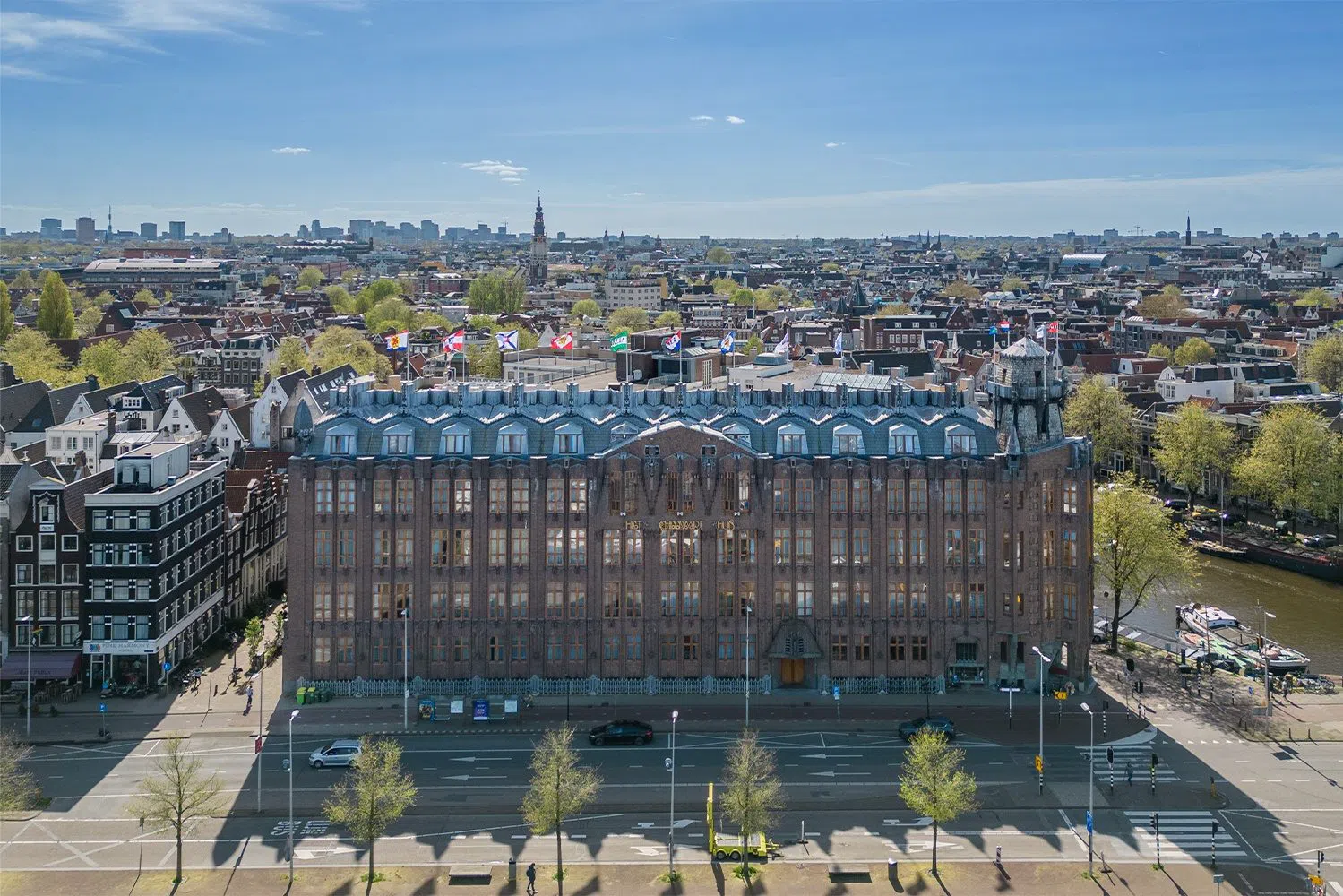
Grand Hotel Amrâth Amsterdam (Prins Hendrikkade) occupies Het Scheepvaarthuis of 1916, the former headquarters of the shipping lines and the founding monument of the Amsterdam School. The building is shaped like a ship's prow, its dark brick carved with Neptunes, seahorses and compass motifs, and inside there is a stained-glass stairwell under wrought-iron lanterns. It has 205 rooms, eight conference and banquet rooms, a spa and Restaurant Seven Seas. Rooms run €250 to €450 a night by season. Ask for a canal-facing room. It stands on the Lastage waterfront, five minutes' walk from Nieuwmarkt.
Planning your days
He Hua Temple takes visitors Tuesday to Sunday in the afternoons, the Huis de Pinto reading room is shut on Sunday, and the Zuiderkerk interior depends on the day's event. Book the Rembrandt House ahead online, and Café Bern by telephone.
See the Amsterdam guide and the Amsterdam hotel search.
Antes de ir
Which day is best for the Nieuwmarkt market?
A small produce, flower and cheese market runs Monday to Friday. The organic farmers' market is on the square on Saturdays from 9:00 to 17:00, and an antiques and flea market replaces it on Sundays from May through October. Browsing is free and snacks cost €3 to €8.
How much does the Rembrandt House cost and do I need to book?
Adult entry is €23.50, or €19.50 off-peak, and €8 for ages 6 to 17; a Museumkaart or I amsterdam City Card covers it. Entry is by timed slot, so book a day or two ahead, because large walk-up parties may not get in.
Can I go inside the He Hua Temple on the Zeedijk?
Yes, Tuesday to Sunday in the afternoons. Entry is free, donations welcome, and a guided tour costs €5. Use a side gate, since the centre gate is for monastics only, and cover your shoulders and knees. It is a working temple, and Sunday morning services are busy.
Can I reserve a table at Café Bern online?
No. Café Bern takes reservations by telephone only, from 15:00, on +31 20 622 0034. It opens daily from 16:00 to 01:00 with food from 18:00 to 23:00, and the room is small, so if there are more than about six of you, call well ahead.
Can you climb the Zuiderkerk tower?
Only in summer, in small guided groups, for a few euros on the days the climbs run. The old tower-tour website has lapsed, so check before you plan around it. The churchyard and exterior are free. The interior is hired out for events, so access depends on what is booked that day.