The Amsterdam issue
Your First Amsterdam Weekend Without the Museum Queue
Forty-eight hours in Amsterdam spent on free ferries, in morning markets and in brown cafés instead of ticket queues, with the prices, the closing days and the door rules.
By Robin HaasThe slow way through Amsterdam's canals, courtyards and back streets
The ferry behind Centraal Station leaves every few minutes, costs nothing, and takes about four minutes to put a quieter city under your feet. Most first weekends in Amsterdam happen inside a ninety-minute walking loop of that station: two museum queues, a cruise ticket bought from a kiosk, dinner on the Damrak. People go home having seen a postcard rather than a city. The better version of the same forty-eight hours mostly means walking out of that loop instead of deeper into it.
Friday night when nobody can agree
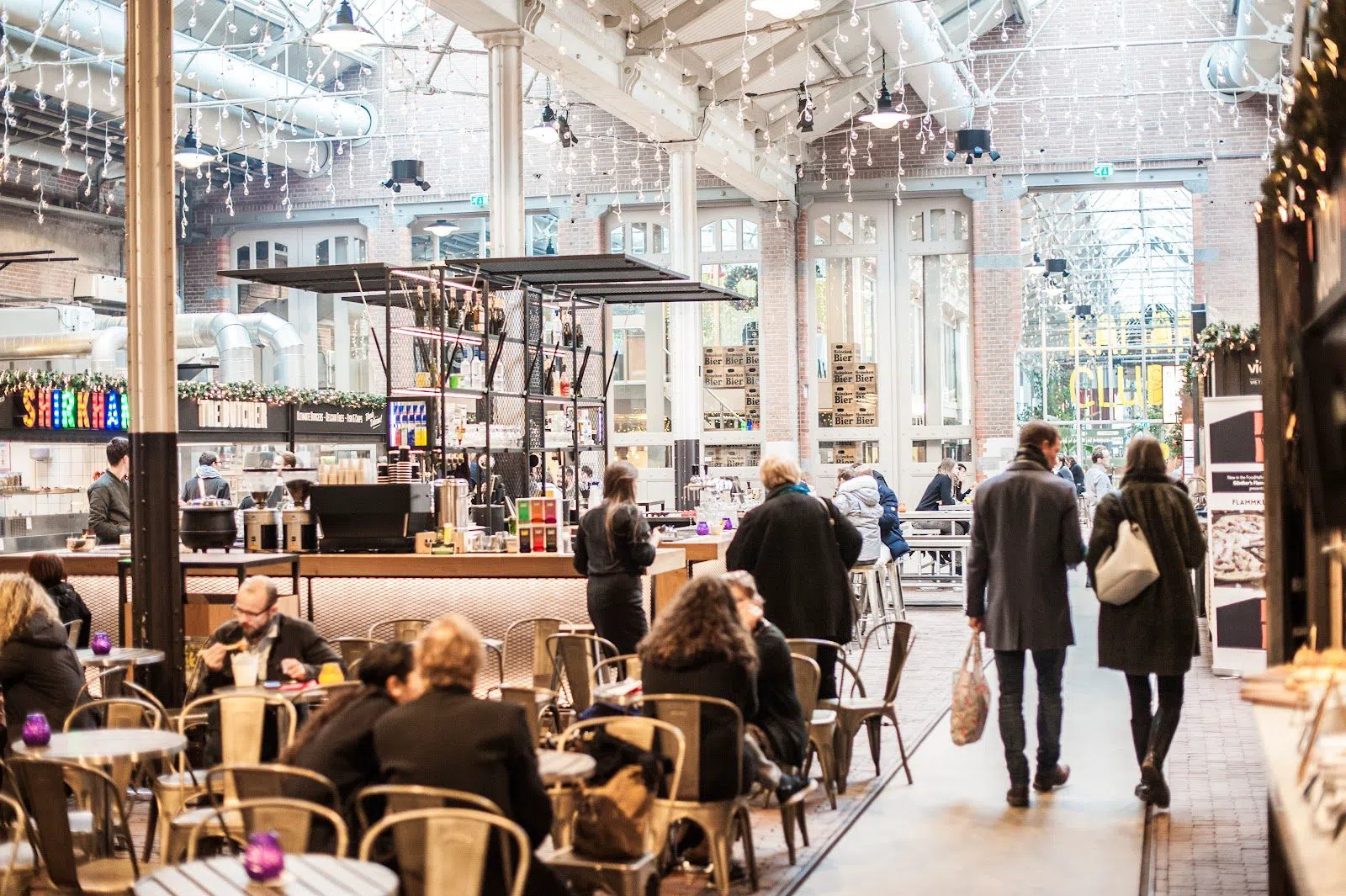
Foodhallen Amsterdam (Oud-West, inside the old tram depot at De Hallen) exists for the moment when four people want four different dinners. Twenty-plus kitchens surround one bar, small plates run €6-14 and drinks €4-9, and nobody has to pretend they wanted the same thing. It is walk-in only with shared seating and no bookings for the public floor, so the rule is simple: arrive before 18:00, claim a table, then split up to order. On Friday and Saturday evenings after that hour it is rammed and you will be eating standing up. Larger group enquiries go through [email protected], though for anything under eight you are better off just turning up early.
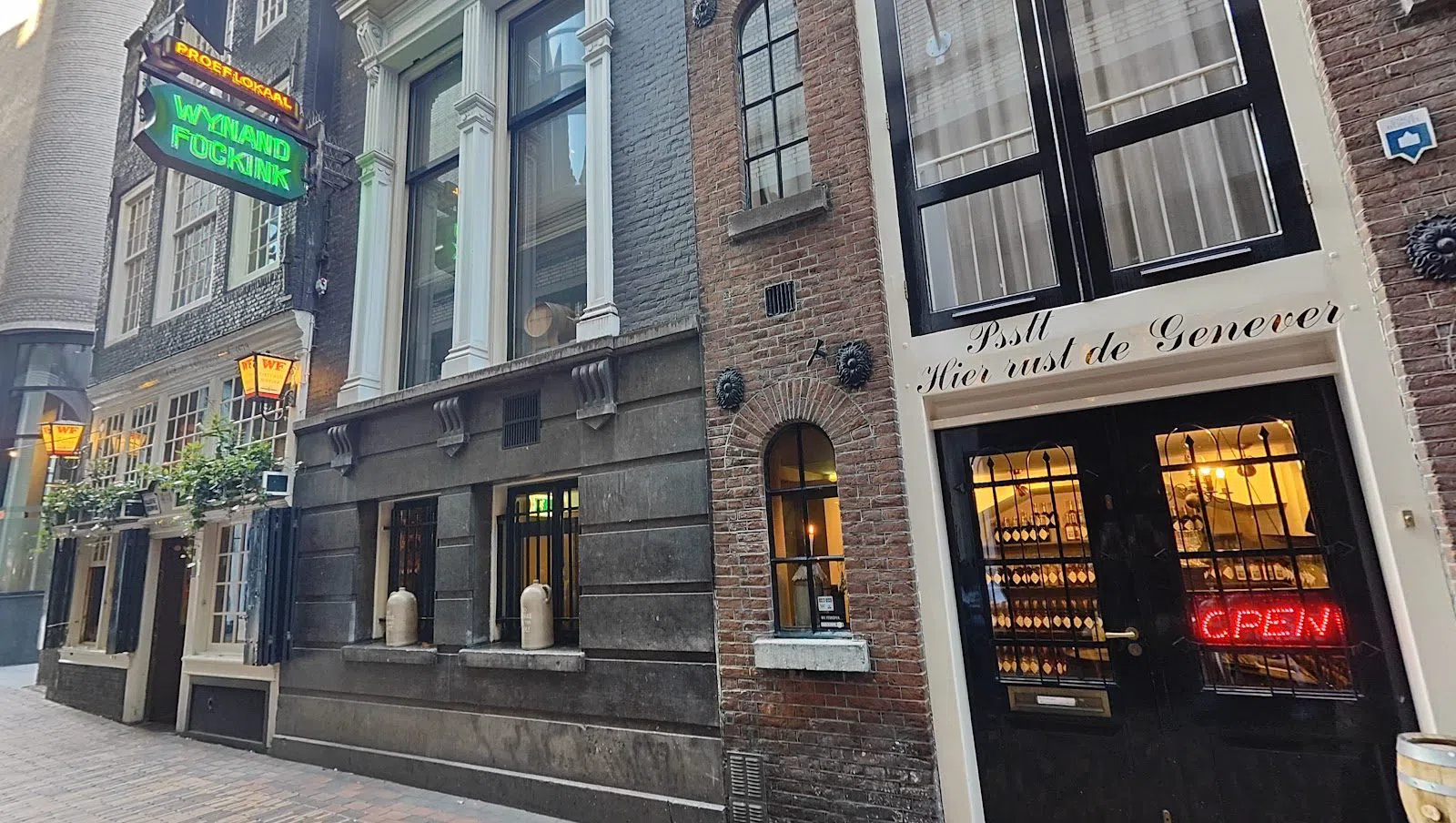
Afterwards, walk or ride back towards the centre for Proeflokaal Wynand Fockink (Centre, in an alley two minutes from Dam Square), a 350-year-old jenever tasting room that most of the crowd on the Damrak never finds. It is tiny: standing only, no reservations, no table to hold. A glass is €6-9 and tastings start around €20. You bow to the glass rather than lifting it because the glass is filled past the rim, and you will wear it otherwise. Queues build after 18:00, and a group over about six will end up spilling into the alley, which is fine in dry weather and miserable in November.
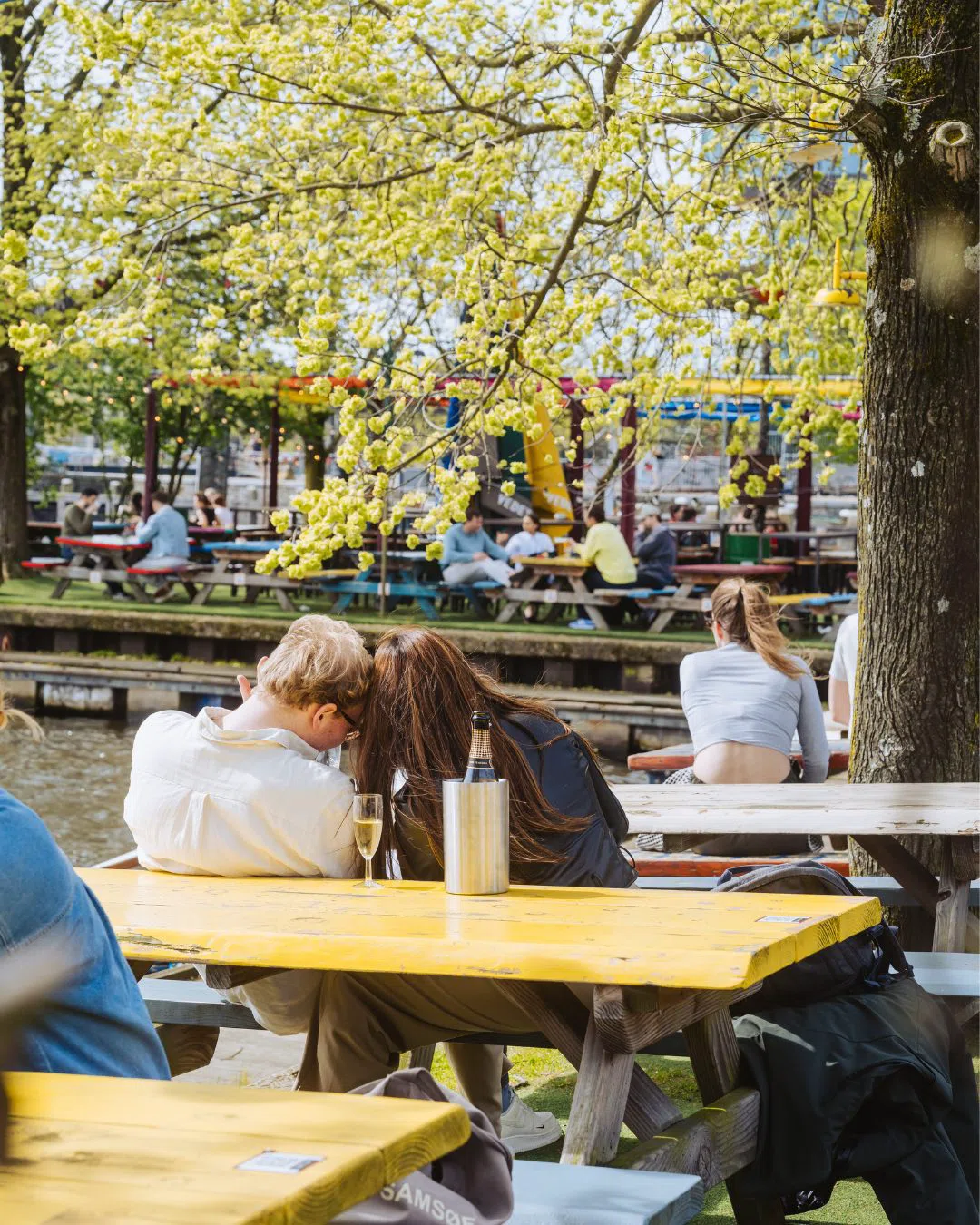
If the night wants to keep going, Hannekes Boom (Oosterdok, ten minutes' walk east of Centraal) is a different city from the streets around the station. It is built out of salvaged timber, beers are €4-6, food €8-18, and it stays open until 03:00 on Friday and Saturday. It is also one of the very few central places built for a big group: parties of thirty or more get a quote, and you can arrive by boat if you have one.
Plan your Amsterdam trip
Live prices from our booking partners.
Free cancellation on many rooms. We may earn a commission when you book.
Saturday morning is pie or the market, not both
Two good Saturday mornings sit at opposite ends of the city, and trying to do both before noon ruins each of them.
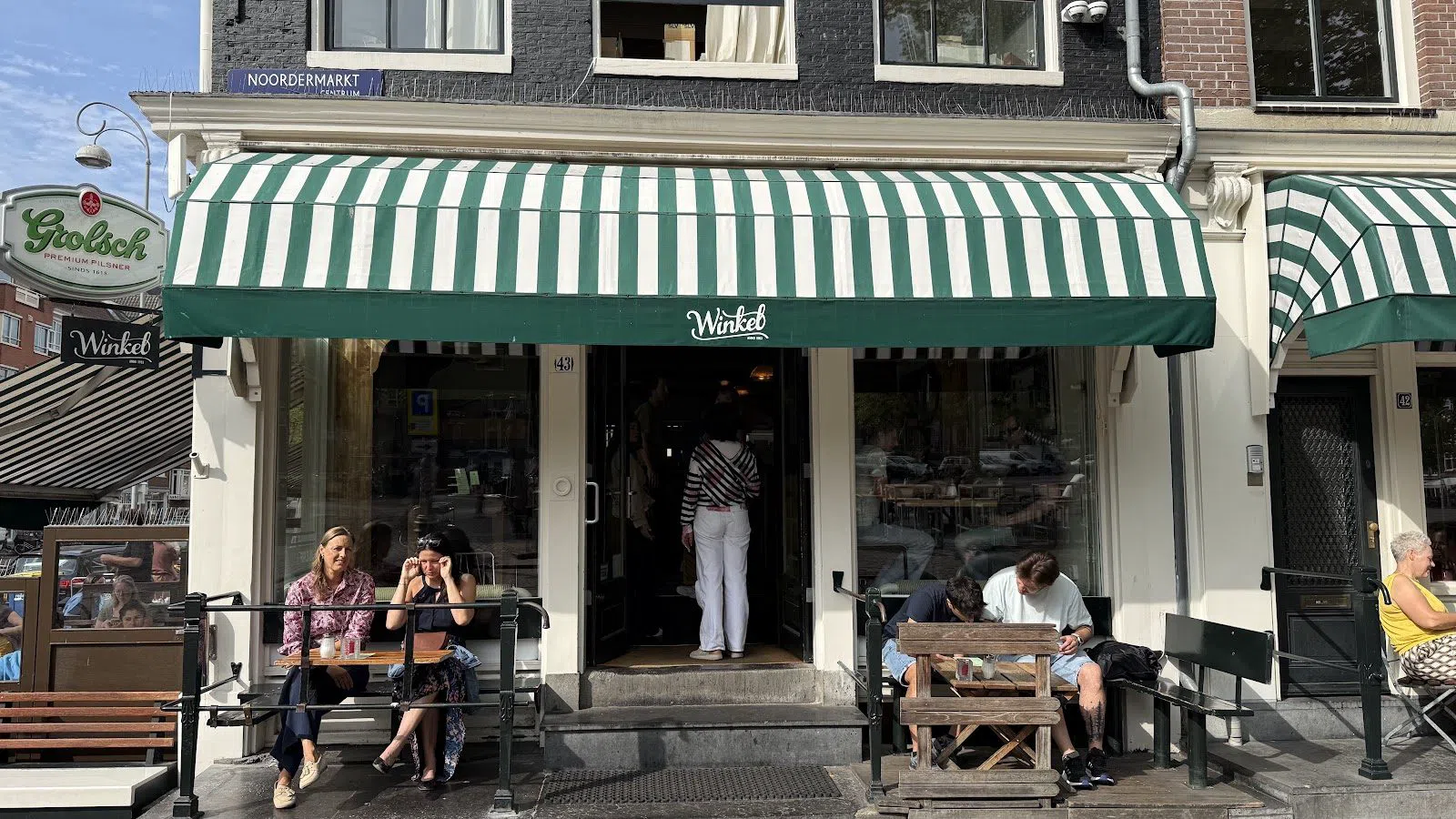
Winkel 43 (Jordaan, on the corner of the Noordermarkt) is widely held to bake the best appeltaart in Amsterdam, and the reason is scheduling: it is baked through the day rather than in one morning batch, so a slice at 15:00 is as good as one at 09:00. Pie with cream is around €6, breakfast and lunch €8-16. Reservations are possible, but the useful advice is about timing. The pavement terrace is the only realistic group option, and Saturday mid-morning, when the Noordermarkt is running outside the door, is the worst possible moment to arrive with six people. It opens at 07:00 on Mondays and Saturdays. Go then and you will have it.
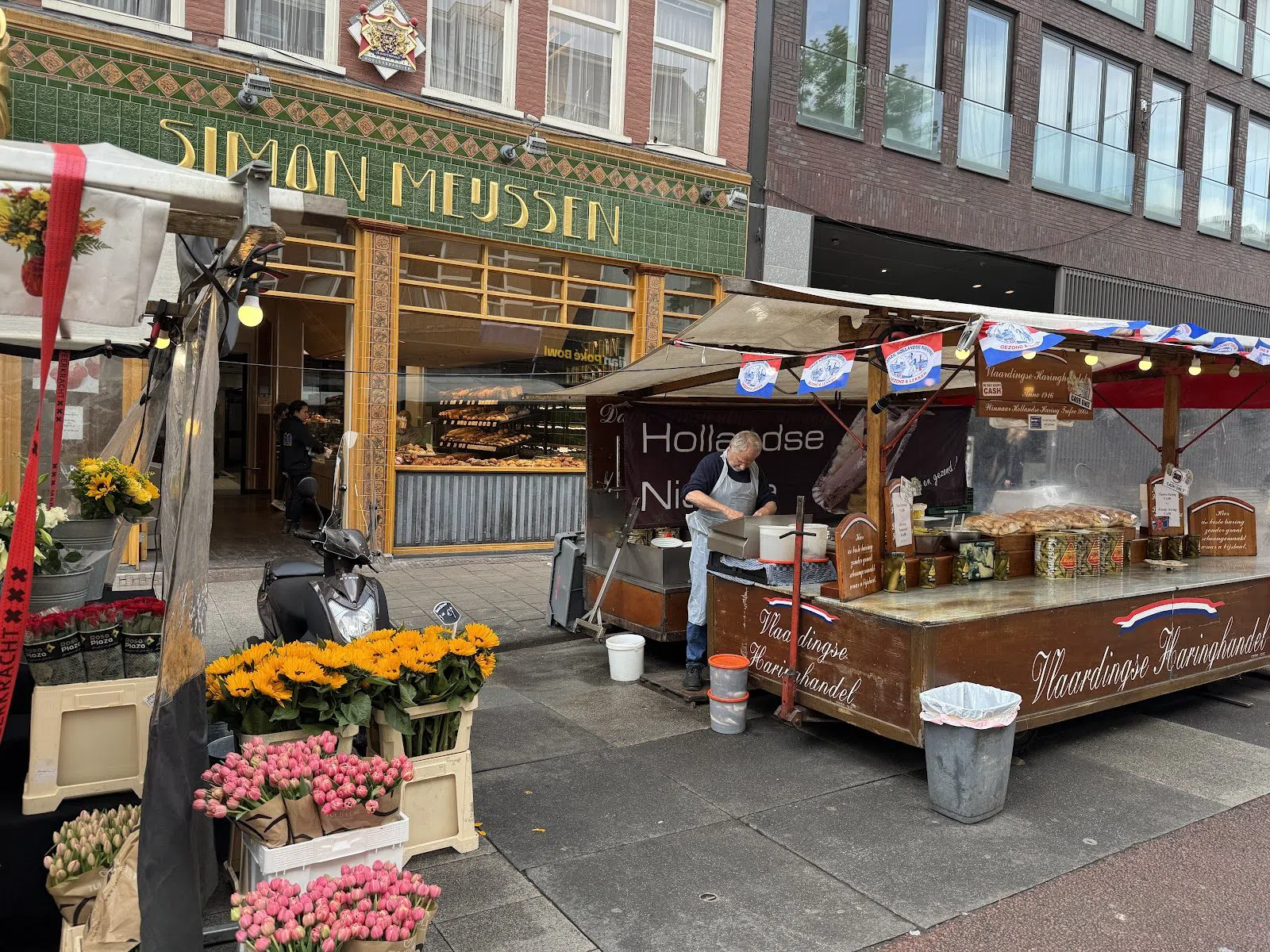
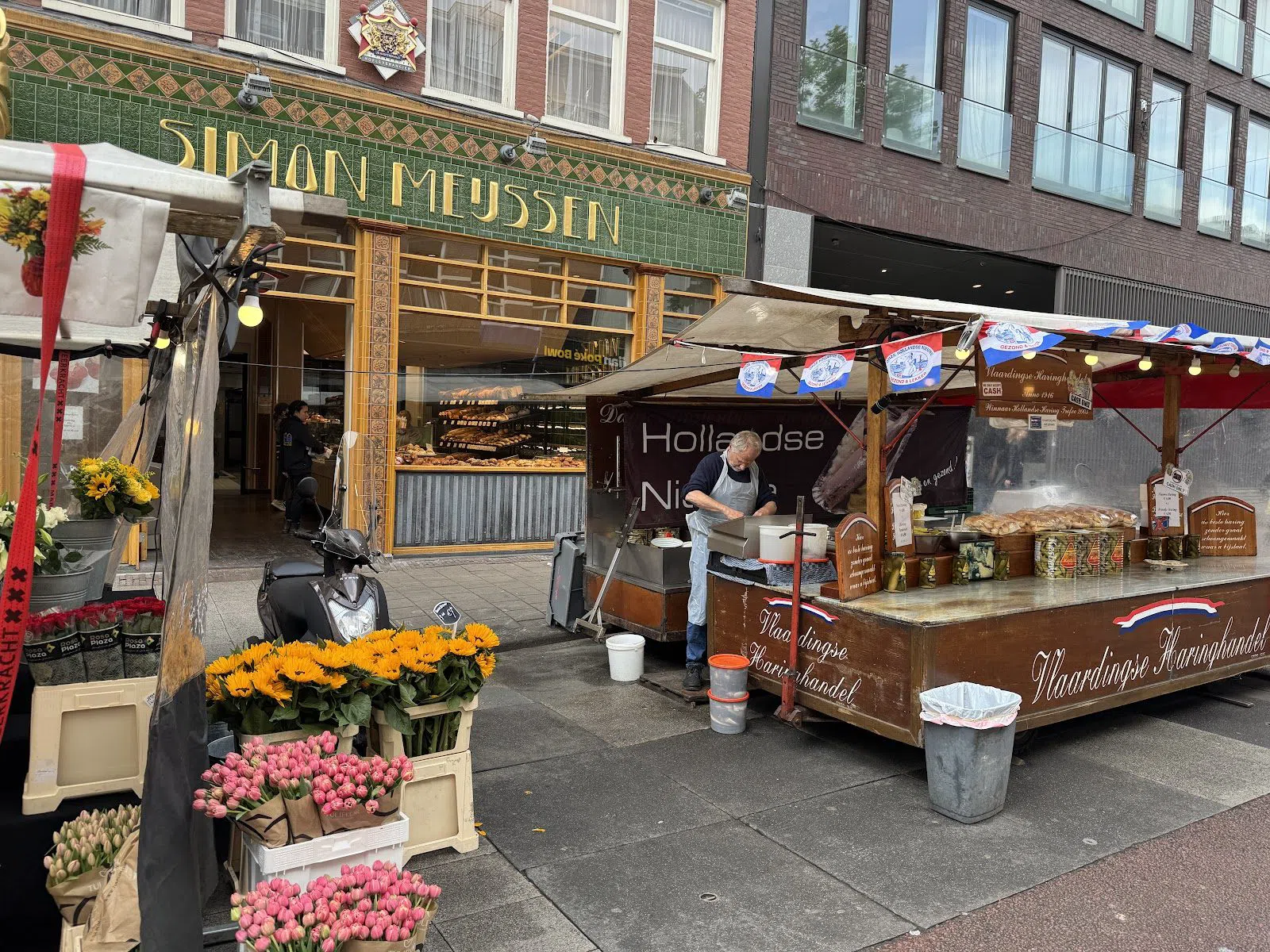
Albert Cuypmarkt (De Pijp) is the country's biggest street market and the spine of its district: a kilometre of stalls with no door, no limit and no group problem of any kind. It runs Monday to Saturday, 09:30 to 17:00, and it is closed on Sundays, which catches out a great many weekenders who planned it for their last morning. Walking it is free; street food runs €2-8. Buy your stroopwafel hot off the iron here and your raw herring from a market cart rather than a counter near the station, and you will understand why the station version is not worth eating. The quiet hour is the first one, before 11:00.
The half-hour ferry ride across the IJ
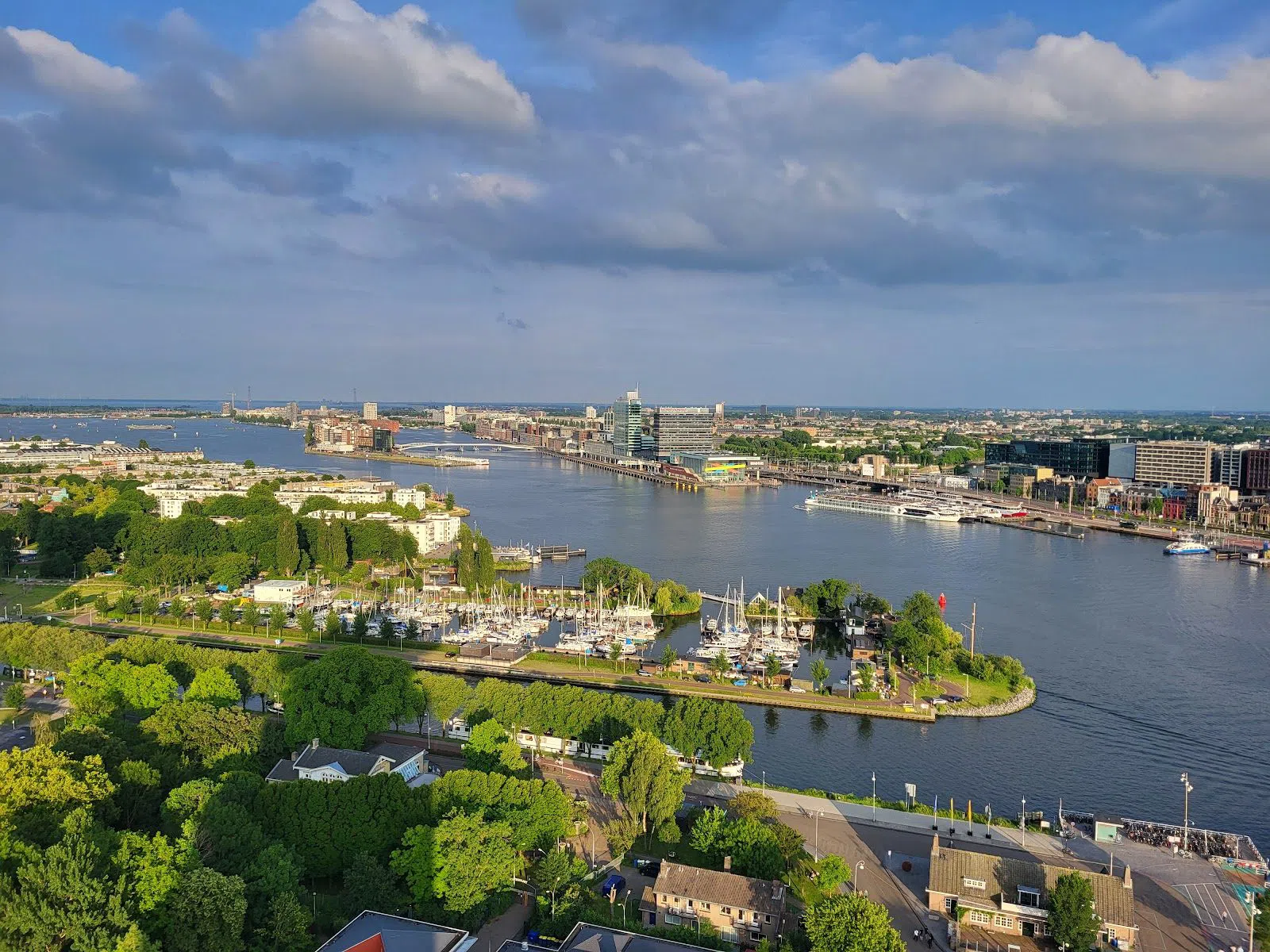
The ferries from the docks behind Centraal are free, take bicycles and run constantly. They are the cheapest boat ride in Amsterdam and the only one without a recorded commentary.
A'DAM Lookout (Overhoeks, Noord, straight off the Buiksloterweg ferry) is the observation deck in the tower you can see from the station. Entry is around €15-17.50, the Over The Edge swing is €7.50 on top, and a premium ticket at roughly €25 bundles drinks. One entry covers the deck, the swing and the Madam sky bar upstairs, which runs DJ sets on Friday and Saturday nights and does not enforce a dress code at the door. Walk-in or online both work and groups are not a problem. Go late afternoon rather than midday: the light does the work, and the deck empties between the afternoon crowd and the evening bar crowd.
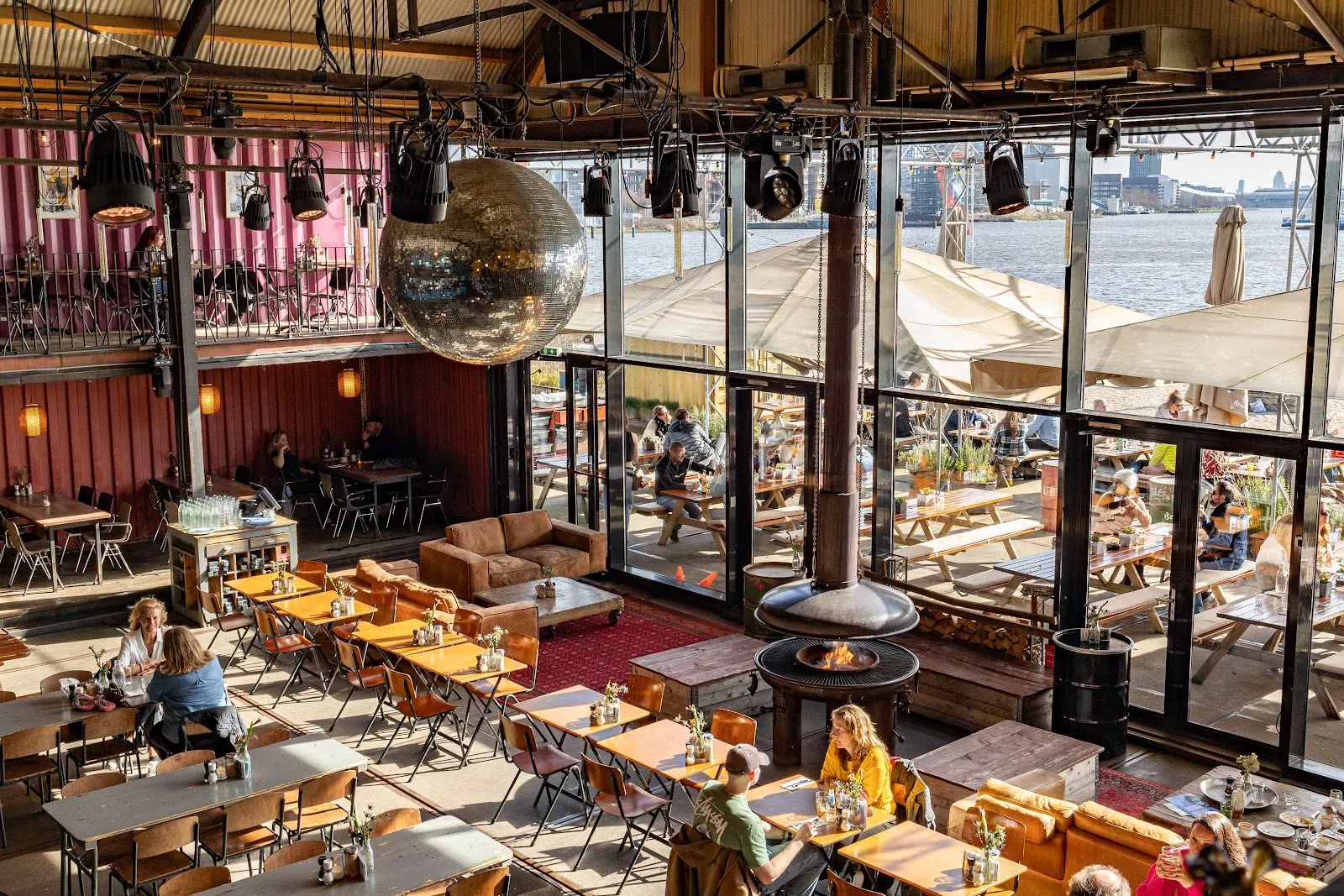
Stay on the north bank and take the NDSM ferry west for Pllek (NDSM, Noord), which is the real reason to cross in the afternoon. Sand underfoot, a ferry horn every ten minutes, and the skyline you were photographing from the other side, now at a comfortable distance. Mains are roughly €18-28 and the kitchen closes at 22:00. The beach terrace absorbs a large group without anyone noticing, group lunches and dinners are taken, and there is private event space. The site has had a redevelopment cloud over it for years; that has now been pushed back to 2028, so it is here for this trip and the next few.
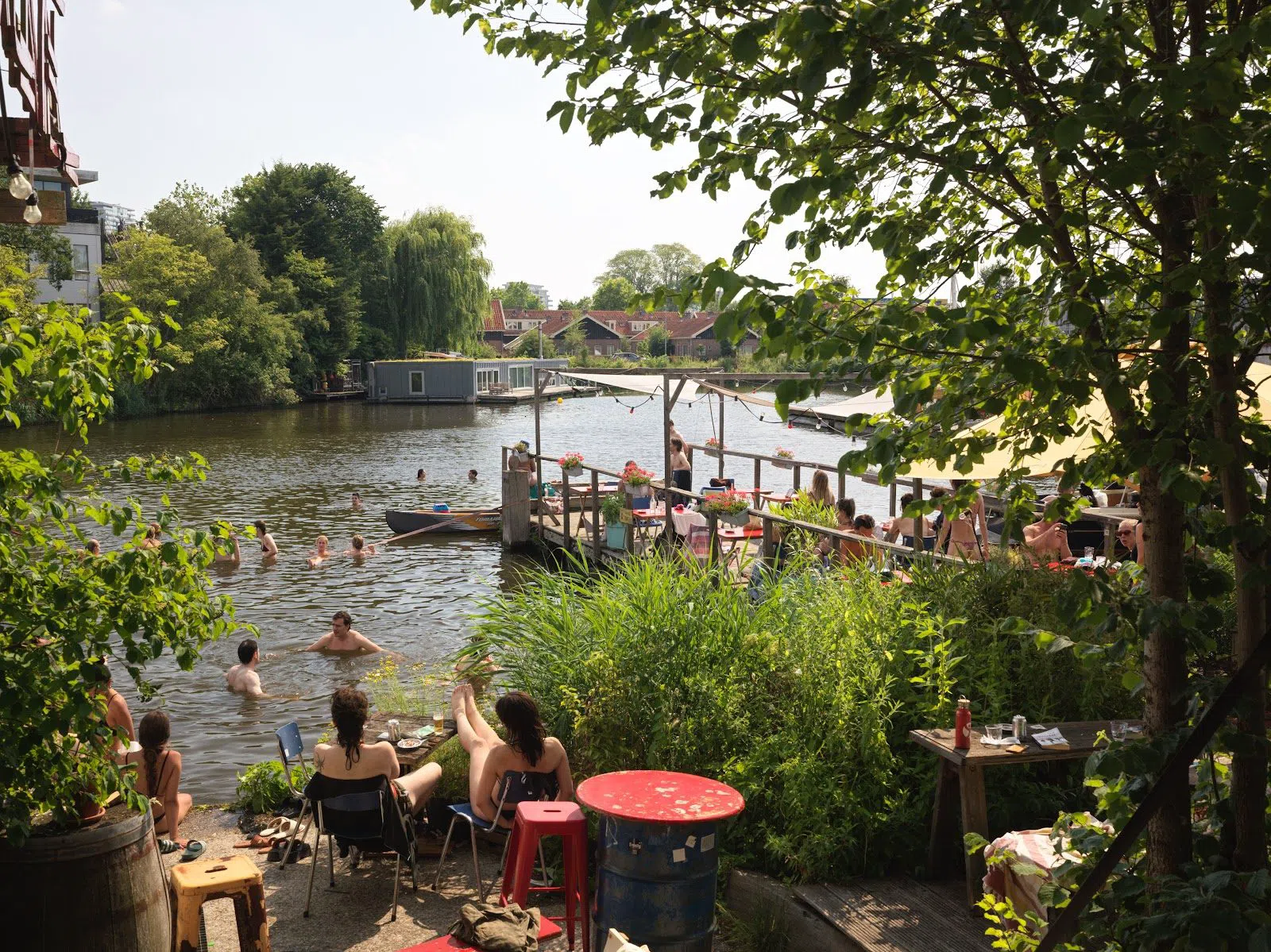
Between the two ferry landings, Café de Ceuvel (Buiksloterham, Noord, twenty minutes' walk or a short ride from the Buiksloterweg ferry) is a clean-tech experiment that happens to be a very good bar. The whole site was built on soil-cleaning plants, everything served is plant-based, and plates run €7-18. It is closed on Mondays and opens from noon Tuesday to Sunday, and groups of eight or more book through their online system. It suits a slow, sunny afternoon and it does not suit anyone in a hurry.
The museum you can simply walk into
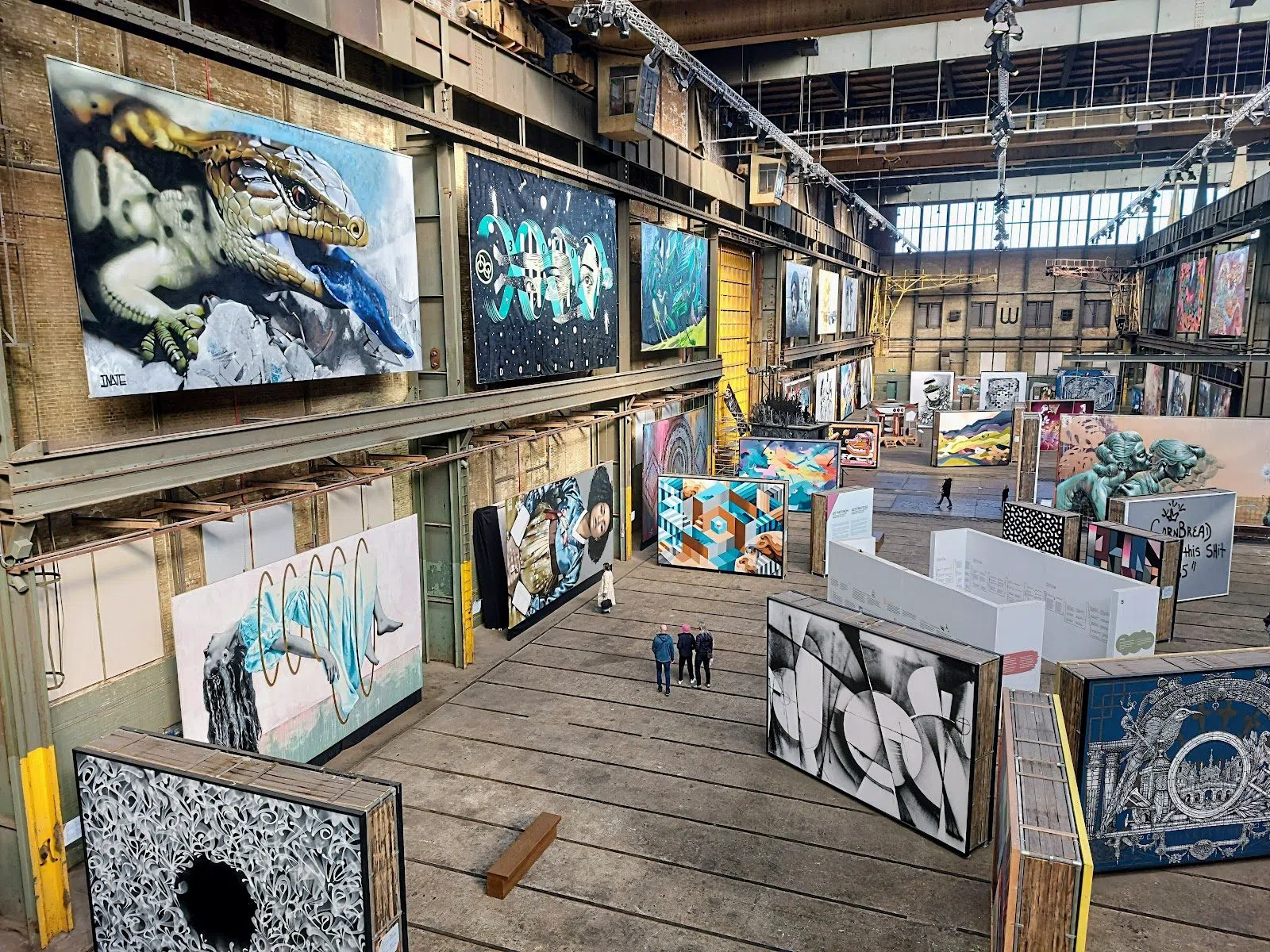
STRAAT Museum (NDSM, Noord, a few minutes from the Pllek terrace) is the museum for people who came to Amsterdam specifically to avoid a museum queue. It is a street-art collection in an enormous former shipbuilding shed. Adult tickets are €21.50, students €16.50, youth €11.50, and it is free under 13. On the first Friday of the month everything is €15. Tickets are rarely sold out, so you can decide on the day, and the scale of the hall means a group never feels penned in. Guided tours and group bookings run through the website if you want structure.
The shed is barely heated. Between about October and April you want the jacket you would wear outside, not the one you would carry.
Two quiet rooms in the old centre
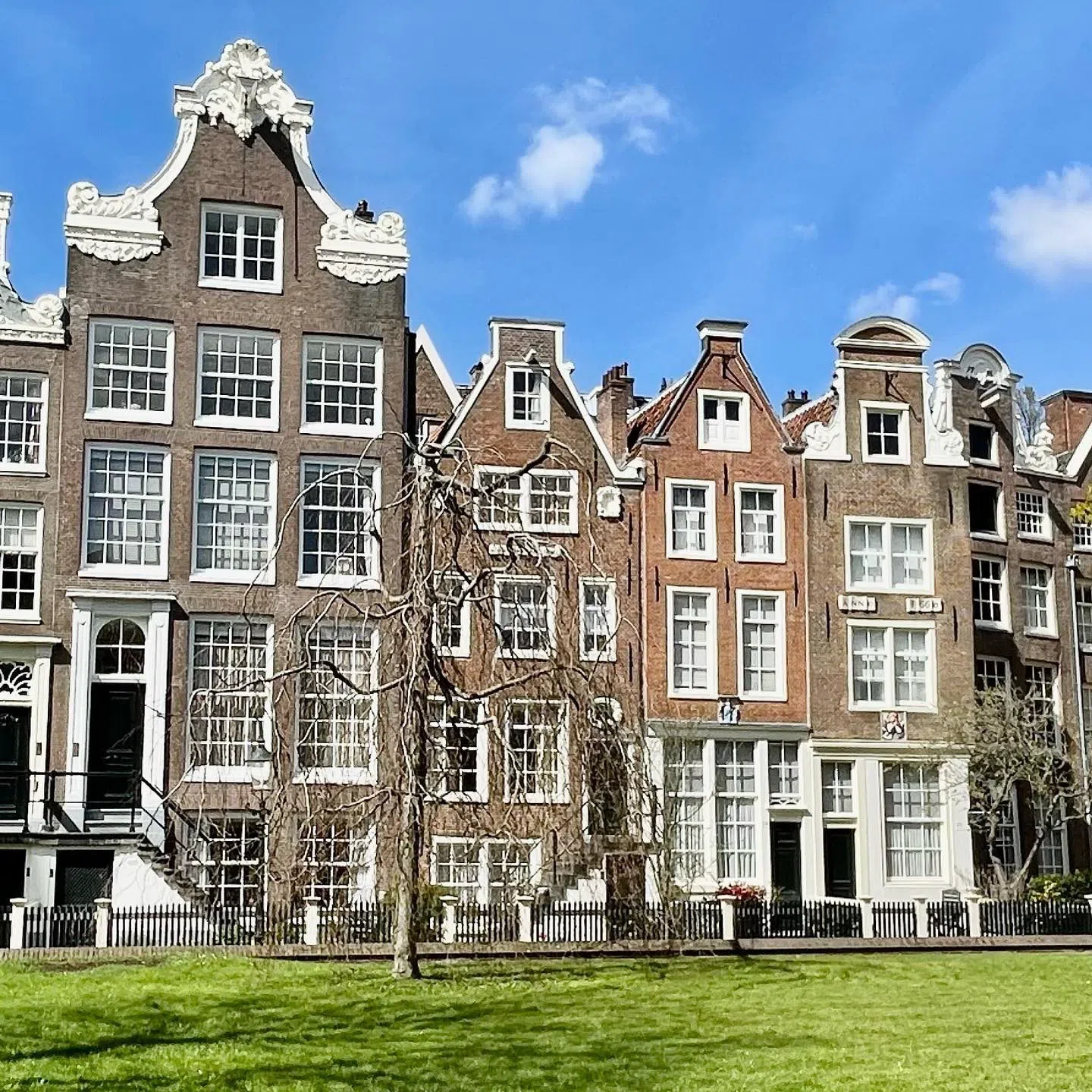
Begijnhof (Centre, through a low door off the Spui) is the quietest place in the old city and sits 400 metres from the noisiest. It is a courtyard of houses around a lawn, open daily 10:00 to 18:00, free to enter, and it is people's homes, which is the whole point. Groups over twelve are not permitted and hosts turn them away at the gate. No bikes, no suitcases, no eating, and silence is requested rather than suggested. Go in twos and threes, keep your voice down, and stay ten minutes rather than thirty.
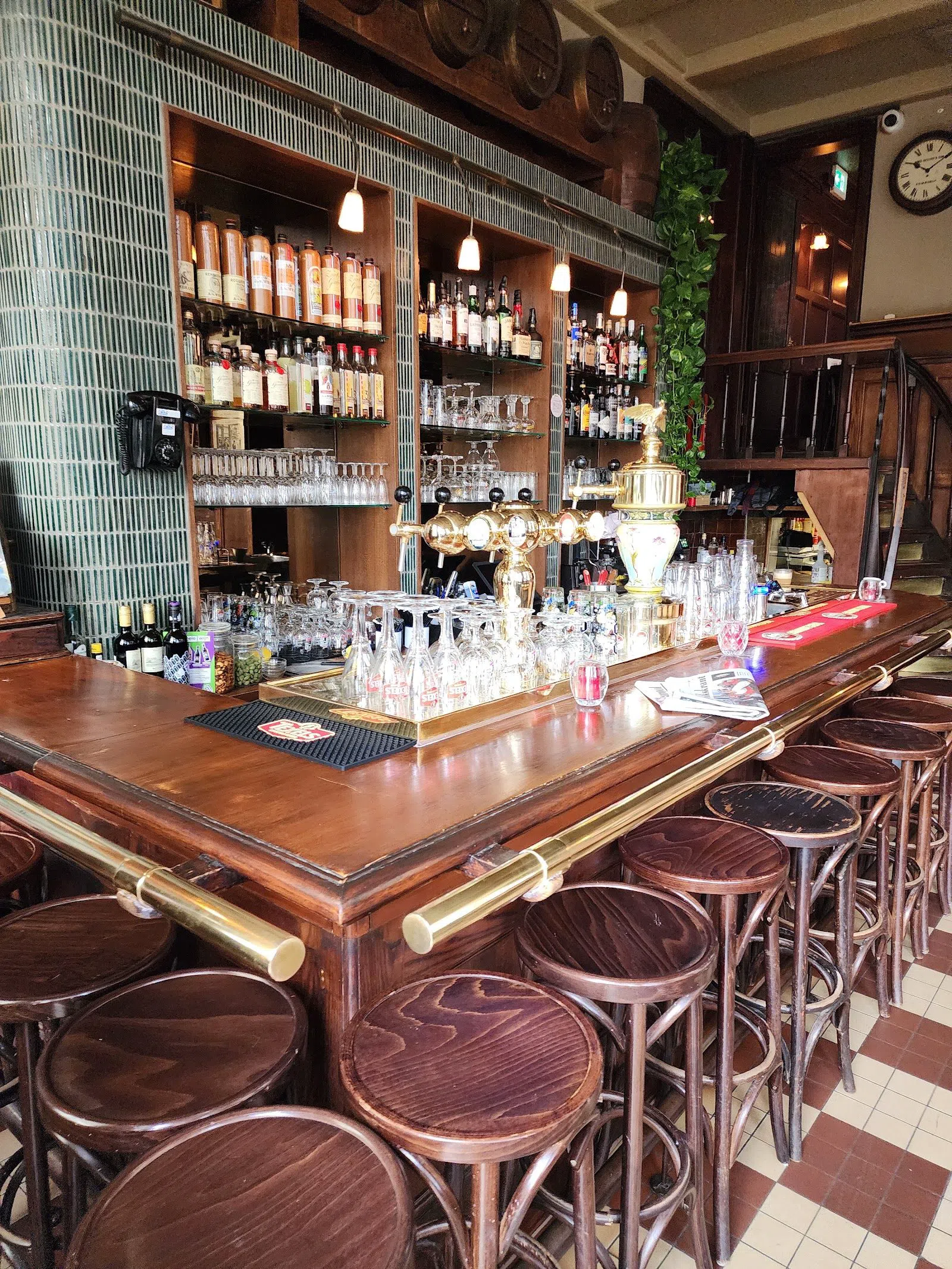
Café 't Smalle (Jordaan, on the Egelantiersgracht) is the brown café people are picturing when they say brown café, and it has earned the right, having been the same room since 1786. Beers are €4-6 and bar snacks €5-10. It is tiny inside and takes no reservations, so four or five people is the practical ceiling; the canal-side pontoon fills the instant the sun appears and stays full. Mid-afternoon on a weekday is when you get the waterside table. On a Saturday evening you get a spot at the bar, which is not a bad outcome either.
Beer under a windmill, dinner in a greenhouse
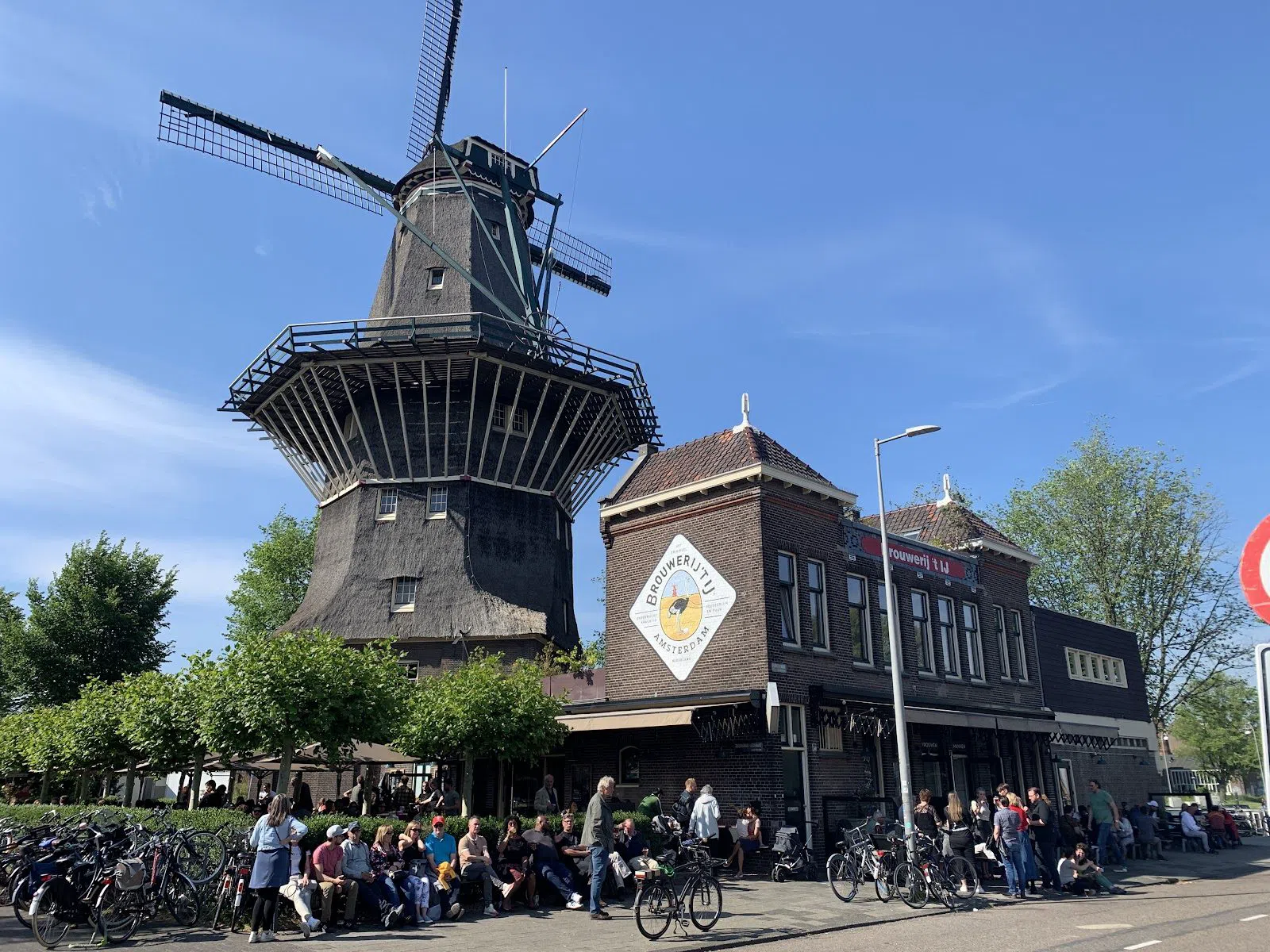
Brouwerij 't IJ — Proeflokaal De Molen (Oost, ten minutes' cycle east of the centre) is a working brewery in the shadow of a windmill dating from 1725. Beers are around €4-6, it is walk-in with no reservations for the tap room, and the terrace under the mill takes a big group happily on a dry afternoon. Brewery tours are booked separately. Watch the hours: they are typically 14:00 to 20:00, so this is an afternoon stop rather than a night out. People turn up at nine and find the shutters down.
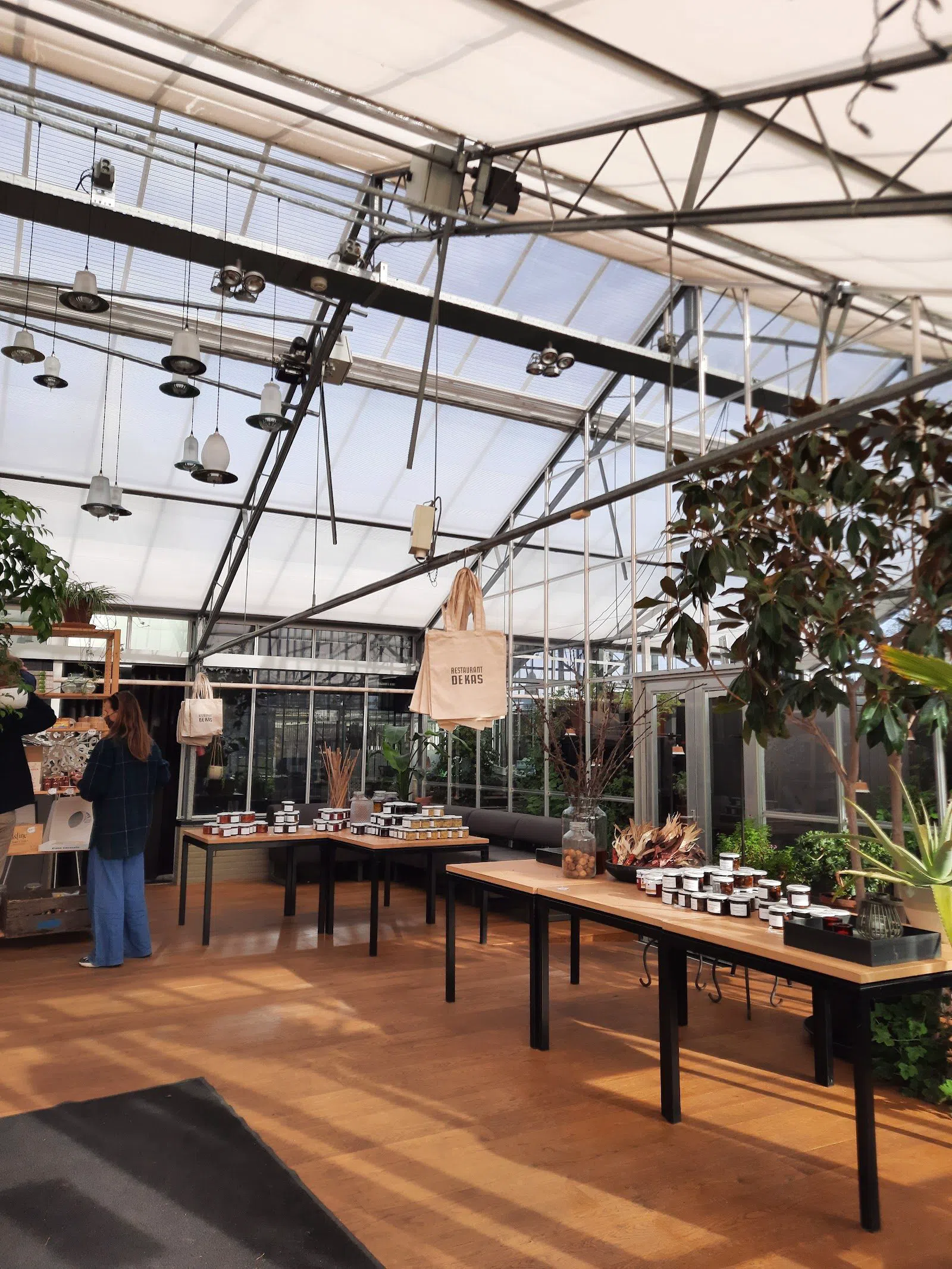
For the one dinner worth planning the day around, De Kas (Park Frankendael, Oost) serves a set menu to the whole table in a working greenhouse, with much of what you eat picked the same morning a few metres away. It holds a Michelin star plus a Green star, set menus run roughly €70-110, and it is closed on Sundays with no Saturday lunch. Book weeks out. This is a deliberate trip east rather than somewhere you wander into, and private dining and group bookings are offered for a table that wants the whole room's attention.
Take the canals yourself instead of buying a seat
A ticketed cruise puts you behind glass with a recorded voice. Mokumboot (boarding points across Centre, De Pijp, East, South, the Amstel, RAI and Weesper) rents you a small open boat instead: no licence needed, up to eight people, captain must be 18 or over. Prices start from €97.50 for two hours per boat and you can bring your own food and drink, so split eight ways it undercuts a cruise ticket and you choose the route. The Westerpark dock has closed, so check which boarding point you have actually booked before you walk across town to it.
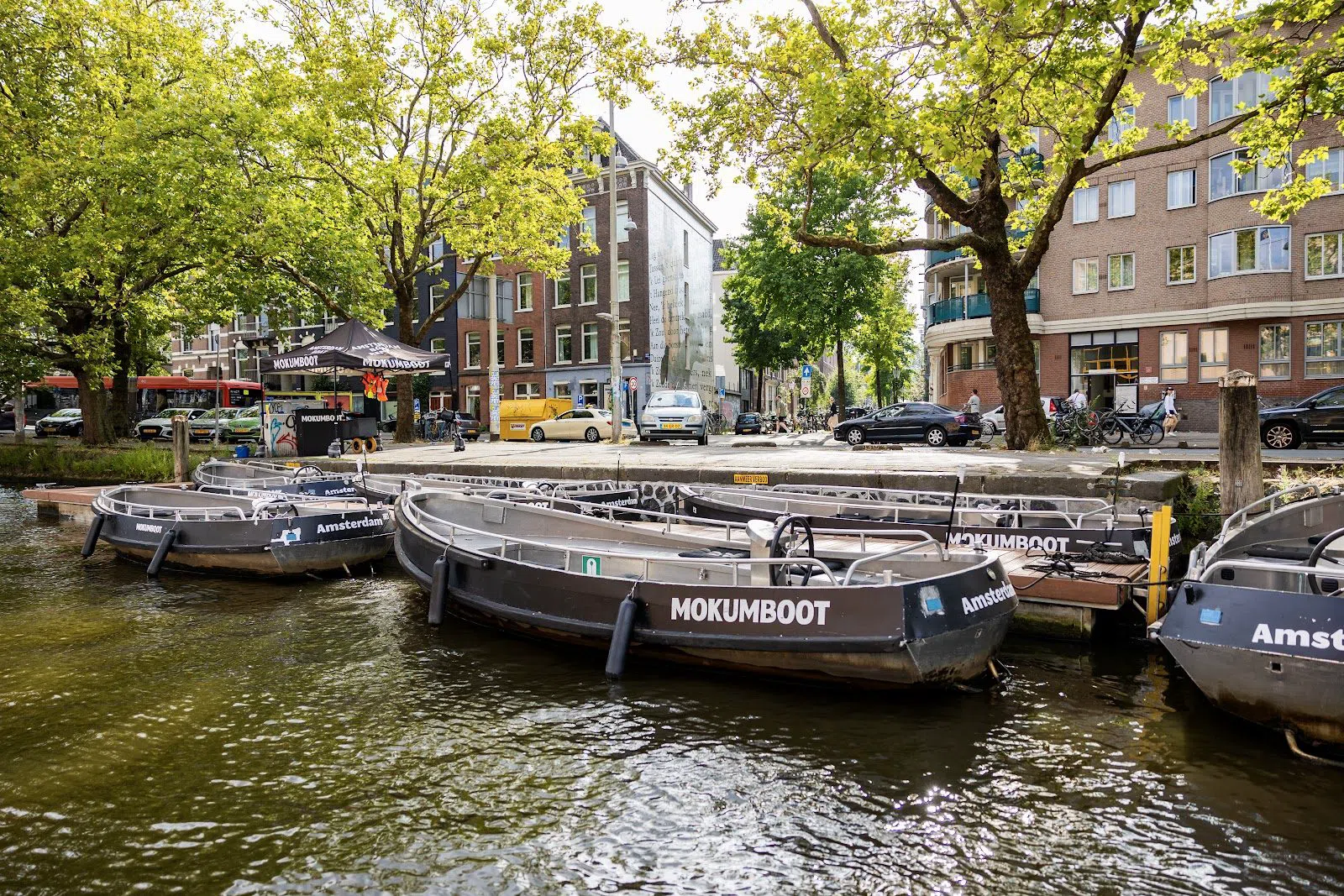
Book ahead for a Saturday afternoon slot, and take the earliest one you can stand. The canals get busy by mid-afternoon in good weather, and a queue at a bridge is where you find out how a boat you have never driven handles.
When the plan falls apart, go to Westergas
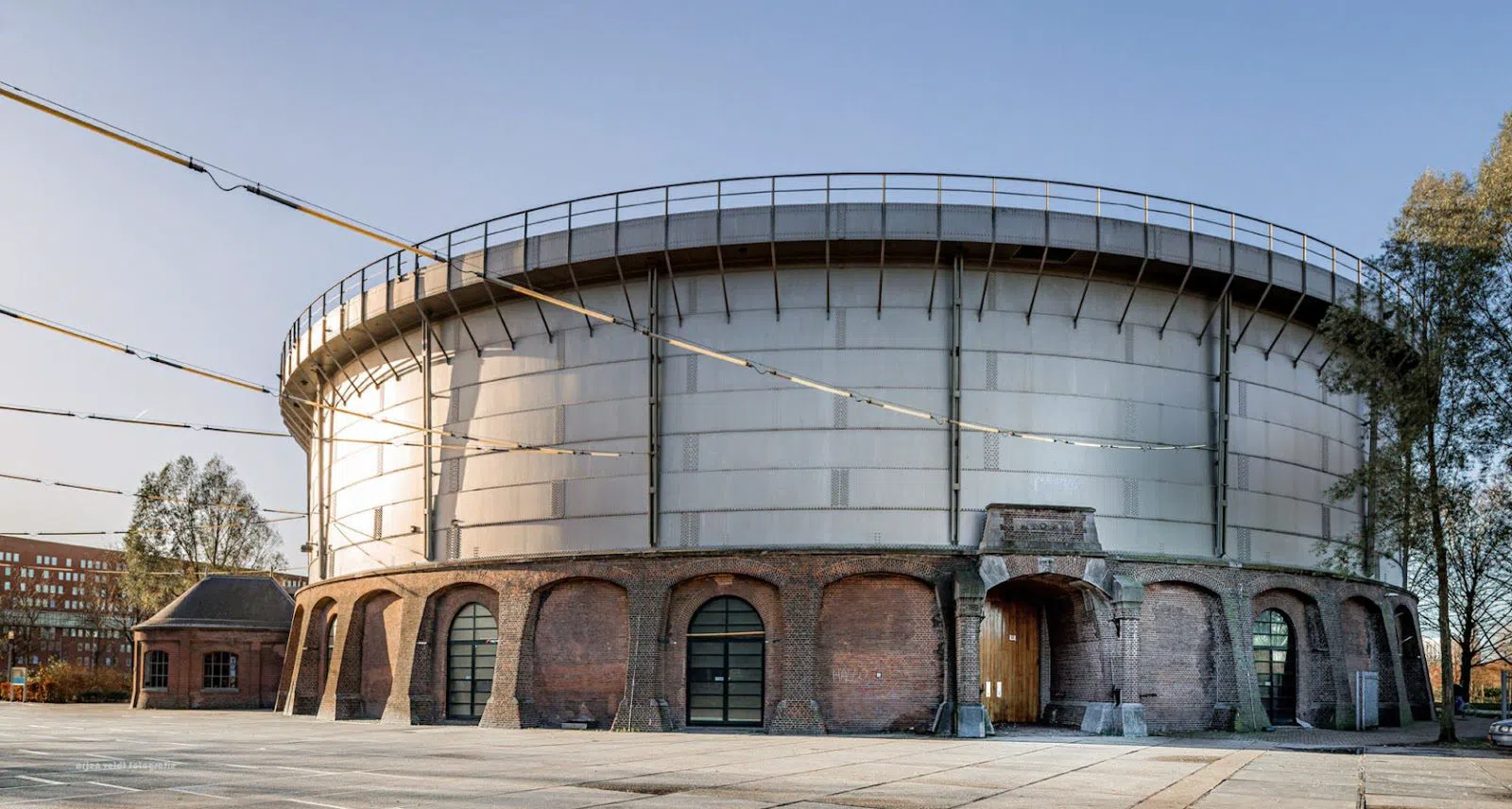
Some afternoons no plan survives the weather or the group. Westergas (Westerpark, a short ride west of Centraal) is a former gasworks turned cultural park, free to walk into, with bars, a bakery, restaurants, exhibitions, an outdoor cinema and the newly reopened Gashouder stage on one site. Events and cinema tickets run €10-40. A group with no fixed intention can turn up and find something, which is what you want at 16:00 on a grey Sunday. Check the programme before you cross town, because the difference between a big night and an empty yard is what happens to be on.
Getting around, paying and timing
Trams and metros take a contactless bank card or phone directly. Tap in and tap out, and be sure of the tapping out, since a missed tap charges you the maximum fare. A GVB day ticket makes sense only if you are riding more than about four times a day; most of this weekend is walkable or reachable by the free IJ ferries. Bring one warm layer more than the forecast suggests, because the wind comes off the water and the STRAAT shed is unheated.
On money, the Netherlands is card-first and some places take no cash at all, while some market stalls take only cash. Carry €20-30 in notes and coins for Albert Cuypmarkt. A debit card is more reliably accepted than a foreign credit card at Dutch terminals, which surprises people at the till.
On timing, the two things that break weekends are Sunday and Monday. Albert Cuypmarkt is shut on Sundays and De Kas closes then too; Café de Ceuvel is shut on Mondays. Build Saturday around the market and the water, and leave Sunday for Noord, the Begijnhof and a long lunch.
On budget, an honest full day without the greenhouse dinner lands around €60-80 a person: market breakfast, free ferries, a €21.50 museum, a boat split eight ways, and brown-café beers at €4-6. Add the tower and the swing and you are near €100. Stay in Oud-West, De Pijp or the Jordaan rather than beside the station and you will walk to most of this; compare rates with the Amsterdam hotel search before you book anything within sight of the Damrak. For the wider city, the Amsterdam guide covers what falls outside a first weekend.
Before you go
Do I need to book Amsterdam museums in advance for a weekend trip?
For the headline museums, yes: timed entry sells out on winter weekends and in summer, so book before you fly. STRAAT Museum at NDSM is the exception. Tickets are rarely sold out, adult entry is €21.50 (€15 on the first Friday of the month) and the hall is big enough that you can decide on the morning.
Are the ferries to Amsterdam Noord free?
Yes. The ferries from the docks behind Centraal Station cost nothing, take bicycles and need no ticket or tap. The Buiksloterweg crossing is the frequent one for A'DAM Lookout and Café de Ceuvel; the NDSM line for Pllek and STRAAT runs less often and stops earlier in the evening, so check the last sailing before you settle in on the terrace.
Which day is Albert Cuypmarkt closed?
Sunday. It runs Monday to Saturday, 09:30 to 17:00, and the Sunday closure is the mistake most weekend visitors make. Go before 11:00 if you want it calm; walking it is free and street food runs €2 to €8.
Where can a group of eight get in without booking anything?
Hannekes Boom east of Centraal is built for big groups and quotes for thirty or more. Foodhallen works if you arrive before 18:00 and split up to order, and Westergas and Albert Cuypmarkt have no door at all. Don't turn up eight-strong at Café 't Smalle or Wynand Fockink, which are tiny and take no reservations, and the Begijnhof turns away groups over twelve outright.
Should I carry cash in Amsterdam?
Carry €20 to €30 for market stalls and little else. The Netherlands runs on cards and some venues refuse cash entirely, but Dutch terminals accept debit cards more reliably than foreign credit cards, so bring a debit card if you have one. Trams and metros take contactless directly: tap in and tap out, or you are charged the maximum fare.