The Amsterdam issue
Amsterdam's Best Brown Cafés That Locals Actually Drink In
A calm, honest walk through fourteen genuine bruine kroegen — which suit a quiet pair, which swallow a group whole, and the exact tram stop and pint price for each.

By Robin HaasThe slow way through Amsterdam's canals, courtyards and back streets
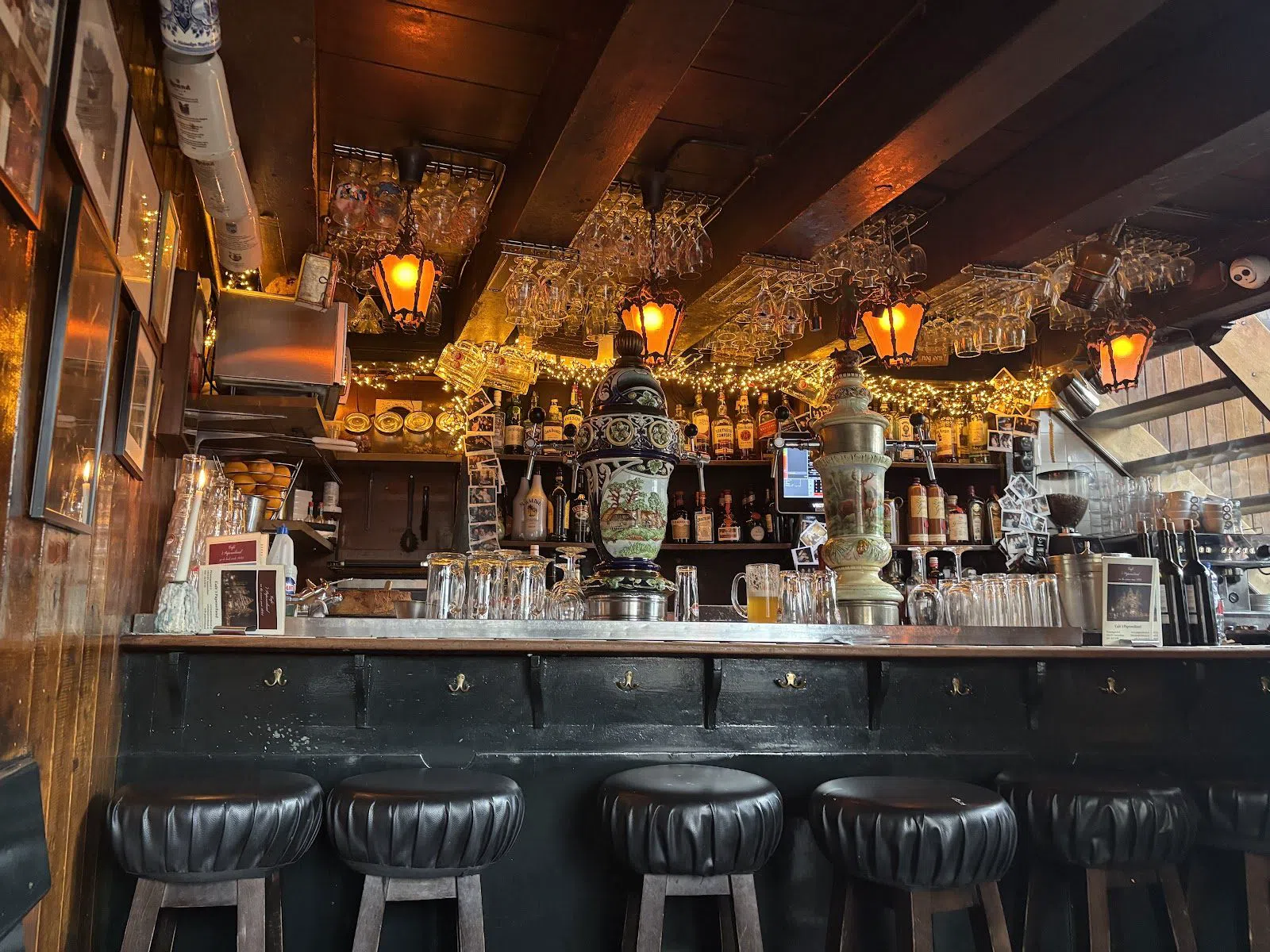
The best brown cafés in Amsterdam aren't the ones with the biggest signs or the longest queue of selfie-takers; they're the low-ceilinged, tobacco-stained rooms where the barman half-recognises the regulars and nobody is performing for a camera. This is a plain guide to fourteen places locals genuinely drink in — where to go for the quiet afternoon pint, which rooms cheerfully take a group, and which are simply too small to bother trying with more than four. No hype, no borrowed folklore beyond what these bars actually own: just the tram stop, the price of a beer, and an honest word on the door.
What a "brown café" actually is
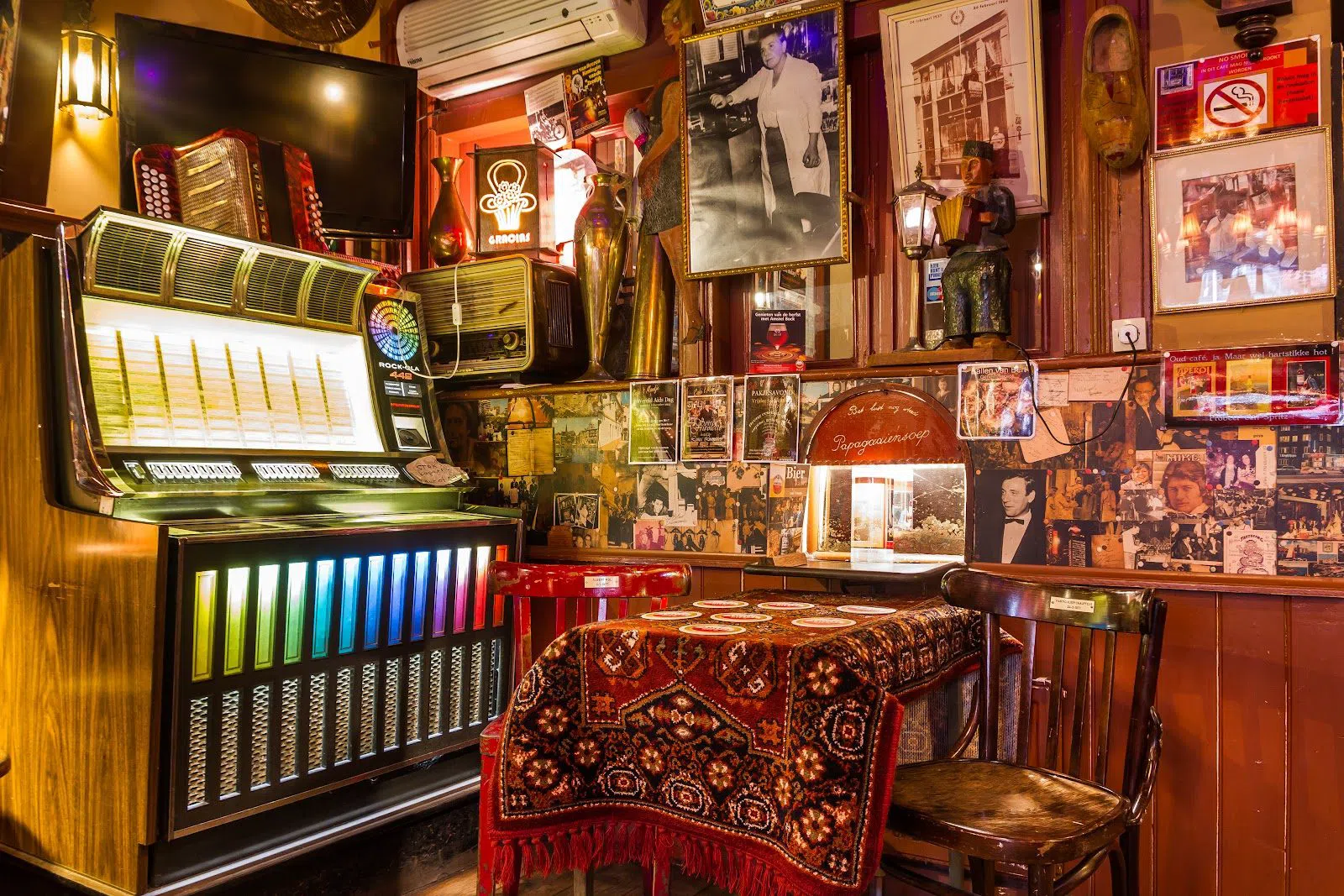
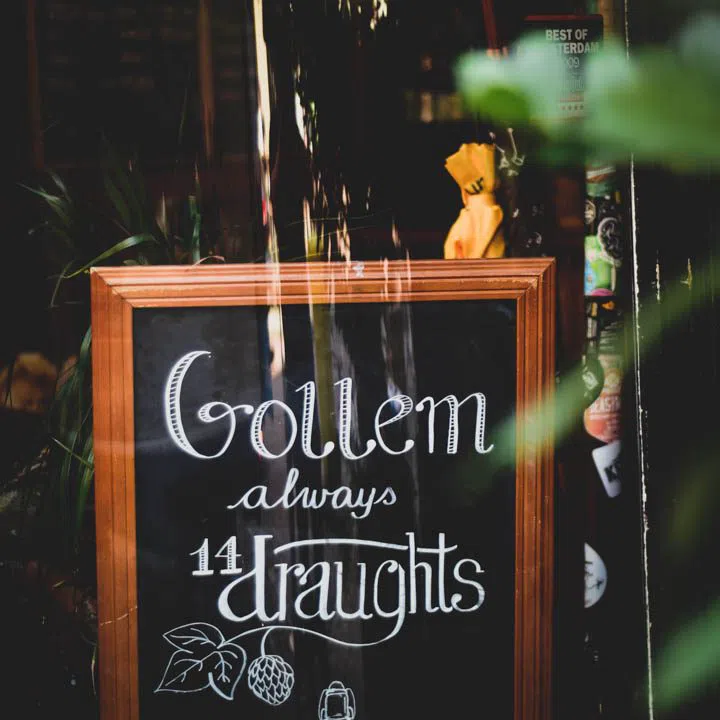
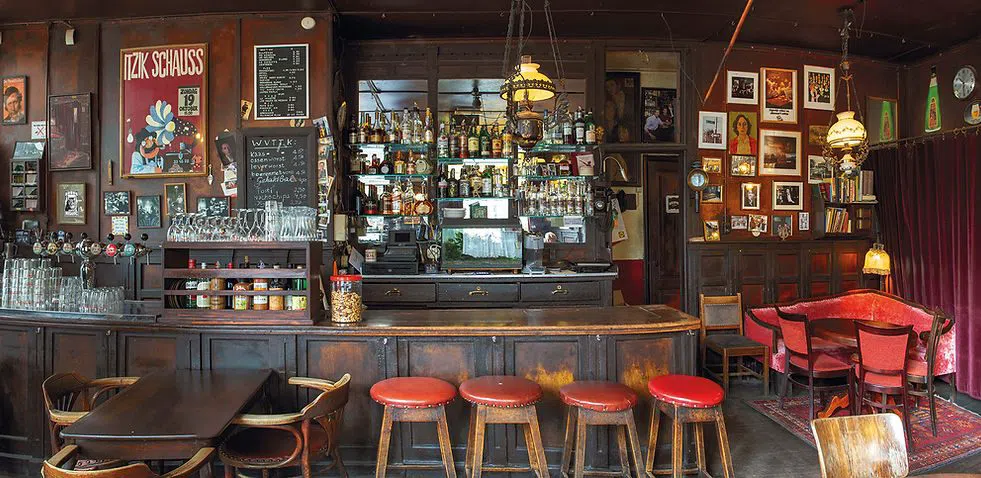
A bruine kroeg earns its name from decades of candle-soot and old tobacco smoke that have darkened the walls and ceiling to the colour of strong, over-steeped tea. Expect wonky floors, worn wood or a little sand underfoot, a resident cat, football murmuring on a low telly, and beer that costs roughly €3.50–6 rather than the €8 you'll pay in the glassy tourist traps. The house pour is almost always a Dutch pils with a two-finger head — order "een pilsje" and don't complain about the foam; that's the style, not a mistake.
Two practical truths shape everything below. First, almost none of these places take reservations, so your booking strategy is really a timing strategy. Second, most are small — genuinely small, front-room small — so the single most useful sentence in this guide is: go early, or go mid-week. A brown café at 4pm on a Tuesday is a different, better animal than the same room at 9pm on a Saturday.
Plan your Amsterdam trip
Live prices from our booking partners.
Free cancellation on many rooms. We may earn a commission when you book.
The Jordaan: the postcard classics
The Jordaan — the grid of narrow canals and lanes just west of the centre — is where the brown-café idea is at its most concentrated and, frankly, its most photographed. It's worth the crowds if you pick your moment.
Start with Café Papeneiland (Jordaan, on the Prinsengracht corner), the one most UK readers will already have seen on a fridge magnet. It's tiny and low-ceilinged with a single shared table, which makes it lovely for two to five and hopeless for a big group; when it's busy you will stand, and there's no polite way around that. Come for the canal-corner looks and the famous appeltaart (about €5; a beer €3.50–6), and manage your expectations on space rather than turning up eight-strong and hoping for a miracle.
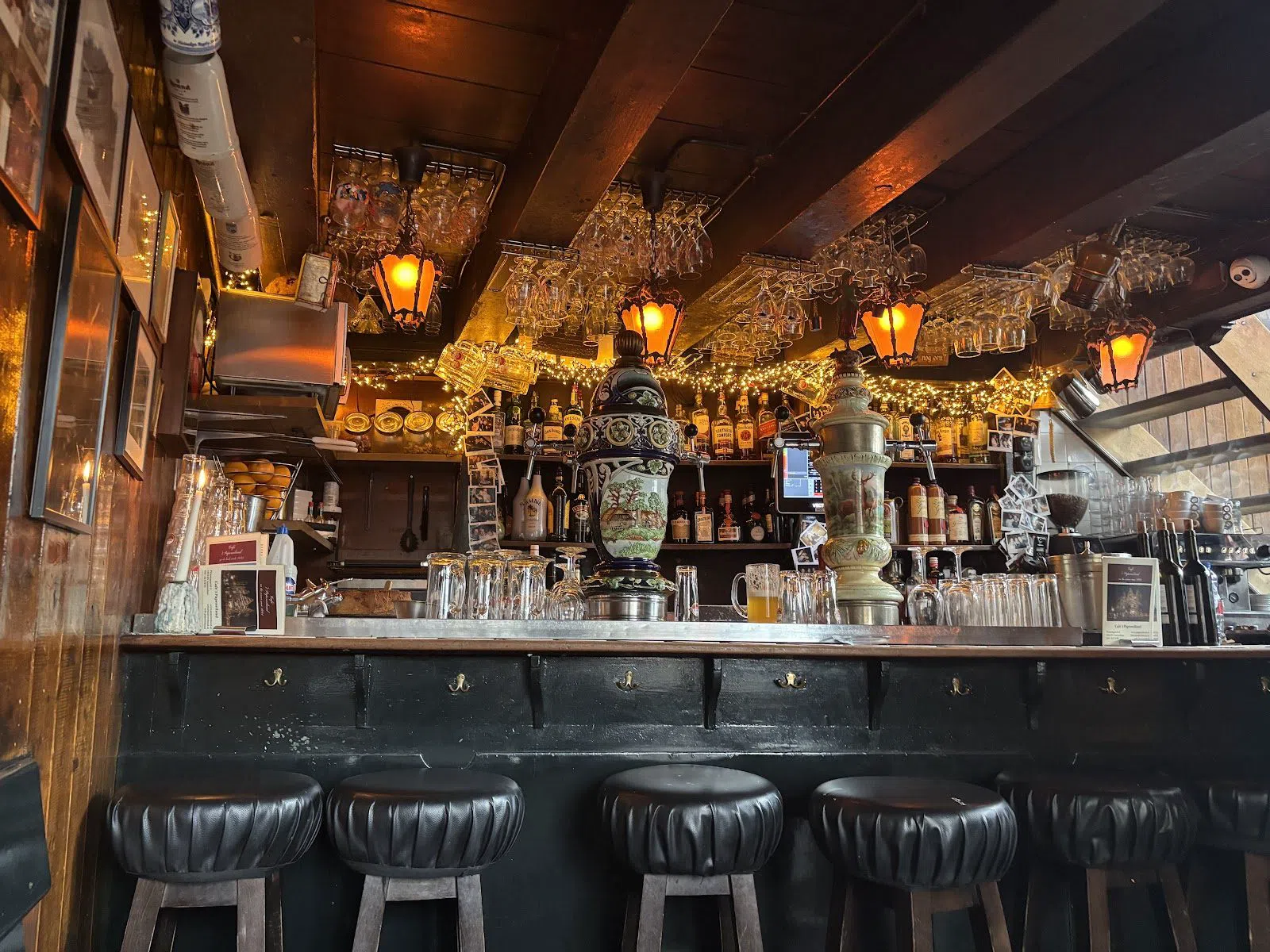
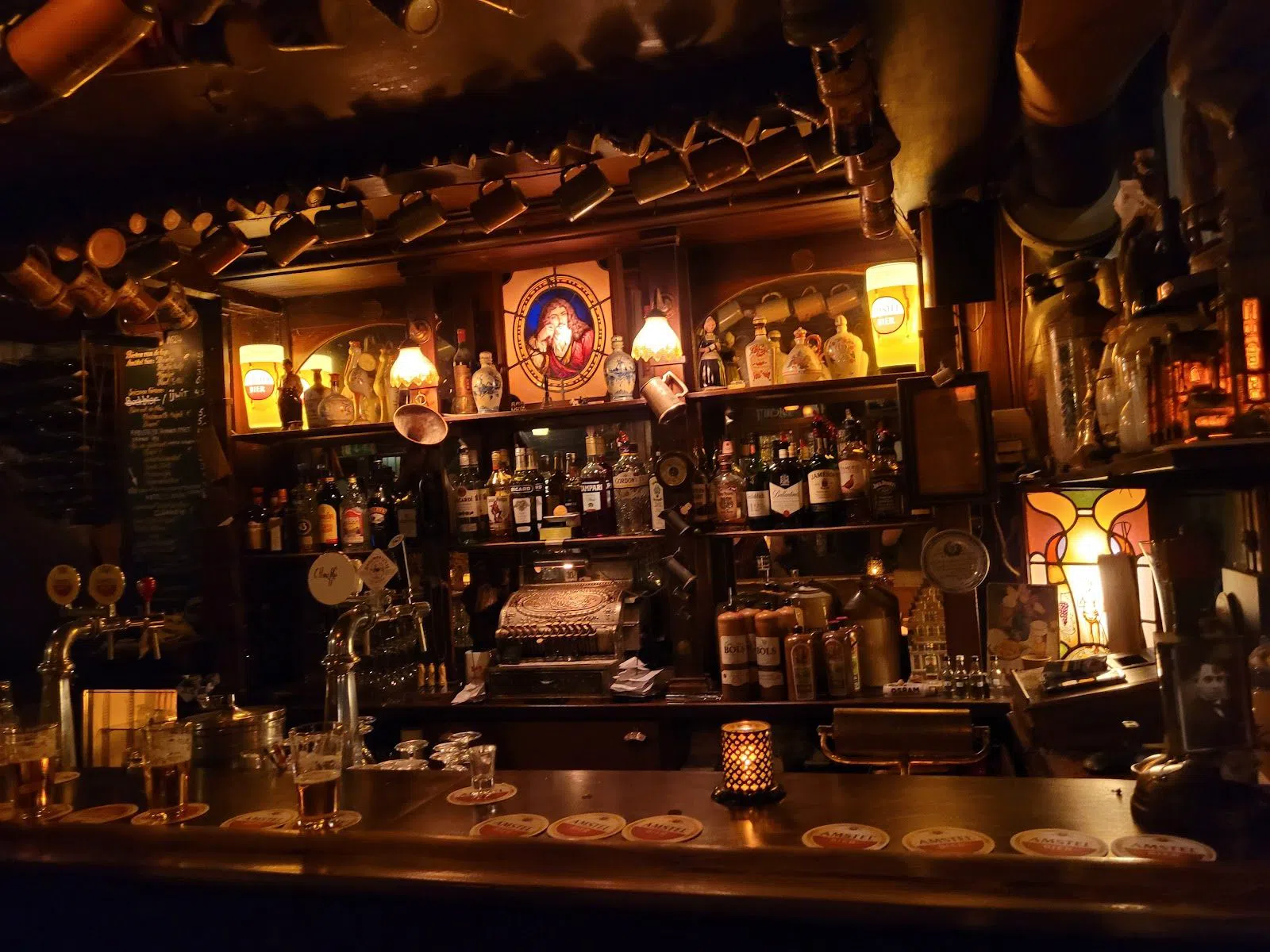
A few minutes south, Café Chris (Jordaan) bills itself as the oldest café in the Jordaan and drinks like it — characterful, unpretentious, and genuinely a place to "drink like an Amsterdammer" rather than to watch other people do it. It's a small locals' bar that welcomes small groups but takes no bookings and fills fast, so mid-week or an early evening arrival is your ally. Beers run €3.50–5.50.
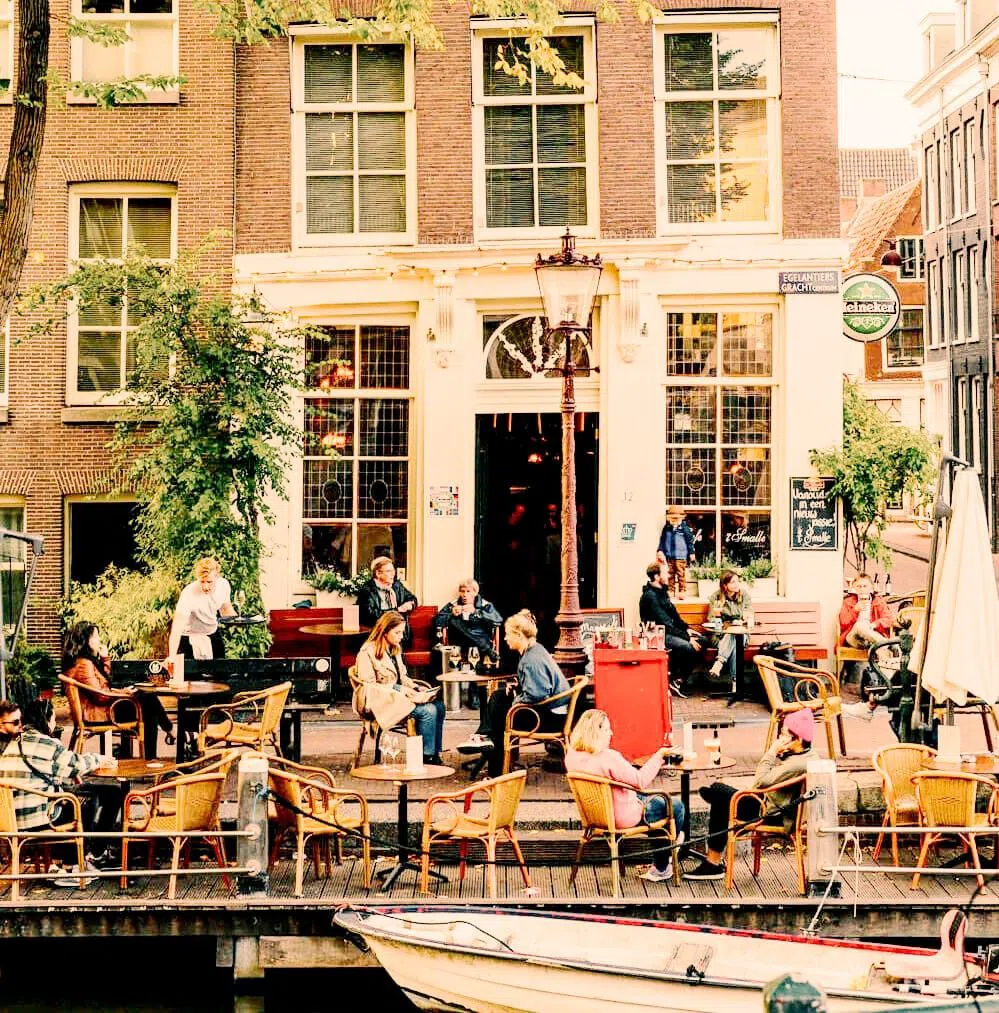
For the prettiest photograph on this entire list, Café 't Smalle (Jordaan) is hard to beat: its waterside pontoon terrace over the canal is the money shot every travel piece wants. Inside is small, but in good weather that terrace will take a group happily and hold onto them for hours. No bookings, so on a sunny afternoon you either arrive early or you hover with a beer in hand waiting for a table to turn. Beer €3.50–6.
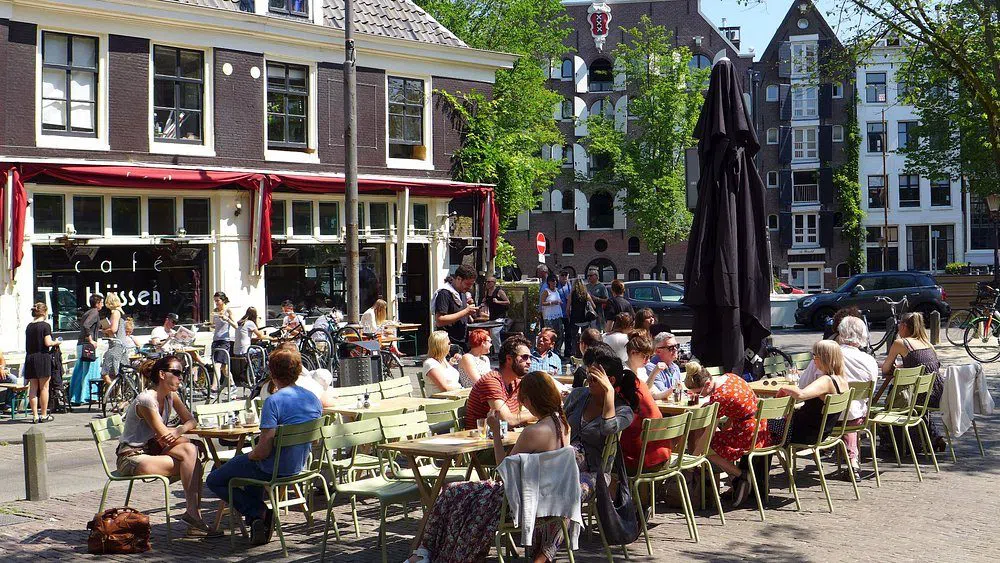
If you actually want to sit a group down and stay a while, Café Thijssen (Jordaan, near the Lindengracht) is one of the larger, livelier options — comfortably takes a group, buzzes at weekends, and hums during the Saturday Lindengracht market. It's a proper all-day anchor: brunch, an afternoon, a late one, all in the same room. Beers €3.50–6.
And for the loud end of the spectrum, Café de Twee Zwaantjes (Jordaan) is the most group-suited place on this whole list — accordion sing-alongs and karaoke nights, late weekend hours, the raucous, arm-round-your-neighbour side of a bruine kroeg rather than a quiet pint. Best on a Friday or Saturday night, when the singing actually happens; go on a wet Tuesday and you'll wonder what the fuss was. Beers €3.50–5.50.
The old centre and the Zeedijk: history you can drink in
Closer to Centraal and the old harbour edge, the cafés trade Jordaan prettiness for centuries of genuine story — and, in a couple of cases, for even less elbow room.
In 't Aepjen (Zeedijk) is a living history stop — a timber-fronted house where, the tale goes, sailors once settled their tabs in monkeys. It's very small and often standing-room only, so treat it as a couples-and-small-groups place, no reservations, beer €4–6. The neat move is to pair it with Café 't Mandje (Zeedijk) a few doors along: Amsterdam's oldest LGBT café, preserved almost in amber, welcoming to everyone and to small groups, closed Mondays, beer €4–6. Go for the story as much as the pint — it's a small, warm, quietly significant room, not a big night out.
For a first or last pint by the station, Café Karpershoek (old centre, near Centraal) is roomier than most and long used to travellers straight off the train, so small-to-mid groups are fine here without any awkwardness at the door. It claims the title of Amsterdam's oldest café, dating to 1606, and it wears the age lightly; beers €3.50–5.50. This is the one to file under "handy" — a civilised first or last drink that doesn't demand a plan.
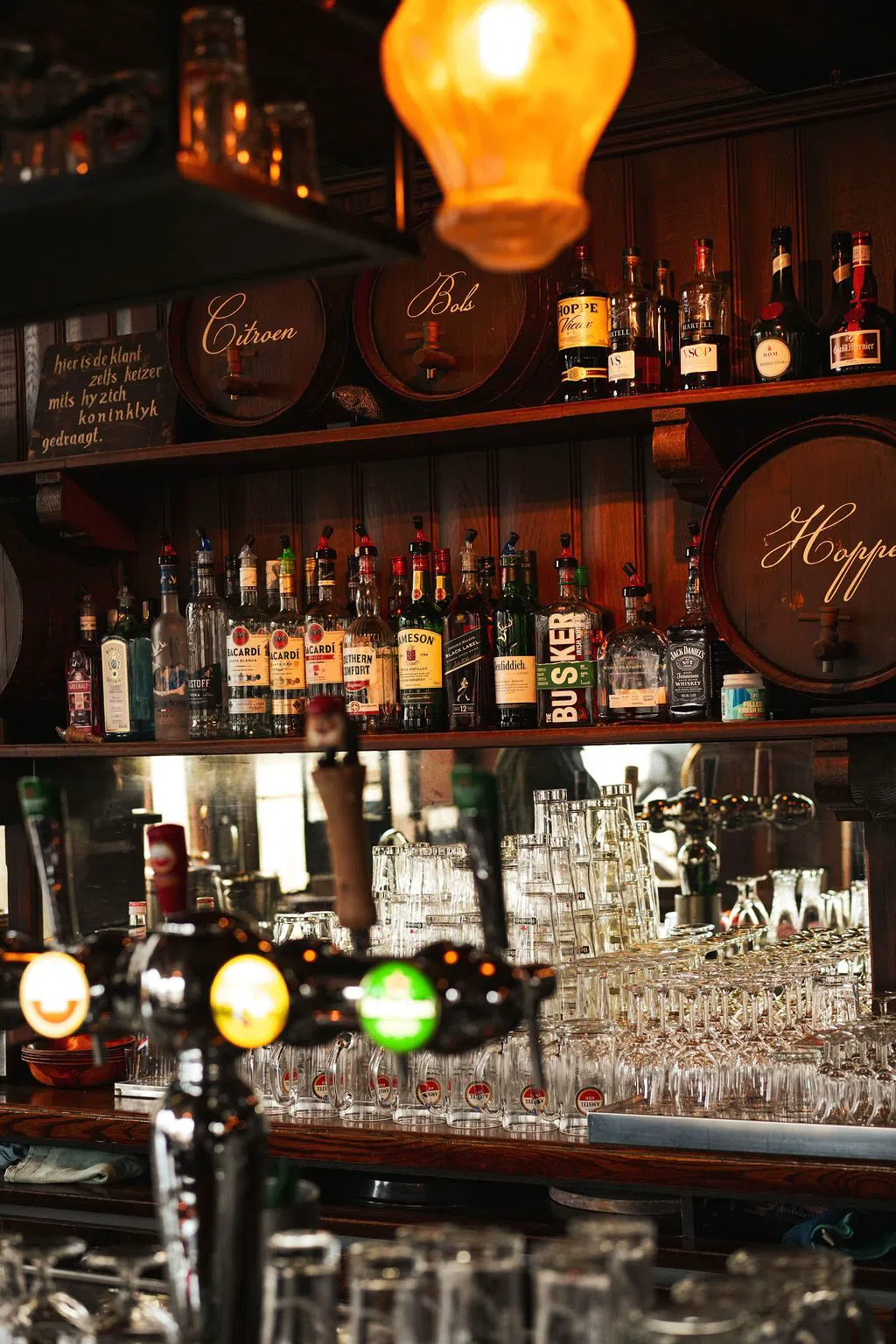
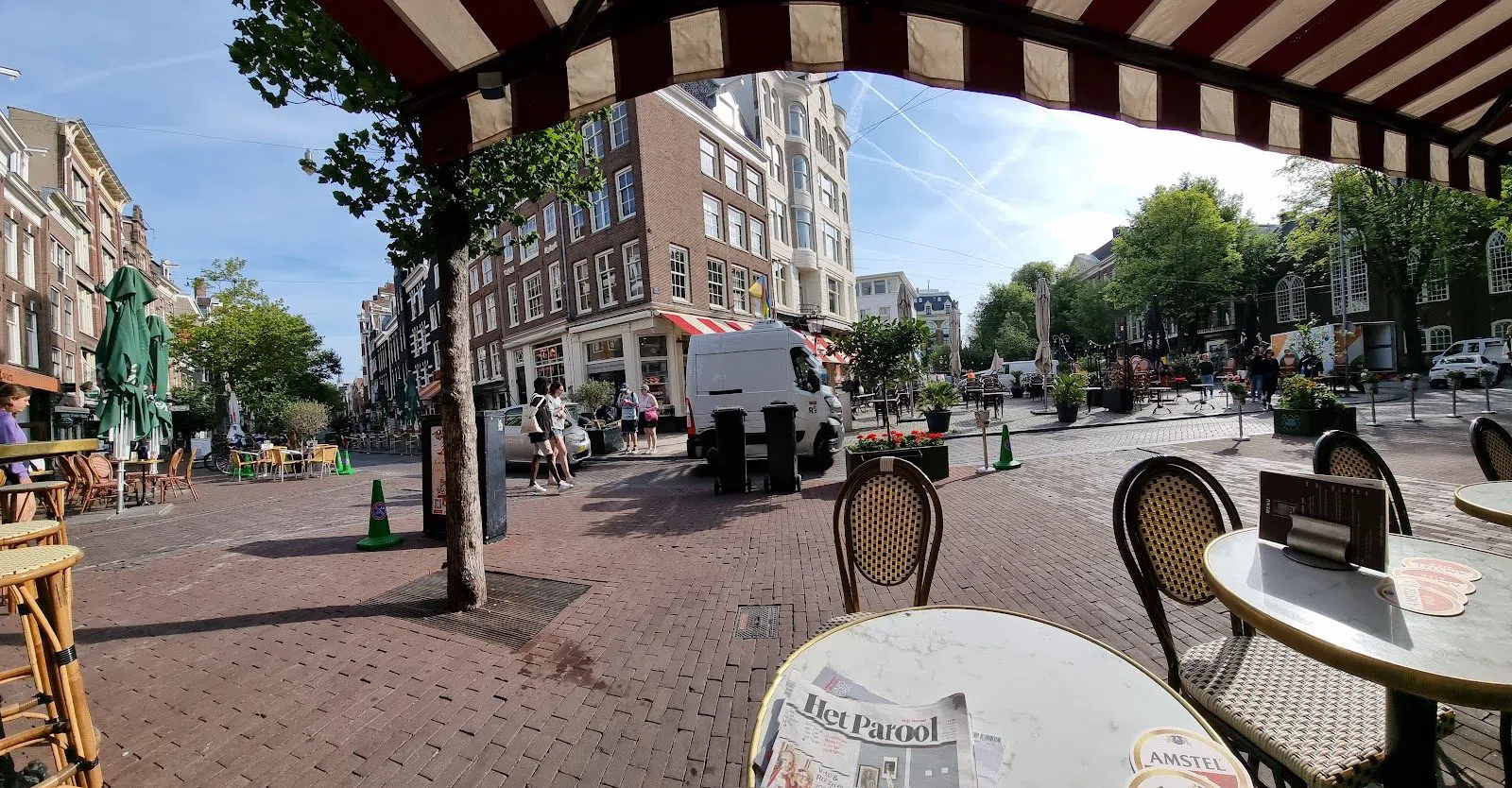
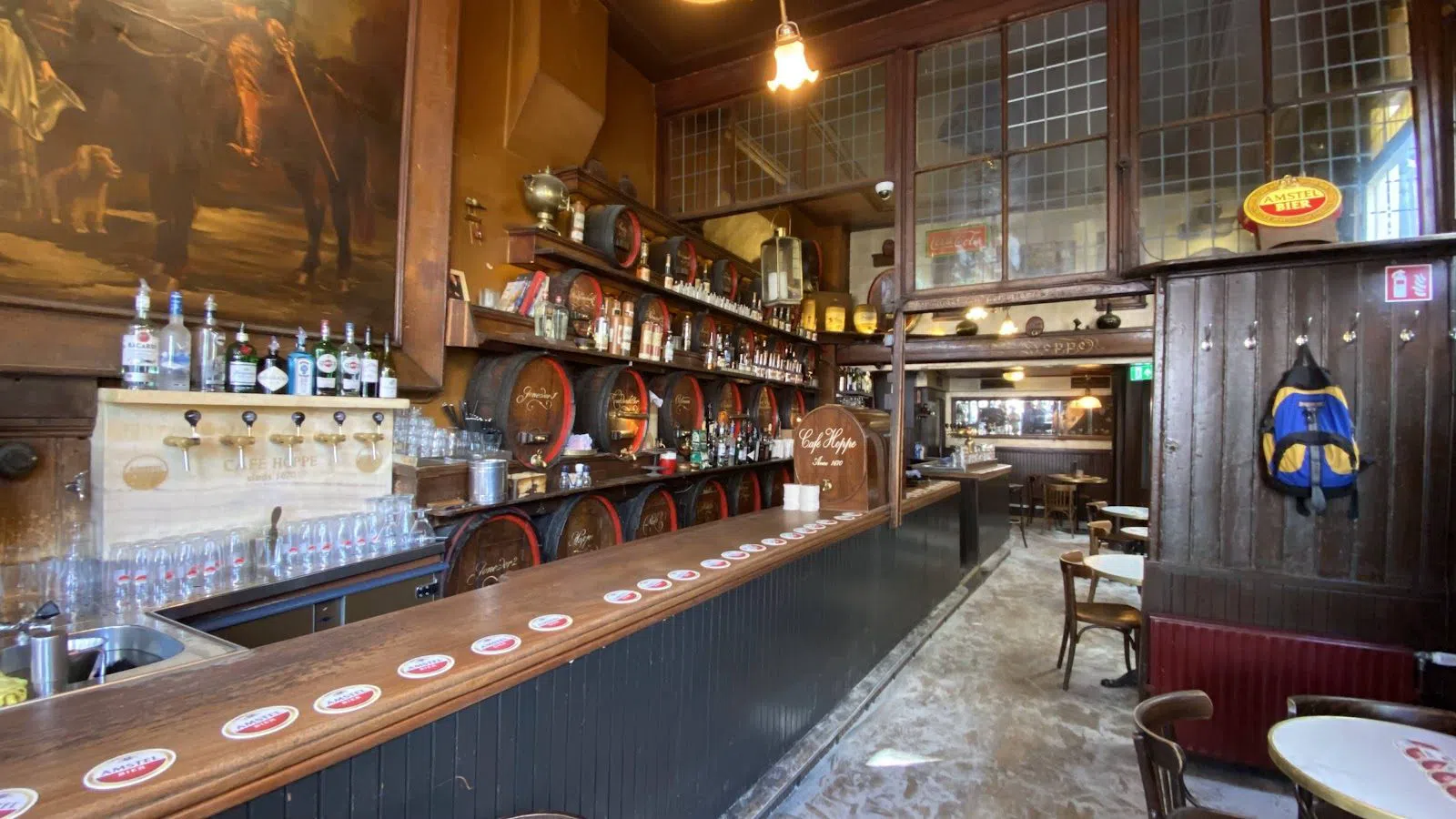
The most group-friendly of the central lot is Café Hoppe (Spui), buzzy and impossible to miss, where the crowd naturally overflows onto Spui square for a standing session in the warmer months. It's the reliable first-round pick — easy to find, easy to leave — before you move deeper into the old centre. Beers €3.50–5.50.
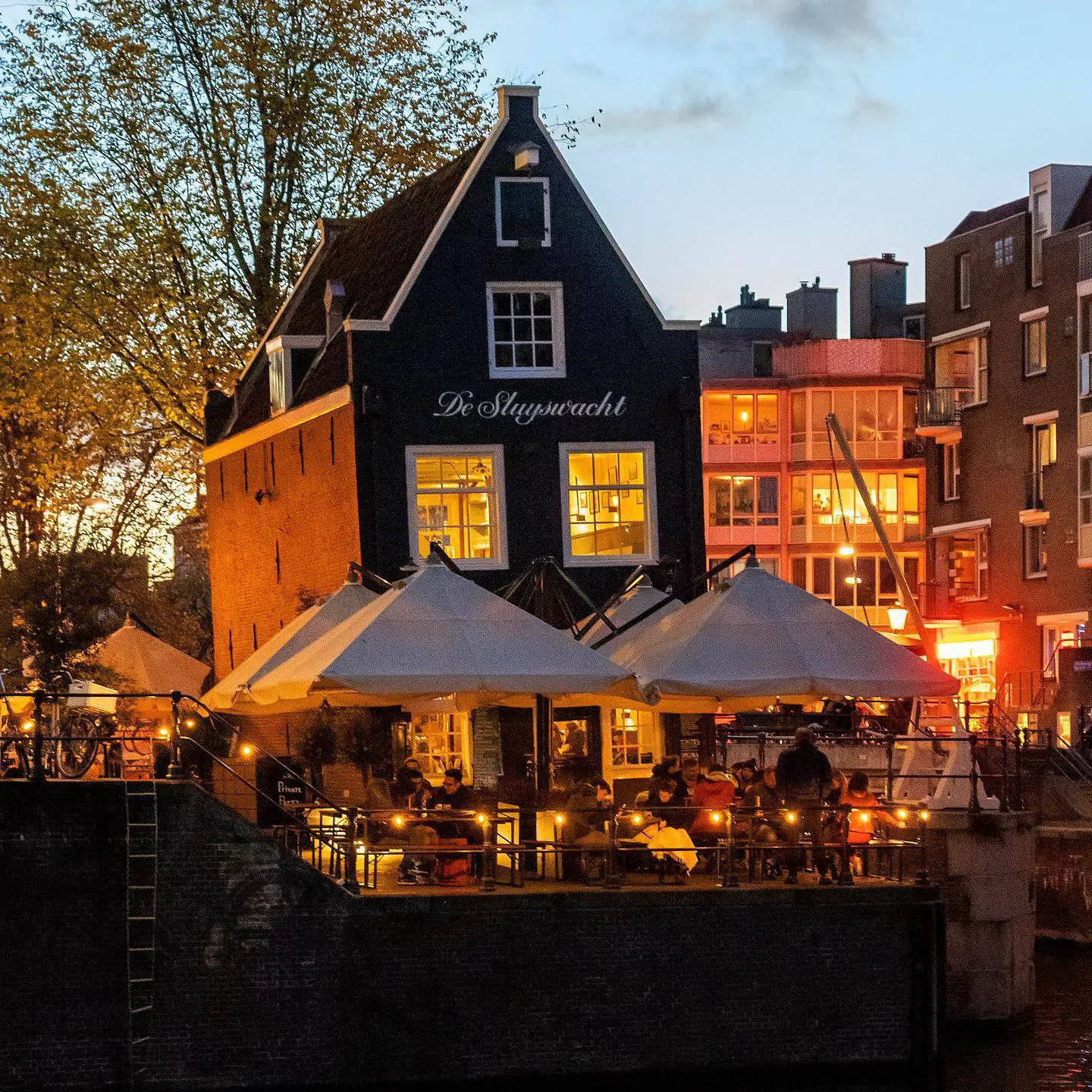
Down by the locks, Café de Sluyswacht (old centre, by the Rembrandt House) is the wonky, visibly leaning little building every photographer loves. Indoors it's cramped, but the canal-side terrace on the lock seats a group and makes a genuinely lovely sunset spot; beer €4–6. It sits right by the Rembrandt House, which makes it the natural culture-plus-beer stop — an hour of paintings, then a pint watching the water.
When you want to taste, not just sip
Three places here are less about the long session and more about what's actually in the glass — and two of them are the answer when you've got a larger group and want it organised rather than chaotic.
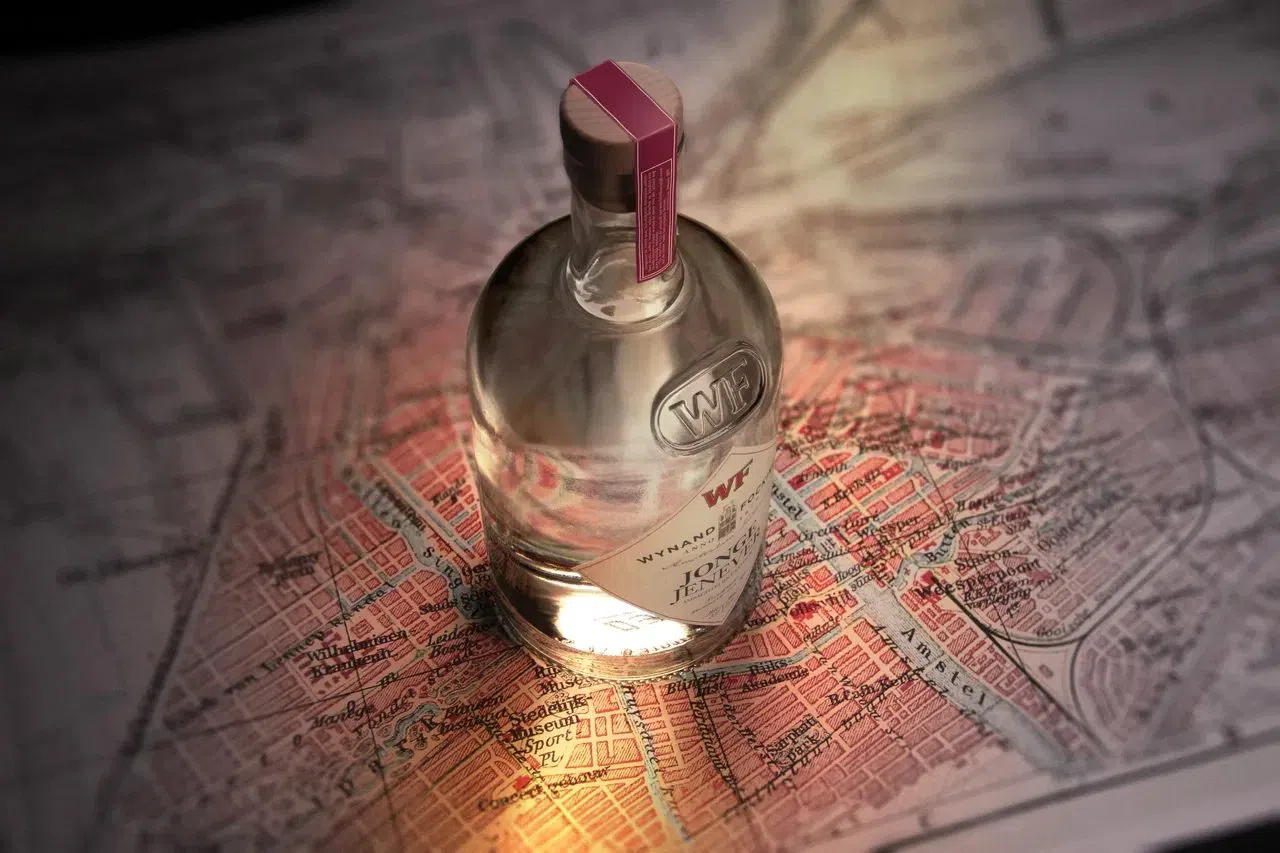
Proeflokaal Wynand Fockink (old centre, just off Dam Square) is the definitive Dutch-spirits experience: a standing-only front bar pouring jenever and liqueurs at roughly €5–7 a glass. Small groups fit the front bar; larger ones can book a guided distillery tasting in the room next door, which is the more sensible option above about six people. This is the place to teach the table the kopstootje — a jenever with a beer chaser, drunk with your hands behind your back and the first sip taken bent over the bar — and it lands beautifully with a UK crowd who've never met the ritual.
For beer specifically, Proeflokaal Arendsnest (canal belt, on the Herengracht) is the country's first all-Dutch-beer bar, with 50-plus taps and a canal-side terrace. It's the one place on this list that is explicitly built for groups: a basement tasting room hosts booked tastings for up to 32, which makes it the obvious pick for a beer-geek contingent or an organised session that needs a plan and a table rather than luck. Craft beers €5–8.
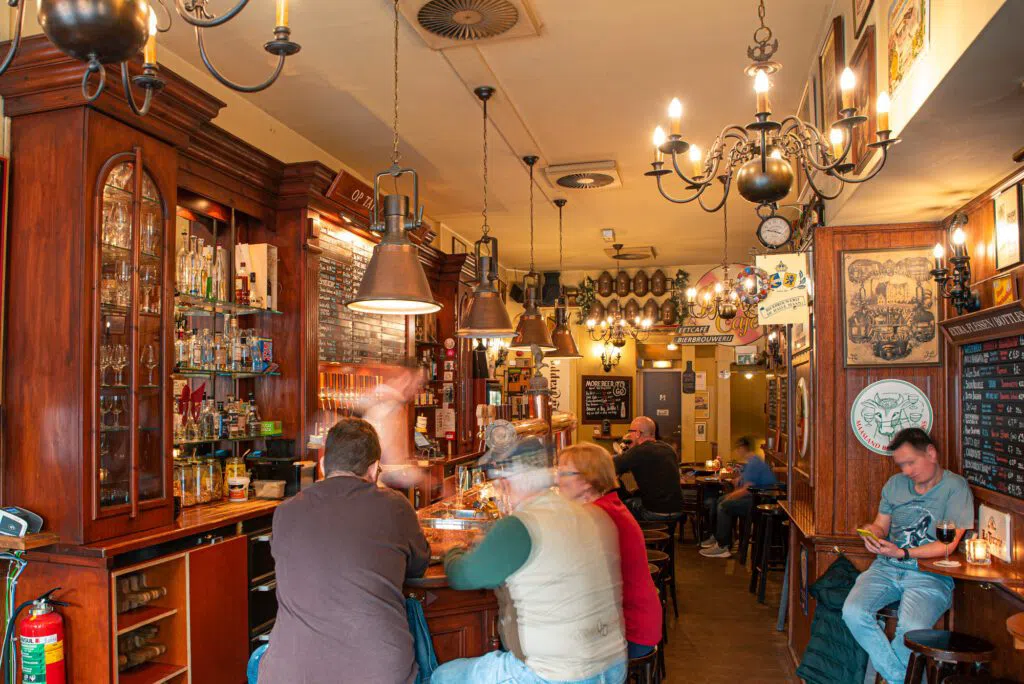
Café Gollem (old centre, on the Raamsteeg) is the city's pioneering specialist beer bar, with 200-plus bottles and a nerd's-eye reputation to match. The original Raamsteeg room is snug and best treated as small-groups-only — but it's run as one operator with larger sister venues, so if you're a bigger UK group, ask for one of the roomier Gollem locations rather than trying to fold eight people into the original. Beers €4–7.
For a quiet pair, not a rowdy night
Not every good brown café wants your stag do, and it's only fair to say so. Café Welling (Museum Quarter, behind the Concertgebouw) is a quiet writers'-and-musicians' local, genuinely off the tourist trail — fine for a small group, wrong for anything loud. Beers €3.50–5.50. It pairs neatly with a Concertgebouw concert or a slow Museum Quarter afternoon, and it's the honest answer when someone in your party wants conversation over volume.
If you're weighing it all up: for couples and quiet afternoons, aim at Papeneiland, In 't Aepjen, 't Mandje and Welling, and keep your numbers low. For a group that wants to sit down and stay, Thijssen, Arendsnest, Karpershoek and the terrace at de Sluyswacht all do the job without a fight at the door. For a genuinely loud night, Twee Zwaantjes. And for a first, easy round that lets you decide the rest, Hoppe on Spui. Book a central bed with an Amsterdam hotel search and you can walk most of this in a single evening; the full Amsterdam guide has more on neighbourhoods and getting your bearings.
Practical notes
Transport. Nearly everything here is walkable from the centre, which is really the point. For the Jordaan, take tram 13 or 17 to Westermarkt and you're a few minutes from Papeneiland, 't Smalle and Chris; trams to Spui drop you right at Hoppe and Gollem; the Zeedijk pair and Karpershoek are a short walk from Centraal; and de Sluyswacht sits by Nieuwmarkt. A GVB day ticket is the simplest way to cover the ground, though on a decent day you'll walk more than you ride.
Cash and cards. Most brown cafés are card- and contactless-friendly now, but a handful of the smallest still prefer a tap or a note for a single round, so carry a little cash as insurance. Think cash-light rather than cash-only, and you won't get caught out.
Timing. The golden rule is early or mid-week. The pretty terraces — 't Smalle, de Sluyswacht — go first on sunny days, and the tiny rooms — Papeneiland, In 't Aepjen — are standing-only when busy. For a quiet pint, aim for late afternoon before the after-work crowd arrives; for the loud end, Twee Zwaantjes only really comes alive on Friday and Saturday nights. Note that 't Mandje is closed Mondays.
Budget. A beer across these places runs roughly €3.50–6, jenever €5–7 a glass, and specialist craft beer €5–8. A relaxed evening of three or four stops, walking between them, is comfortably done for £25–35 a head — a fraction of the tourist-strip price a few streets away, and in far better company.
Before you go
What is a brown café in Amsterdam?
A bruine kroeg ("brown café") is a traditional Dutch pub whose walls and ceiling have been darkened over decades by candle-soot and old tobacco smoke. Expect wonky floors, worn wood, a low-key local crowd and pils around €3.50–6 — the everyday drinking rooms locals use, not tourist bars.
Do Amsterdam brown cafés take reservations?
Almost none do. Places like Café Papeneiland, Café Chris, Café 't Smalle and In 't Aepjen are walk-in only and fill fast, so arrive early or mid-week. The main exceptions are booked tastings: Proeflokaal Arendsnest takes group tastings for up to 32, and Wynand Fockink offers a guided distillery tasting for larger groups.
Which Amsterdam brown cafés are best for a group?
Café Hoppe on Spui, Café Thijssen and Café Karpershoek all comfortably take groups, and Café de Twee Zwaantjes is the liveliest with sing-along nights. For an organised session, Proeflokaal Arendsnest's basement room seats up to 32, and bigger groups should use Café Gollem's larger sister venues rather than the snug original.
Are Amsterdam brown cafés cash-only?
Mostly no — most are card- and contactless-friendly today. A few of the smallest rooms still prefer a tap or cash for a single round, so carry a little cash as backup. Treat them as cash-light rather than cash-only.
How much does a night in Amsterdam's brown cafés cost?
A beer runs roughly €3.50–6, jenever €5–7 a glass, and specialist craft beer €5–8. A relaxed evening of three or four stops, walking between them, comes to about £25–35 a head — far less than the tourist-strip bars a few streets away.