The Amsterdam issue
Amsterdam Canal Cruises and How to Pick the Right Boat
Fourteen operators, one set of canals. What each boat costs, how many people it takes, and which one suits the trip you're on.

By Robin HaasThe slow way through Amsterdam's canals, courtyards and back streets
The canals are barely three metres deep and the water is the colour of strong tea, which is a poor advertisement and entirely beside the point. Sit down below street level and the city reorders itself. The gables line up, the hoist beams over the old warehouse doors suddenly make sense, and the ring of canals stops being an abstraction on a map. An hour on the water costs less than most museum tickets, and it is still the quickest way to work out how Amsterdam is put together.
What you are actually choosing between
Every operator sells "a canal cruise", and that phrase covers boats with almost nothing in common. Four things decide whether you enjoy the hour.
Start with the roof. Glass-roofed boats run in any weather and are the sensible choice in January. In July they get hot, and the glass throws reflections into every photograph you take. Open electric boats are better company and worse in rain, though most carry blankets and nobody minds you using one.
Then size. A big fleet boat carries sixty to a hundred people and a recorded commentary. A small boat carries six to twelve and a person who answers questions. Both are legitimate. The price gap, roughly €15 against €40, is exactly that difference and not much else.
Third is the commentary itself. The multilingual audio track is useful when your group doesn't share a language. A live skipper is better if you want to ask why a particular house leans forward, or what the hooks under the gables are for.
Fourth is whether they can take your whole group on one boat. That is where most plans fall apart, and it is worth settling before you look at anything else. Capacities are hard numbers, not suggestions.
Plan your Amsterdam trip
Live prices from our booking partners.
Free cancellation on many rooms. We may earn a commission when you book.
The cheap hour, done properly
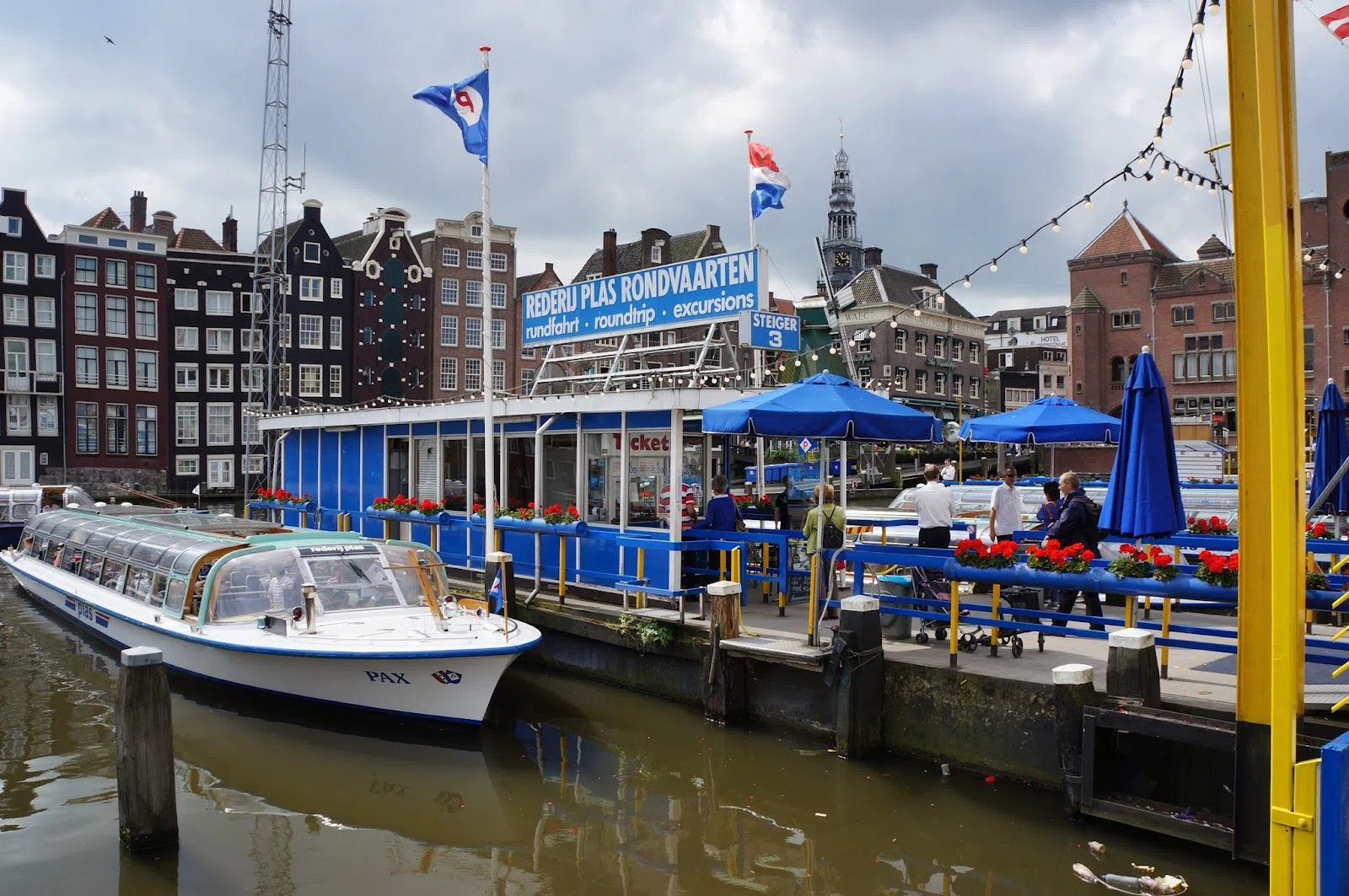
Rederij Plas (Damrak, five minutes on foot from Centraal Station) is the cheapest honest hour on the water. It is €15 booked online, €15.50 if you pay at the Damrak booth, and €11.50 for children aged four to twelve, with departures every twenty minutes year-round. Nothing about it is special and nothing needs to be: you get a covered boat, a recorded commentary and the loop done competently. It is also the one to remember when a larger group needs a boat at short notice, since private hire is €400 an hour for up to forty people, then €10 per person per hour above that.
Rederij P. Kooij (central, a short walk south of Dam Square) has been running since 1922 and is still family-run, which makes it the oldest cruise line on the canals. Around €15 to €19 for the one-hour cruise, 365 days a year, departures every half hour. Private charter is €400 an hour including the captain. If the queue at one company looks unmanageable, the other is usually five minutes away.
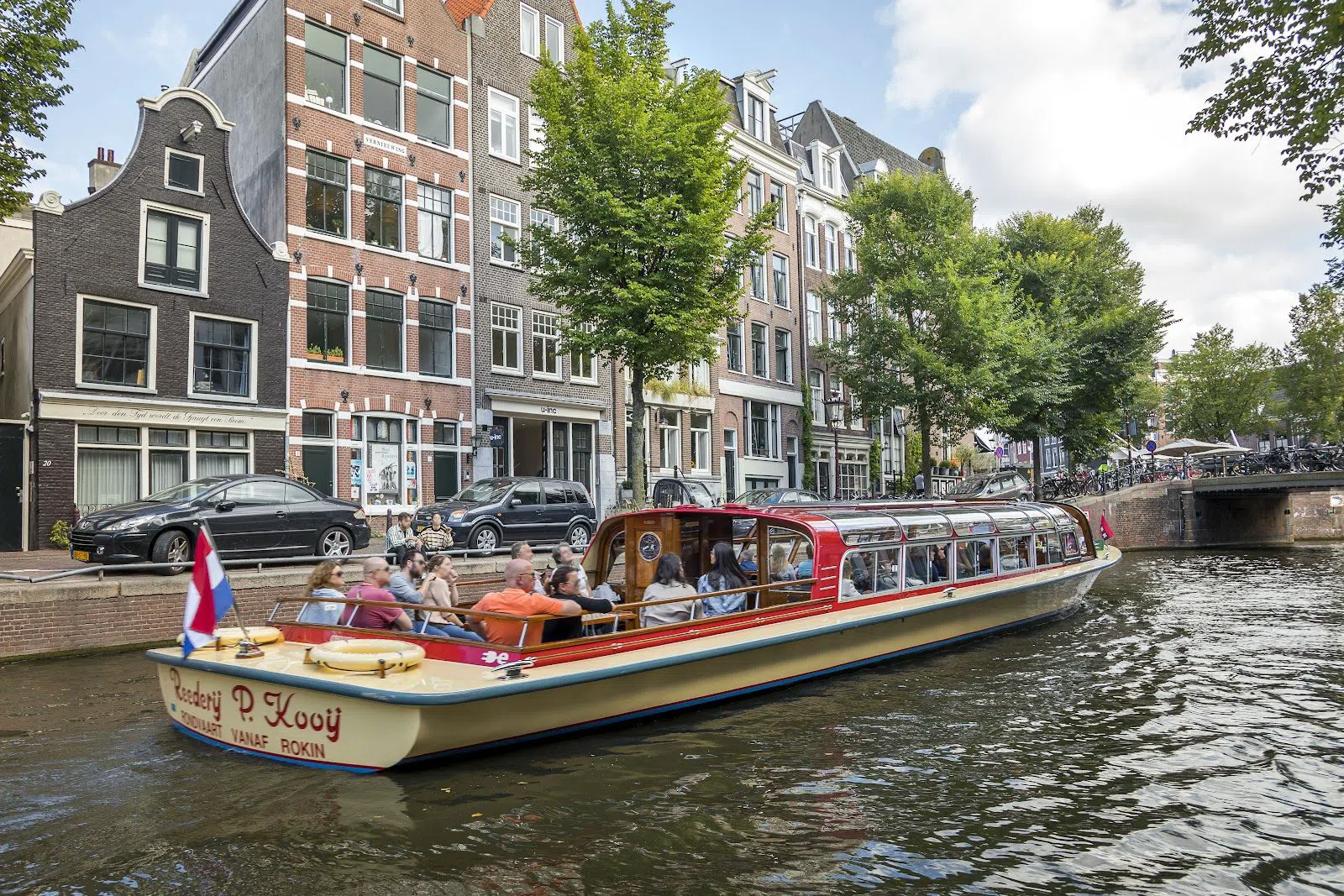
Both are covered boats. Take the first departure of the morning, or one after 20:00 in summer, and you will have room to move to whichever side of the boat the light is on.
The big fleets, and when to use them
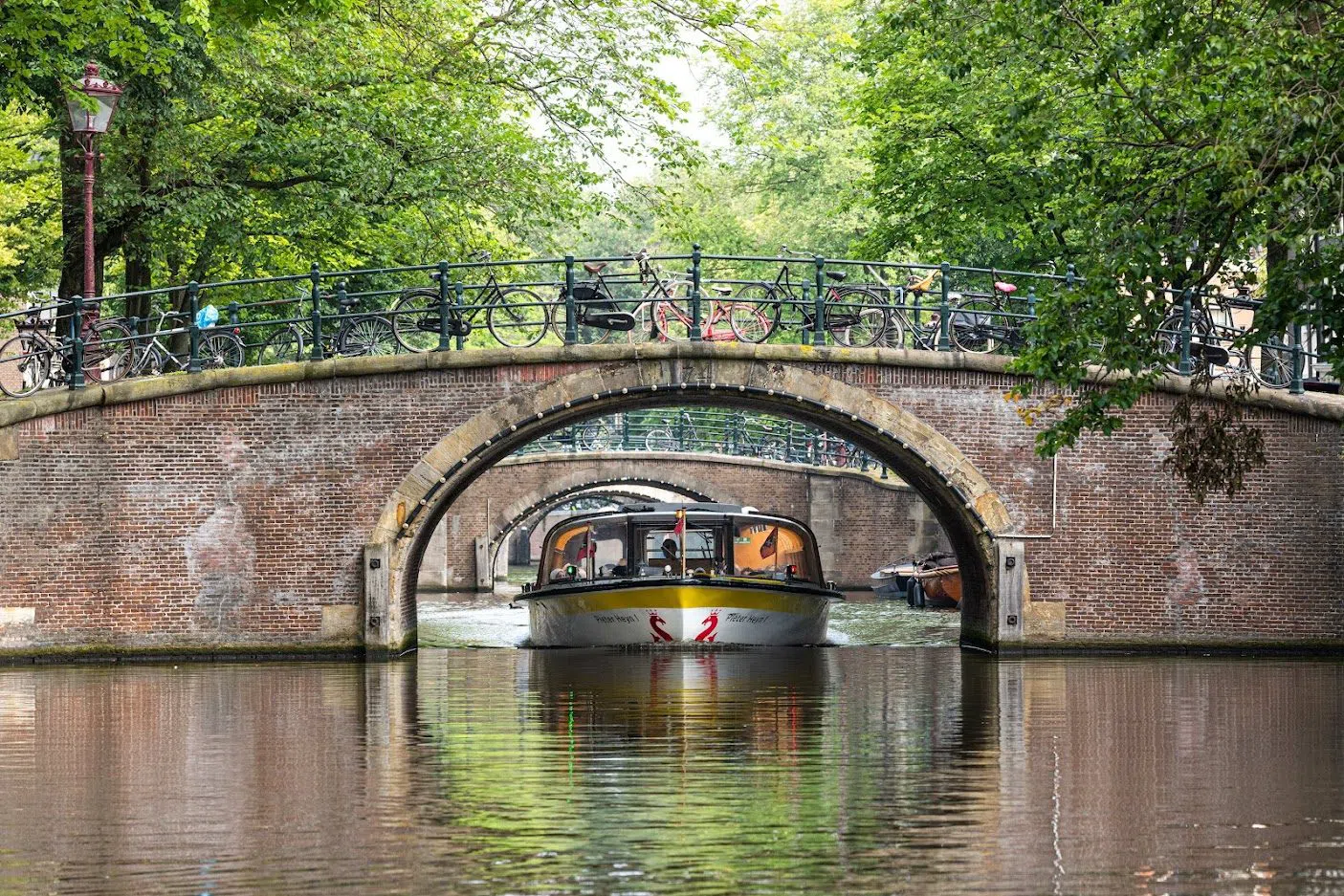
Stromma Netherlands (five departure points, including Damrak, the Rijksmuseum, Central Station and Leidseplein) is the default large operator: covered boats, open electric boats and saloon boats all sold from one desk, from €13.50 to €47.95 depending on which you pick. It has a dedicated business and group charter arm. Its real value is as a fallback. When every small boat in the city is booked out on a Saturday in August, Stromma will still have a seat and a departure within the half hour.
LOVERS Canal Cruises (four city-centre departure points, the main one by Centraal Station) has been going since the 1950s and runs daily from 09:00 to 21:00, at roughly €18 to €22 for the classic hour, with dining cruises priced well above that. The free audio guide comes in nineteen languages, which makes it the most useful option when the people you're travelling with don't share one.
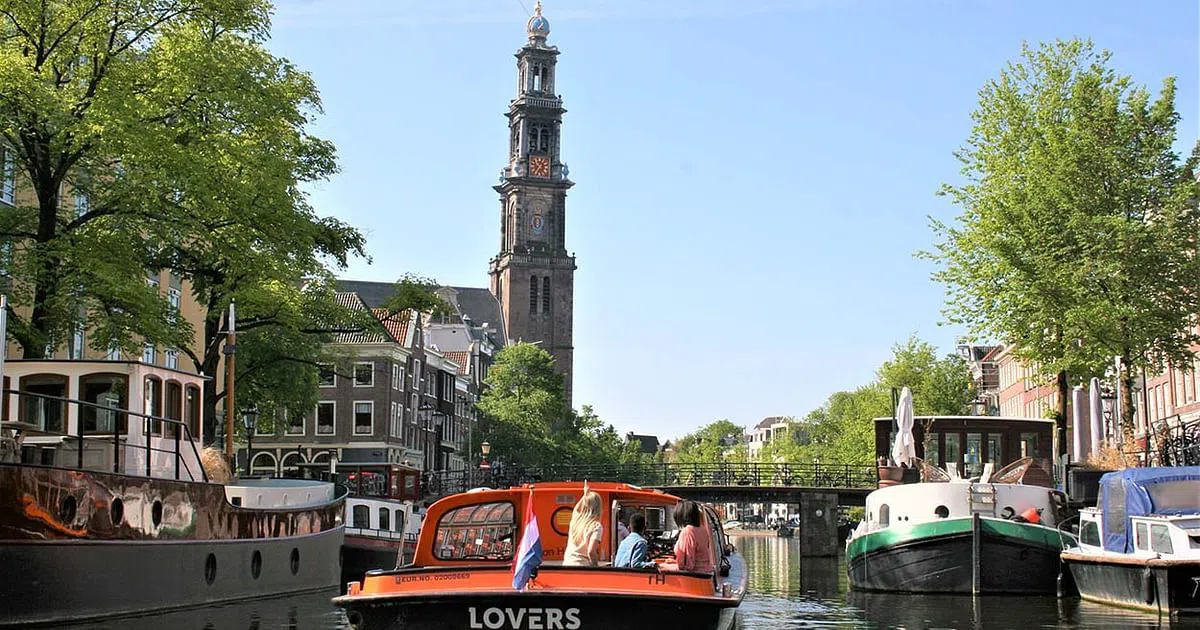
Be honest with yourself about these boats. They are the ones queueing along the water at two in the afternoon, they fill with school groups in term time, and the commentary is a recording. They are also fine, and cheap, and they go where the small boats go.
Six seats and the narrow canals
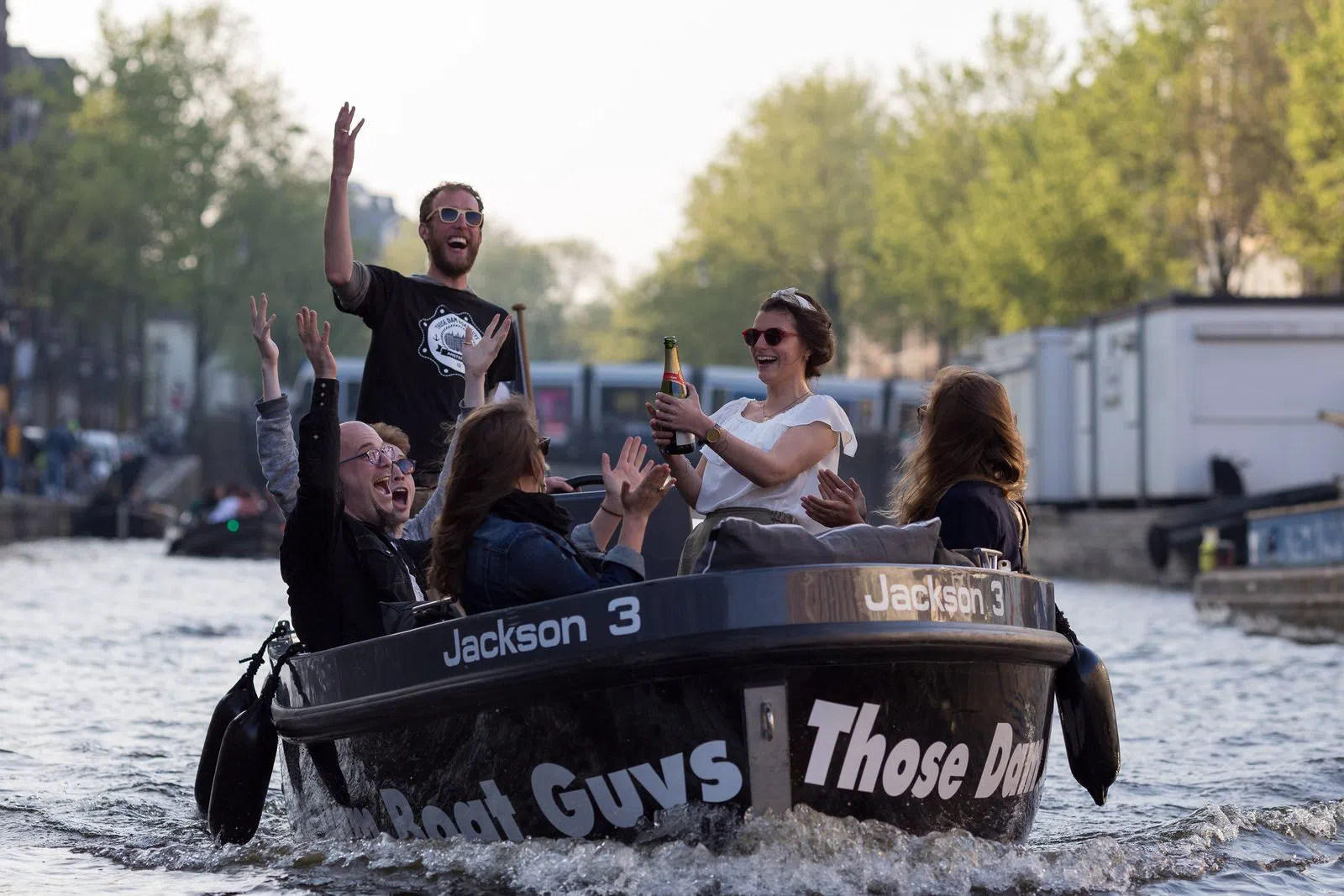
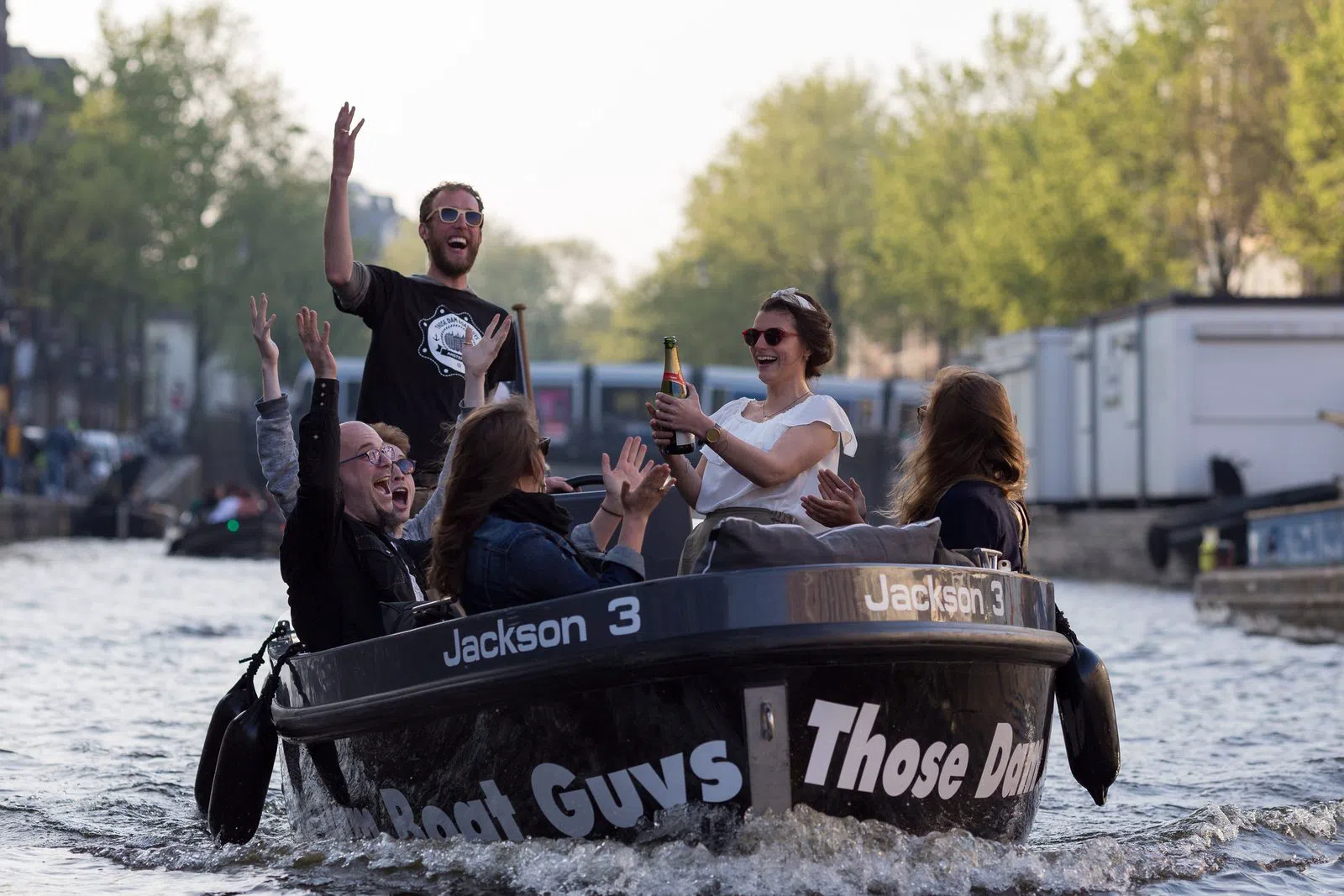
Those Dam Boat Guys (boarding on the western canal ring) run public tours capped at six people, at roughly €35 to €45 a head. There is no script and no recording: one guide, six seats, and canals narrow enough that the big fleet boats physically cannot follow you into them. Groups of seven or more can't join a public tour and must book their own private boat, which the company offers openly rather than treating as an exception. It suits solo travellers and couples; you will end up talking to the other four people aboard, so book something bigger if that's not what you want. There is no toilet and no roof to speak of.
Captain Dave Canal Cruises (central canal ring) takes a maximum of twelve guests and runs ninety minutes rather than the standard sixty, on an old boat that has both heating and a toilet. From €39 per person for the morning cruise and €42 for the 'Cruise like a Local'; private charters run from ninety minutes to six hours at €215 an hour. This is the pick for anyone who hates being rushed, and the one I'd suggest for a first visit in bad weather when you still want a human being doing the talking.
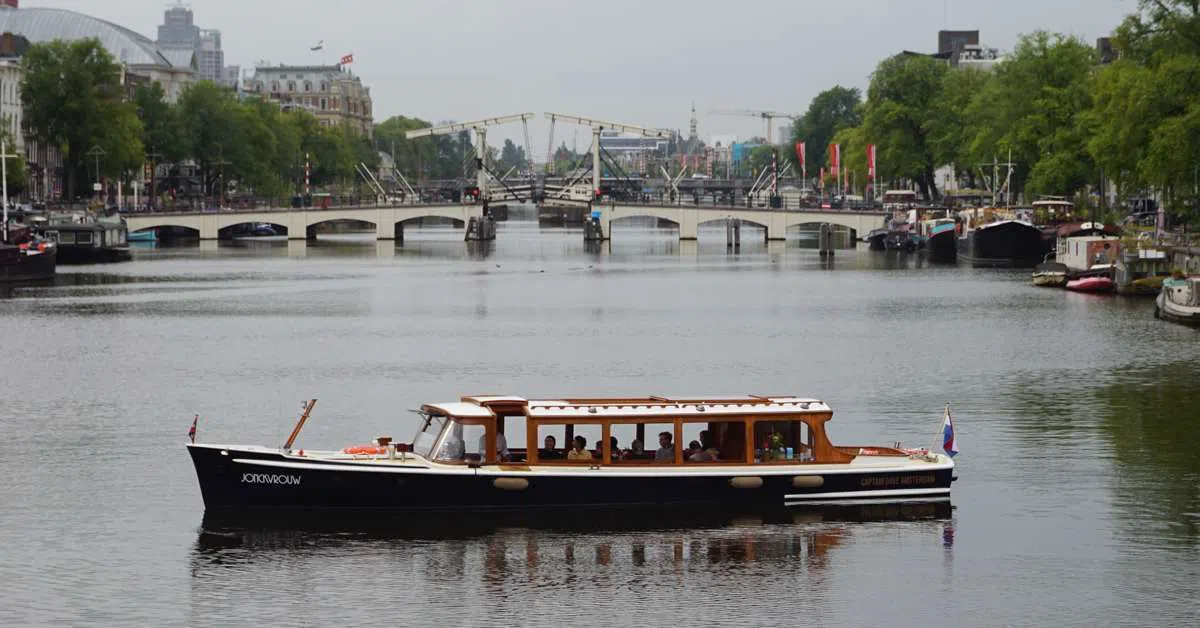
Mokumboot (seven rental docks across the city, including de Pijp and Westerpark) will put a skipper on a boat for you for private tours of up to thirty-five people, with cruises from €19.50 per person. The seven docks are the point. You can start somewhere residential rather than on a tourist quay, which changes the first ten minutes of the trip completely.
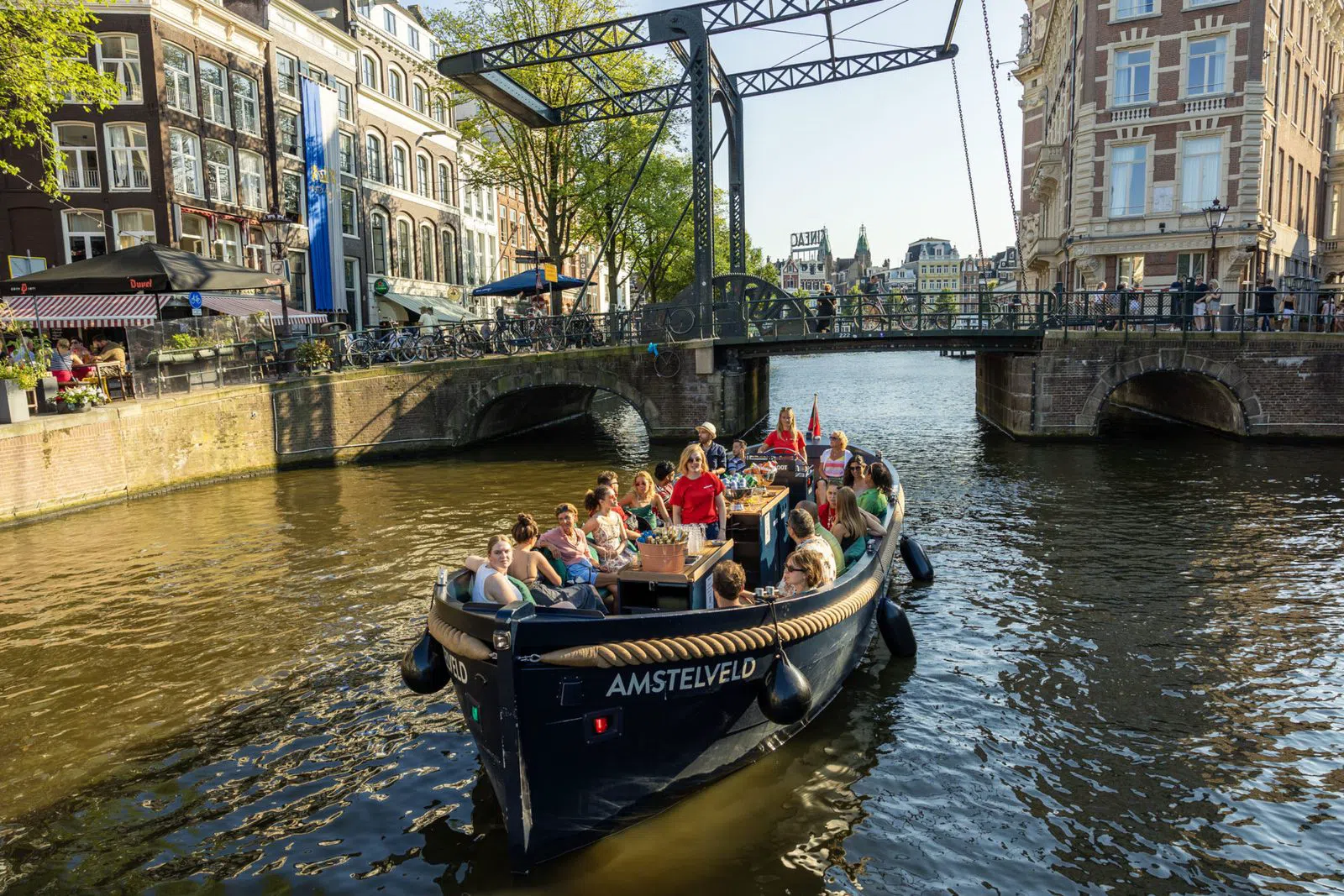
When the drinks are the point
Captain Jack Amsterdam (boards at the Rijksmuseum) runs open electric boats with a live skipper rather than a recording, from €22.95 for sixty minutes up to €39.95 for the ninety-minute all-inclusive. The drinks are genuinely included rather than sold from a cool box halfway round. Boarding at the museum means it slots straight onto the end of a museum morning without crossing the city.
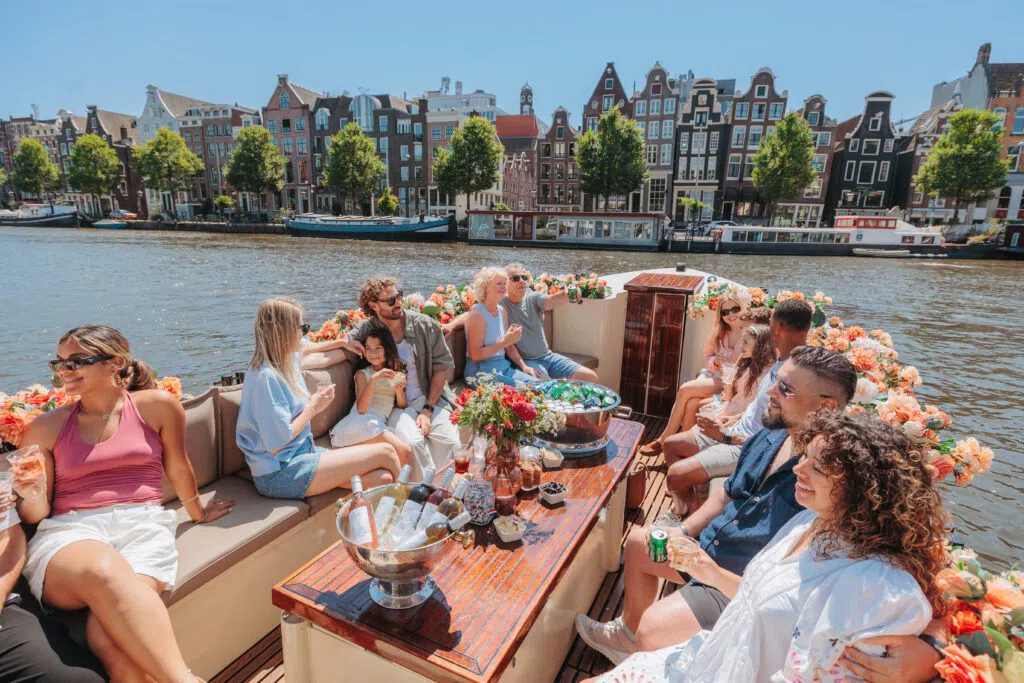
Pure Boats (central canal ring) sells semi-private cruises at €39 to €69 per person for two hours with the bar open, across a six-boat fleet carrying anywhere from six to thirty-six guests. Whole-boat hire is €330 to €630. The 36-seat Stan Huygens is the one that lets a large group stay together without the evening turning into a party boat, which is a real distinction and worth asking about when you book.
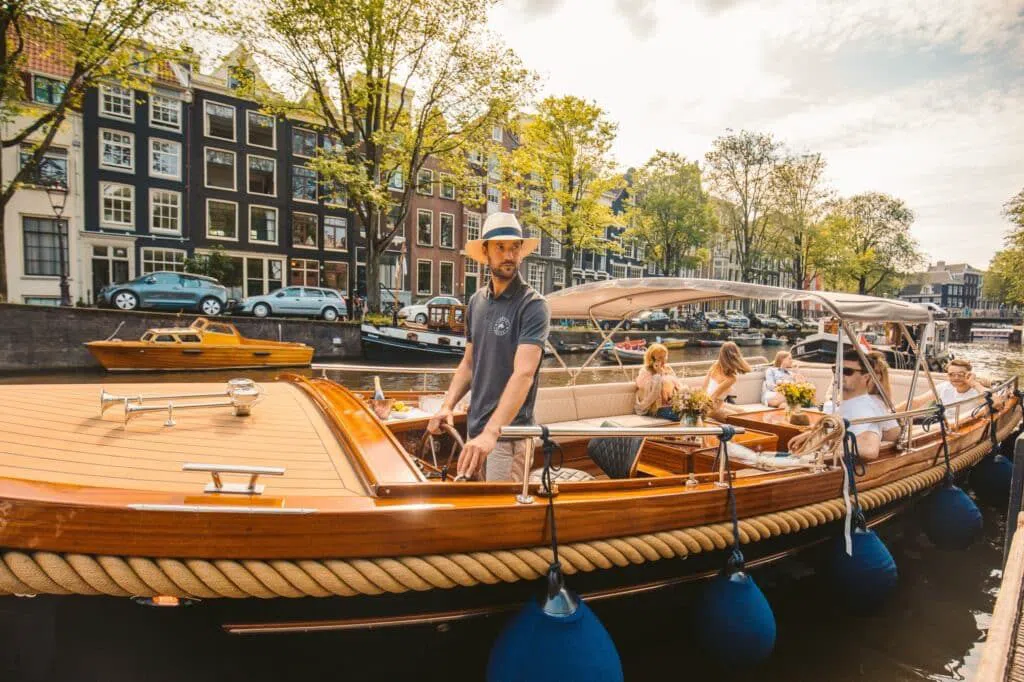
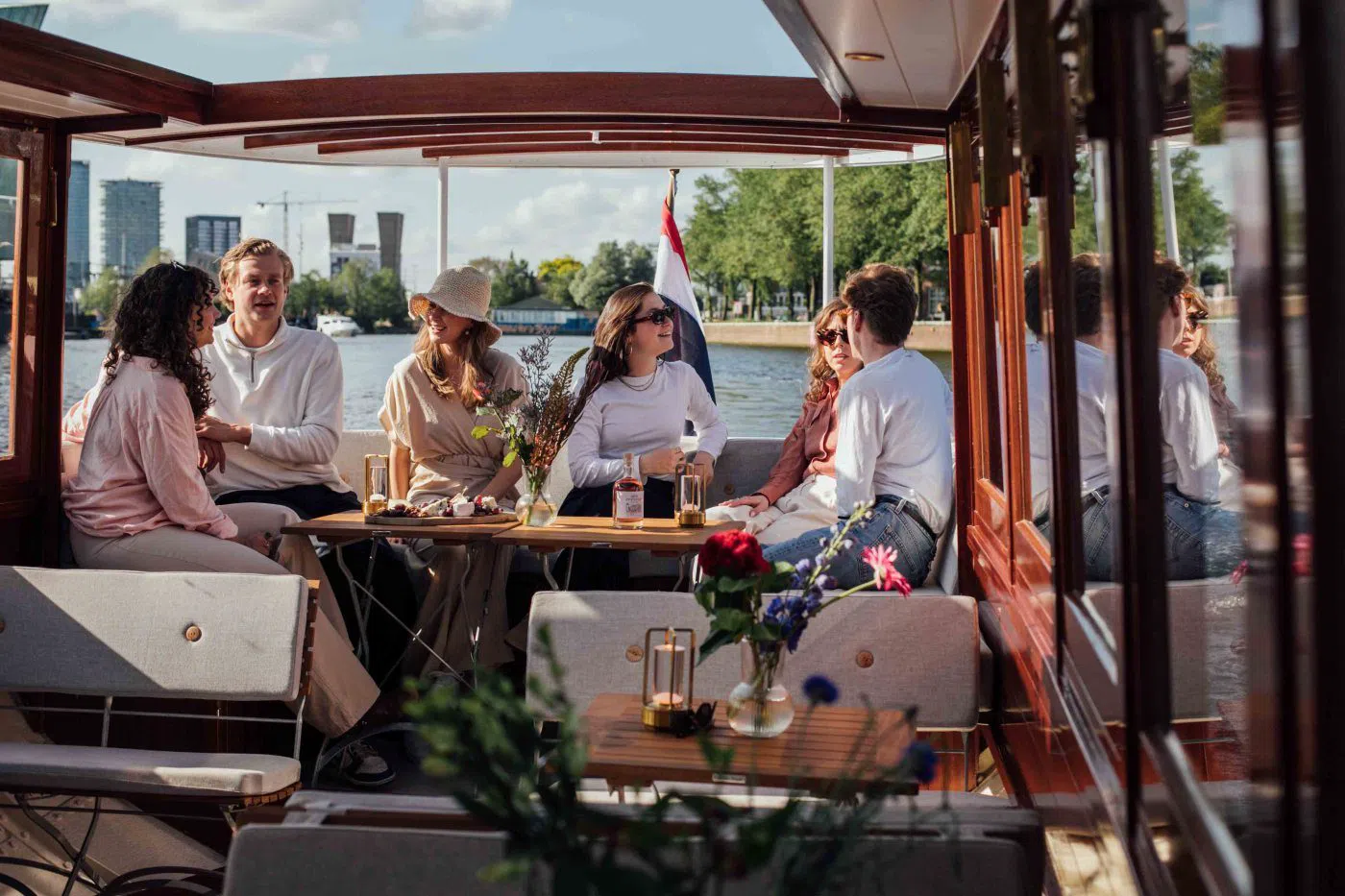
Friendship Amsterdam (city centre) runs open boats with an actual bar aboard and live guiding, from €19.50 per person, €26.50 for the booze cruise and €33.50 for the cocktail cruise. Private boats take up to thirty people from €399, with a captain and hostess as standard, sensibly priced once you are past about twenty heads.
One honest caveat on all three. These are sociable boats, and if you want a quiet hour looking at architecture you have chosen wrong. They are also on residential canals with people asleep behind those windows, so the decent operators keep the volume down. A boat is a poor venue for a loud night out; the bars ashore are better at it.
Boarding with a wheelchair or a pushchair
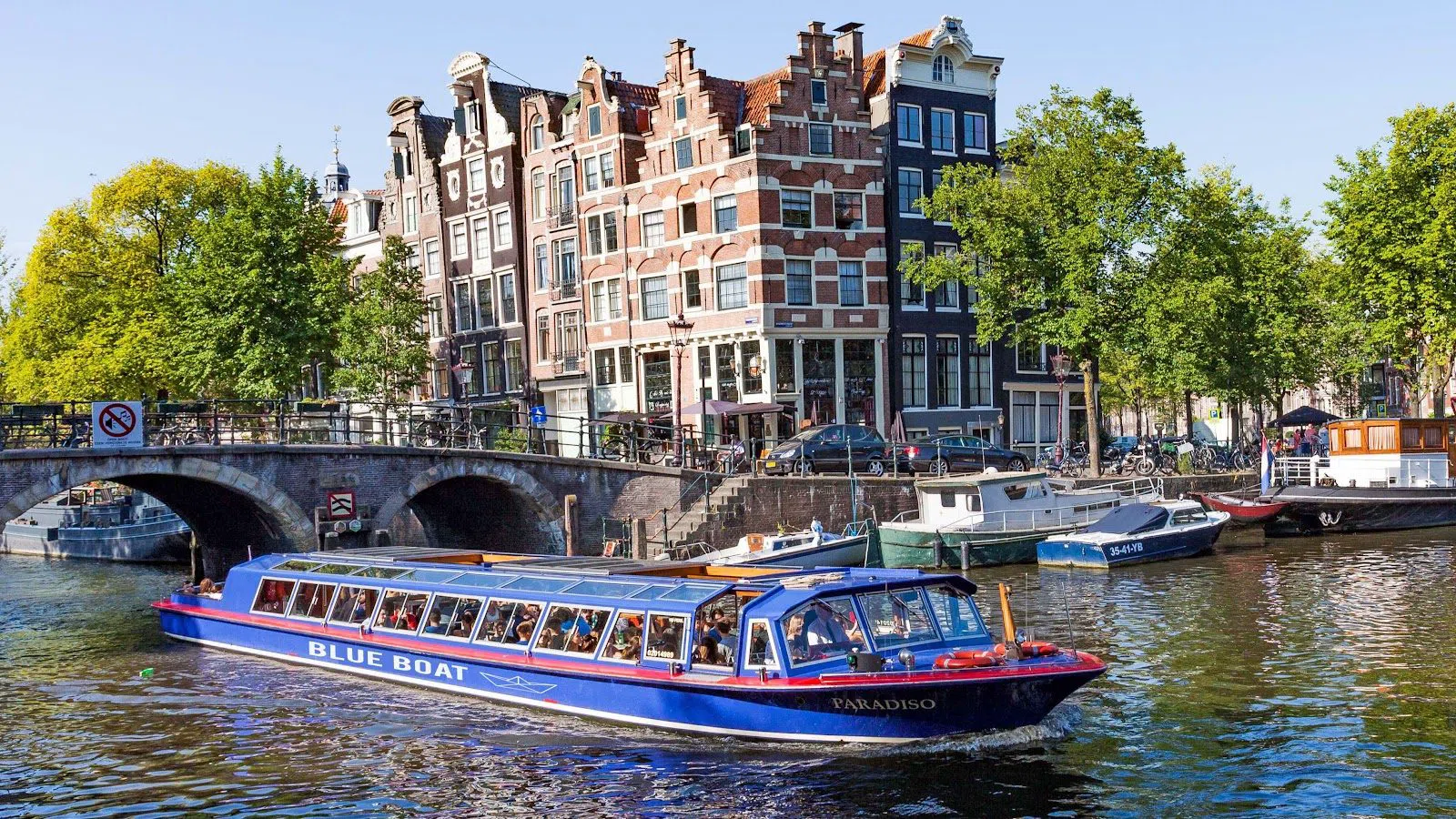
Blue Boat Company (the museum-quarter end of the canal belt) is the only fleet in the city with properly wheelchair-accessible boats (six of them) and it also runs a dedicated children's cruise. The City Canal Cruise starts at €12.25 and evening departures from €19.50, which makes it one of the cheapest tickets on the water as well as the most accessible. Tailor-made group charters with catering are handled directly.
If someone in your party uses a wheelchair, say so at the point of booking rather than at the gangway, and confirm which quay you are boarding from. Canal quays are cobbled, the drop to the boat varies with the water level, and knowing in advance which of the six boats is on your departure saves an argument at the water's edge.
One boat for twenty people or more
Flagship Amsterdam (central) has the widest range of boat sizes sold from one place, from ten up to seventy-five people. Public cruises run €19.40 to €125 and above; private rental starts at €44.50 per person, with a skipper and hostess and food and drink packages available. For a group of thirty or forty this is the practical answer. The alternative is splitting across two operators and spending the evening wondering where the other boat got to.
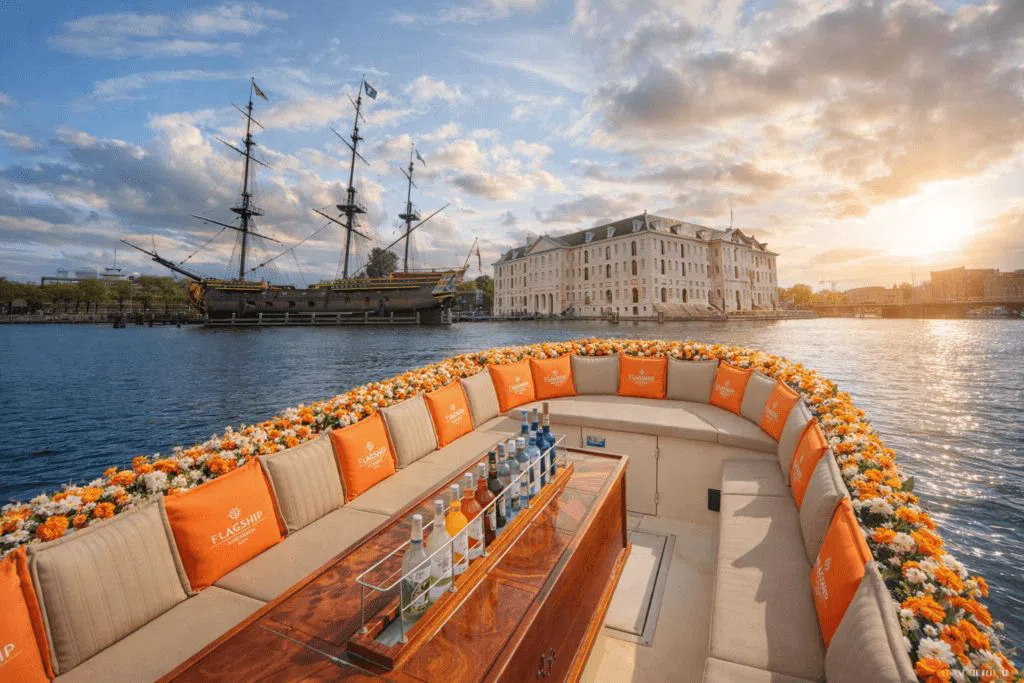
Below that size, the options above cover it: Friendship takes up to thirty privately from €399, Pure hires whole boats at €330 to €630, and Rederij Plas will do €400 an hour for up to forty on short notice. Budget by the boat-hour rather than per head once you pass twenty people. It is almost always cheaper, and it is the only way to get everyone on the same water at the same time.
Salon boats for an occasion
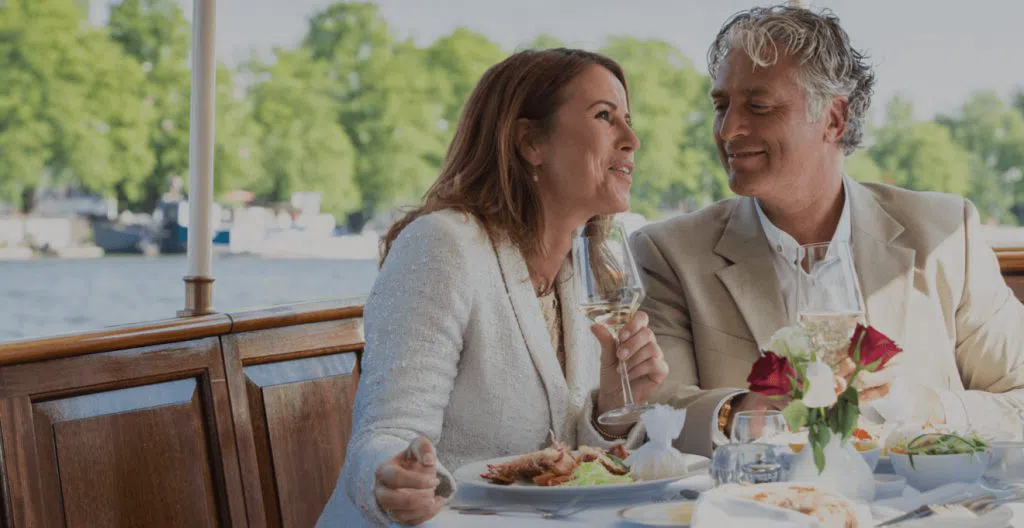
Rederij Belle (charter only, boarding quay arranged with the booking) runs a fleet you cannot simply turn up for: Emma takes twenty, Belle van Zuylen thirty, Adeline fifty, Dame van Amstel eighty, and the steamship Succes a hundred and ten. Prices start around €695 for a salon boat, with dining and event packages above that. The standout is the Sunday morning cruise with live players from the Sweelinck Orchestra, a slow, quiet, distinctly civilised way to spend a couple of hours, and the only thing on this page I would describe as an occasion rather than an activity. Book it weeks out.
Steering it yourself
Canal Motorboats (west of the centre, on the old harbour islands) rents open boats for one to eight people with no licence required, by the hour, daily from 10:00 to 22:00 all year. Groups of ten or more can book a captained charter instead. It is the cheapest way to spend three hours on the water by some distance.
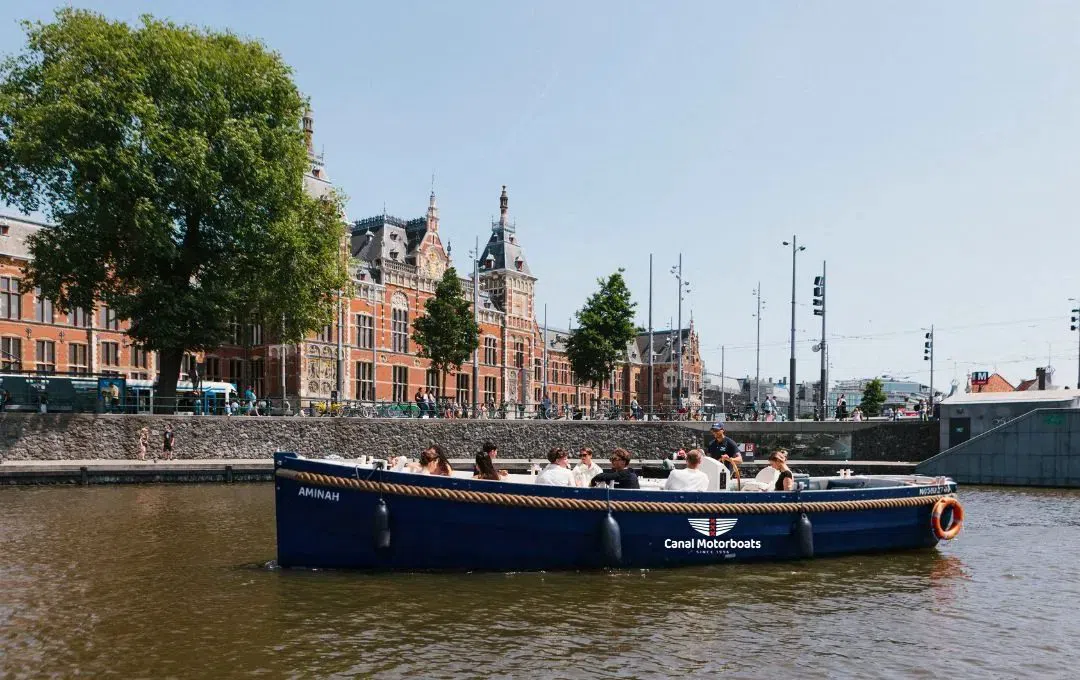
Mokumboot rents self-drive boats for up to eight from €97.50 per boat, from any of its seven docks.
Be clear about the trade. Steering takes concentration: you are sharing narrow water with sixty-seat fleet boats that have right of way in practice if not in theory, the bridges are lower than they look from the pavement, and the person at the tiller spends the trip watching the water rather than the houses. Rotate whoever is driving, keep them off the drinks entirely, and give yourself three hours rather than one so there is time to stop being tense. It is a good afternoon. It is not the relaxed option, whatever the price suggests.
Practical notes before you book
Getting to the quay is rarely the hard part. Almost every departure point is a short walk from Centraal Station, the Rijksmuseum tram stop or Leidseplein, and walking between two of them takes less time than working out a tram. Departure quays move for events and roadworks, so read the boarding address on your confirmation rather than the one you remember from the website.
The Netherlands runs on cards. Contactless works at every booth and aboard every bar boat, and cash is the awkward option here rather than the safe one. Bring a card that doesn't charge you for using it abroad; a few small operators are card-only.
Timing is the one thing worth planning. The first departures of the day, around 09:30, are the quietest hour on the water by a wide margin. Weekend afternoons between 14:00 and 16:00 are the worst. Light matters more than you'd think: in June it is still bright at 22:00, so an evening cruise is a daylight cruise, while in December it is dark by half four, which makes a winter evening trip the better one for lit bridges and warm windows.
Weather rules out less than you'd expect. Open boats run in rain and hand out blankets; covered boats run in everything. If the forecast is properly bad and you have booked six seats in an open boat, ring them. The small operators will usually move you rather than watch you sit through it.
For a budget, reckon on €12 to €19 for a standard covered hour, €35 to €45 for a small-boat tour with a live guide, €22 to €40 for an open boat with drinks included, and €215 to €400 an hour for a private boat with a skipper. A salon boat for an occasion starts around €695. Nothing on the canals needs to cost more than that, and the €15 hour is not a lesser version of the city.
Most operators sit within a fifteen-minute walk of the main hotel clusters around the station, Leidseplein and the museum quarter, worth checking against the Amsterdam hotel search if you would rather roll out of bed and onto a boat at half nine. For what to do with the rest of the day once the map has clicked into place, the Amsterdam guide covers the ground.
Before you go
How much does a canal cruise in Amsterdam cost?
A standard one-hour covered cruise runs about €12.25 to €19: Blue Boat Company starts at €12.25, Rederij Plas is €15 online and Rederij P. Kooij around €15 to €19. Small-boat tours with a live guide cost €35 to €45 with Those Dam Boat Guys, or from €39 with Captain Dave. Open boats with drinks included cost between €22.95 and €39.95. Private boats with a skipper start at €215 an hour with Captain Dave and €330 to €400 an hour elsewhere.
Do I need to book a canal cruise in advance?
For the big fleets, no. Rederij Plas departs every twenty minutes and Rederij P. Kooij every half hour, year-round, so walking up works even in summer, and Stromma has five departure points as a fallback. For anything small you should book: Those Dam Boat Guys cap public tours at six people and Captain Dave at twelve, so they sell out days ahead in season. Rederij Belle is charter-only and needs weeks.
Which boat works for a group of twenty-five or more?
Flagship Amsterdam carries ten to seventy-five and is the cleanest answer for thirty or forty people on one boat. Friendship Amsterdam takes up to thirty privately from €399, Pure Boats hires whole boats from €330 to €630 including its 36-seat Stan Huygens, and Rederij Plas will charter at €400 an hour for up to forty at short notice. Above eighty, Rederij Belle's Dame van Amstel and steamship Succes are the only options.
Are any Amsterdam canal boats wheelchair accessible?
Blue Boat Company is the only fleet in the city with properly wheelchair-accessible boats, six of them, with cruises from €12.25 and evening departures from €19.50. Say so when you book rather than at the gangway, and confirm the boarding quay: the drop from a cobbled quay to the boat changes with the water level, and you want the right boat on your departure.
Open boat or covered boat — which should I pick?
Covered boats run in any weather and are the obvious call from November to March, but they get hot in July and the glass throws reflections into your photographs. Open electric boats are better company and better for pictures, and most carry blankets; in heavy rain they are honestly unpleasant. If the forecast turns after you've booked an open boat, phone the operator, because the small ones will usually move you.