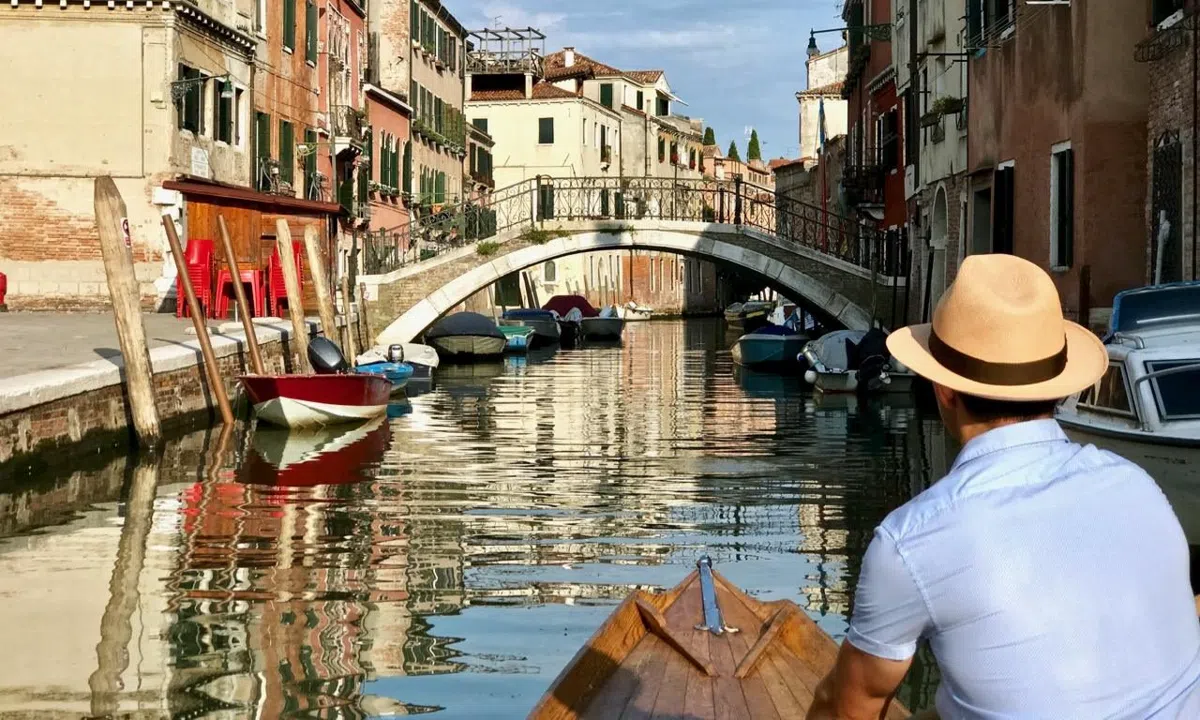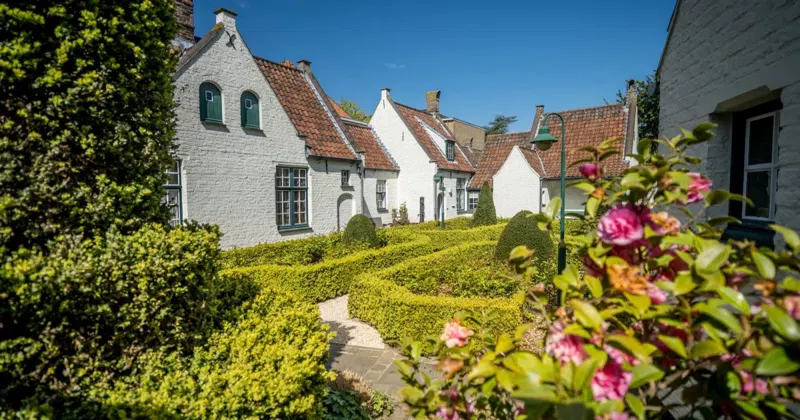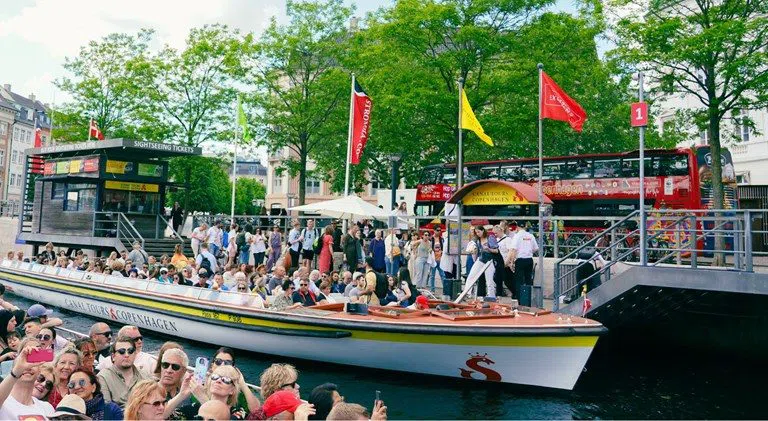

Walk down Egelantiersstraat on a wet Tuesday morning and you will pass at least three heavy wooden doors that seem to lead nowhere — no shopfront, no sign, nothing to explain the width of the frame. Behind them are courtyards built four centuries ago so that widows and unmarried women could live rent-free, out of sight of the street, funded by merchants who wanted their charity quiet rather than visible. Amsterdam's hofjes are still there in 2026, still lived in, and still almost entirely absent from the canal-tour script that calls this "the Jordaan" and keeps walking. Behind seven of those doors is a version of the city that predates the crowds by roughly four hundred years, and it only holds up if you're quiet enough to deserve the look.
The One Everyone Points At: Begijnhof
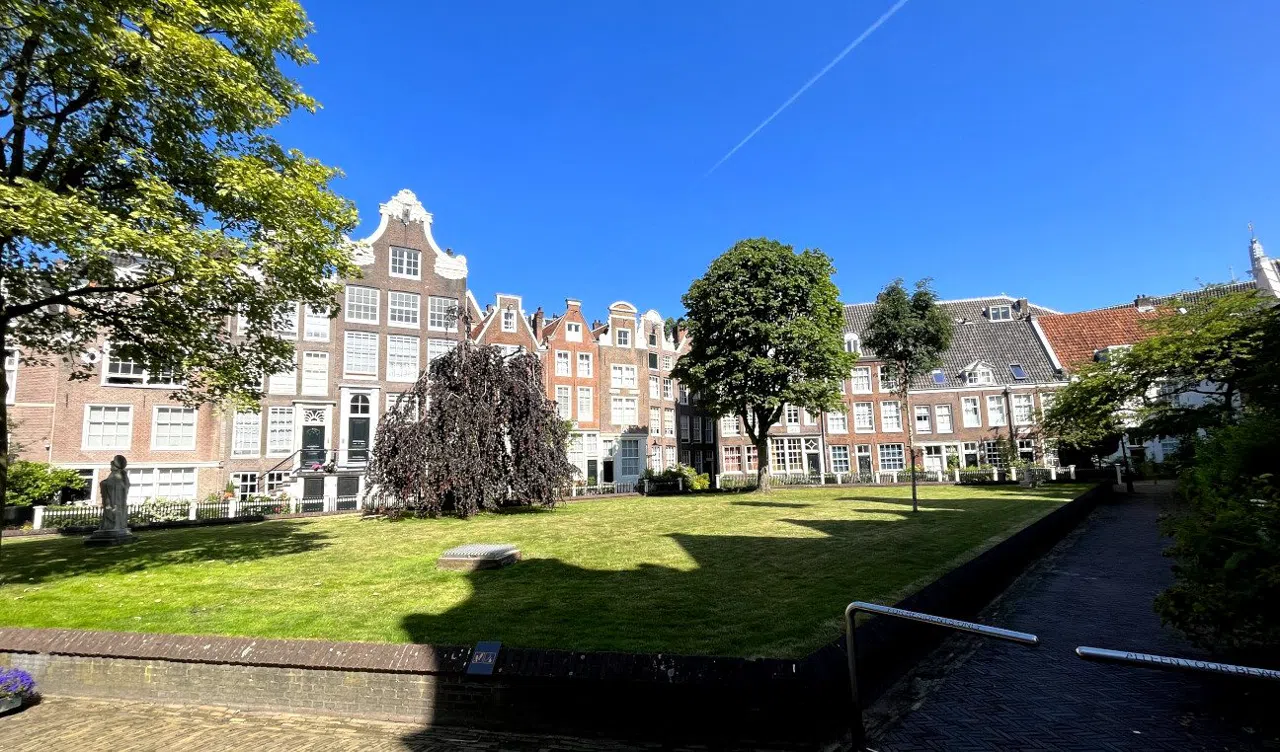
Begijnhof (Spui, city centre) is the hofje every guide mentions and almost none actually enter — tour groups stop on Spui, gesture at the wall, and move on. That's partly by design and partly by rule: entry is free and the courtyard is open 10am–6pm daily except King's Day, but large tour groups of 12 or more are not officially permitted inside. Small clusters are fine. What's easy to miss from outside is that this isn't a museum piece — the almshouses ringing the lawn still house a community of single women, and the request for silence inside is for their benefit, not for atmosphere. Keep your voice down, don't photograph the windows of the houses, and you'll get five unhurried minutes in a green square that the trams rumbling past on Spui never hint at. Nearest stop: Spui, served by trams 1, 2, 5, 13 and 17.
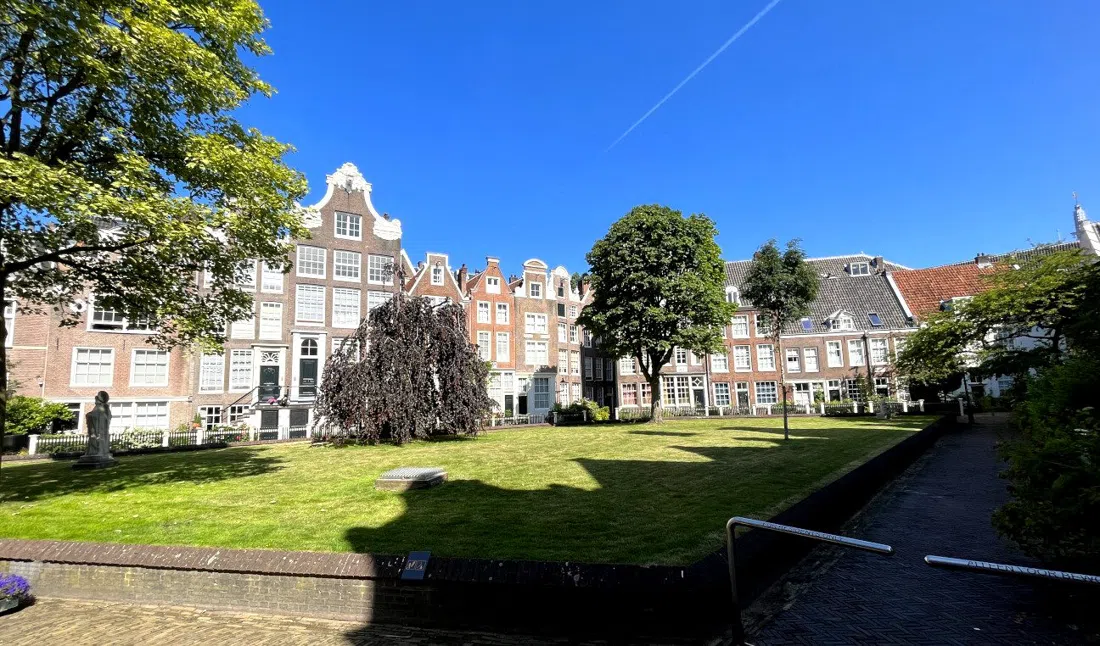
Begijnhof is the gateway hofje precisely because it's the one everyone half-sees. The other six take real intention to find, and reward it in kind.
The Jordaan's Hidden Cluster
Three of the seven sit within a ten-minute walk of each other in the western Jordaan, and together they make the best case for treating hofje-hunting as its own small walking route rather than a single stop.
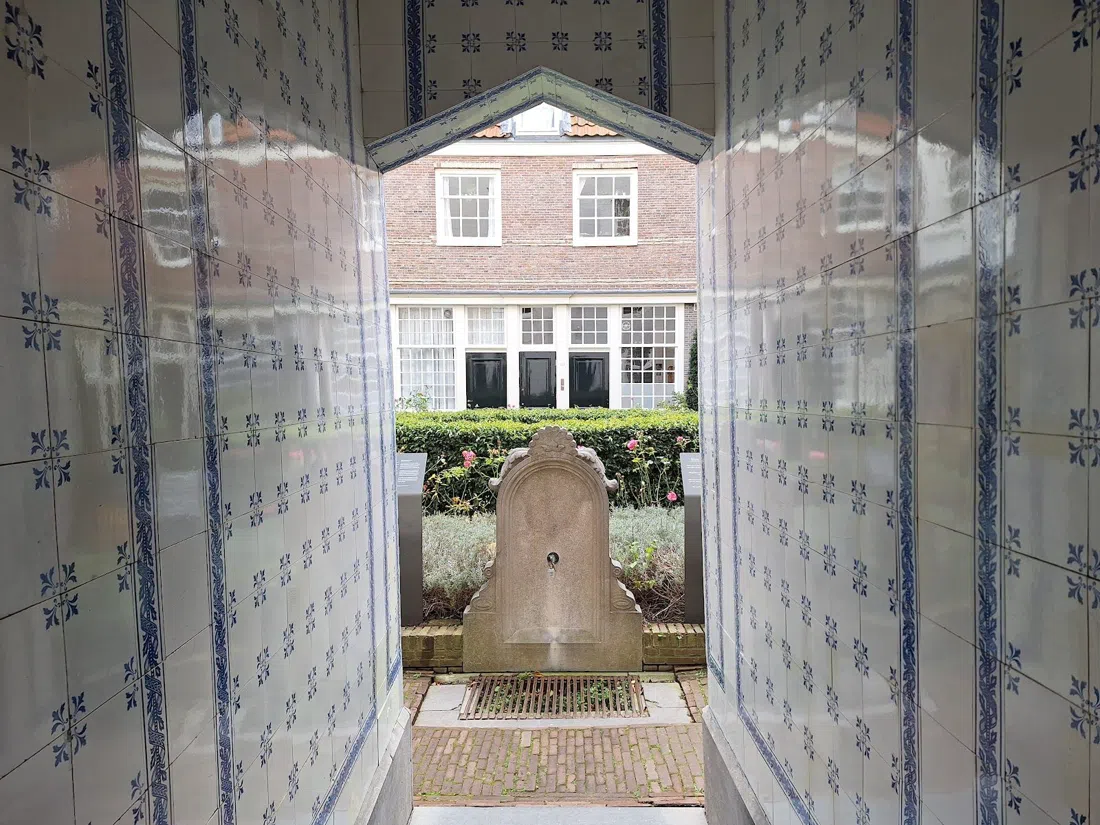
Sint Andrieshofje (Egelantiersgracht, Jordaan) is the oldest surviving hofje in the Jordaan after the Begijnhof, and its blue-and-white tiled entrance corridor is, without exaggeration, the single most photogenic hidden-doorway shot in the neighbourhood — a narrow tunnel of Delft tile that opens abruptly onto a garden. The catch is scale: this is a tiny space, and residents live right at the windows looking onto the courtyard. Visit in pairs, not as part of any organised group, and treat the tiled corridor itself, rather than the garden, as the thing you came for.
A few streets over, Karthuizerhof (also called Karthuizerhofje, on Karthuizersstraat) is the largest hofje in the city, and worth the detour for scale alone — a proper sense of how much land a 17th-century charitable trust could tie up in the middle of a working-class neighbourhood. It's also the one most likely to have its gate abruptly closed: hours can shift without notice for maintenance work or resident meetings, and groups larger than four are actively discouraged by the people living there. Build in a fallback — if the gate's shut, Sint Andrieshofje or Claes Claeszhofje are close enough to walk to instead.
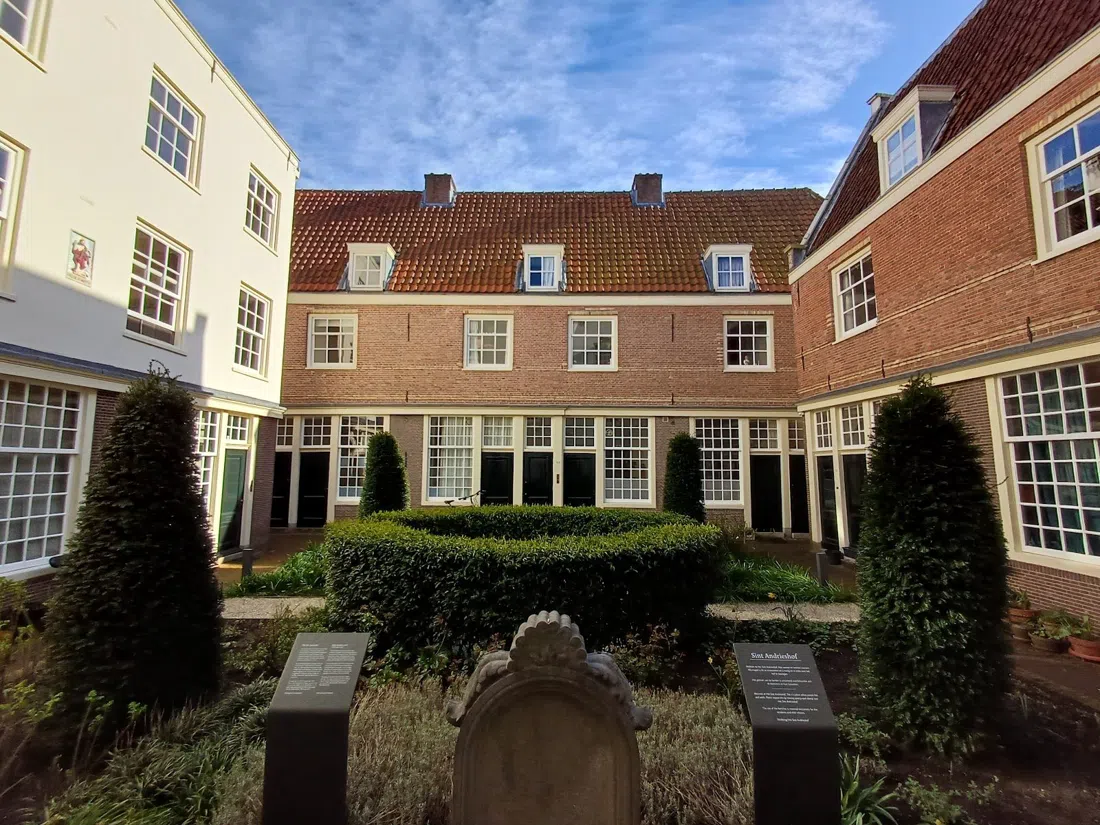
Claes Claeszhofje (at the corner of Egelantiersstraat and Tuinstraat) is the hofje that best rewards actually finding the unmarked gate rather than following a map pin — there's no sign, and the entrance is easy to walk straight past even when you're looking for it. It was restored after decades of decay and has the smallest footprint of the three, so this is solo or pairs only. Go early morning or late afternoon, when it's quietest; midday in summer, what little space there is fills with people doing exactly what this guide is telling you to do.
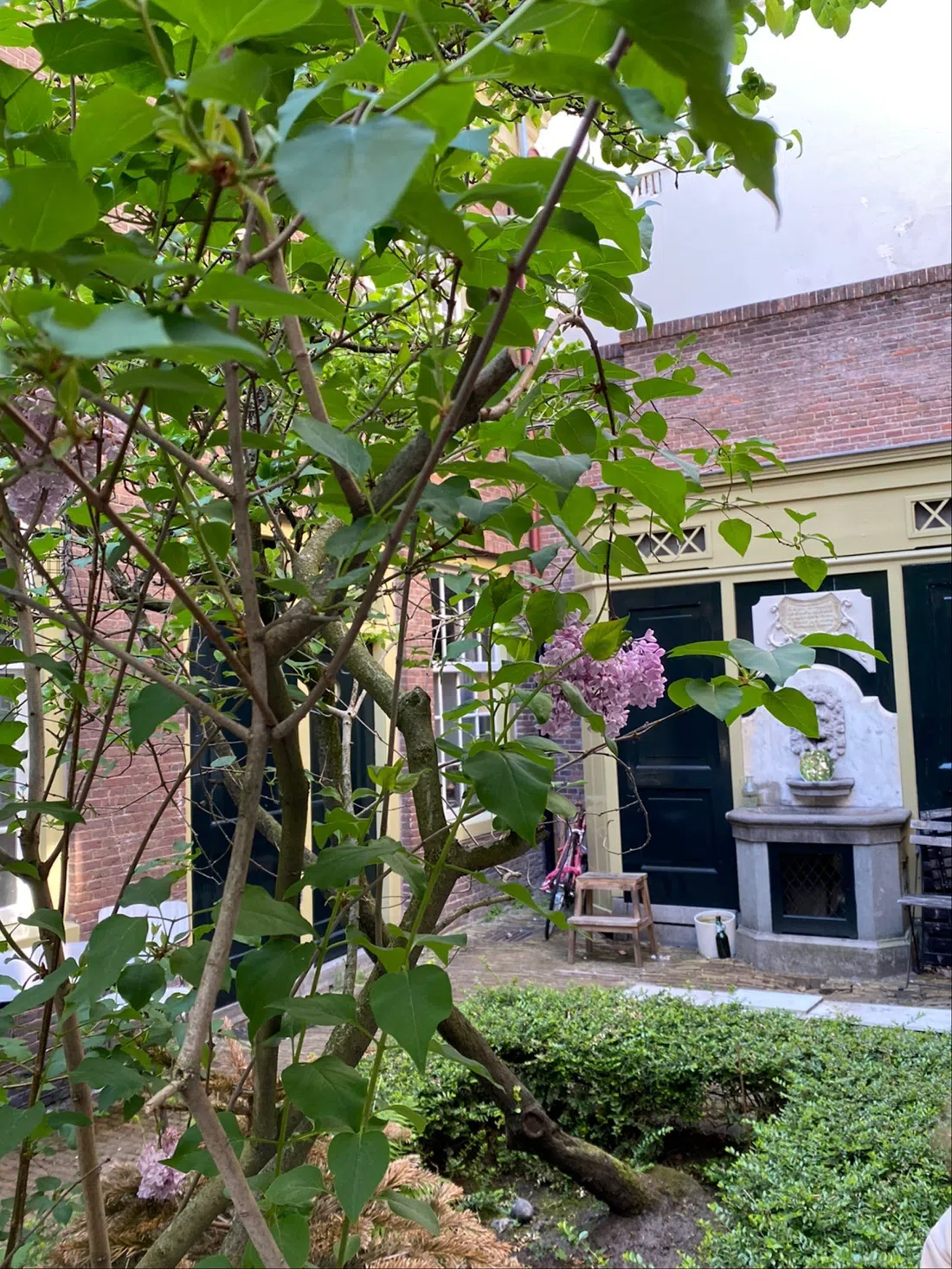
Between the three, budget at least an hour if you actually want to find each gate rather than glimpse it — the unmarked entrances are the point, and rushing defeats it.
The Weekday-Only Hofjes
Two of the seven have hours narrow enough that they need planning around, not just a walk-by.
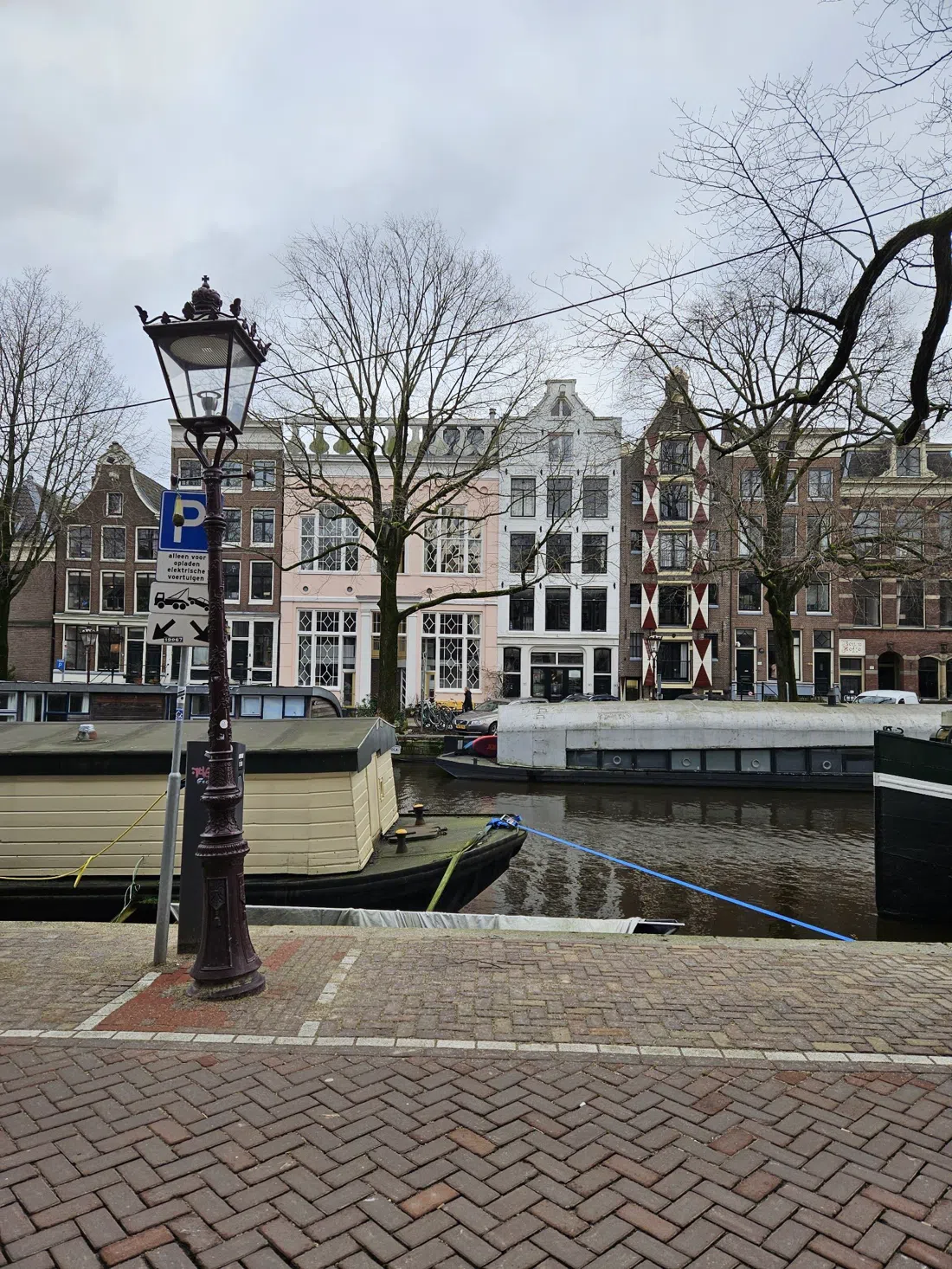
Zon's Hofje (Prinsengracht 159, near the Westerkerk) has the purest "walked past it a dozen times" facade in the city. Because Mennonite congregations in the 17th century couldn't legally front a public street with a church, the whole complex reads as a blank wall from the canal — no clue that a courtyard sits behind it. The entrance is a single-file corridor, which rules out group tours by design, and it's a weekday-only address: Monday to Friday, 8am to 6pm. Turn up on a Saturday and you'll get the same blank wall the tour groups see.
Suyckerhoffje, a short walk further into the Jordaan, has an even tighter window — open weekday mornings only, roughly Monday to Thursday, 9am to 5pm, and closed entirely from Friday through Sunday. It's a small residential garden, pairs only, and the narrow hours are exactly what keeps it emptier than its Jordaan neighbours. Go early, stay five minutes, leave quietly — this isn't a place to linger with a picnic, and the residents whose kitchen windows face the garden will notice if you do.
The Garden Worth Lingering In: Hofje van Brienen
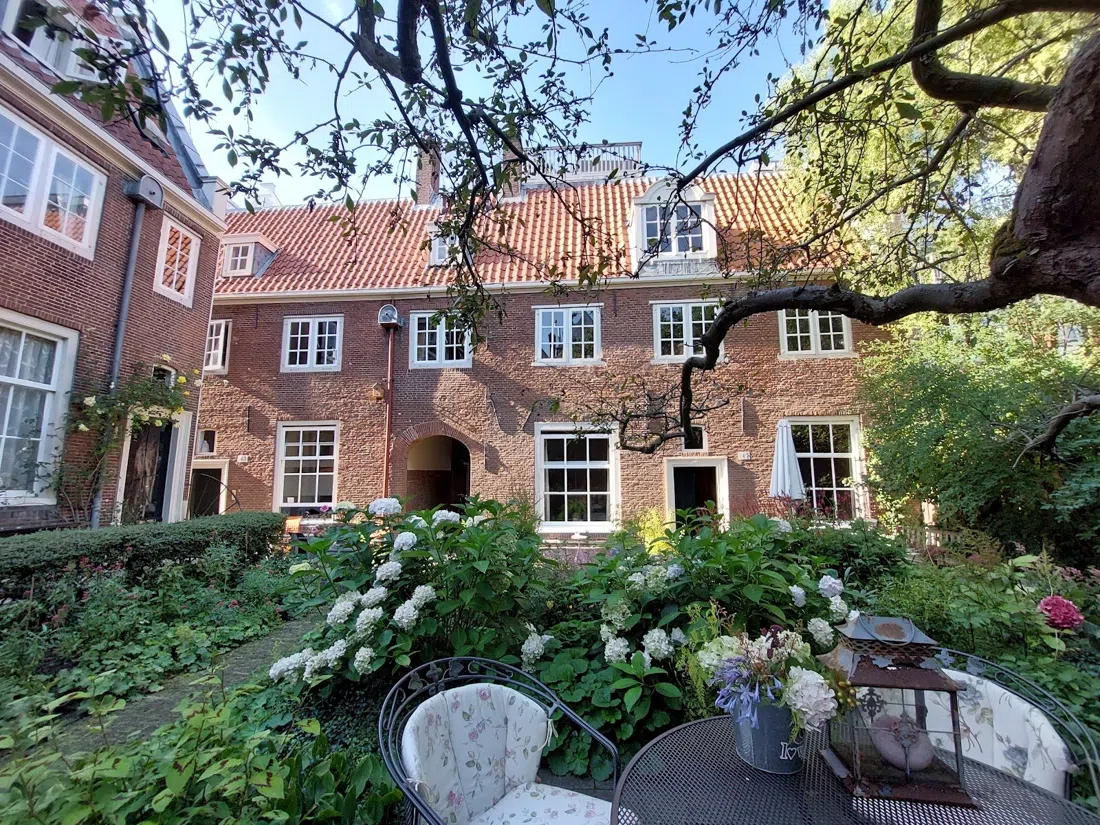
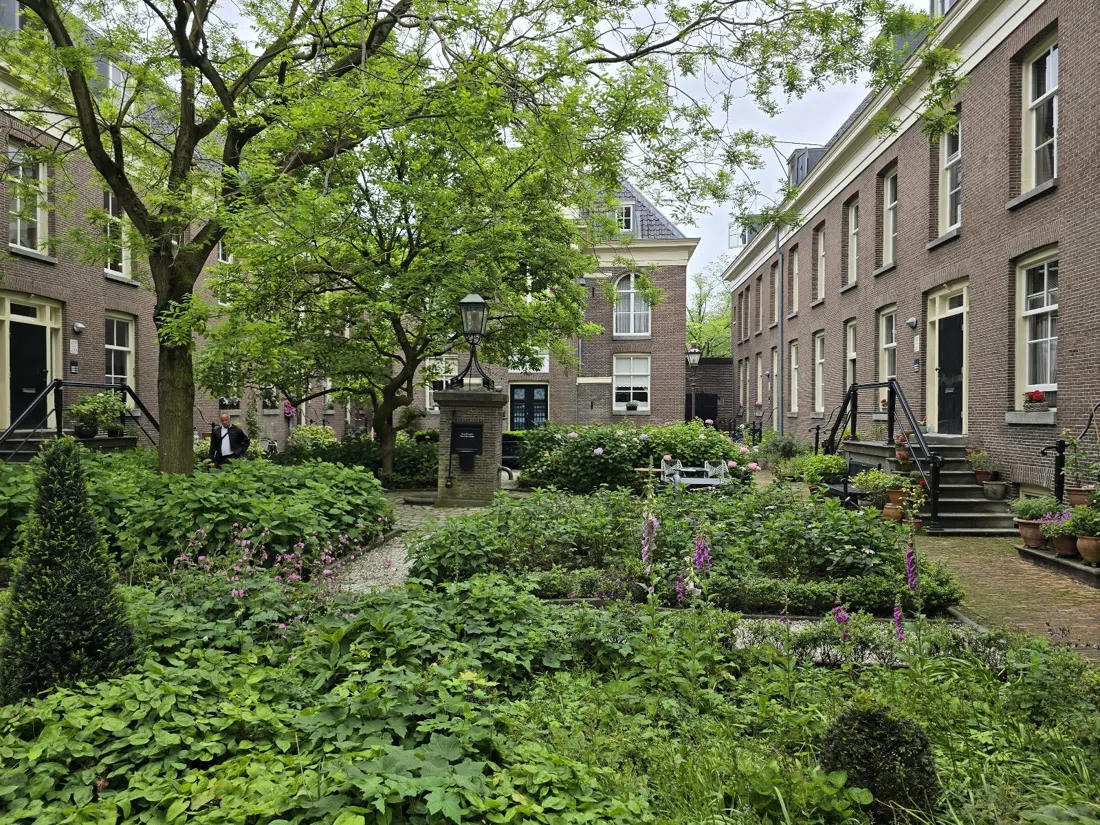
Hofje van Brienen, also known as De Star (Prinsengracht, near Brouwersgracht), is the outlier in the group, and the one place on this list where "linger" is genuinely the right instruction rather than a caution against it. It has the largest garden of the seven, and small groups of up to roughly six people are tolerated on weekdays — the only hofje here where that's true. It's closed Sundays. What makes it historically distinct is that it was Amsterdam's only Catholic almshouse founded in an era when the city's charitable trusts were overwhelmingly Protestant-run — a rare thing to see standing in the middle of the Jordaan. If you only have time to sit in one hofje rather than just pass through, this is it.
How Hofjes Actually Work
None of the seven charges admission, and none of them are museums, which is the part visitors misjudge most often. Every courtyard on this list is someone's home. The residents — historically single women, now a broader mix depending on the foundation — live with their front doors and kitchen windows facing the same garden you're standing in. That changes the etiquette considerably from a canal-tour stop:
- No organised tour groups. Where a hofje explicitly tolerates a small number of visitors (Begijnhof in small clusters, not groups of 12 or more; Hofje van Brienen up to around six on weekdays), that's a resident-set ceiling, not a suggestion — and several of these hofjes (Sint Andrieshofje, Karthuizerhof, Claes Claeszhofje, Zon's Hofje, Suyckerhoffje) don't want groups at all, pairs or solo only.
- Keep it brief. Five minutes is plenty at the smaller courtyards. You're not being rushed by staff — there's no staff — you're being polite to someone's living room.
- Don't photograph windows or doorways with residents visible. The tiled corridor at Sint Andrieshofje or the garden at Hofje van Brienen is fair game; someone's kitchen isn't.
- Expect closed gates. Karthuizerhof's hours move for resident meetings and maintenance with no posted notice, and the weekday-only hofjes (Zon's, Suyckerhoffje) are simply shut outside their windows. A closed door isn't a mistake on your part — build a backup into the walk.
- Silence, not sightseeing. Begijnhof in particular asks for quiet specifically because it still houses single women as it has for centuries — treat the request as literal, not decorative.
Planning the Route
A reasonable order, on foot, starts at Begijnhof near Spui, since it's the easiest to find and sets the tone. From there it's roughly 15–20 minutes on foot into the Jordaan for Sint Andrieshofje, Claes Claeszhofje and Karthuizerhof, which sit close enough together to do as one loop. Zon's Hofje and Suyckerhoffje are weekday-morning detours worth timing deliberately rather than hoping for — check the day of the week before you set out, not after you've walked there. Finish at Hofje van Brienen near Brouwersgracht, where the garden is large enough to actually sit in for ten minutes before heading back toward the canals. The whole route, done properly rather than rushed, is a half-day walk, not a checklist.
If you're staying in the city for this and want a base within walking distance of the Jordaan, start with the Amsterdam hotel search; for the wider context on what else is worth your time between hofje visits, the Amsterdam guide covers the rest of the city.
Practical Details: Transport, Cash, Timing and Budget
Transport. The Jordaan cluster is walkable from Amsterdam Centraal in about 20–25 minutes, or a short tram ride: trams 13, 14 and 17 stop at Westermarkt, a few minutes' walk from Zon's Hofje, Karthuizerhof and Claes Claeszhofje. For Begijnhof, get off at Spui (trams 1, 2, 5, 13, 17). A GVB single-ride ticket runs roughly €3.40–3.60 depending on the current fare table — check gvb.nl before you go, since single fares change more often than day passes. If you're doing the full route on foot, you likely won't need a ticket at all beyond arriving in the city.
Cash. You won't need any. Every hofje on this list is free to enter, and none of them sell anything on-site — no gift shop, no ticket booth. A couple keep an unmarked donation box near the chapel or entrance (Begijnhof is the most likely); a coin or two is a courtesy, never a requirement.
Timing. Weekday mornings, roughly 9am to noon, are the quiet window across all seven — before day-trip groups are out and while residents' own daily rhythm (post, deliveries, the school run for anyone with kids in the complex) makes a human presence in the courtyard feel normal rather than intrusive. Weekends narrow your options hard: Suyckerhoffje and Hofje van Brienen are both closed, and Zon's Hofje is shut entirely. Plan your hofje day for a Tuesday, Wednesday or Thursday if you want all seven realistically in reach.
Budget. Zero euros for entry across the board — the only real cost is time, and the discipline to visit in pairs rather than groups. That's also the honest limitation of hofje-hopping as an activity: it doesn't scale. You can't bring six friends to Claes Claeszhofje and expect the same welcome a couple gets. If you're travelling as a larger group, split up, or treat Begijnhof and Hofje van Brienen — the two that formally tolerate small groups — as your shared stops, and let the rest be a solo or pairs detour.
None of these seven require a booking, a ticket, or a guide. What they require is showing up at the right hour, on the right day, with low expectations of noise and high respect for the fact that someone is home. That's a harder ask than following a lanyard through Dam Square, and it's exactly why the canal tours skip them.