The Amsterdam issue
Inside Amsterdam's Proeflokalen: Where Jenever Is Still Poured the Old Way
A calm, honest guide to the tiled tasting rooms, brown cafés and modern bars where Amsterdam still serves its native spirit brim-full — and how to drink it without spilling a drop.

By Robin HaasThe slow way through Amsterdam's canals, courtyards and back streets
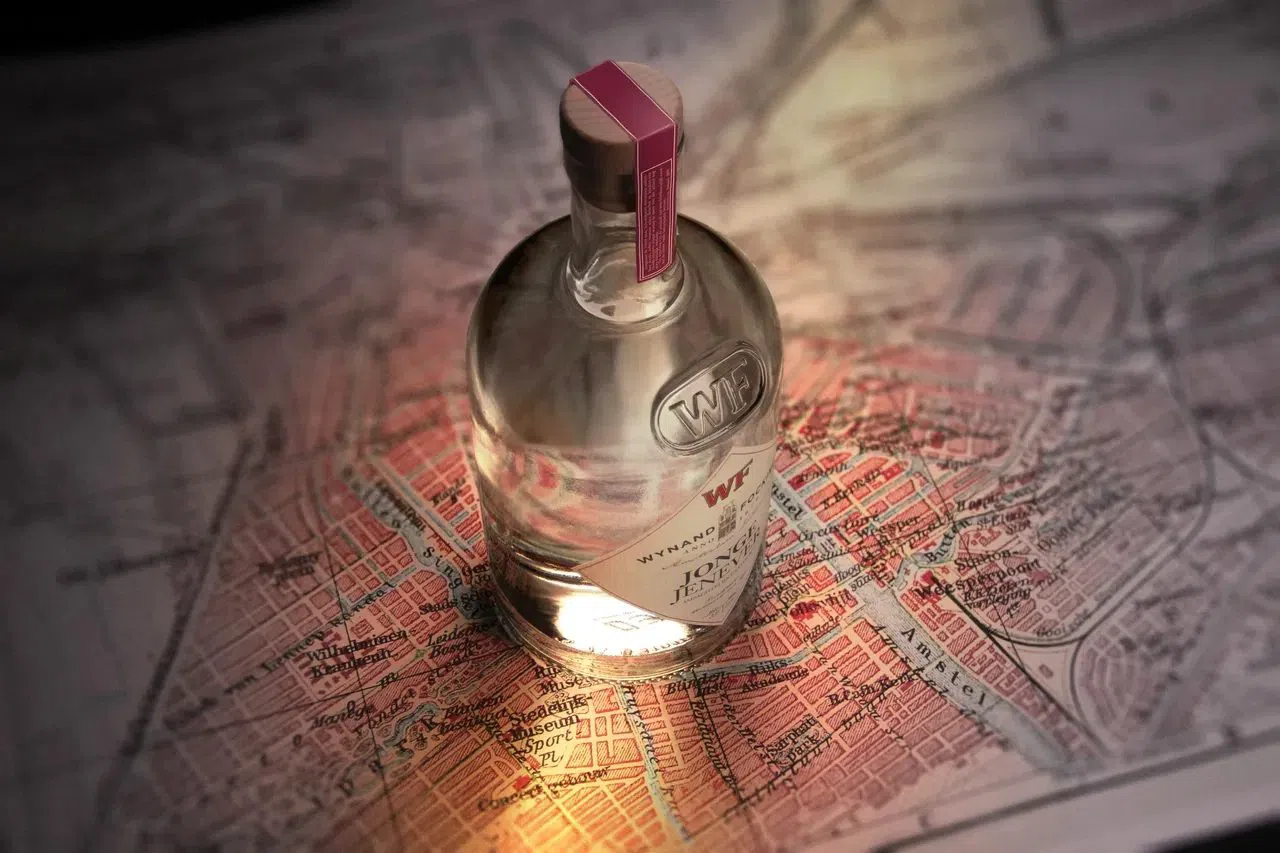
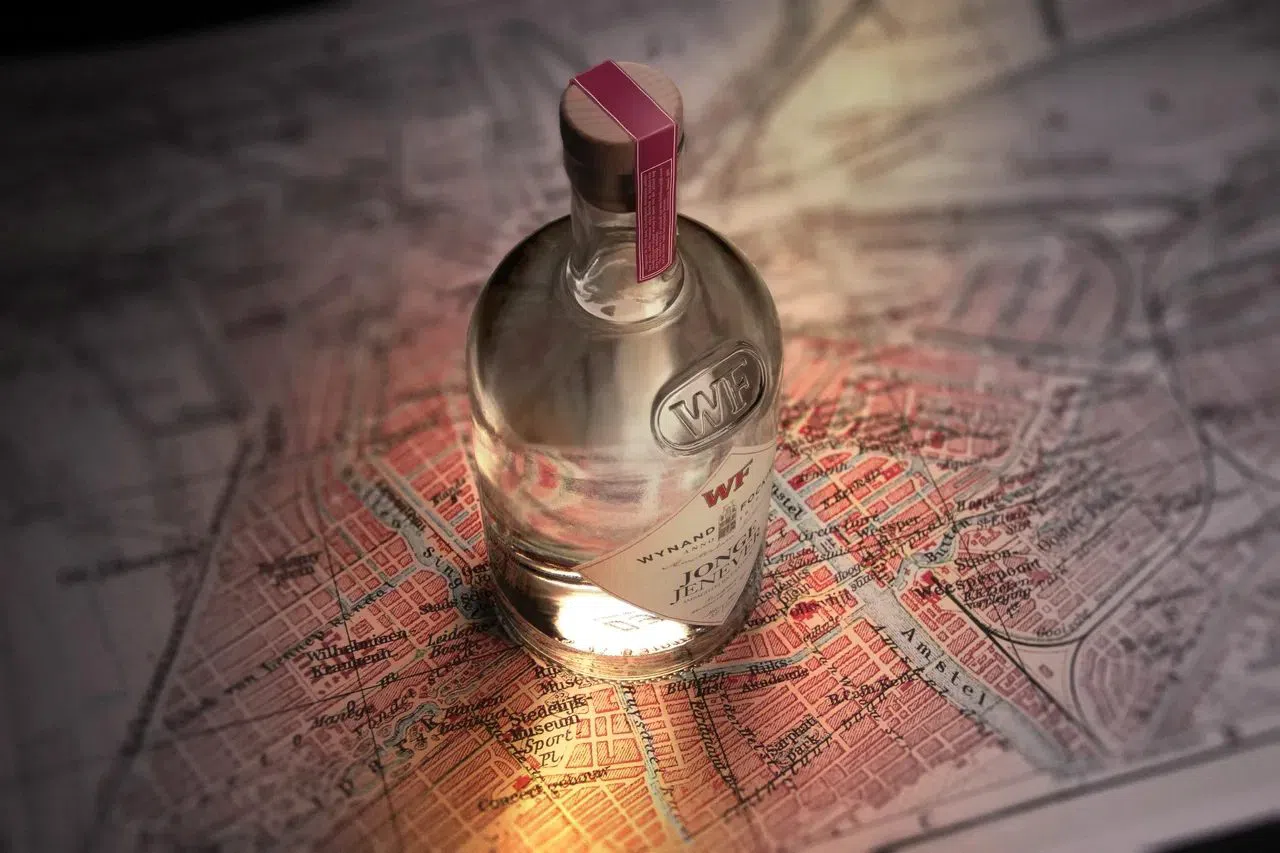
The genever bottle rarely travels far from the city that made it. In Amsterdam it is still poured to the brim in small tulip glasses, in tiled rooms that have been doing exactly this since before the tulip crash — and the polite move is to bow to the bar and take that first sip with your hands behind your back.
What "the old way" actually means
Jenever — genever, if you prefer the older spelling — is the maltier, juniper-led ancestor of gin, distilled here since the sixteenth century (Bols has been at it since 1575). The words you'll see on the bottle, oude and jonge, describe style, not age: oude is rounder and grainier, jonge is lighter and cleaner, with the richer korenwijn sitting somewhere between the two. It is served in a tulip-shaped borrelglas filled to the very brim, which is why the tradition is to leave the glass on the bar, lean down, and take the first sip with your hands behind your back — a small bow to the drink that doubles as the only sane way to avoid spilling it. Order it alongside a small beer and you have a kopstoot ("a knock to the head"), the pairing that built these rooms. None of this is performance for tourists; it is simply how the city drinks, and the best proeflokalen will hand you a brimming glass and expect you to know what to do with it.
Plan your Amsterdam trip
Live prices from our booking partners.
Free cancellation on many rooms. We may earn a commission when you book.
The historic tasting rooms — start here
If you visit only one place, make it Wynand Fockink (down the Pijlsteeg alley just off Dam Square). Distilling since 1679 and one of the very few tasting rooms to survive intact, it is the benchmark: a narrow, wood-and-bottle standing room where a glass runs €5–7, there is no bar to reserve and nowhere, really, to sit. That is the point. A couple or a pair of friends will find it magical; a group of eight will find it physically impossible at peak hours. If you're travelling in numbers, book the Saturday distillery tour (roughly 2–3pm, about €20) instead of trying to squeeze the bar — it's the graceful way to bring a party here without wearing out the room, and it's the essential first stop whichever way you come.
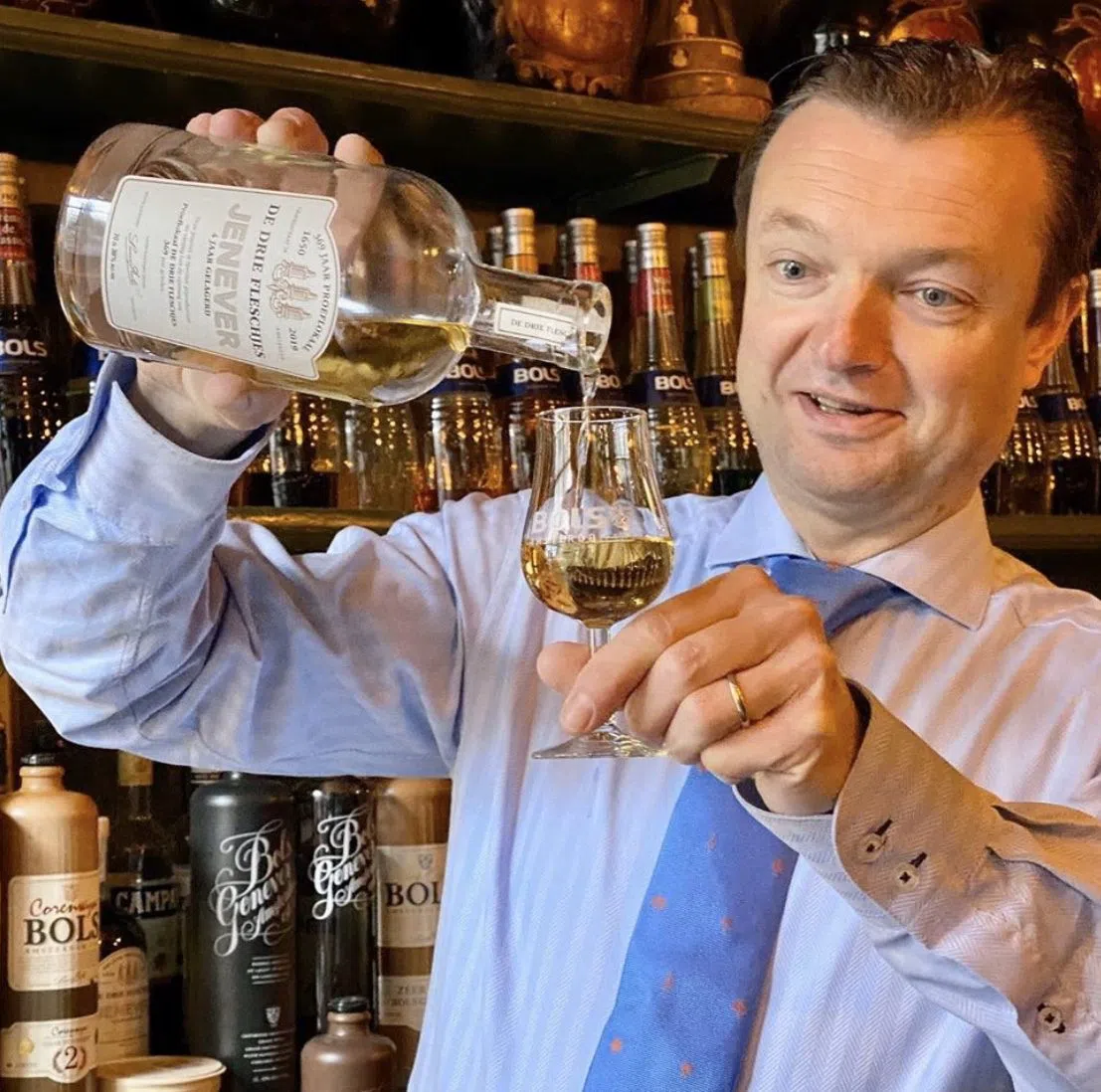
Five minutes away, tucked behind the Dam, De Drie Fleschjes (Gravenstraat) claims a founding date of 1650 and looks every one of its years: a low room lined with the private barrels of Amsterdam families and firms, the single most photogenic detail in the city's jenever world. It's walk-in only and it fills fast, so treat it as an early-evening stop — arrive when the doors open and you'll get space; arrive at nine on a Friday and you'll be drinking in the doorway. Small groups suit it; large ones don't.
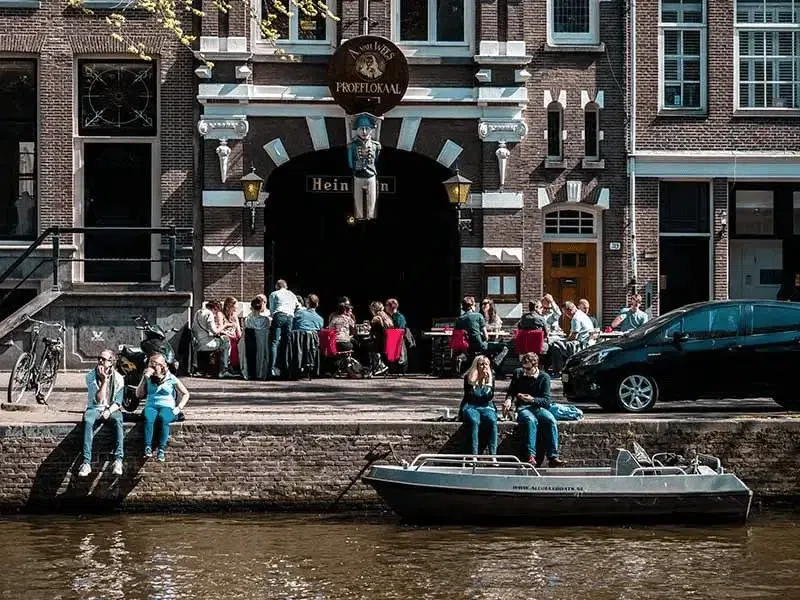
For anyone organising a proper sit-down, Proeflokaal A. van Wees, also known as De Admiraal (on the Herengracht), is the traditional house that actually works for groups. The van Wees family keeps the city's homegrown jenever tradition alive — they also run the tiny De Ooievaar on Sint Olofspoort — and the Herengracht flagship pairs a restaurant with bookable guided tasting flights (around €25–35 per person, glasses €4–6). This is where you bring the eight people who wouldn't fit in Wynand Fockink: reserve ahead, eat something, and let a guide walk everyone through oude, jonge and the korenwijn in between.
Brown cafés and a living slijterij
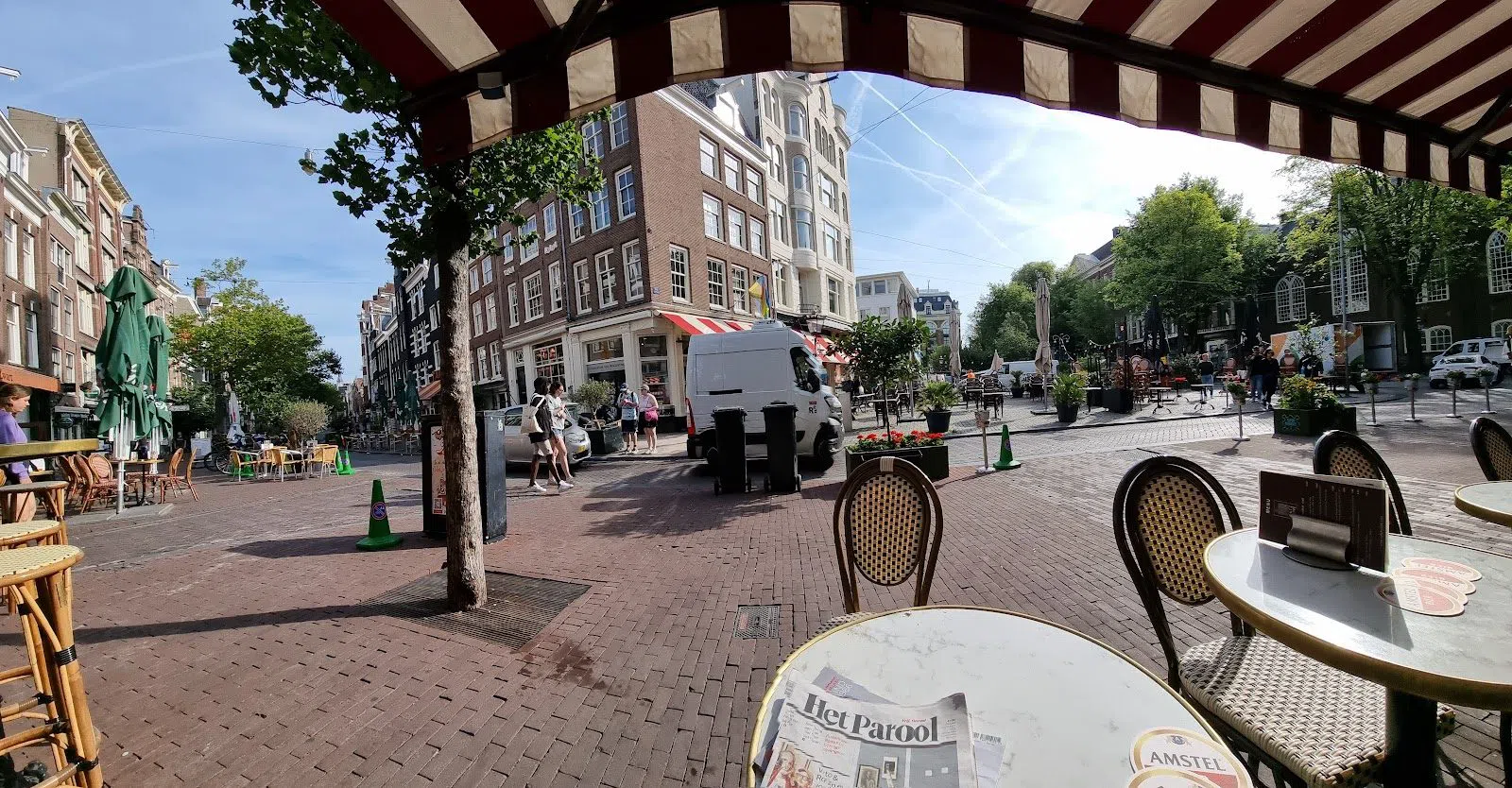
Some of Amsterdam's best jenever is poured not in dedicated tasting rooms but in the brown cafés that began life as distillery houses. The obvious one is Café Hoppe (on the Spui), which started as a tasting house and still serves aged jenevers over a barrel-backed bar. It is one of the most forgiving places on this list for a crowd: a big, dark café with a terrace that spills onto the square, no reservations, and a standing-room drinking culture that absorbs large groups happily. Order a kopstoot (around €8 for the jenever-and-beer pairing; glasses from €3.50) and drink it elbow to elbow with locals — this is the lively, unfussy face of the tradition.
For something smaller and more local, Café Slijterij Oosterling (near Rembrandtplein, on the Utrechtsestraat) is a working slijterij — a liquor shop where you can also drink at the bar. Family-run, characterful and entirely unpolished, it lets you sip a jenever (€3.50–6) or buy the bottle off the shelf to take with you. It's tight, so it rewards a couple or a small group rather than a party, and there's nothing curated about it: that's exactly why regulars love it.
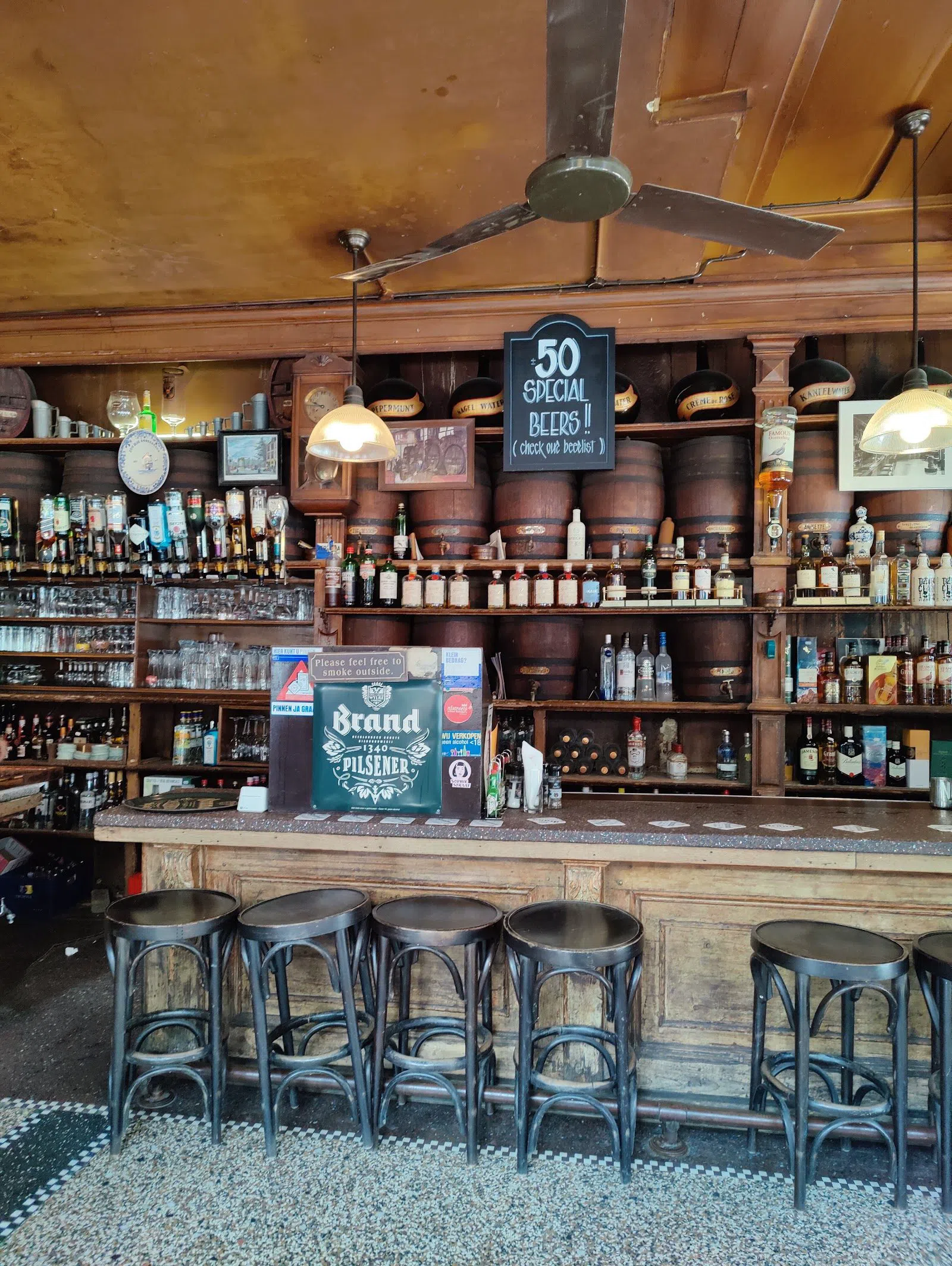
Included more for its bones than its bottles, Bierproeflokaal In de Wildeman (just off Nieuwendijk, near Centraal Station) occupies a genuine 1690 proeflokaal building, though it pivoted long ago to become a beer specialist with 250-plus beers and Trappists. It's roomy, groups are welcome to walk in, and it's closed Sundays. Come for the heritage and the space, order a jenever pour (beers €5–8) alongside a beer, and you can build your own kopstoot in one of the oldest tasting rooms still standing.
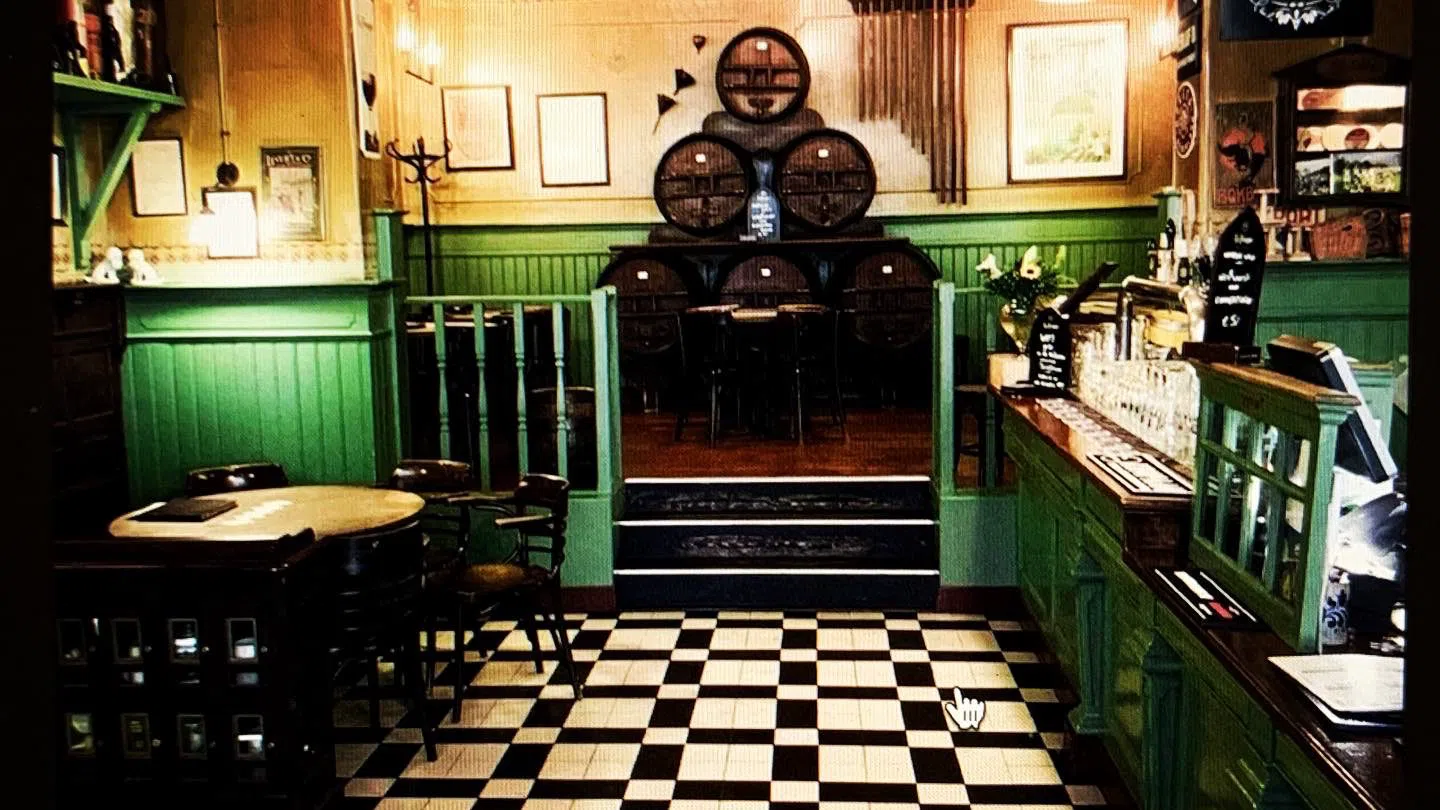
For beginners, groups and rainy days
Not everyone wants to be handed a brimming glass in a room where everyone else clearly knows the ritual, and there's no shame in easing in. The gentlest introduction is House of Bols (in the Museum Quarter, opposite the Rijksmuseum), a polished, timed-entry brand experience rather than an old brown bar. Tickets are €18 standard or €21 premium and include a tasting and a cocktail; the self-guided route absorbs large parties easily and it's the obvious move on a wet afternoon or with a group that wants structure. It's touristy and it knows it — but it's also the clearest single primer on where genever came from.
For a more grown-up modern take, Dutch Courage (in the old centre) reworks around 150 genevers into serious cocktails and has the international-bar polish to match its place on the world's Top-500 lists. Pours start from about €6 and cocktails run €12–16; it welcomes groups and coaches beginners through the spirit, but reserve ahead for larger parties, especially at weekends. If the historic proeflokalen feel daunting — the standing, the ritual, the tiny rooms — this is the room that translates all of it for a crowd from anywhere in the world.
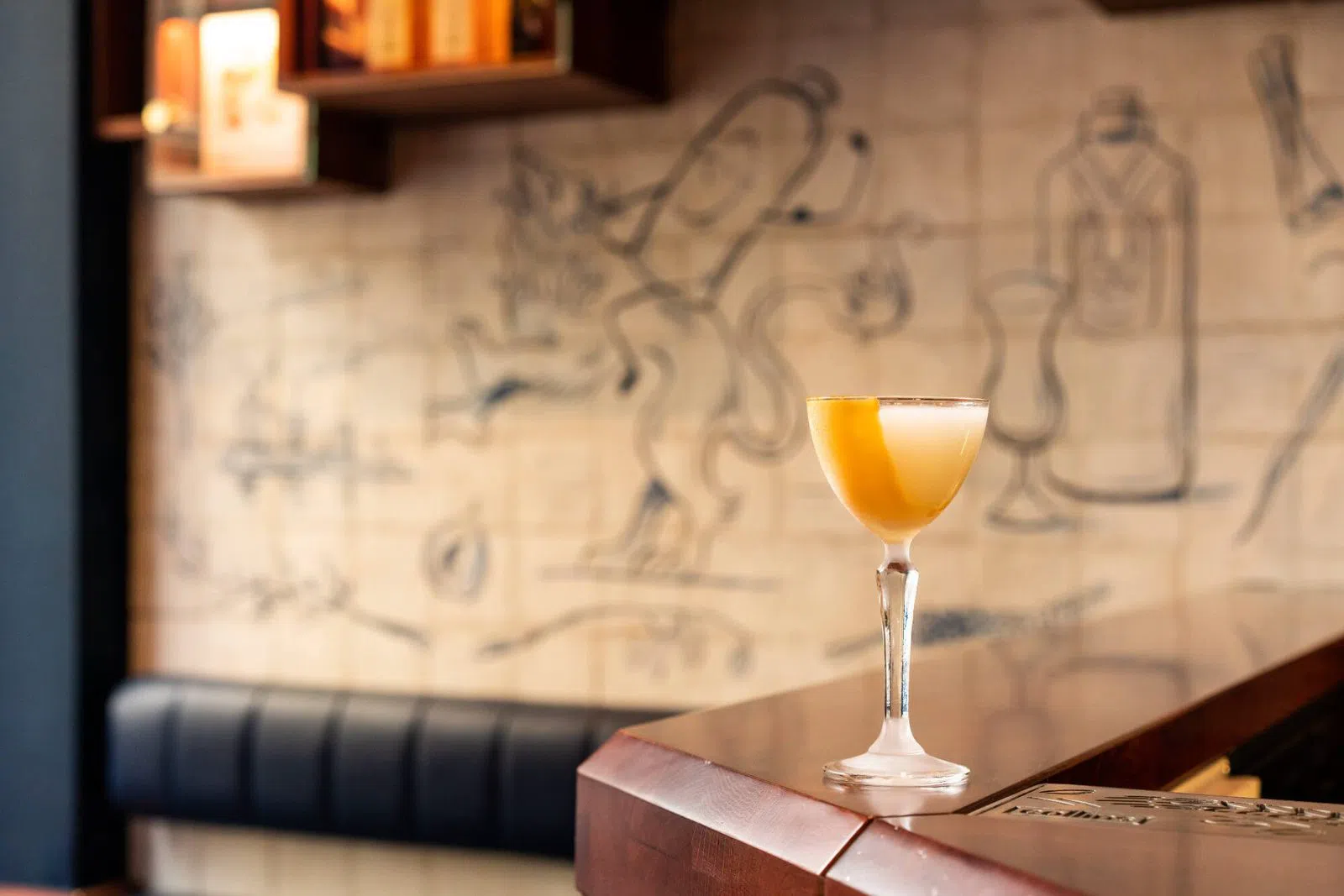
Travellers basing themselves south of the centre have a quieter option in Bar Mokum (in De Pijp), a small-to-medium cocktail bar built on local jenever and Amsterdam distillers. Cocktails are €12–15, it leans low-tourist, and it suits smaller groups — reserve if you want a table. It won't replace a visit to the historic core, but for a first or last night in the neighbourhood it's a modern, unhurried room that still keeps the local spirit front and centre.
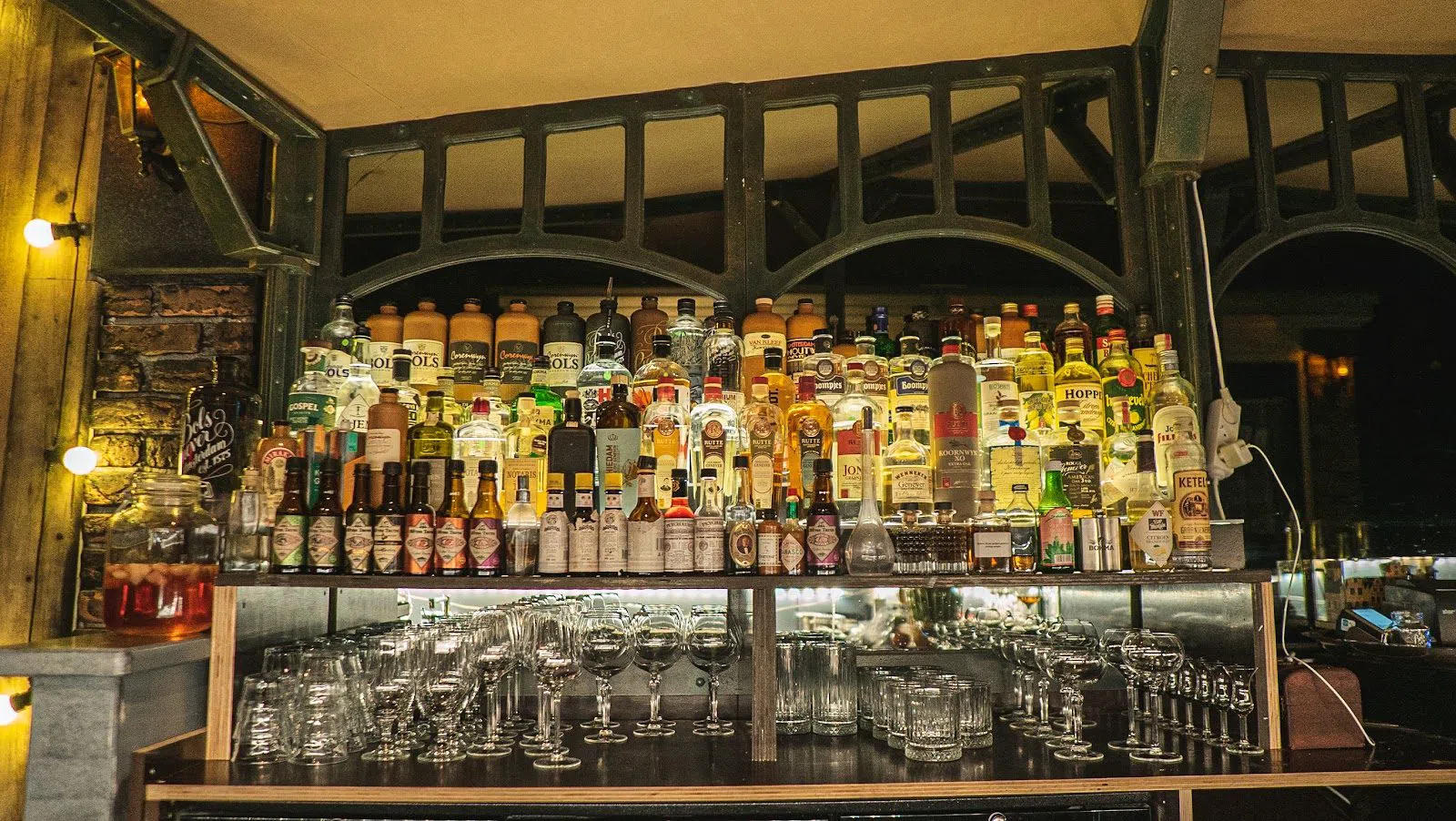
Out of the centre: a garden distillery
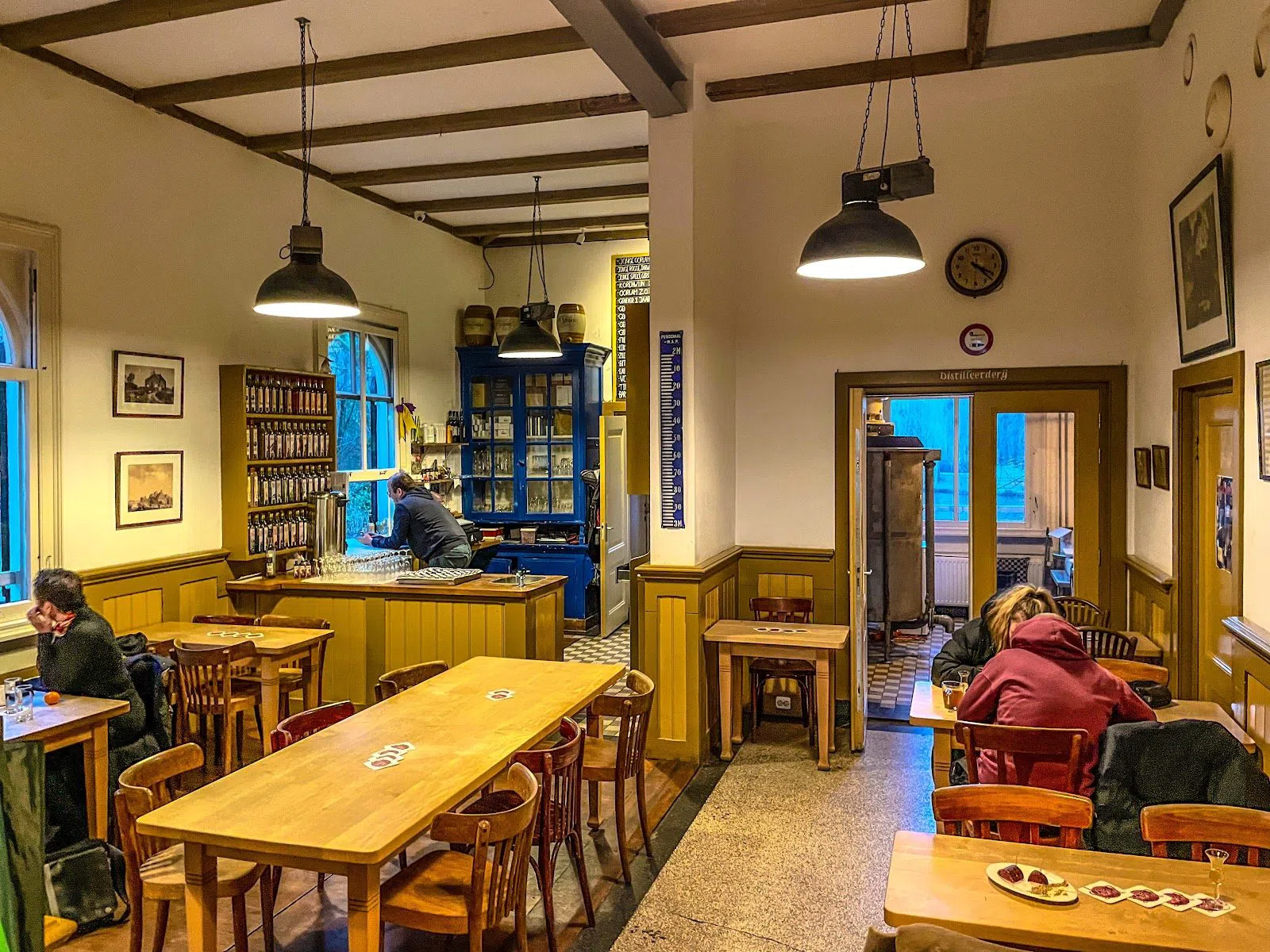
When the weather turns warm and the centre feels cramped, ride east to Distilleerderij 't Nieuwe Diep (in the Flevopark), a working distillery pouring its own jenevers, ciders and bitters (glasses €4–6) at outdoor tables in the middle of a park. It is the rare jenever spot that genuinely works for a group on a summer afternoon — the antidote to the elbow-to-elbow tasting rooms downtown. The same people run a small city outpost, 't Kelkje, if you can't make the trip. Two honest caveats: it keeps summer hours and it's weather-dependent, so check before you cycle out — there's no point arriving on a cold, wet Tuesday in the shoulder season.
Planning your jenever crawl
Getting around. Almost everything here sits within a walkable ring of the centre — Wynand Fockink, De Drie Fleschjes, Café Hoppe and In de Wildeman are minutes apart on foot, and a good crawl links them without any transport at all. Trams fan out from Centraal and the Dam if your feet give out; a 24-hour GVB public-transport ticket costs roughly €9 and covers trams, buses and the metro. The one exception is 't Nieuwe Diep out in the Flevopark, which is best reached by bike (this is Amsterdam — rent one) or a short tram-and-walk east.
Cash and cards. Most bars take cards without fuss, but the smaller, older rooms and the odd slijterij can flip between card-only and cash-preferred without warning — carry a little cash as insurance and you'll never be caught out.
Timing. The historic rooms are small and get their character from being full, but "full" tips into "impossible" quickly. Aim for the quiet hour — arrive when doors open in the late afternoon or early evening for Wynand Fockink and De Drie Fleschjes, and save Café Hoppe and Dutch Courage for later, when a crowd is a feature rather than a problem. In de Wildeman is closed Sundays; 't Nieuwe Diep is a summer-and-good-weather proposition only.
Budget. A traditional glass runs €3.50–7, a kopstoot around €8, a guided tasting flight €25–35 per person, and the House of Bols experience €18–21. Two or three glasses across a couple of rooms is a genuinely affordable evening by Amsterdam standards; the tastings and the Bols ticket are where you'll spend, and both are worth it if you want context rather than just a drink.
Where to stay and read next. Base yourself in the old centre and most of these rooms are on your doorstep; De Pijp puts you next to Bar Mokum with an easy tram in. Start your Amsterdam hotel search around the canal ring for walkable proximity, and see our full Amsterdam guide for what to pair with a jenever evening. Whatever you do, take that first sip with your hands behind your back — the room will notice if you don't, and notice more kindly if you do.
Before you go
What is a proeflokaal?
A proeflokaal is a distillery tasting room — historically the sampling bar attached to a jenever distillery. In Amsterdam the surviving ones, like Wynand Fockink and De Drie Fleschjes, are small, tiled, standing-room spaces where you drink the spirit at or near the bar rather than sit down for a full night out.
How do you drink jenever the traditional way?
The glass is filled to the very brim, so you leave it on the bar, lean down and take the first sip with your hands behind your back — a small bow that also stops you spilling it. Pair it with a small beer and you have a kopstoot, the classic Amsterdam combination.
Which Amsterdam proeflokaal is best for a group?
For a booked, sit-down experience with food, Proeflokaal A. van Wees on the Herengracht handles larger parties best. Café Hoppe on the Spui absorbs big walk-in crowds, House of Bols is built for tours, and 't Nieuwe Diep works for groups outdoors in summer. Wynand Fockink and De Drie Fleschjes are too small for large groups at peak times.
What's the difference between oude and jonge jenever?
The terms describe style, not age. Oude jenever is maltier, rounder and grainier; jonge jenever is lighter, cleaner and closer to a neutral spirit. Korenwijn is a richer, more grain-forward style sitting between them. Most tasting rooms will pour all three so you can compare.
How much does a glass of jenever cost and do you need to book?
A traditional glass runs about €3.50–7, a kopstoot around €8, and guided tasting flights €25–35 per person. The historic tasting rooms are walk-in and don't take bar reservations, so arrive early evening for space; book ahead only for van Wees tastings, the Wynand Fockink Saturday tour, Dutch Courage tables, or the timed House of Bols experience (€18–21).