The Amsterdam issue
The Free Fleet: Amsterdam's IJ Ferries and the North Bank That Opened Overnight
Five routes cross the IJ for nothing at all, day and night — the cheapest way into Amsterdam's most interesting district, and the best free ride in the city.
By Robin HaasThe slow way through Amsterdam's canals, courtyards and back streets
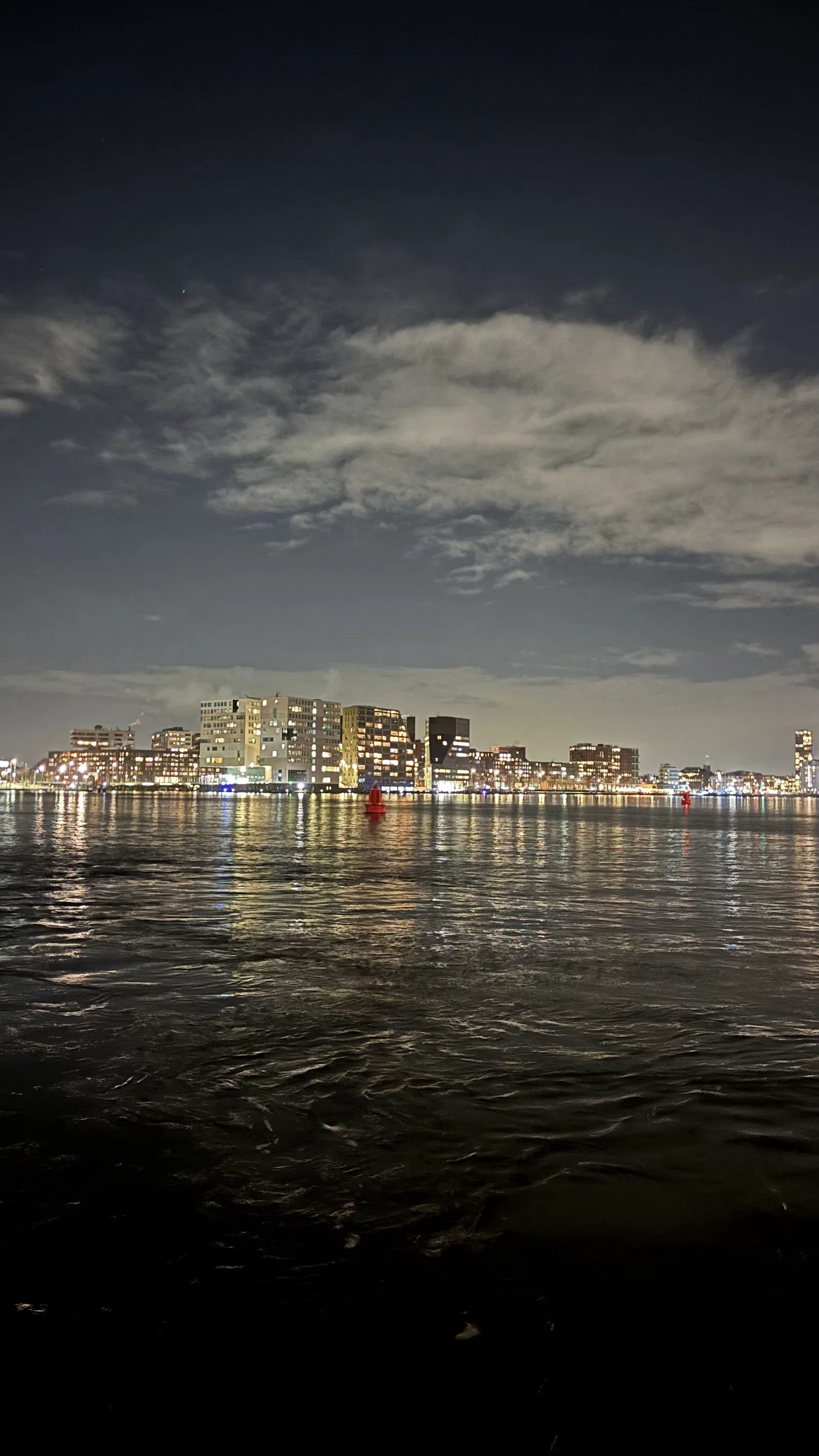
Behind Amsterdam's Centraal Station, past the bike racks and the last departing tram, a run of squat blue-and-white boats loads and unloads without anyone paying a cent. They are the least glamorous public transport in the city and, in the same breath, its finest free experience: seven minutes of open water, cold wind off the IJ, and a low grey sky full of gulls, delivered on a loop that barely stops to draw breath. Cross once and the whole north bank opens up — a former shipyard that art, food and a certain stubborn scruffiness took over almost overnight.
The free fleet, and how it actually works
The GVB Free IJ Ferries (directly behind Centraal Station) are exactly that — free, with no ticket, no barrier, no tap-in, and no daily limit. You walk on, you wheel on, you ride, you get off. Bikes, cargo bikes, mobility scooters and wheelchairs board at no charge alongside foot passengers, which is why a whole group can roll on together without anyone counting heads or splitting up.
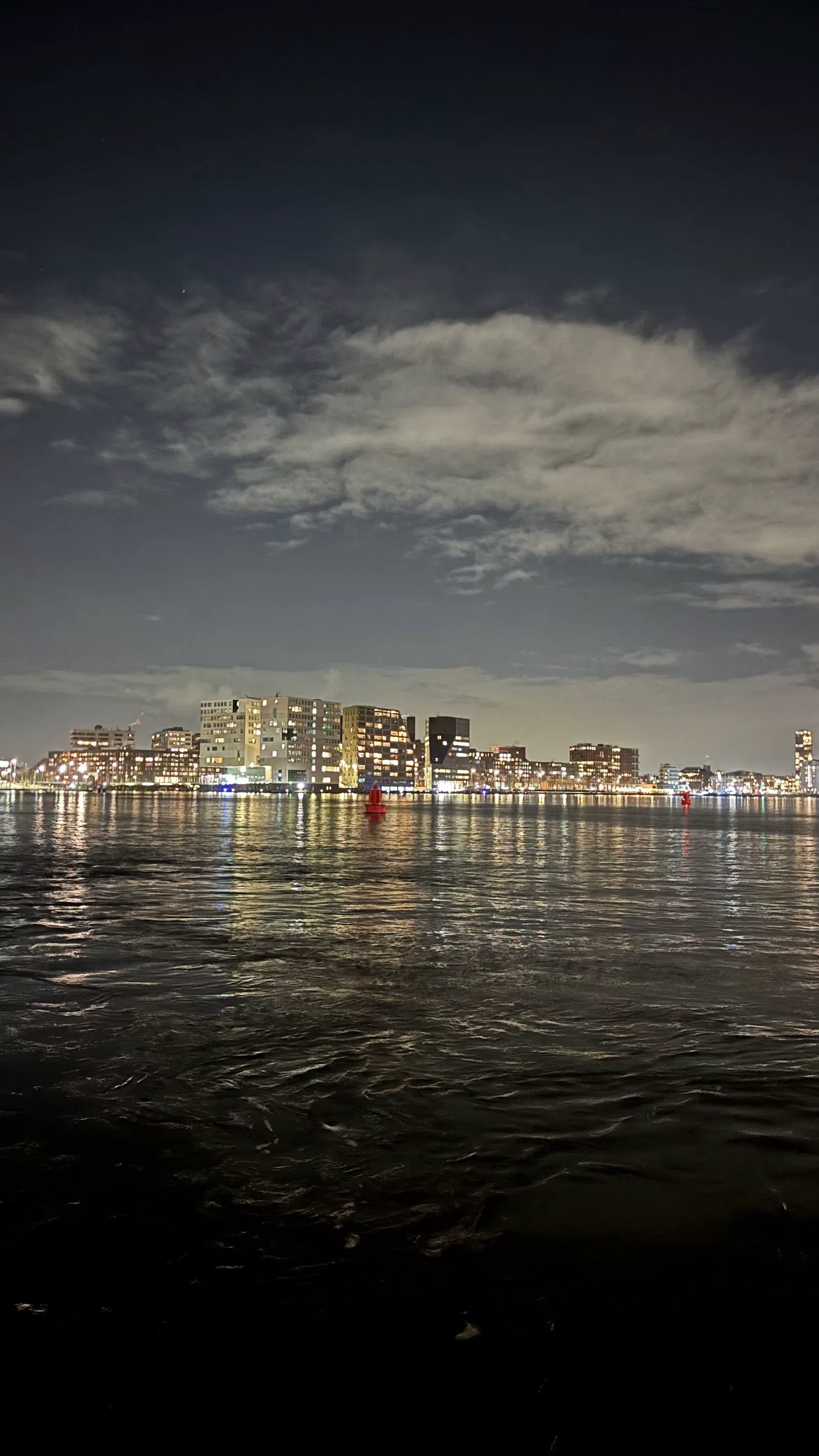
Five routes fan out from the water behind the station, and it pays to know which one you want before you join the queue at the pontoon. The F3 to Buiksloterweg is the workhorse: a two-minute hop straight across to the cluster of the EYE building, the A'DAM tower and the 5D flight hall. The F4 to NDSM is the long one — roughly seven minutes upriver to the old wharf, and the crossing most worth taking for its own sake. The F2 to IJplein lands you a little east, handy for the quieter waterfront walk toward the container cafés. The core routes run around the clock, every few minutes by day and thinning out overnight, so there is no real timetable to memorise for a daytime trip; you turn up and one is usually loading.
A note on the crowds, because they are real. On a bright summer weekend the F4 pontoon can back up with cyclists and day-trippers, and you may wait for the next boat. Come off-season, or before ten in the morning, and you will often have the deck half to yourself — which is when the ride is at its best. Do not treat these as sightseeing cruises with commentary; they are commuter boats that happen to have a spectacular view. That is the whole point.
Plan your Amsterdam trip
Live prices from our booking partners.
Free cancellation on many rooms. We may earn a commission when you book.
NDSM: the wharf that art took over
Step off the F4 and you are on the NDSM Wharf (Amsterdam-Noord), once the largest ship-building yard in Europe and now a national monument given over almost entirely to open-air art. It is wide, flat, windblown and unmanicured — cranes, rail tracks, painted hangars and murals the size of houses — and it costs nothing to wander. This is terrain built for groups: you can spread out, roam, and lose each other for an hour without anyone minding. Festivals and markets spill across the yard through the warmer months, so it is worth checking what is on before you cross, but even on an empty Tuesday the scale of the place carries the visit.
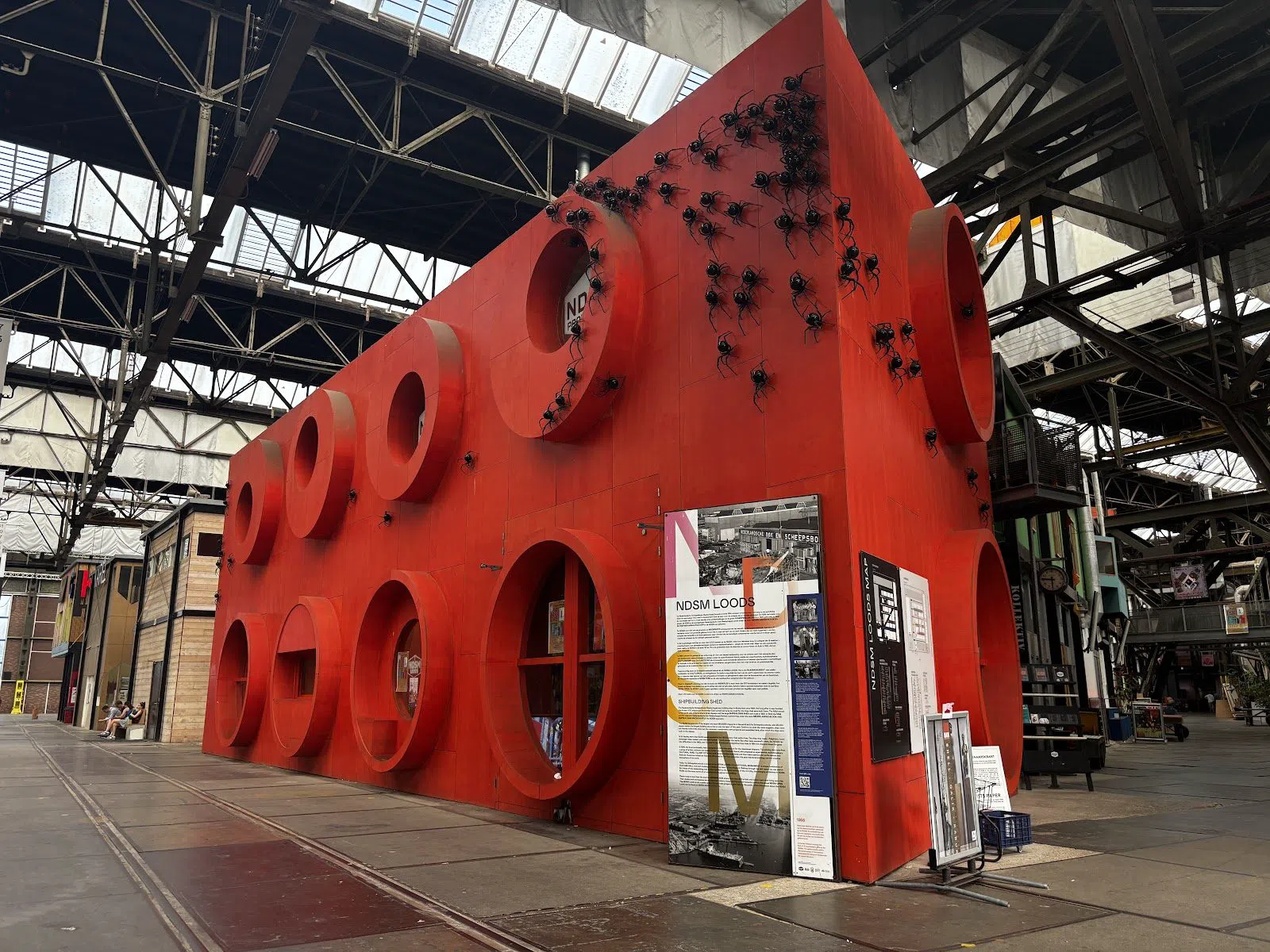
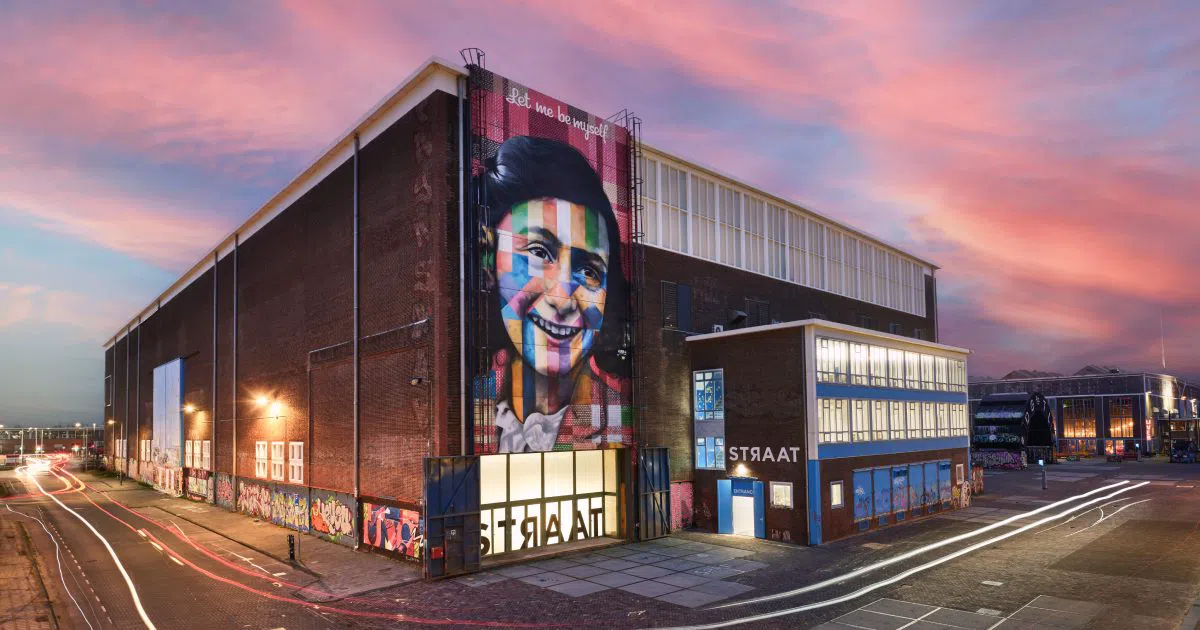
Inside NDSM's old welding shed sits the STRAAT Museum (NDSM), a single vast hall holding more than 160 giant works by over 150 international artists — the indoor answer to the murals outside. Entry is €17.50 for an adult, and the space swallows groups easily; guided and group tickets are available if you want the backstory rather than a wander. It is a genuine museum rather than a photo backdrop, and an hour here is honestly earned.
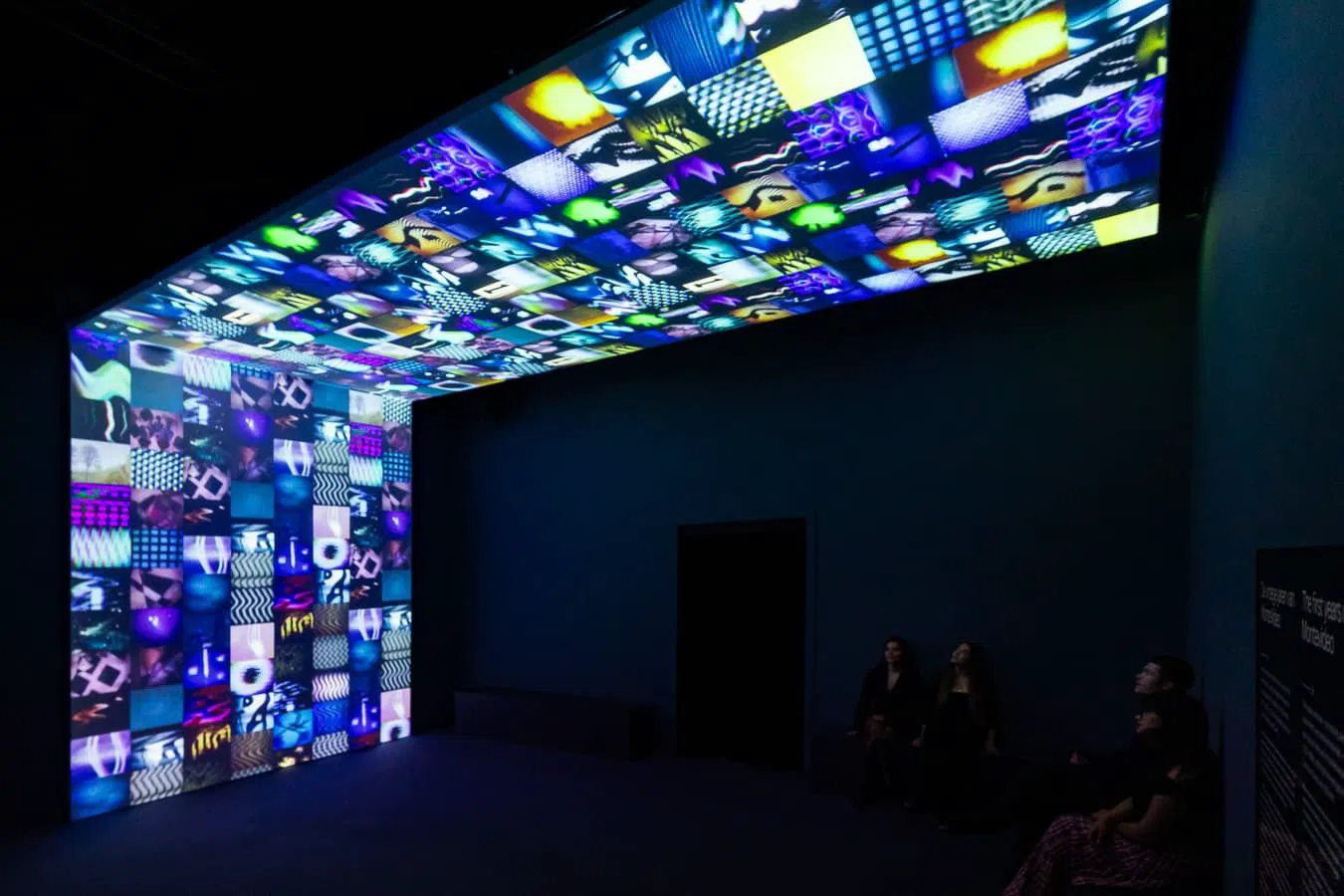
A few steps away, in the Lasloods staging hall, the Nxt Museum (NDSM) takes the opposite tack: a 1,400-square-metre black box of room-scale, new-media installations, the first museum of its kind in the country. Tickets run around €19.50 and entry is by timed slot, which suits a group with a plan and frustrates one that turns up on a whim — book your window ahead. Where STRAAT is spray paint and daylight, this is darkness, projection and sound; the two make a deliberate contrast if you want both.
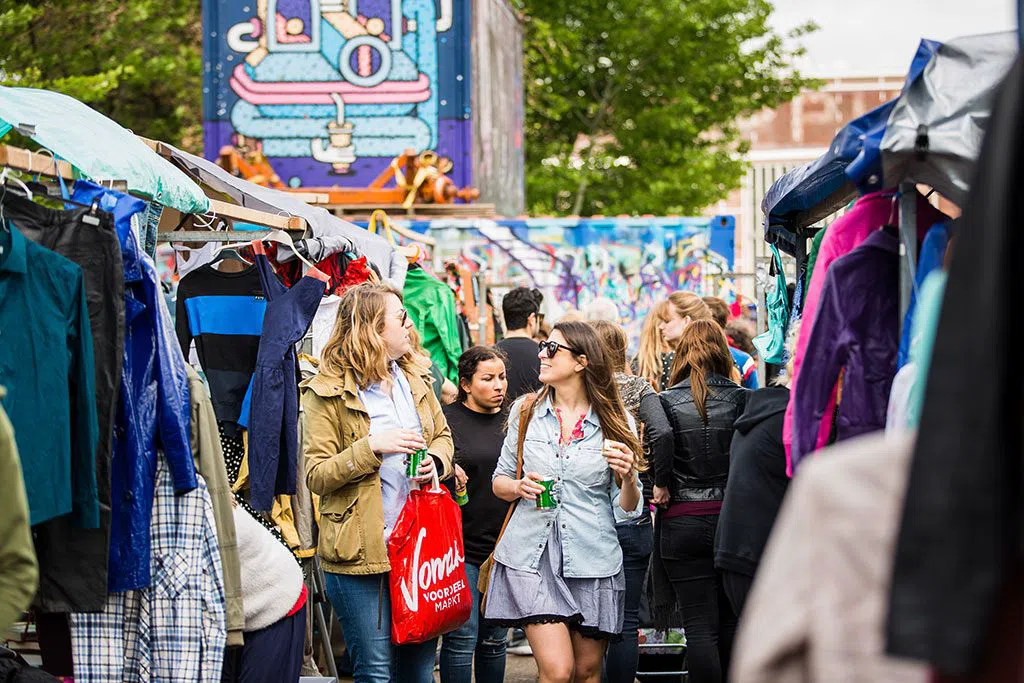
If your timing is lucky, the quay hosts the IJ-Hallen Flea Market (NDSM), Europe's largest, held roughly once every three weeks — indoors through winter, out on the open wharf in summer. Entry is €6 for adults and €2.50 for children, and it is a genuinely enormous, sprawling event that a group can happily get lost in for a morning. The catch is the calendar: it runs on set weekends only, so check the dates before you build a day around it. Turn up on the wrong Saturday and there is nothing to see but an empty yard.
The Buiksloterweg cluster: a swing, a film and a flight
Back on the F3, the two-minute Buiksloterweg crossing lands you at the densest knot of paid attractions on the north bank — all within a short walk of the pontoon.
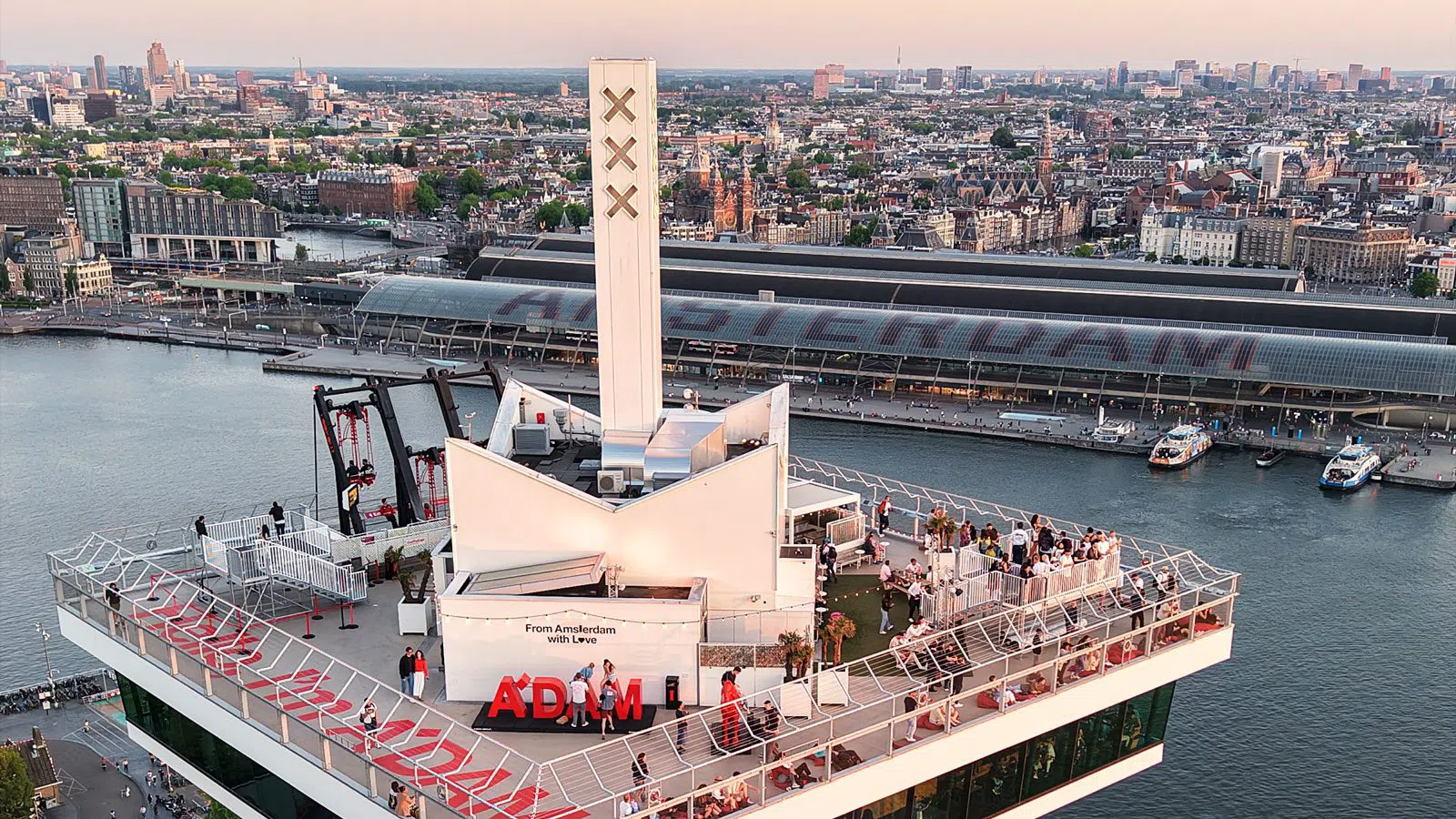
The A'DAM Lookout — Over the Edge (Buiksloterweg) is the one people photograph: Europe's highest swing, which tips you out over the edge of the tower at 100 metres above the harbour. A standard ticket is €15, with a premium option at €25 that shortens the queue; group and skip-the-line tickets exist and are worth it on a busy afternoon. It is built for high volume and handles crowds well, but be honest with your group about who actually wants to dangle off a rooftop — some will, some very much will not, and the view from the deck alone is reward enough for the rest.
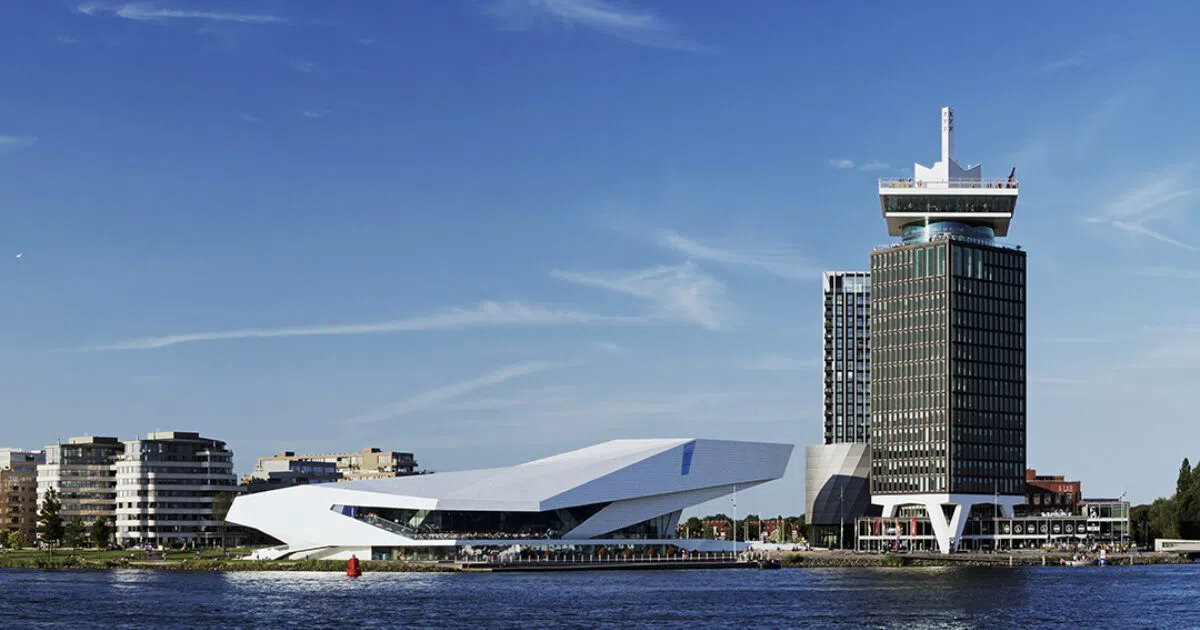
Next to the landing, the EYE Filmmuseum (Buiksloterweg) is the swooping white landmark of the north bank, and its best-kept secret is that you do not need a ticket to enjoy most of it. The building and its waterside terrace are free to enter, and the terrace — open late — is a front-row seat to the harbour and the city skyline opposite, film or no film. Exhibitions cost around €12.50 if you want them. For a couple or a group watching the light change over the water with a coffee, this is the calmest free perch on the bank.
Beside the F3 landing, THIS IS HOLLAND (Buiksloterweg) offers a 5D flight over the country — a quick, weatherproof, kid- and group-proof hit at €17.50 a head. It moves up to 200 visitors an hour, so queues rarely stall, and it slots neatly into a half-day between the ferry, the EYE terrace and the swing. It is unashamedly an attraction rather than a cultural stop; take it as that and it delivers.

Where the north bank eats and drinks
The district's restaurants tell its whole story — factories, greenhouses and shipping containers rebuilt into places to eat, most of them big, loose and made for a table of friends.
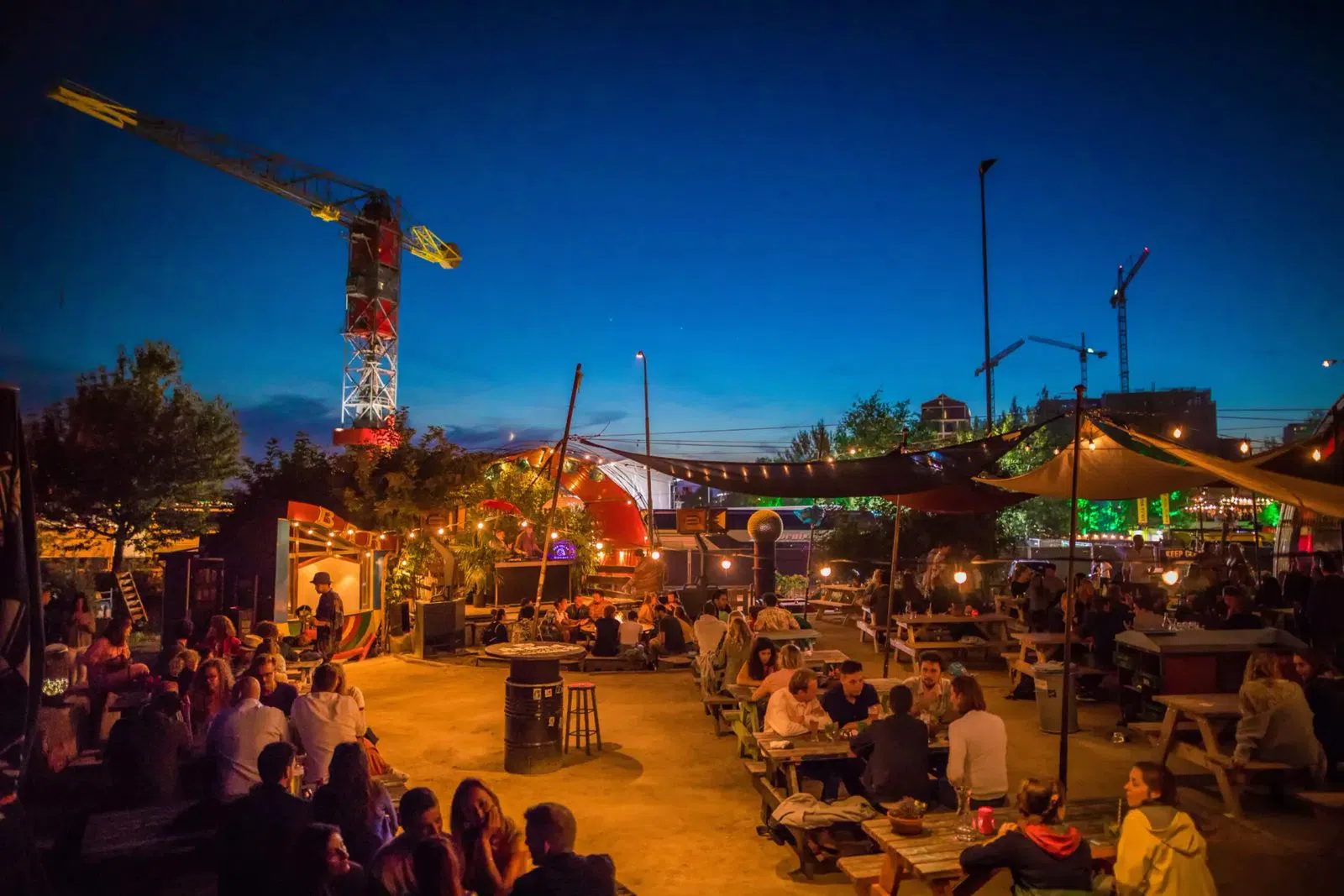
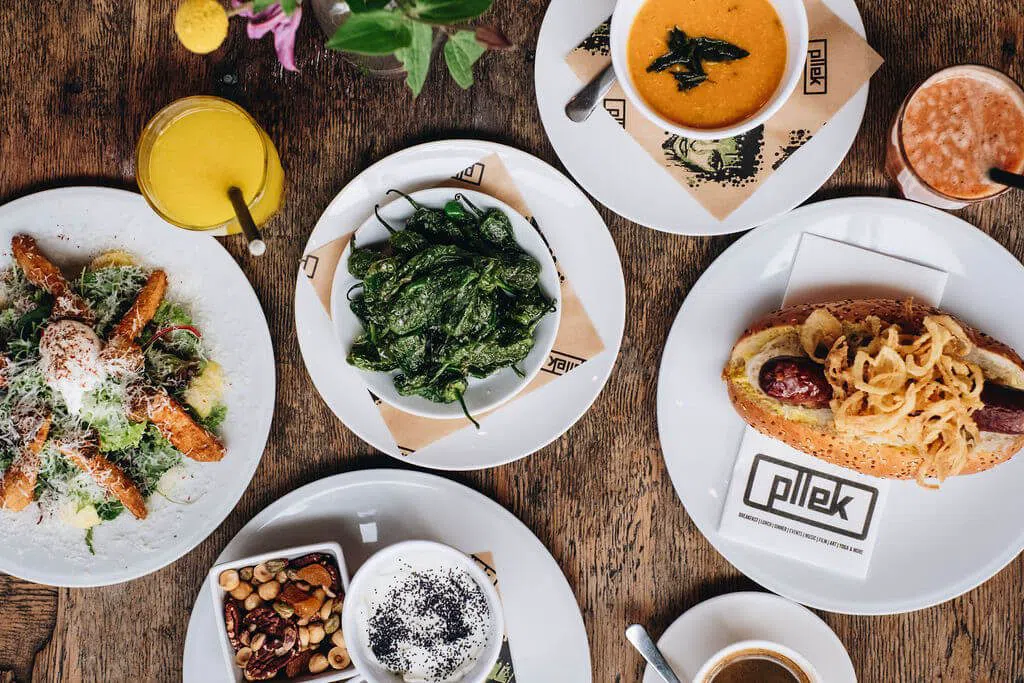
Pllek (NDSM) is the definitive NDSM sunset spot: Amsterdam's largest green restaurant, welded together from old shipping containers with an actual sand beach on the IJ. Mains land around €18–26, it hosts live-stage events, and it is about as group-friendly as a restaurant gets — come for the west-facing light more than the menu. A short walk on, Noorderlicht Café (NDSM) is a greenhouse-café on the water's edge with a permanent permit, a sustainable kitchen by day and a cultural stage by night; mains sit around €15–22, and the salvaged, bohemian feel makes it forgiving of a large, casual party.
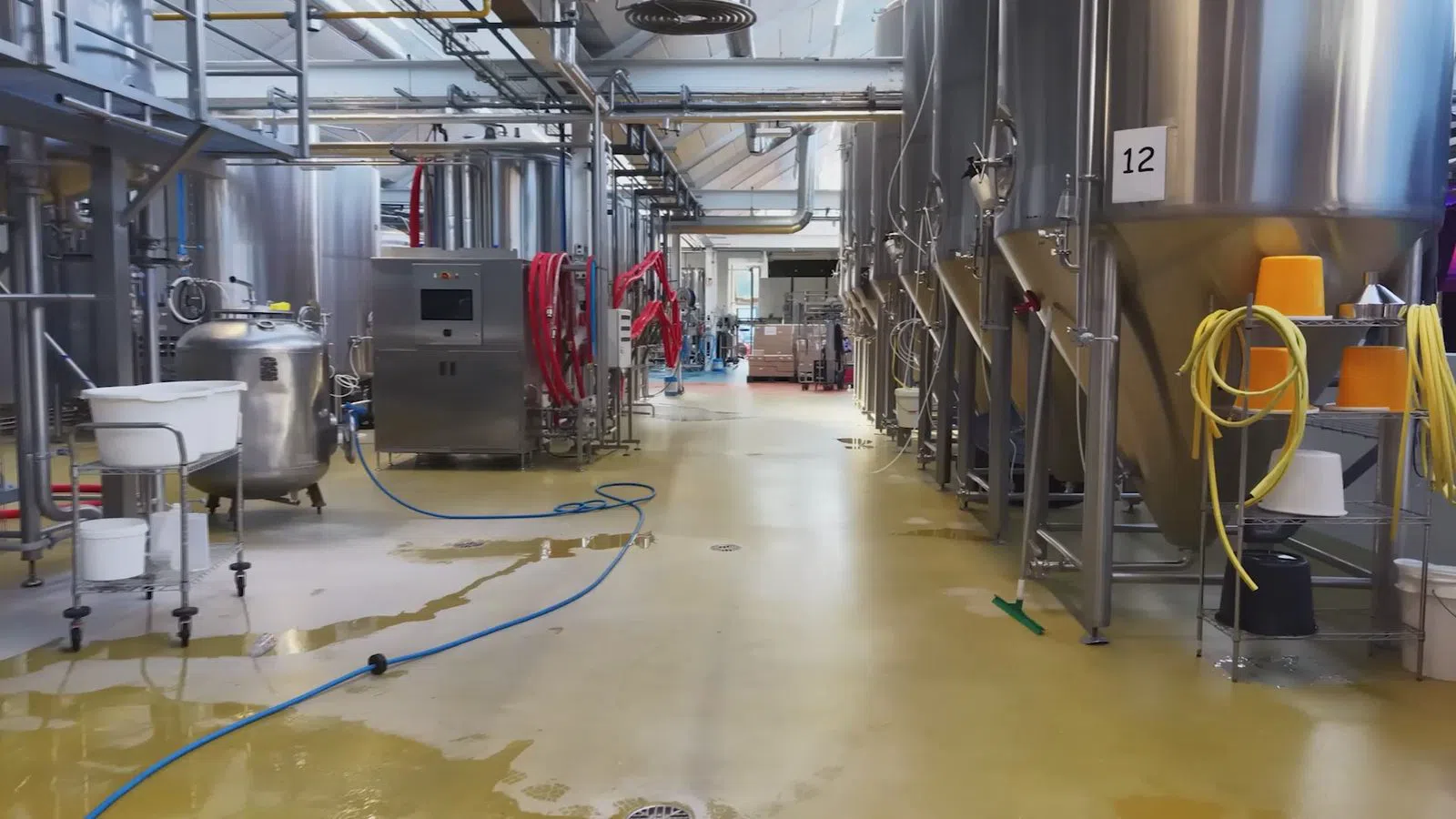
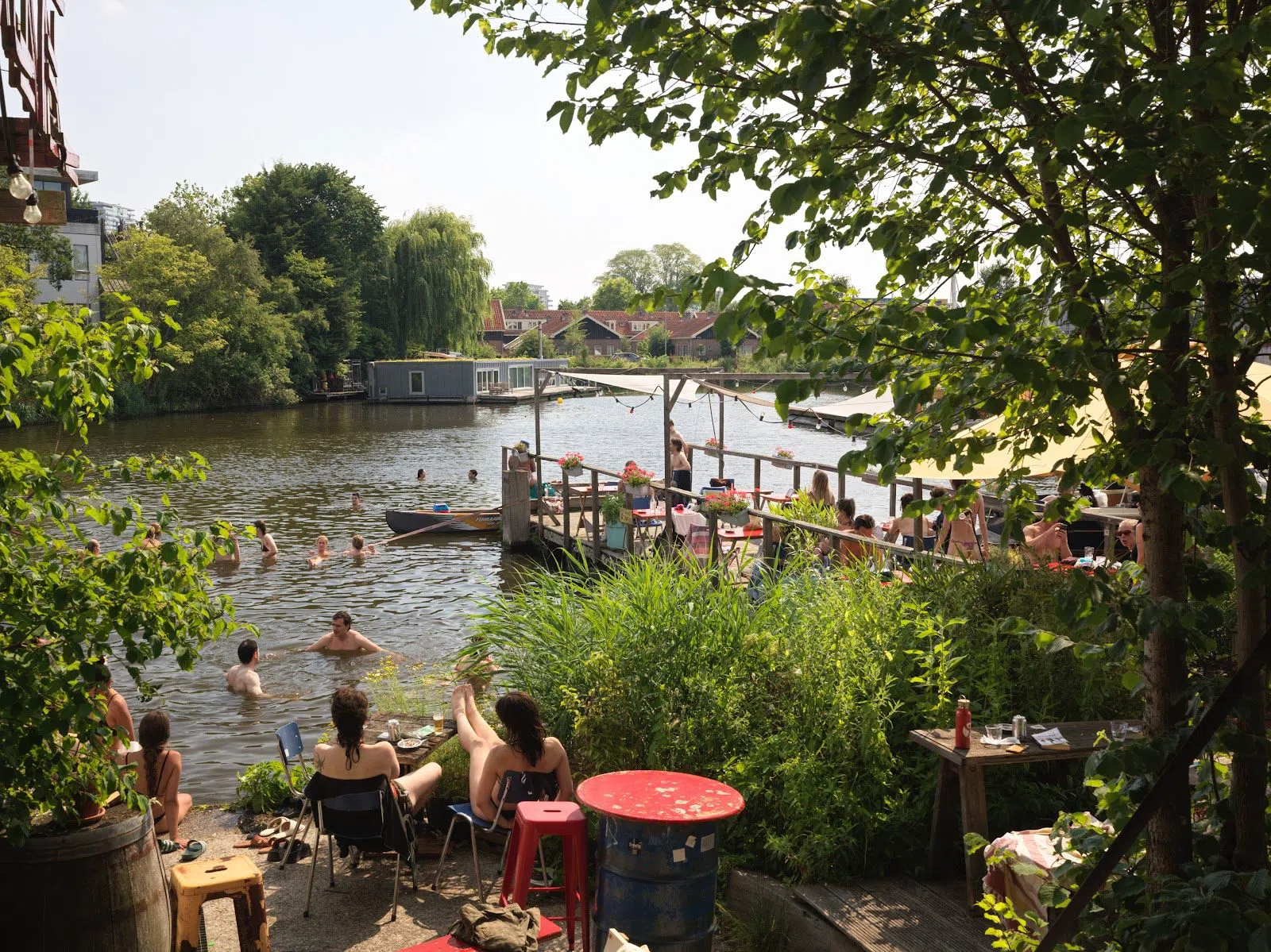
Between the IJplein and Buiksloterweg landings, Café de Ceuvel (Amsterdam-Noord) is a circular-economy landmark — dry-docked houseboats set on remediated industrial land, relaxed and communal, with small plates around €8–16. Its lease is secured into 2027, which is worth saying plainly: catch it while it is here, because sites like this in the city do not last forever. For beer, Oedipus Brewing Craft Space (Schaafstraat, Amsterdam-Noord) is Noord's cult brewery in its own roomy indoor-outdoor taproom, with beers around €5–7 and Beef Chief burgers on site — an easy, colourful landing pad for a group afternoon, especially after a morning at the flea market.
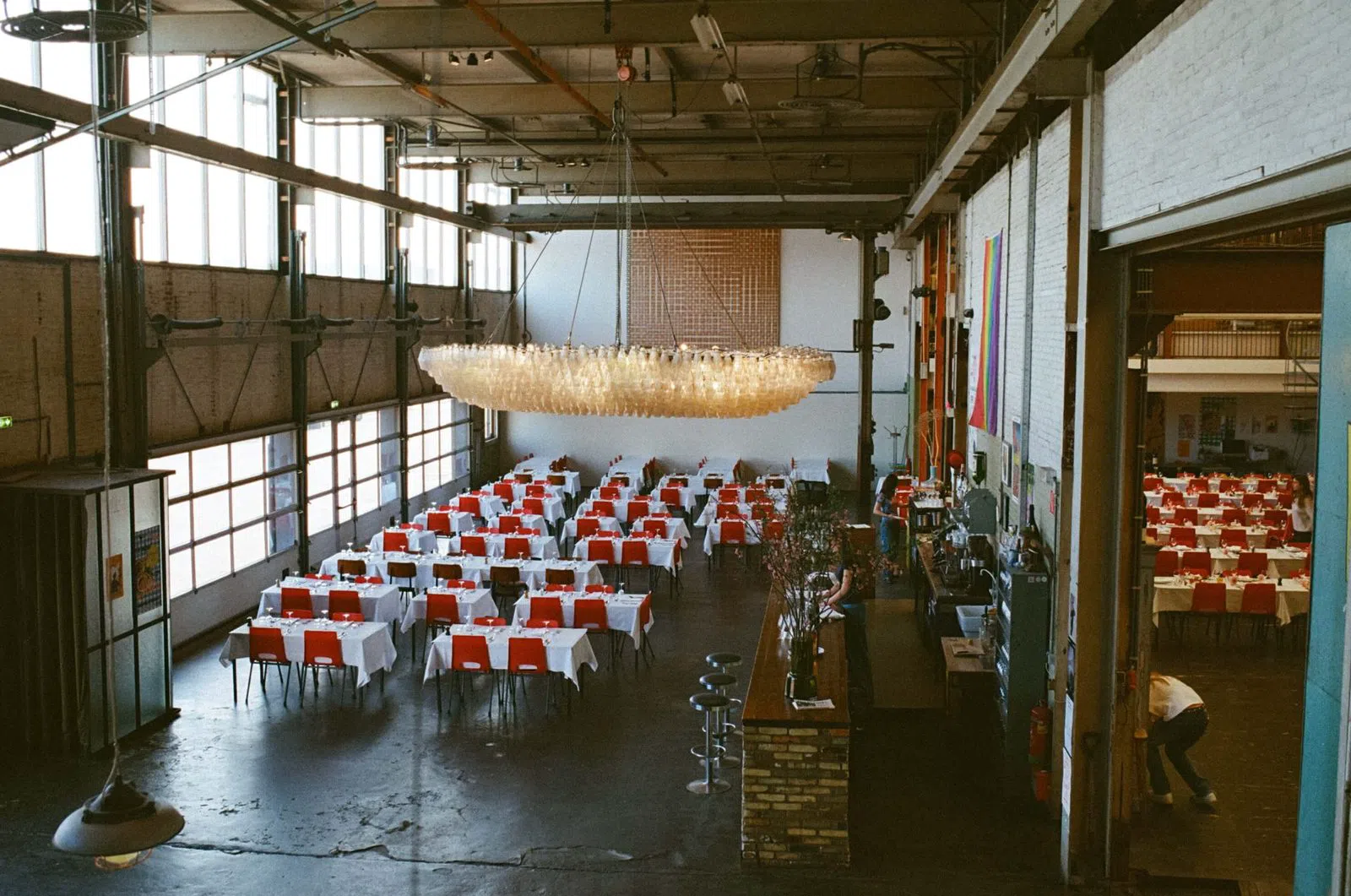
For a proper sit-down dinner, Hotel de Goudfazant (Amsterdam-Noord waterfront) — which is a restaurant, not a hotel — is the archetype of the district's factory-to-table story: a cavernous industrial warehouse serving affordable Dutch-French plates, with a three-course menu around €39.50. The hall swallows big tables, but it sells out most nights, so book ahead rather than chancing a walk-in.
Timing the crossing
The single piece of timing advice worth following: aim to cross on the F4 to NDSM about half an hour before sunset. You get the seven-minute run upriver with the light going gold on the water, land at the wharf, and are a two-minute walk from a beach chair at Pllek as the sky turns. Coming back after dark, the city skyline behind the ferry is its own quiet spectacle, and the boats keep running long into the night, so there is no last-ferry anxiety to manage.
For everything else, mornings are kinder. Museums open around ten, the ferries are near-empty before the day-trippers arrive, and the wharf has a stillness off-season that the summer festivals bury. If you are choosing between a couple's afternoon and a group day out, the north bank does both — just lean the couple toward the EYE terrace and de Ceuvel, and the group toward the wharf, the flea market and Pllek.
For a base within easy reach of the ferries, start an Amsterdam hotel search; anything near Centraal puts the whole free fleet at your feet. For the rest of the city beyond the water, the wider Amsterdam guide covers the ground the ferries do not.
Practical notes
Transport. The ferries are free, unlimited and step-free — no ticket, no reservation, bikes and wheelchairs included. They leave from directly behind Centraal Station; follow the signs through the station to the IJ-side pontoons. The F3 (Buiksloterweg) serves the EYE/A'DAM/5D cluster; the F4 (NDSM) serves the wharf, its museums and the flea market; the F2 (IJplein) serves the eastern waterfront walk. Core routes run 24/7, thinning overnight.
Cash and cards. Prices here are in euros; the destination trades in euro throughout. Cards are near-universal at the museums, attractions and larger restaurants, but carry a little cash for the flea market, where stalls are cash-friendly and change is quicker.
Timing. Cross before ten in the morning to beat the crowds, or half an hour before sunset for the best of the F4. Book timed slots for the Nxt Museum, a table at Hotel de Goudfazant, and check the IJ-Hallen calendar before building a day around it — it runs only on set weekends.
Budget. A full day is cheap by the city's standards. The ferries and the NDSM wharf cost nothing; the EYE building and terrace are free to enter. If you paid for one museum (€17.50), one attraction (€15), a flea-market entry (€6), lunch and a couple of beers, you would spend roughly €55–70 a head and still have change against a comparable day in the centre. The best thing you do all day — the crossing itself — is free.
Before you go
Are the Amsterdam IJ ferries really free?
Yes. The GVB IJ ferries behind Centraal Station are completely free — no ticket, no tap-in and no daily limit. Foot passengers, bikes, cargo bikes, scooters and wheelchairs all board at no charge, and the core routes run around the clock.
Which ferry do I take for NDSM and the street art?
Take the F4 to NDSM, a roughly seven-minute crossing to the old shipyard. It lands you at the NDSM wharf, the STRAAT and Nxt museums, the IJ-Hallen flea market and the container restaurants. For the EYE building, A'DAM swing and 5D flight, take the shorter F3 to Buiksloterweg instead.
How do I time the sunset ferry crossing?
Board the F4 to NDSM about half an hour before sunset. You get the long upriver run with the light on the water, then land two minutes from a beach seat at Pllek. The ferries keep running late, so there is no last-boat pressure on the way back.
Do I need to pay to visit the EYE Filmmuseum?
No. The EYE building and its waterside terrace are free to enter, and the terrace is open late with a full harbour view. You only pay — around €12.50 — if you want to see an exhibition or a film.
When is the IJ-Hallen flea market open?
IJ-Hallen runs on the NDSM quay roughly once every three weeks, on set weekends only — indoors in winter, outdoors in summer. Entry is €6 for adults and €2.50 for children. Check the current dates before planning your day, as the wharf is empty on off weekends.