The Amsterdam issue
Where to Sleep in Amsterdam on Your First Solo Trip
Sixteen tested beds across Noord, Oost, Oud-West and the old centre, with real prices, honest noise levels and which ones make arriving alone easy.

By Robin HaasThe slow way through Amsterdam's canals, courtyards and back streets
Behind Amsterdam Centraal the ferries to Noord leave every few minutes, all night, and they cost nothing. The crossing takes about five minutes with your bag on your knees. On a first solo trip that single fact redraws the map, because several of the best beds in the city sit on the far bank of the IJ, and the water most people read as a boundary is barely an inconvenience.
Where you sleep counts for more when you are travelling alone. You come back to it in the middle of the afternoon, you decide what to do with your evening in its lobby, and a bad first night sets the tone for the rest of the week. What follows is sorted the way the decision actually gets made: side of town first, then how much privacy you want, then what you are willing to pay for it.
Choose the side of town before you choose the bed
Amsterdam is small enough that almost nothing on this list is more than twenty-five minutes from anything else. That makes the centre a weaker argument than it looks. The old core around Dam Square and the canal belt puts you inside the museum walk, but also inside the crowds and the stag noise, and you pay for the address twice, once in money and once in sleep.
Oost, along Wibautstraat and around Oosterpark, is ten minutes from the centre by metro or tram and feels like a place people live in rather than visit. Noord is across the ferry: quieter streets, better value, and in minutes it is closer to Centraal than half the canal ring is on foot. Oud-West gives you a market street and the Foodhallen. The Vondelpark edge and the museum quarter are green, calm and a little dull after ten at night, which on a first solo trip is not necessarily a criticism.
One rule worth following regardless of area: for your first night, book somewhere with 24-hour reception or a staffed bar. Arriving alone at midnight to a keypad and an empty hallway is the part of solo travel nobody enjoys. If you want to compare live rates across everything below, the Amsterdam hotel search shows what each place is charging on your dates, and that moves a long way between a wet Tuesday in February and the third week of October.
Plan your Amsterdam trip
Live prices from our booking partners.
Free cancellation on many rooms. We may earn a commission when you book.
Hostels where meeting people is the point
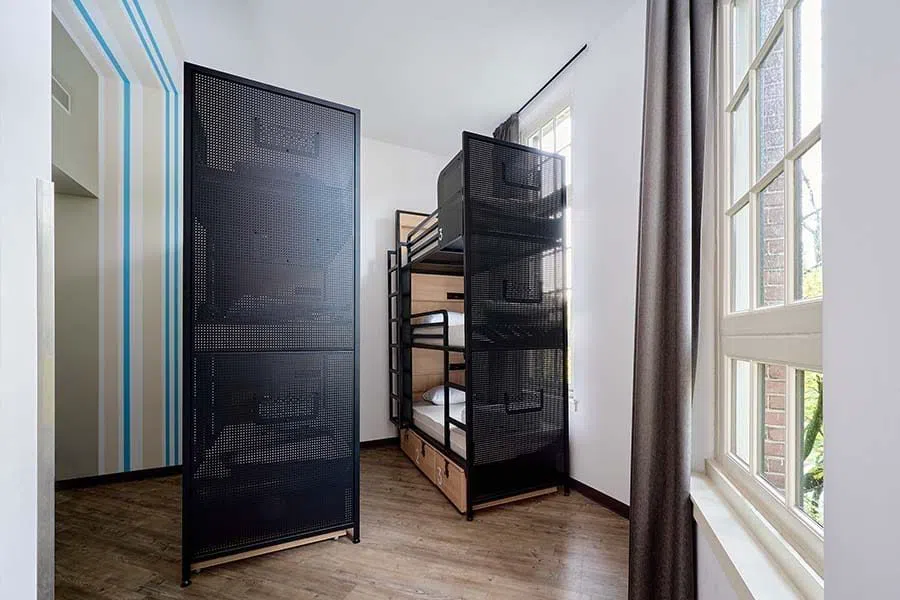
ClinkNOORD (Noord, beside the Buiksloterweg ferry) is the strongest all-round first-solo pick in the city, and not by a narrow margin. There are female-only dorms of four to ten beds alongside mixed dorms of four to fourteen, curtained bunks with a locker and a reading light, and en-suite private rooms sleeping one to six if you want the same building without the bunk. Dorm beds run roughly €25–55, privates roughly €90–170. The 24/7 café-bar means there is always somewhere to land, whatever time your flight got in, and the free round-the-clock ferry is what makes the location work instead of hurt. There is a dedicated groups desk and bookable venue space, so you will sometimes share the bar with a school trip.
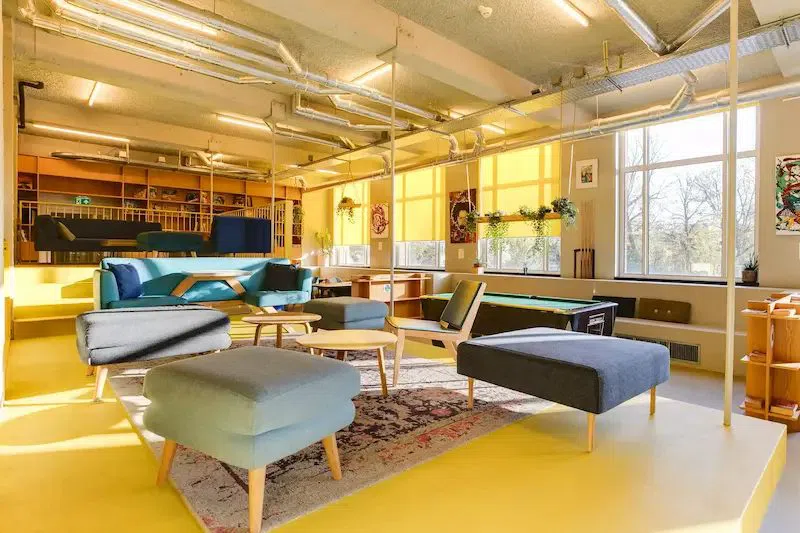
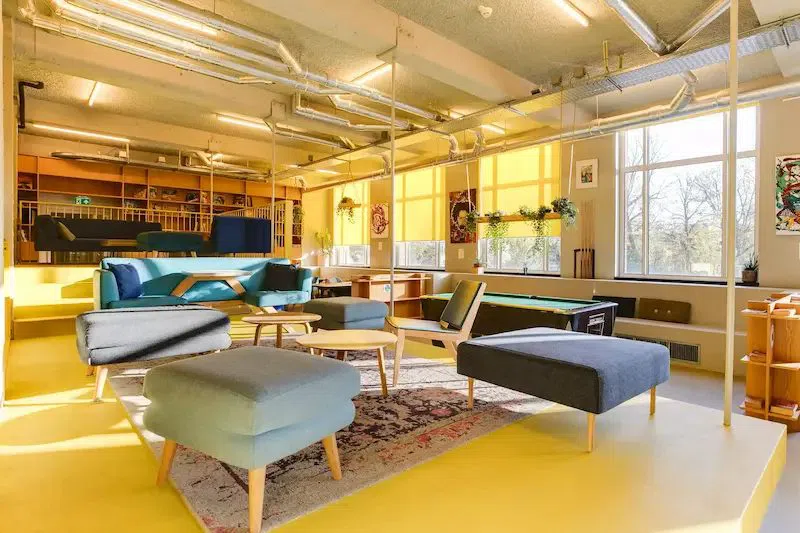
Generator Amsterdam (Oost, overlooking Oosterpark) is the easiest place in the city to fall into conversation without trying. The Auditorium bar does the social work for you: you sit down, someone talks to you, and the evening happens. Dorm beds start from about €12, private doubles from about €60, suites climb past €270. The glass-fronted privates over the park are the useful trick here, with company downstairs and a door upstairs, and no need to commit to either. Generator actively courts groups, with a booking coordinator and an allocated coach pick-up point, so on some weekends a large share of the bar already knows each other.
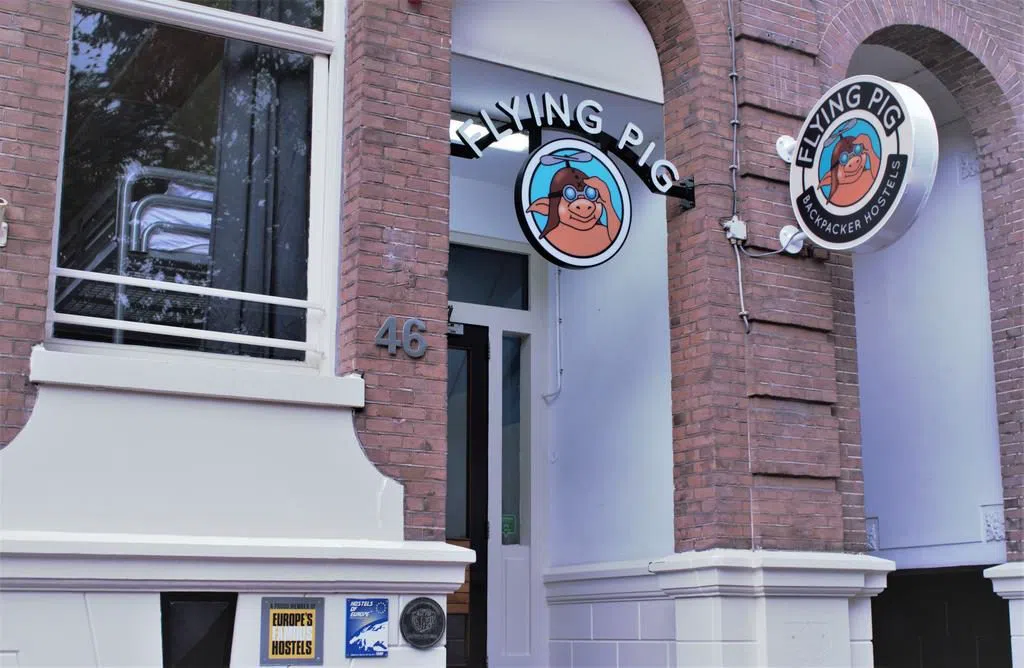
Flying Pig Uptown (five minutes from Leidseplein, on the Vondelpark side) is the classic Amsterdam backpacker bar with beds attached: beer pong tournaments, karaoke, rolling happy hours, 24-hour reception and a free welcome drink. Dorm beds are roughly €30–60, private rooms €100–160. It is loud by design and makes no apology for it. Book it if meeting people is the entire point of the trip. Avoid it if you want to be asleep before two.
Quieter beds in a shared building
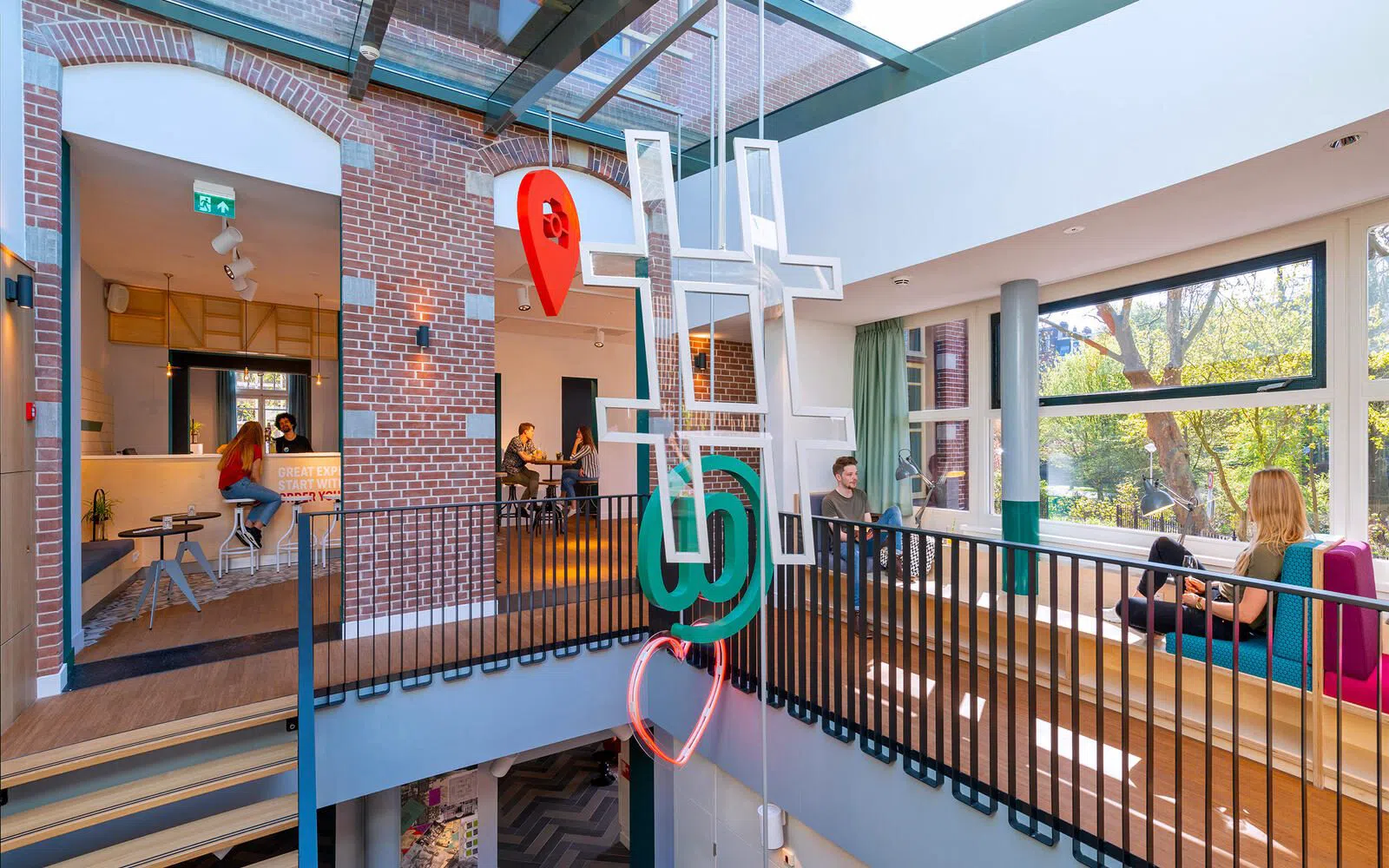
Stayokay Amsterdam Vondelpark (Vondelpark, at the museum-quarter end) is the dependable option. Every room has its own bathroom, reception is staffed round the clock, it holds EU Ecolabel certification, and it runs game nights and singer-songwriter evenings, organised sociability instead of the bar-crawl kind. Dorm beds are roughly €35–65 and private rooms €110–170. Two things to know before you book: there is a seven-consecutive-night maximum, and the place is cashless. School, youth and sports groups are core business, so it skews young and busy; under-18s are only taken in private rooms, and 16- and 17-year-olds need written parental consent.
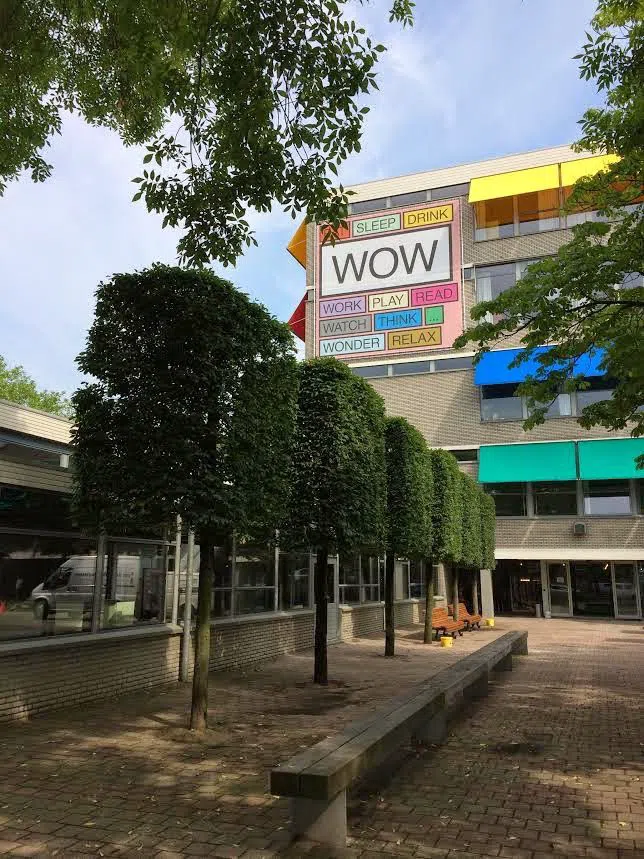
WOW Amsterdam (Nieuw-West) is a working creative hub that happens to run a hostel. There are 352 beds in rooms of twelve, eight, six, four and two, recent art-school graduates living in the studios upstairs, exhibitions in the building and a restaurant on site, all for backpacker money, with dorm beds at €25–50. It is genuinely out west, so budget for the tram and for fifteen extra minutes in each direction.
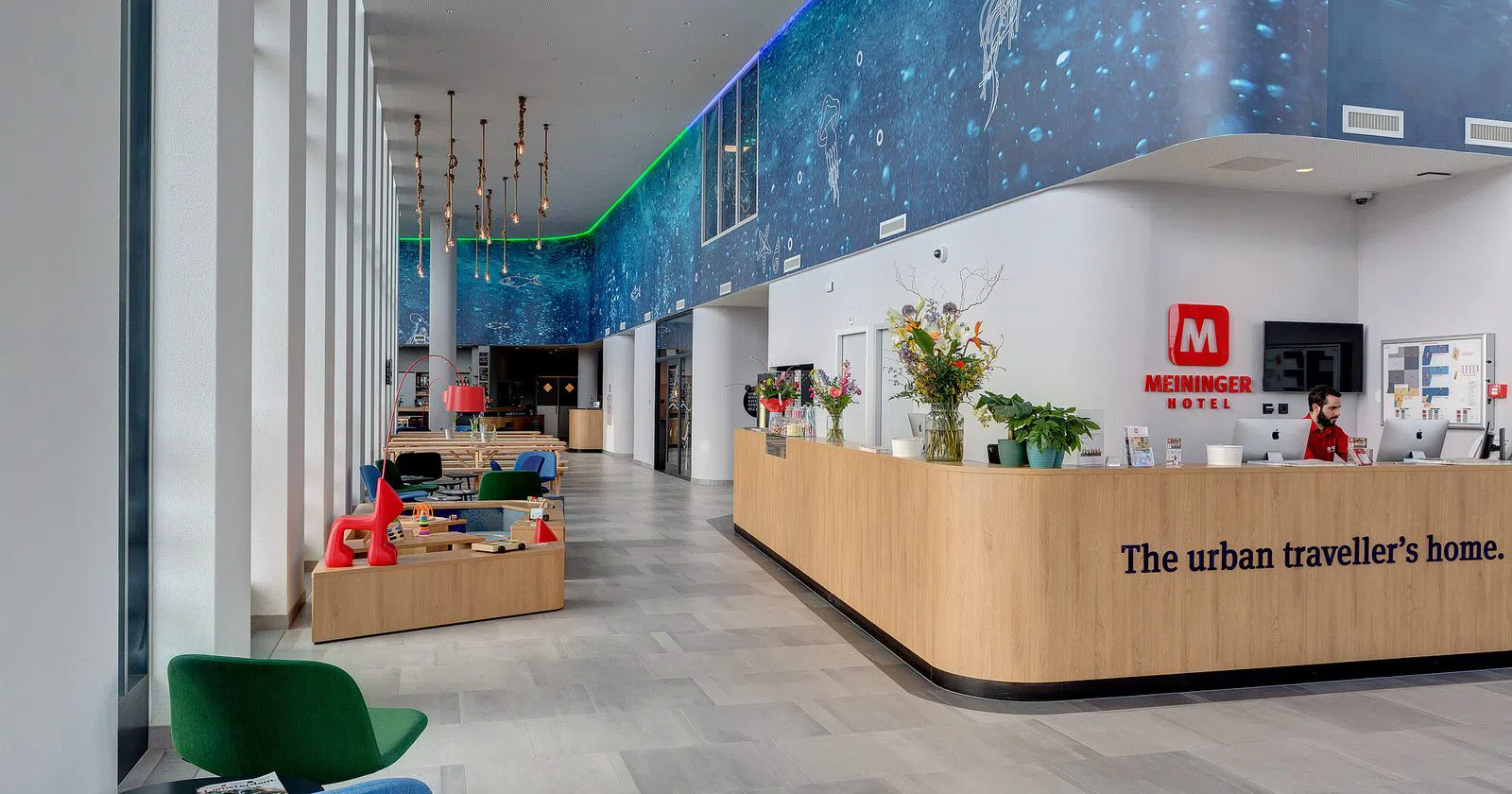
MEININGER Hotel Amsterdam Amstel (Oost, across the road from Amstelstation) is plain and reliable, with a guest kitchen for anyone economising and metro and rail on the doorstep. Private doubles run €80–150, dorm beds €30–55. It is the most explicitly group-friendly address here, with dedicated deals for parties of twelve or more, packed lunches and late check-out, so expect coach parties in the breakfast room. The payoff is a sensible fallback when central prices spike, which they reliably do around the Amsterdam Dance Event on 21–25 October.
A door that locks for close to dorm money
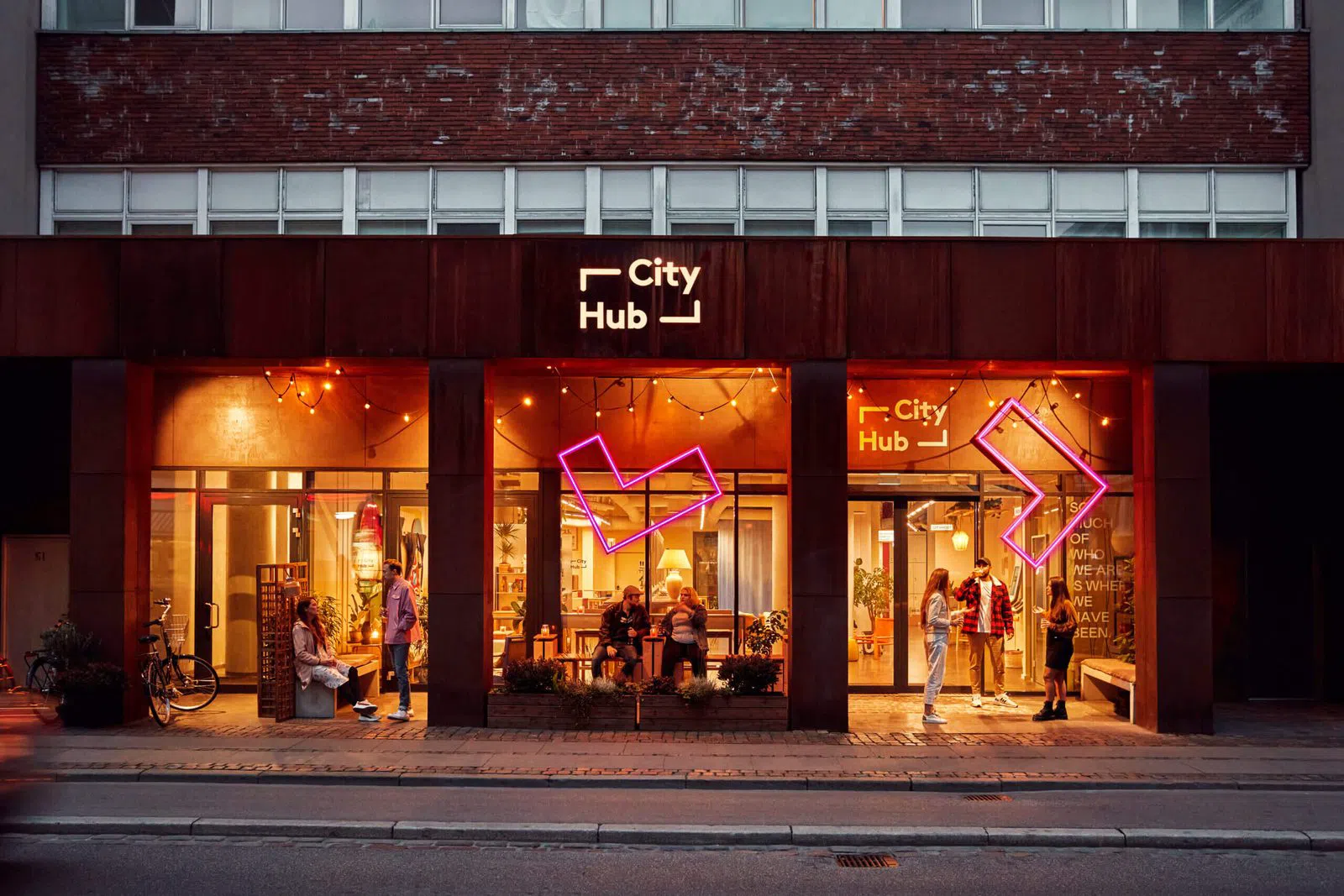
CityHub Amsterdam (Oud-West, five minutes from the Foodhallen) sells an individually locked pod with a double mattress, its own speaker and its own lighting, at roughly €70–130. The trade-off is honest: shared bathrooms, and no standing-up space to speak of. Friends book adjacent hubs instead of sharing a room, which tells you the scale. For a solo traveller who wants a lock and a proper lie-down more than a wardrobe, it is the best value in the city.
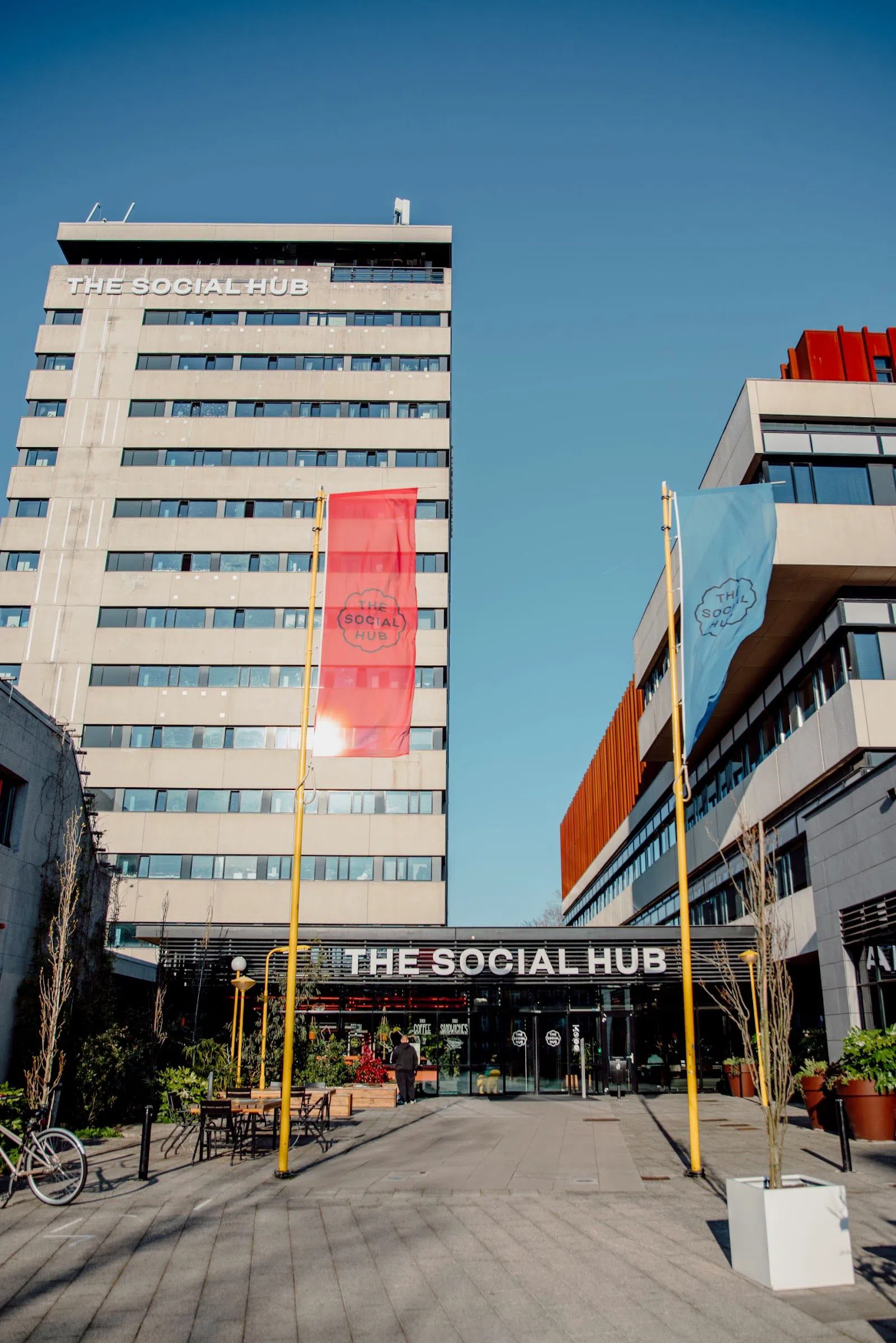
The Social Hub Amsterdam City (Oost, Wibautstraat) is half hotel, half student residence, with private rooms at roughly €110–200. Because people live there long-term, the lobby has a permanent population rather than a nightly churn, which is the difference between somewhere you can sit alone at nine on a Tuesday and somewhere you feel like the last person awake. You still get a room with a lock and a desk. Group bookings are handled directly and the room count absorbs them without the building tipping.
Hotels where a single guest is not an anomaly
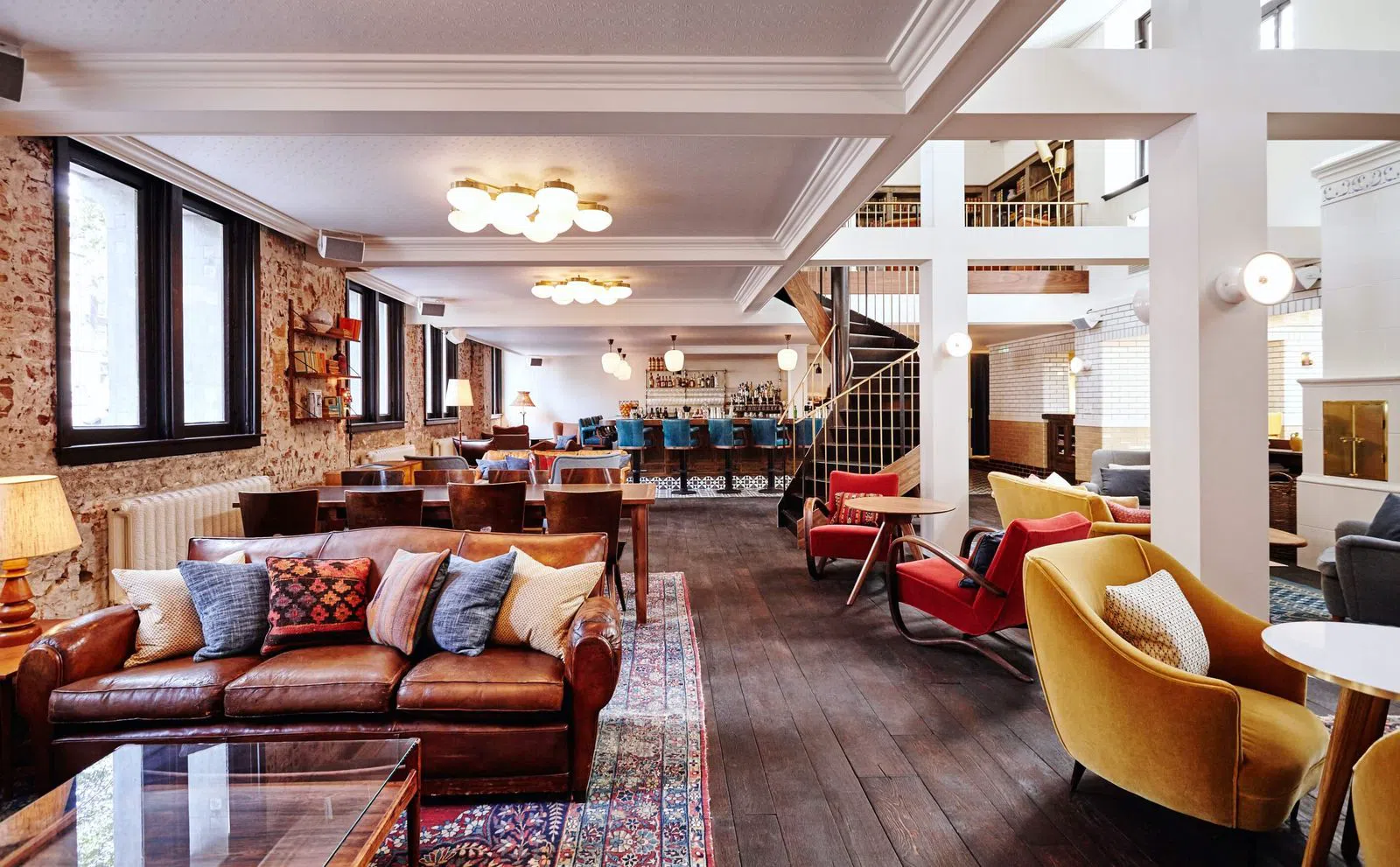
The Hoxton, Amsterdam (canal houses on the Herengracht, at the edge of the Nine Streets) is the most central splurge here and the one that rewards solo travellers most directly. Rooms are graded from Shoebox upward, from roughly €160, with larger canal-view rooms at €250 and up, so one person pays for the space they actually use at an address that would otherwise be out of reach. The lobby is deliberately open to non-guests, which keeps it busy and makes sitting there alone with a book entirely unremarkable.
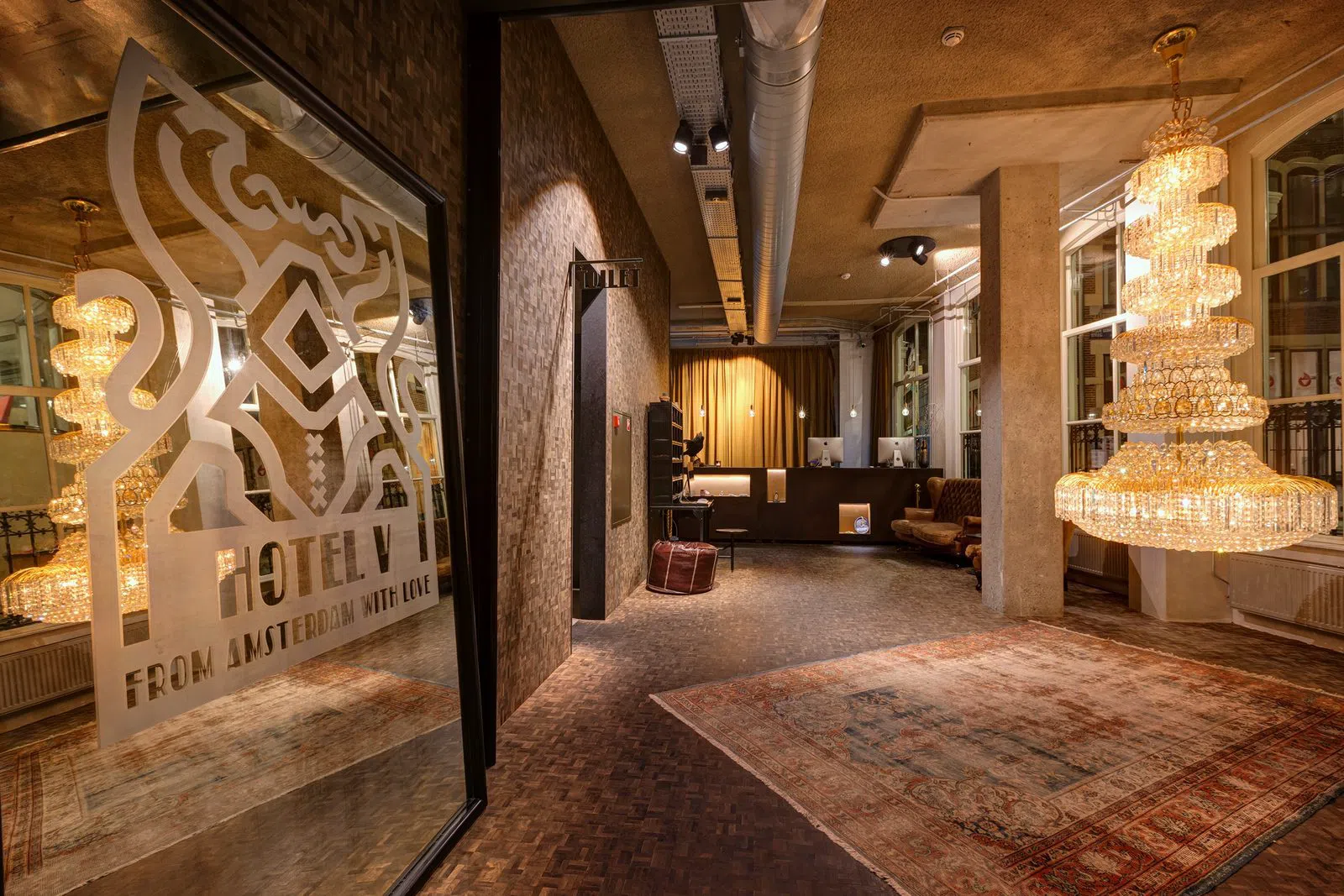
Hotel V Nesplein (Nes, old centre) puts you on a quiet theatre alley two minutes from Dam Square, a combination that barely exists elsewhere in the old town. Comfort rooms run roughly €140–220. The Lobby downstairs is a restaurant locals actually use, not a hotel breakfast room, which matters when you would rather eat at a counter than be seated alone at a table for two. There is a dedicated groups and events service, and sibling properties take the larger parties.
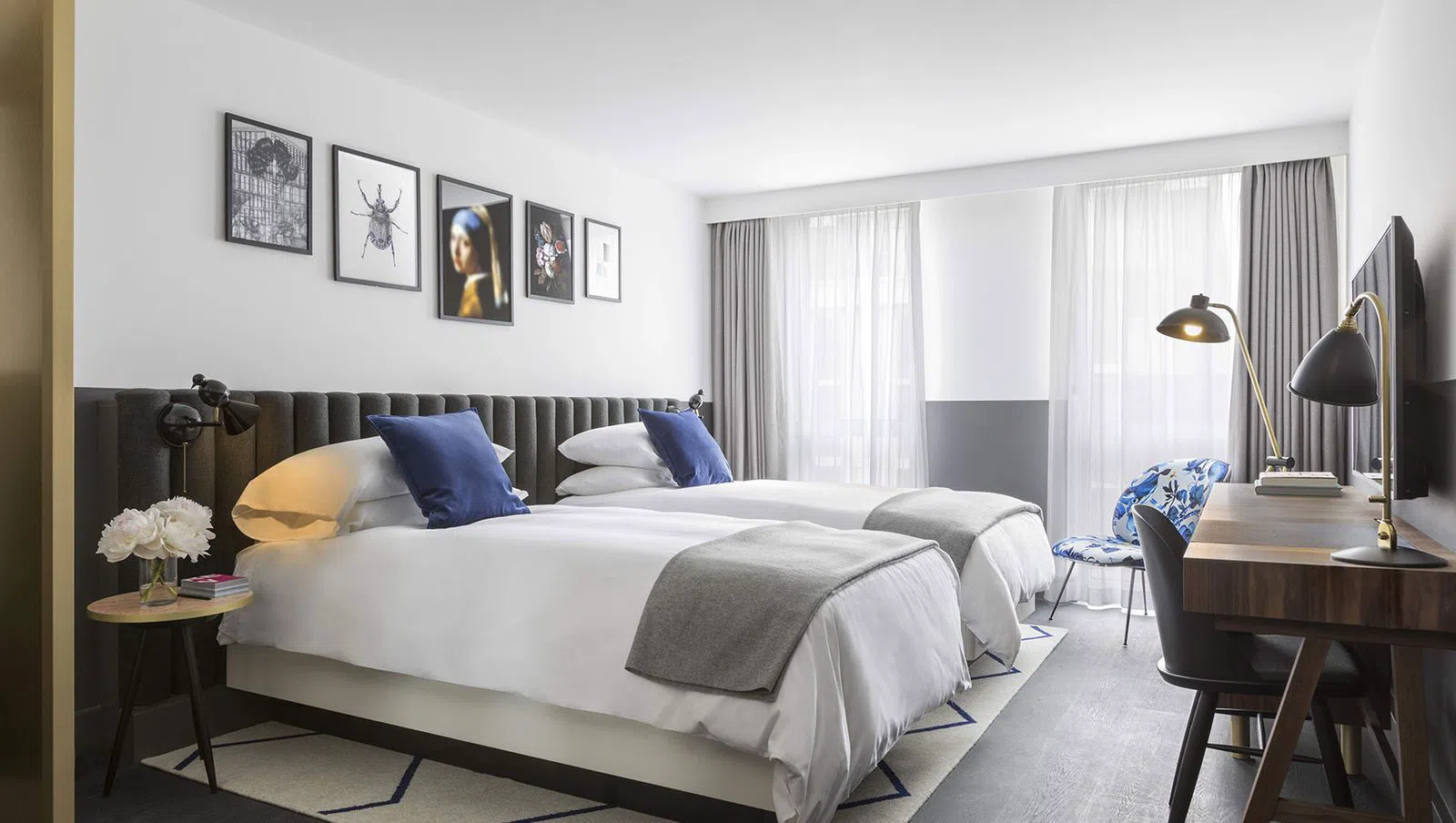
Kimpton De Witt Amsterdam (centre, a short walk from Centraal) is the top of the range at roughly €220–380 for a double. It was the first Kimpton in Europe, and its Super Lyan bar sits in Europe's 50 Best Bars, a place where a solo drinker at the counter is normal rather than conspicuous, which is worth more on a first trip than any amount of marble. A new restaurant, NENI Centrum, opens in the building on 1 September 2026. The hotel runs a full meetings and events operation across several bars and restaurants, so parts of the ground floor can be busy with corporate groups.
Rooms with a reason to stay in

Volkshotel (Oost, Wibautstraat) is an old newspaper office with the bones left showing, and the one hotel here where the roof is the reason to book. Doubles run roughly €130–230, and the rooftop hot tubs and sauna are open daily 07:00–23:00. Soak at dusk, then walk downstairs into Canvas when it turns into a dance floor on Friday and Saturday: a night out with no cross-town journey home at three in the morning, which is the single most useful thing a hotel can offer someone travelling alone.
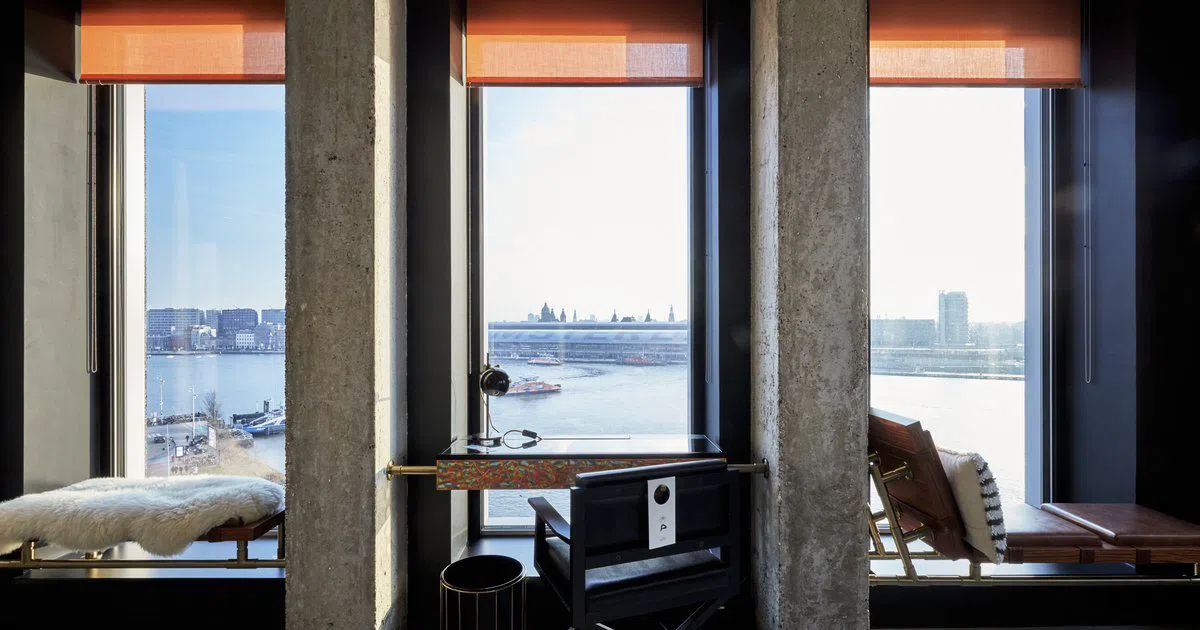
Sir Adam Hotel (Overhoeks, Noord, in the A'DAM tower) trades on the same free 24/7 ferry from behind Centraal: three minutes from the station, skyline view, calmer streets. Doubles are roughly €170–280. The tower carries bars, a club and event floors, so group energy gets absorbed by the building instead of landing in your corridor.
Hotel Jakarta Amsterdam (Java-eiland, in the eastern docklands) is built from cross-laminated timber, runs energy-neutral, and has a genuine botanical garden as its spine. The atrium was planted with the Hortus Botanicus, so the greenery is curated, not decorative. Doubles run roughly €150–250. It suits a slower trip and rewards anyone who likes waterfront walking.

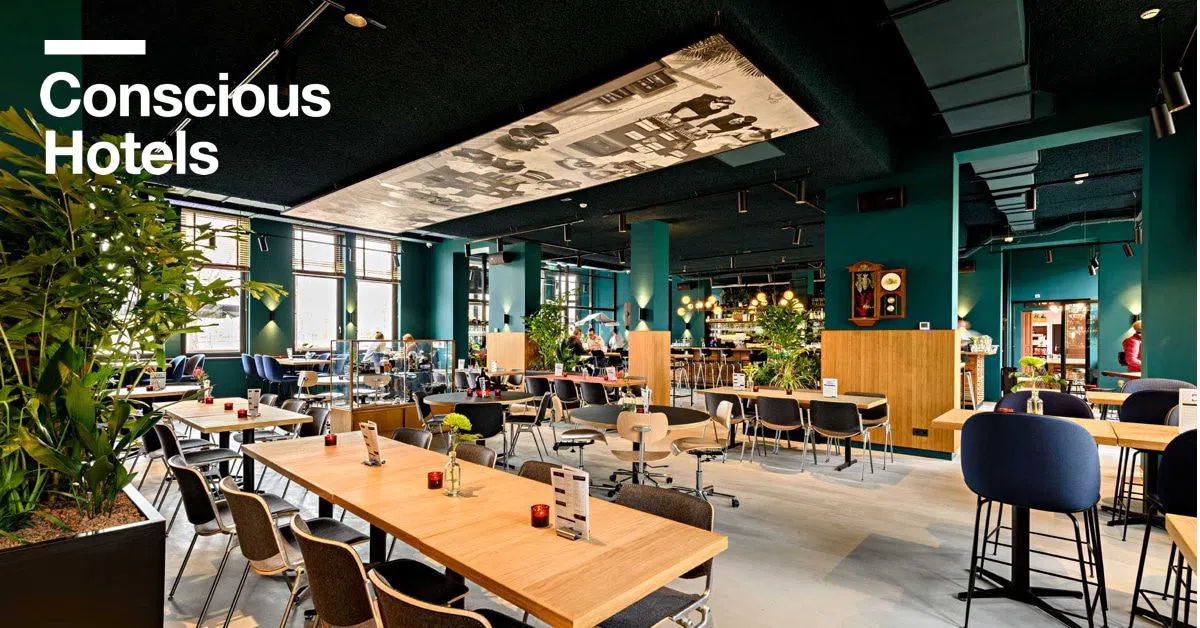
Conscious Hotel Vondelpark (museum-quarter end of Vondelpark) runs entirely on renewable energy with organic-only food and Auping beds made from recycled material, at roughly €120–190 for a double. Mornings start with a park run instead of a tram, which is a real advantage if your body clock is still somewhere else.
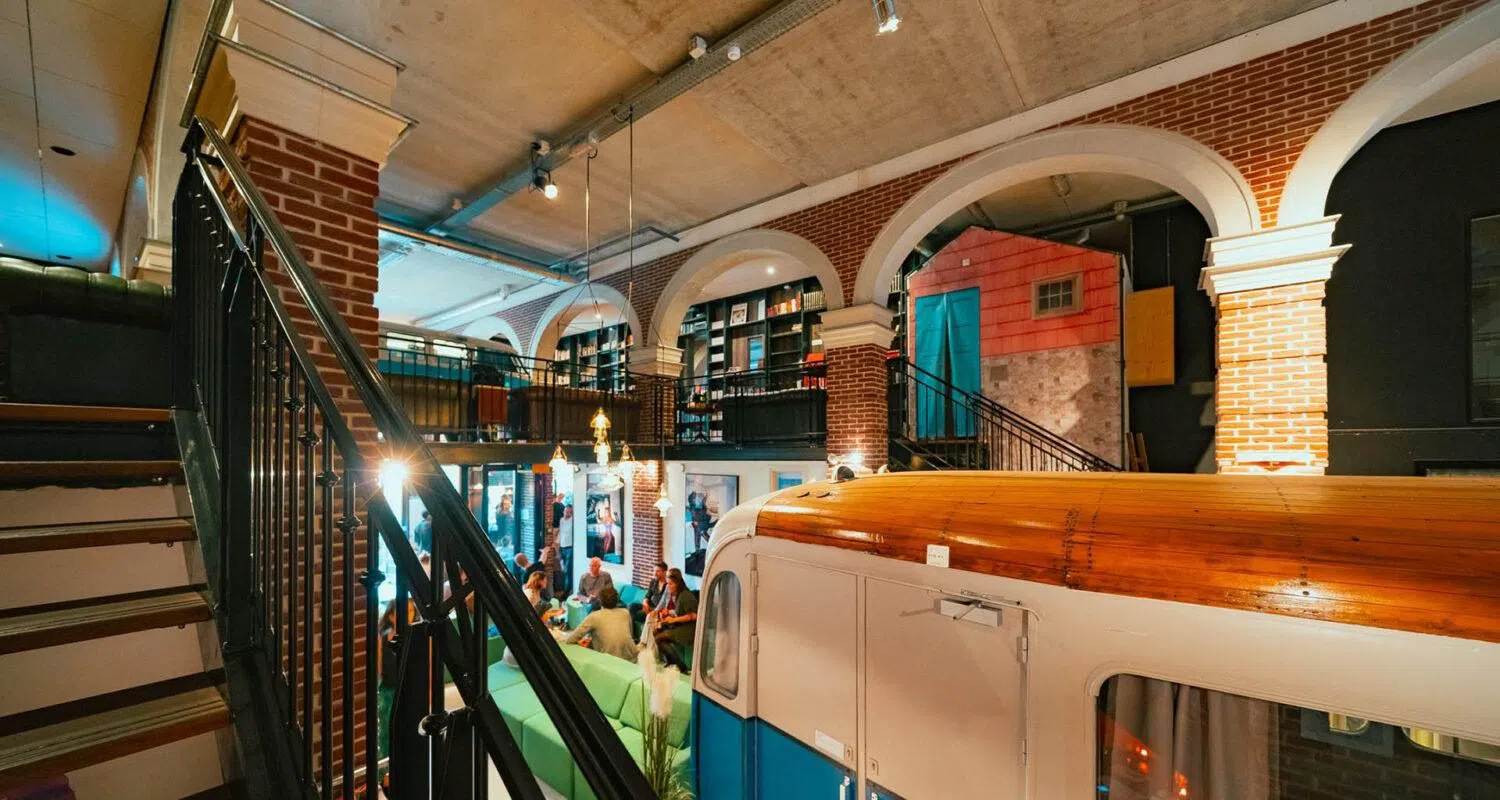
Hotel Not Hotel (Oud-West) is small and quirky, not group-oriented: singles and doubles at roughly €100–180, each room built as an art piece by the hotel's own workshop, so you sleep inside an installation rather than a themed suite. Read the room description properly before you pay, because some rooms, including the tram, have no daylight, no air conditioning and shared bathrooms.
What the door is actually like
No hotel or hostel on this list operates a selective door. Dutch reception desks are not velvet ropes, and turning up alone is the least remarkable thing you can do. The door policy you will actually meet is at club level, and specifically at Canvas on the Volkshotel roof on a Friday or Saturday, where going early or going as a pair is the difference between walking in and queueing.
On groups: Generator, MEININGER, Stayokay and WOW take large parties as a matter of course, and Sir Adam and Kimpton De Witt are big enough to swallow them. Hotel Not Hotel is fine for two or three friends and awkward for anything larger. CityHub cannot put a group in one room at all, so friends book adjacent pods. If you are travelling alone and want a calm building, the group-heavy places are still fine midweek and off-season; it is Friday to Sunday, and the third week of October, when the tone changes.
One cost to watch: Amsterdam charges a percentage-based city tax on the room rate, and quotes do not always include it. Ask, or check the fine print, before you assume the total.
Transport, cash, timing and what it costs
The ferries behind Centraal to Buiksloterweg and NDSM are free, run around the clock and take bicycles, and that is how you reach ClinkNOORD and Sir Adam. Everything else is GVB trams and metro: tap on and off with a contactless card or phone, or buy a one-hour ticket or a multi-day pass at a machine. Check the current fare on the GVB site rather than trusting an older figure, and if you are staying in Noord or Oost, walking plus the ferry covers more than you would expect.
This is a card-first city. Some places are entirely cashless, Stayokay among them. Carry a backup card, because a handful of Dutch cafés and shops still take domestic debit only and will wave away a credit card without much sympathy. You will barely need euros in cash beyond a market stall.
On timing, January to March is the quietest and cheapest stretch, and the museums are genuinely pleasant on a wet weekday. September is the sweet spot for weather against price. Avoid booking late for 21–25 October, when the Amsterdam Dance Event fills the city and rates across every category climb hard; if those are your dates, book months ahead or take a bed out in Oost or Nieuw-West and accept the tram.
As a working set of budget numbers for 2026: dorm bed €25–65, locked pod €70–130, budget private room €80–170, comfortable midrange double €120–230, top end €220–380, plus city tax and a few euros a day on transport. For what to do once the bag is dropped, the Amsterdam guide covers the rest of the city.
Before you go
Which Amsterdam area is best for a first solo trip?
Oost (around Wibautstraat and Oosterpark) and Noord across the free ferry both give you calmer streets, better value and a ten-minute run into the centre. The old canal core is convenient for museums but noisier and more expensive, so you pay for the address in both money and sleep. Whichever side you choose, book a first night somewhere with 24-hour reception or a staffed bar.
Is a dorm or a private room better when travelling alone?
A dorm is the fastest way to meet people, and ClinkNOORD's curtained bunks with lockers and reading lights — including female-only rooms of four to ten beds — take most of the sting out of sharing. If you want a lock without hotel money, CityHub's individually locked pods at roughly €70–130 sit between the two, with shared bathrooms as the trade-off.
How far in advance should I book a room in Amsterdam?
For January to March, a few weeks is usually enough. For September weekends, aim for a month or two. For 21–25 October, when the Amsterdam Dance Event runs, book months ahead — rates climb across every category, and the fallback is a group-friendly budget address like MEININGER opposite Amstelstation rather than anything central.
Do I need cash in Amsterdam?
Barely. It is a card-first city and some places, including Stayokay Amsterdam Vondelpark, are entirely cashless. Bring a backup card, because a few Dutch cafés and shops accept domestic debit only and will decline a credit card without much discussion.
Are hostels near Leidseplein too loud for a first solo trip?
Flying Pig Uptown is loud by design — beer pong, karaoke and rolling happy hours, with 24-hour reception and a free welcome drink. That is the right choice if meeting people is the point of the trip and the wrong one if you want to sleep before two. For company without the volume, Generator or The Social Hub give you a busy ground floor and a quiet room upstairs.